
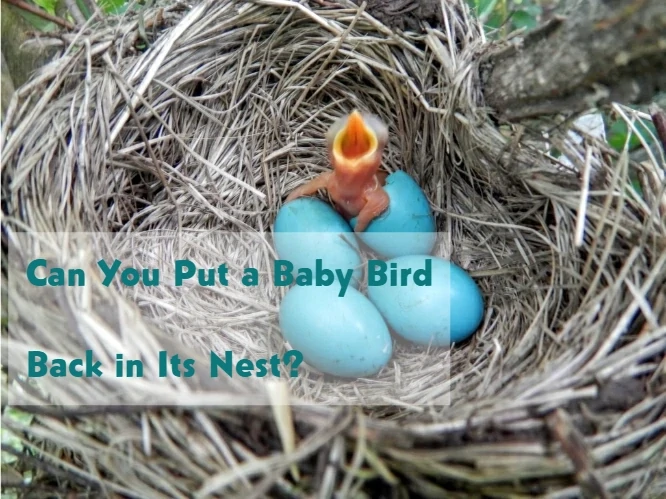
You’re walking through your backyard when you spot a tiny, helpless baby bird on the ground. It’s chirping loudly, and you can see its nest just a few feet above in a tree. Your first thought is probably to help the little guy out and put it back where it belongs.
But is that actually the right thing to do? Can you put a baby bird back in its nest?
Yes, you can put a baby bird back in its nest if it’s a nestling (naked or barely feathered). The parents won’t reject it because of your scent. Birds have a very weak sense of smell and will continue caring for their babies after you handle them.
If you find a naked or barely feathered baby bird on the ground, it likely fell from its nest by accident.
These birds aren’t ready to leave yet, and they need to go back. The good news is that you can actually help without worrying about the parents abandoning it.
The Big Myth About Human Scent
Let’s clear up one of the biggest myths about baby birds right away. You’ve probably heard that if you touch a baby bird, the parents will smell your scent on it and abandon it forever.
That’s just not true.
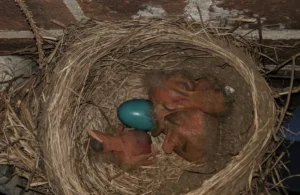
Most birds have a really weak sense of smell. They rely much more on their sight and hearing to find food and care for their babies. When you pick up a baby bird and put it back in the nest, the parents won’t even notice that you touched it.
They’ll keep feeding it and taking care of it like nothing happened. Your scent doesn’t matter to them at all.
How to Tell If a Bird Actually Needs Help
Before you pick up any baby bird, you need to figure out if it actually needs your help. Not every baby bird on the ground is in trouble.
There are two types of baby birds you might find: nestlings and fledglings.
Nestlings
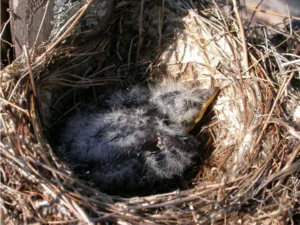
Nestlings are the babies that really do need to go back in the nest. These birds are naked or only have a little bit of fluffy down on them. Their eyes might still be closed. They can’t hop around or fly at all.
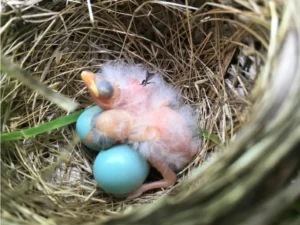
If you see a nestling on the ground, it probably fell out by accident. It needs to go back.
Fledglings
Fledglings are older babies that are actually supposed to be on the ground. These birds have most of their feathers and can hop around. They might look a bit messy or awkward, but that’s normal.
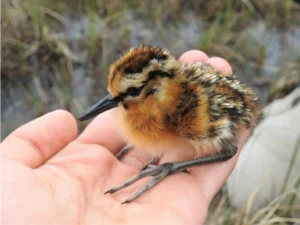
Fledglings leave the nest before they can fly well. They spend a few days on the ground while their parents keep feeding them and teaching them how to survive. This is a completely natural part of growing up for a bird.
If you see a fledgling hopping around on the ground, just leave it alone. The parents are watching it and know exactly where it is.
What to Do When You Find a Nestling
So you’ve found a nestling on the ground, and you’ve decided it needs to go back in its nest.
Here’s what you should do.
- First, look around and try to find the nest. It’s usually pretty close by, somewhere in a tree or bush above where you found the baby. If you can see the nest and it’s within reach, you’re good to go.
- Pick up the baby bird gently. You don’t need gloves, but you can wear them if it makes you feel better. Cup the bird carefully in your hands without squeezing it.
- Place the bird back in the nest as gently as possible. Try not to disturb any other babies or eggs that might be in there.
- Then step back and leave the area. The parents are probably watching you right now, and they won’t come back to the nest while you’re standing there. Give them space to return and check on their baby.
What If You Can’t Find the Nest?
Sometimes you can’t find the nest at all. Maybe it’s too high up, or maybe it got destroyed in a storm. If that happens, you have a few options.
You can try to make a substitute nest. Get a small container like a plastic berry basket or margarine tub. Poke some drainage holes in the bottom so water doesn’t collect inside.
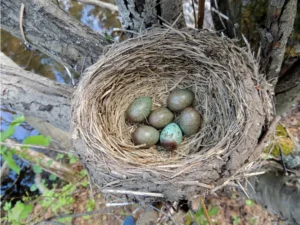
Line the container with dry grass, leaves, or paper towels to make it soft and warm. Then put the baby bird inside.
Attach this makeshift nest to a tree or bush as close as possible to where you found the baby. Put it in a shaded spot where it won’t get too hot. The parents should be able to hear their baby chirping and will come to feed it in the new location.
If the nest was destroyed and there’s nowhere safe to put the baby, you might need to call a wildlife rehabilitator. Don’t try to raise the baby bird yourself. It’s actually illegal in most places to keep wild birds without a permit, and baby birds have very specific needs that are hard to meet at home.
When You Should Leave a Baby Bird Alone
Not every situation needs your help. Sometimes the best thing you can do is absolutely nothing.
If the baby bird is a fledgling (fully feathered and hopping around), leave it alone. Its parents are nearby and still feeding it. This is normal behavior.
If the baby bird is in immediate danger from a cat or dog, you can move it to a nearby bush or under a hedge. Just move it a few feet away to somewhere safer. The parents will still find it.
If the baby bird looks healthy and the parents are actively feeding it, don’t interfere. You might think you’re helping, but you could actually stress out the parents and the baby.
Signs That a Baby Bird Needs Professional Help
Sometimes a baby bird needs more help than you can give it. Here are signs that you should call a wildlife rehabilitator instead of trying to help on your own.
If the baby bird is injured (you can see blood, a broken wing, or a hurt leg), it needs medical care. Don’t try to fix this yourself.

If you’ve watched the nest for a few hours and the parents haven’t come back at all, the baby might be orphaned. Wildlife rehabilitators know how to feed and care for orphaned birds.
If the baby bird is cold to the touch and not moving much, it might be sick or dying. A professional can give it the care it needs.
If a cat or dog attacked the bird, it needs antibiotics even if you can’t see any wounds. Cat and dog saliva contains bacteria that can kill birds within 24 hours.
How Long Should You Watch Before Helping?
If you’re not sure whether a baby bird needs help, the best thing to do is watch from a distance for a while.
Find a spot where you can see the bird but where you’re far enough away that the parents will feel safe coming back. Stay there for at least an hour or two.
Watch to see if the adult birds come to feed the baby. They might not come right away because they’re nervous about you being there. But if you wait quietly, you should see them return.
If the parents come back and feed the baby, everything is fine. Leave the bird where it is.
If no parents show up after a few hours, the baby might need help. That’s when you can step in and either put it back in the nest or call a rehabilitator.
What Happens After You Put It Back?
After you put a baby bird back in its nest, the parents will almost always continue taking care of it. They don’t care that you touched it.
The parents will keep bringing food to the nest every 15 to 20 minutes during the day. They’ll keep the babies warm at night. They’ll clean out the nest and protect the babies from predators.
In a week or two, that baby bird will be ready to leave the nest on its own as a fledgling. Then it’ll spend a few more weeks learning to fly and find food before it’s truly independent.
Your quick action to put it back in the nest gave it a real chance at survival. Without the nest, a nestling would die pretty quickly from cold, hunger, or predators.
Why Baby Birds Fall Out of Nests
You might be wondering why baby birds fall out of their nests in the first place. There are actually several reasons this can happen.
Sometimes strong winds or storms shake the nest and a baby tumbles out. Sometimes the baby is just moving around too much and accidentally falls over the edge.
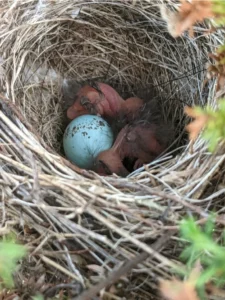
Sometimes sibling birds push each other around while competing for food, and one gets shoved out. Sometimes the nest gets too crowded as the babies grow bigger.
In some cases, the parents actually push out a baby that’s sick or weak. This sounds harsh, but it helps the healthy babies survive by giving them more food and space.
Can You Raise a Baby Bird Yourself?
You might think it would be fun to raise a baby bird at home. Maybe you could teach it to trust you and it could be your pet.
But this is actually a really bad idea for several reasons.
First, it’s illegal. The Migratory Bird Treaty Act makes it illegal to keep most wild birds without special permits. You could get in serious trouble if wildlife officials find out you’re keeping a wild bird.
Second, baby birds are incredibly hard to keep alive. They need to eat every 15 to 20 minutes from sunrise to sunset. They need specific types of food depending on their species. They need the right temperature and humidity.
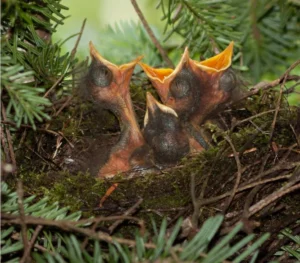
Most people who try to raise baby birds without training end up killing them by accident. The birds die from being fed the wrong food, from not being fed often enough, or from being kept too hot or too cold.
Third, even if you manage to keep the bird alive, you’ll create a bird that can’t survive in the wild. It won’t know how to find food, avoid predators, or interact with other birds. You’ve basically sentenced it to life in a cage.
When to Find a Wildlife Rehabilitator
If a baby bird really does need professional help, you need to find a licensed wildlife rehabilitator in your area.
Start by searching online for “wildlife rehabilitator near me” along with your city or state. Most states have wildlife agencies that keep lists of licensed rehabilitators.
You can also call your local animal shelter, veterinarian, or nature center. They usually know who handles wild birds in the area.
When you call a rehabilitator, they’ll ask you questions about the bird to figure out if it really needs help. They might tell you to bring it in, or they might give you instructions on what to do at home.
Most wildlife rehabilitators work as volunteers and don’t charge for their services. But they really appreciate donations to help cover the cost of food and medical care for the animals they treat.
How to Keep Baby Birds Safe in Your Yard
If you want to help baby birds in general, there are things you can do to make your yard safer for them.
- Keep your cats indoors, especially during baby bird season in spring and summer. Cats kill billions of birds every year, and baby birds on the ground are easy targets.
- If you have dogs, watch them carefully when they’re outside. Don’t let them grab or mouth baby birds they find.
- Don’t use pesticides in your yard during nesting season. The chemicals can poison birds or kill the insects they need to feed their babies.
- Leave some messy areas in your yard with brush piles and dense shrubs. These give fledglings safe places to hide while they’re learning to fly.
- Put reflective stickers or screens on your windows to prevent birds from flying into them. Window strikes kill a huge number of birds every year.
Conclusion
Finding a baby bird on the ground can be stressful. You want to help, but you’re not sure what to do.
The good news is that if it’s a nestling (naked or barely feathered), you can absolutely put it back in its nest. The parents won’t reject it because of your scent. That’s just a myth.
But make sure you know the difference between a nestling that needs help and a fledgling that’s supposed to be on the ground. Fledglings should be left alone unless they’re in immediate danger.
When you do help a baby bird, keep it simple. Put it back in the nest, make a substitute nest if needed, or call a wildlife rehabilitator if it’s injured. Don’t try to raise it yourself.
Most baby birds that fall out of their nests can be saved with just a little bit of help from caring people like you.

Hi, my name is Ezra Mushala, i have been interested animals all my life. I am the main author and editor here at snakeinformer.com.