

If you’re dealing with a rat problem or just curious about rat biology, you might wonder whether different types of rats can breed with each other.
Roof rats (also called black rats) and Norway rats (also called brown rats) are the two most common rat species that people encounter. Can roof rats and Norway rats breed, or to put it another way, can black and brown rats breed?
Yes, roof rats and Norway rats can technically breed with each other and produce offspring, but it’s extremely rare in the wild. These hybrid offspring are usually less healthy and less fertile than purebred rats. The two species prefer different habitats and have different behaviors, which naturally keeps them separated.
While it’s biologically possible for these two rat species to produce hybrid babies, it almost never happens naturally because they avoid each other and live in different areas.
Understanding Roof Rats vs. Norway Rats
Before we talk about whether they can breed, it’s important to understand the differences between these two rat species.
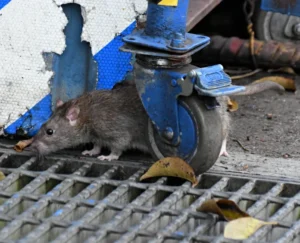
Roof rats (Rattus rattus), also called black rats or ship rats, are smaller and more slender. They typically weigh 5 to 9 ounces and have long, thin tails that are longer than their body. Their fur is usually black or dark brown, though it can vary.

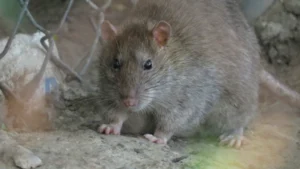
Norway rats (Rattus norvegicus), also called brown rats, are bigger and bulkier. They typically weigh 7 to 18 ounces, with some large males reaching over a pound. Their tails are shorter than their body length, and their fur is usually brownish or grayish.

Both species are in the same genus (Rattus), which means they’re closely related in evolutionary terms. This close relationship is what makes breeding between them possible, unlike rats breeding with mice or other rodents.
The names “black rat” and “brown rat” can be confusing because roof rats aren’t always black and Norway rats aren’t always brown. The scientific names are more reliable for identification.
Why Breeding Between Them Is Rare in the Wild
Even though these rats can technically produce offspring together, it almost never happens naturally.
They prefer completely different habitats. Roof rats are excellent climbers and prefer high places like attics, upper floors of buildings, trees, and walls. Norway rats prefer ground-level locations like basements, sewers, burrows, and lower floors of buildings.
This habitat separation means the two species rarely even meet. A roof rat living in your attic might never encounter the Norway rat living in your basement.

Their behaviors are different too. Roof rats are more cautious and skittish, while Norway rats are bolder and more aggressive. Norway rats will often dominate roof rats if they do meet, which leads to avoidance rather than mating.
They have different activity patterns. While both are nocturnal, roof rats tend to be more active at different times than Norway rats, reducing the chances of encounters.
In areas where both species exist, Norway rats often push roof rats out entirely. Norway rats are bigger, more aggressive, and better at competing for resources. This competitive exclusion keeps them separated.
The Biology of Rat Breeding
Understanding how these two rat species can breed requires looking at their genetic and reproductive similarities.
Both species have 42 chromosomes. This matching chromosome number is critical. For breeding to be possible, the chromosomes need to pair up correctly during reproduction.
Their reproductive systems are very similar in structure and function. Both have similar gestation periods (21 to 23 days), similar litter sizes (6 to 12 pups on average), and similar sexual maturity ages (8 to 12 weeks).
The hormonal signals involved in mating are similar enough that a male of one species can recognize a female of the other species as a potential mate (though they’d rather mate with their own species).
Physically, the size difference isn’t so large that mating is impossible. While Norway rats are bigger, the difference isn’t as extreme as, say, between a Great Dane and a Chihuahua.
The genetic difference between these species is relatively small compared to the difference between rats and other rodents. They split from a common ancestor only about 2 to 3 million years ago.
Hybrid Offspring: What Science Shows
Scientific studies have documented cases of roof rat and Norway rat hybrids, though these are mainly from laboratory settings.
Hybrid offspring can be produced when roof rats and Norway rats are housed together in laboratories. These hybrids are viable, meaning they can survive and grow to adulthood.
However, hybrid offspring often show reduced fertility. Male hybrids, in particular, are often sterile or have very low sperm counts. Female hybrids tend to be more fertile but still less so than purebred rats.
The hybrid offspring usually show intermediate characteristics. They might be larger than roof rats but smaller than Norway rats. Their behavior might blend traits from both species.
Hybrids often have lower survival rates than purebred rats, especially in the wild. They might not be as well adapted to either the high-climbing lifestyle of roof rats or the ground-dwelling lifestyle of Norway rats.
In the few documented cases of wild hybrids, they tend to have reduced fitness. This means they’re less successful at surviving and reproducing, which is why hybrids don’t become common in nature.
Historical Evidence of Interbreeding
There’s some evidence that roof rats and Norway rats have interbred in the past, at least occasionally.
Genetic studies have found small amounts of DNA from one species in the other, suggesting that interbreeding has happened at some point in their evolutionary history.
In the 1800s, when both rat species were spreading around the world on ships, there might have been more opportunities for interbreeding. The confined spaces of ships could have forced the two species into closer contact.
Some rat populations show genetic markers that suggest past hybridization, though it’s hard to determine when and where this occurred.
Historical records from the 1700s and 1800s describe rats with intermediate characteristics, though it’s impossible to know for sure if these were actual hybrids or just individual variation within a species.
The rarity of documented hybrids suggests that even when the two species do come into contact, they usually don’t choose to breed with each other.
Behavioral Barriers to Breeding
Beyond habitat separation, there are behavioral reasons why these rats don’t usually breed together.
Mating preferences are species-specific. Given a choice, a roof rat will almost always choose another roof rat as a mate rather than a Norway rat. The same goes for Norway rats preferring their own species.
Courtship behaviors are slightly different between the species. While similar, there are subtle differences in the ultrasonic calls, scent marking, and physical behaviors used during mating.
Social structures differ between the two species. Norway rats form larger, more complex colonies with strict hierarchies. Roof rats form smaller, less structured groups. A rat from one species might not fit well into the social structure of the other.
Aggression between the species is common. When Norway rats and roof rats meet, they often fight rather than mate. Norway rats, being larger and more aggressive, usually dominate these encounters.
The stress of encountering another species might also reduce mating behavior. Animals under stress often don’t reproduce, even if they’re physically capable of doing so.
What Hybrids Look Like
In the rare cases where roof rat and Norway rat hybrids exist, they show a mix of traits from both parents.
Size tends to be intermediate. Hybrids are usually bigger than roof rats but smaller than Norway rats, weighing somewhere around 7 to 12 ounces.
Tail length is also intermediate. Roof rats have tails longer than their bodies, while Norway rats have tails shorter than their bodies. Hybrids fall somewhere in between.
Fur color can vary widely. Hybrids might have black, brown, gray, or mixed coloring. The texture might be coarser than a roof rat’s but finer than a Norway rat’s.
Body shape tends to be in the middle too. Not as slender as a roof rat, but not as bulky as a Norway rat.
Behavior can be unpredictable. Some hybrids might climb well like roof rats, others might burrow like Norway rats, and some might show behaviors from both species.
Can You Deliberately Breed Them?
If you were deliberately trying to breed roof rats and Norway rats together, it’s technically possible but not practical or advisable.
In laboratory settings, scientists have successfully created hybrids by housing the two species together and removing the option to mate with their own species.

The success rate isn’t very high, even in controlled conditions. Many mating attempts don’t result in pregnancy, and some pregnancies end in miscarriage.
Ethical concerns exist around deliberately creating hybrids. The offspring often have health problems and reduced fertility, which could be considered cruel.
There’s no practical reason to create hybrids. Both pure species are well-studied and serve as research models. Hybrids don’t offer any advantages.
For pest control purposes, hybrids wouldn’t be helpful. They’d likely be just as much of a problem as purebred rats.
Genetic Studies on Rat Hybridization
Modern genetic technology has helped us understand more about rat hybridization.
DNA analysis can identify hybrid individuals by looking for genetic markers from both species. This has revealed that hybrids are even rarer than previously thought.
Studies show that when hybridization does occur, the genes from one species tend to be lost over a few generations. The hybrid offspring usually breed back with one of the parent species, diluting the mixed genetics.
Research has found that certain genes create incompatibilities between the species. These incompatibility genes can cause health problems in hybrids or make male hybrids sterile.
Some studies suggest that the Y chromosome in particular has incompatibilities between the species, which explains why male hybrids often have fertility problems.
Genetic research also confirms that the two species are distinct and that gene flow between them is extremely limited in wild populations.
Geographic Distribution and Overlap
Understanding where these rats live helps explain why interbreeding is so rare.
Norway rats are found worldwide, especially in cooler and temperate climates. They’re the dominant rat species in most of North America and Europe.

Roof rats prefer warmer climates and are more common in coastal areas, the southern United States, and tropical regions. They’re less common in cold areas.
In regions where both species exist, they usually don’t overlap much. Norway rats dominate urban ground-level habitats, while roof rats stick to elevated areas.
Some port cities have both species, but even there, they tend to occupy different niches. Norway rats in the sewers and basements, roof rats in the attics and walls.
Climate change might be changing these distribution patterns. As some areas get warmer, roof rats might expand their range into areas currently dominated by Norway rats.
Implications for Pest Control
The fact that these rats can technically breed (but rarely do) has some implications for pest control.
You need to identify which species you’re dealing with because control methods can differ. Roof rats need traps placed high (on rafters, in trees), while Norway rats need traps placed low (along baseboards, near ground level).
If you have both species on your property (which is rare), you need to address both separately. They’ll be in different locations and might respond differently to bait and traps.
Genetic pest control methods are being researched for rodents. Understanding how rat species can and can’t interbreed is important for these developing technologies.
If hybrids did exist on your property, they’d likely be as much of a pest as purebred rats and would need to be controlled just the same way.
The rarity of hybridization means you don’t need to worry about a “super rat” emerging from crosses between the species. Each species maintains its own characteristics.
Other Rat Species and Breeding
Beyond roof rats and Norway rats, there are over 60 species in the Rattus genus.
Some other Rattus species can probably interbreed with roof rats or Norway rats, though this has been studied less. The closer the evolutionary relationship, the more likely successful breeding becomes.

Polynesian rats (Rattus exulans) are another common species and might be able to breed with roof or Norway rats, though documented cases are even rarer.
Wood rats (genus Neotoma) can’t breed with roof or Norway rats because they’re in a completely different genus despite having “rat” in their name.
Cotton rats, pack rats, and other “rats” that aren’t in the Rattus genus also can’t interbreed with true rats.
The ability to interbreed is really limited to very close relatives within the same genus, and even then, it’s often rare or results in less healthy offspring.
Why This Matters
Understanding that roof rats and Norway rats can technically breed (but usually don’t) helps us understand several things.
It shows us that species boundaries aren’t always absolute. While rats and mice can’t breed at all, closely related species sometimes can, even if they rarely do.
It helps us understand how evolution works. The fact that hybrids are less healthy and less fertile is part of what keeps species separate. This is called reproductive isolation.
For researchers, knowing that hybrids are possible helps them understand rat genetics and evolution better.
For homeowners and pest control professionals, knowing these are distinct species with different behaviors and preferences is more important than their ability to theoretically interbreed.
It also shows that natural behaviors and habitat preferences are just as important as genetic compatibility in keeping species separate.
Conclusion
Roof rats and Norway rats (black rats and brown rats) can technically breed with each other because they’re closely related species in the same genus with the same number of chromosomes.
However, this almost never happens in the wild because the two species prefer completely different habitats (roof rats up high, Norway rats at ground level), have different behaviors, and tend to avoid or compete with each other rather than mate.
When hybrids do occur (mainly in laboratory settings), they’re usually less healthy and less fertile than purebred rats, particularly the males.
The genetic, behavioral, and habitat differences between these species are strong enough to keep them separate in nature, even though they’re not completely unable to produce offspring together.
If you’re dealing with rats on your property, you’re almost certainly dealing with one species or the other, not hybrids. Identify which species you have (by location, size, and appearance) and use appropriate control methods for that specific species.
The ability of these two rat species to occasionally produce hybrid offspring is interesting from a scientific perspective, but it has almost no practical impact on how we deal with rats in our homes and businesses.

Hi, my name is Ezra Mushala, i have been interested animals all my life. I am the main author and editor here at snakeinformer.com.