

Finding out you have rats in your house is bad enough, but one of the most disturbing thoughts is whether those rats can get into your bedroom and onto your bed while you’re sleeping.
It’s the kind of thing that can keep you awake at night, literally. You might be wondering if this fear is justified or just paranoia. Can rats actually go on your bed?
Yes, rats can and will go on your bed if they have access to your bedroom. Rats are excellent climbers and can easily scale bedding, furniture, or walls to reach your bed. They’re most active at night when you’re sleeping, which means they can get on your bed without you knowing.
The idea of rats on your bed is disturbing, but understanding why and how they get there helps you prevent it from happening.
Why Rats Would Want to Get On Your Bed
Rats don’t specifically target your bed because it’s where you sleep. They have practical reasons for being there.
Warmth is a big attraction, especially in colder months. Your bed retains body heat, and rats are drawn to warm spots. If you sleep in your bed regularly, it’s one of the warmest places in your room.
Food is another major draw. If you eat in bed or keep snacks on your nightstand, you’re creating a buffet for rats. Even tiny crumbs that you don’t notice are enough to attract them.

Nesting material is valuable to rats. Beds provide fabric, stuffing from pillows, and other soft materials that rats can tear apart to build nests. If a rat can access your bed, it might be looking for nest-building supplies.
Water can sometimes be found on nightstands in the form of water glasses or bottles. Rats need water daily, and a predictable water source will draw them back repeatedly.
Exploration is just part of rat behavior. Rats are curious and will investigate new areas of their territory. Your bed is just another surface to explore, especially if it leads to other areas or resources.
How Rats Can Climb Onto Beds
Rats are surprisingly good climbers, which makes it easy for them to reach your bed even if it seems high off the ground.
Bedding that hangs down to the floor creates a perfect ladder. Sheets, blankets, or comforters that drape over the edge give rats something to climb. Their claws can grip fabric easily.
Furniture near the bed provides stepping stones. A nightstand, dresser, or chair next to your bed lets rats climb up and jump the short distance to your mattress.

Bed frames with cross bars or decorative elements give rats footholds. They can climb the frame itself if there’s anything to grip.
Walls with textured surfaces can be climbed by rats. If your bed is against a wall with textured wallpaper, stucco, or brick, rats can climb the wall and drop onto your bed from above.
Curtains or drapes near the bed are another climbing route. Rats can scale curtains to reach window sills, then move along furniture or other surfaces to reach your bed.
Headboards, especially wooden or upholstered ones, provide texture that rats can grip. They can climb up the headboard and move onto your pillows from there.
Basically, if a rat can get into your bedroom, it can probably get onto your bed. They don’t need much in terms of climbing aids.
Signs That Rats Have Been On Your Bed
If you’re worried that rats are getting on your bed, there are telltale signs to look for.
Droppings are the most obvious evidence. Rat droppings look like dark, pointed pellets about 1/2 to 3/4 inch long. Fresh droppings are dark and shiny, while old ones are gray and crumbly. Finding these on or near your bed is a clear sign.
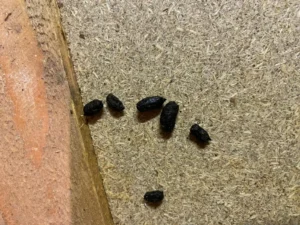
Grease marks or smudges on bedding, walls near your bed, or furniture show where rats have traveled. Rats have oily fur that leaves dark streaks on surfaces they repeatedly brush against.
Gnaw marks on your headboard, bed frame, or nearby furniture indicate rat activity. Fresh gnaw marks look lighter in color because they expose the inner material.
Strange smells, particularly a musky or ammonia-like odor, can indicate rat urine. If your bedroom smells weird and you can’t figure out why, rats might be urinating on or near your bed.
Shredded fabric from pillows, blankets, or even your mattress means rats are taking nesting material. You might find small holes or tears you can’t explain.
Noises at night are a strong indicator. If you hear scratching, rustling, or movement sounds in your bedroom after you turn off the lights, rats are probably active nearby and possibly on your bed.
If you wake up with unexplained scratches or bites, though rare, it could be from rats. They don’t usually bite sleeping humans, but it can happen if they feel threatened or if food residue is on your skin.
The Health Risks of Rats On Your Bed
Having rats on your bed isn’t just gross, it’s actually dangerous to your health.
Diseases can be transmitted through rat urine and droppings. Rats can carry leptospirosis, hantavirus, salmonella, and other pathogens. When they walk on your bed, they can leave contaminated urine and feces that you might touch or breathe in.
Parasites like fleas, ticks, and mites often hitch rides on rats. These parasites can transfer to your bedding and then bite you while you sleep. Rat mites in particular are known for biting humans.

Allergens from rat urine, droppings, and dander can trigger allergic reactions or asthma attacks. If you’re suddenly having respiratory issues or skin irritation, rat contamination might be the cause.
Contamination of your sleeping surface means you’re directly exposed to whatever pathogens the rats are carrying. Your face, mouth, and nose are close to contaminated surfaces while you sleep.
Stress and anxiety from knowing rats are on your bed can affect your sleep quality and mental health. The fear of rats affects many people deeply, and sleeping becomes difficult when you’re worried about rats.
The risk isn’t just theoretical. People have gotten sick from rat-borne diseases transmitted through contamination in their homes, including bedrooms.
How to Keep Rats Off Your Bed
Prevention is the best approach. There are several steps you can take to make your bed less accessible and less attractive to rats.
Keep bedding off the floor completely. Make sure sheets, blankets, and comforters are tucked in and don’t drape down to create a climbing surface.
Move furniture away from your bed. If possible, don’t have nightstands, dressers, or chairs touching or very close to your bed. Create a gap that rats would have to jump across, which they’re less likely to do.
Never eat in bed. This is one of the most important rules. Even tiny crumbs you can’t see are enough to attract rats. Keep all food in the kitchen or dining area.

Don’t keep food or drinks on your nightstand. If you must have water nearby, use a sealed bottle, not an open glass. Better yet, get up and go to the kitchen if you need a drink.
Use bed leg guards or cups. You can buy or make smooth barriers that fit around bed legs. Since rats can’t grip smooth surfaces well, this makes it much harder for them to climb up.
Keep your bedroom clutter-free. Clutter provides hiding spots and climbing aids for rats. A tidy room with minimal furniture is less rat-friendly.
Seal your bedroom door at night. Use a door sweep or towel to close the gap under your door. This won’t stop determined rats, but it creates another barrier.
Use peppermint oil or other natural deterrents around your bedroom. While not foolproof, strong scents can discourage rats from entering. Refresh these regularly.
What to Do If You Find a Rat On Your Bed
If you actually encounter a rat on your bed, stay calm and take appropriate action.
Don’t make sudden movements. While scary, sudden movements might cause the rat to panic and bite. Rats generally don’t want to interact with humans and will flee if given a chance.
Turn on lights. Rats prefer darkness, so bright light will usually make them want to leave quickly.

Make noise. Loud sounds or clapping will typically send a rat running. They’re more afraid of you than you are of them, even though it doesn’t feel that way.
Give it an escape route. Make sure there’s a clear path for the rat to leave the room. Don’t corner it, as a cornered rat might act defensively.
After the rat leaves, don’t sleep in that bed until you’ve dealt with the problem. The bed needs to be cleaned and sanitized, and you need to figure out how the rat got in.
Inspect your bedroom thoroughly for entry points. Check for holes in walls, gaps around pipes or wires, openings near windows, and any other way a rat could have gotten into your room.
Set traps immediately. Place snap traps or live traps along walls and in corners where you think rats are traveling.
Cleaning Your Bed After Rat Contact
If rats have been on your bed, you need to clean and disinfect everything thoroughly.
Remove all bedding immediately. This includes sheets, pillowcases, blankets, comforters, and mattress covers. Don’t shake them out, as this can spread contamination. Carefully roll them up and place them directly in the washing machine.
Wash all bedding in hot water with detergent. The heat helps kill pathogens. Run a complete cycle, then consider running a second cycle or adding a disinfectant like bleach (if the fabric can handle it).
Vacuum your mattress thoroughly. Pay special attention to seams, buttons, and any crevices where droppings or hair might hide. Use the hose attachment to get into every crack.

Disinfect your mattress with a proper cleaner. You can use a mixture of equal parts water and white vinegar, or a commercial disinfectant approved for use on mattresses. Spray it on, let it sit for 10 to 15 minutes, then blot with clean towels.
Let your mattress dry completely before putting fresh bedding on. Prop it up or use fans to speed drying. A damp mattress can develop mold.
Clean your bed frame and nearby furniture. Rats might have walked on these surfaces too. Use disinfectant on all surfaces the rats could have touched.
Wash or dry clean pillows if possible. Check the care labels. If pillows can’t be cleaned properly, consider replacing them, especially if you found droppings or gnaw marks.
Getting Rid of Rats From Your House
Keeping rats off your bed is pointless if they’re still in your house. You need to eliminate the entire rat population.
Set multiple traps in strategic locations. Place them along walls, in corners, and near signs of rat activity. Use snap traps or electronic traps, not glue traps (which are inhumane).
Use the right bait. Peanut butter, chocolate, or dried fruit work well. Change bait every few days if it’s not being taken.
Seal all entry points. Inspect your entire house and seal any hole larger than 1/4 inch for mice or 1/2 inch for rats. Use steel wool with caulk, hardware cloth, or sheet metal to seal gaps.

Remove food sources. Store food in sealed containers, clean up crumbs immediately, secure garbage in bins with tight lids, and don’t leave pet food out overnight.
Eliminate water sources. Fix leaky pipes and faucets, don’t leave standing water, and make sure there’s no water pooling anywhere in or around your house.
Consider professional help if the problem is severe. Pest control professionals have access to better tools and techniques than most homeowners.
Preventing Rats From Entering Your Bedroom Specifically
Even if you have rats elsewhere in your house, you can make your bedroom a rat-free zone.
Install a door sweep if you don’t have one. The gap under bedroom doors is often large enough for rats to squeeze through.
Check walls for holes or cracks. Look behind furniture, in closets, and near baseboards. Seal any openings you find.

Inspect around windows. Make sure window frames fit tightly and there are no gaps. Use caulk to seal any cracks.
Look for gaps around pipes or wires entering your room. These are common entry points. Seal them with steel wool and caulk.
Check heating vents and cold air returns. If they don’t have tight-fitting covers, rats might be able to enter through the ductwork.
Keep your bedroom door closed at night. This creates a physical barrier, though it’s not perfect if rats are already in the walls.
Conclusion
Yes, rats can definitely go on your bed, and they will if given the opportunity. They’re excellent climbers and are most active at night when you’re sleeping.
Rats might be attracted to your bed by warmth, food crumbs, water, or nesting materials. They can climb up bedding that touches the floor, furniture next to your bed, bed frames, or even walls.
To keep rats off your bed, remove all food from your bedroom, keep bedding off the floor, move furniture away from your bed, and seal your bedroom from rat entry. Most importantly, address the rat problem in your house completely by trapping rats and sealing all entry points.
If rats have been on your bed, clean and disinfect everything thoroughly. The health risks from rat contamination are real and shouldn’t be ignored.

Hi, my name is Ezra Mushala, i have been interested animals all my life. I am the main author and editor here at snakeinformer.com.