
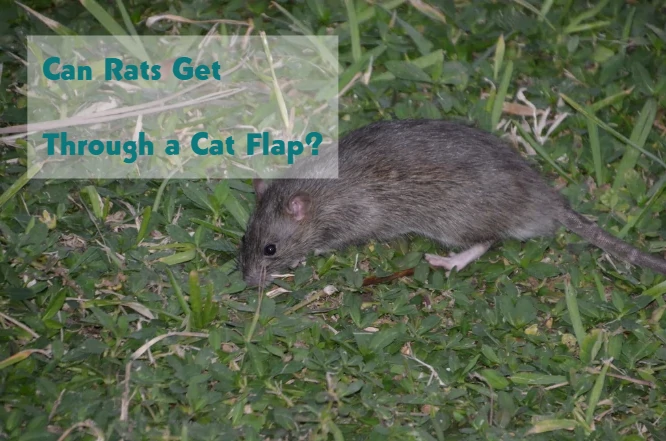
If you have a cat flap installed in your door, you’re probably giving your cat the freedom to come and go as they please. But you might be wondering if you’re also giving unwanted visitors an easy way into your home.
Rats are known for squeezing through surprisingly small spaces, and a cat flap seems like it could be the perfect entry point. Can rats get through a cat flap?
Yes, rats can easily get through a cat flap. Most cat flaps are large enough for an adult rat to squeeze through without any problem. If a cat can fit through the opening, a rat definitely can too.
Rats are incredibly flexible animals with collapsible rib cages that let them squeeze through openings that look way too small for them. If your cat flap is unlocked or doesn’t have any security features, it’s basically an open door for rats looking for food, warmth, or shelter inside your home.
How Big of an Opening Can Rats Fit Through?
Rats can fit through openings that are much smaller than you’d think. An adult rat can squeeze through a hole that’s only about the size of a quarter (roughly 1 inch or 2.5 cm in diameter).
This means if a rat can fit its head through an opening, the rest of its body can follow. Their skulls are the widest part of their body, and once the head makes it through, their flexible rib cage and body can compress and slip right through behind it.
Most standard cat flaps have openings that are around 5 to 7 inches wide and tall. That’s more than enough space for even a large rat to walk straight through without any effort at all.
Why Rats Are Attracted to Cat Flaps
Rats aren’t just randomly checking out cat flaps. They’re actually drawn to them for several reasons that make your home look really appealing.
First, if you have a cat, you probably have cat food somewhere inside. Rats have an incredible sense of smell, and they can detect food from pretty far away. The scent of cat food (or any other food in your kitchen) can lead them straight to your cat flap.
Also, cat flaps often have gaps around the edges or don’t seal completely when closed. These gaps let out warm air from inside your home, especially during colder months. Rats are always looking for warm places to nest, and that warm air coming through the flap is like a welcome sign.
The flap itself also provides a clear sign that there’s a way inside. Rats are smart and can learn by watching. If they see your cat using the flap, they might figure out that it’s an entry point worth investigating.
What Happens When Rats Get Inside Through Cat Flaps
Once a rat gets inside through your cat flap, it’s not just going to look around and leave. Rats that find their way inside are usually looking for three things: food, water, and shelter.
They’ll head straight for your kitchen if they can smell food. Rats will chew through cardboard boxes, plastic bags, and even some types of containers to get to food. They’ll eat crumbs off the floor, raid your pantry, and even get into your pet’s food bowls.
But it’s not just about food. Rats will also look for places to nest. They might set up in your walls, under your floors, in your attic, or even behind your appliances. Once they find a good spot, they’ll start bringing in materials to build a nest (like shredded paper, fabric, or insulation).
The real problem is that rats don’t come alone. If one rat finds a way in and discovers it’s a good place with food and shelter, it’ll bring more rats.
Female rats can have up to 12 babies in a single litter and can get pregnant again right after giving birth. This means a small rat problem can turn into a serious infestation really quickly.
Signs That Rats Are Using Your Cat Flap
You might not catch a rat in the act of coming through your cat flap, but there are several signs that can tell you rats are using it as an entry point.
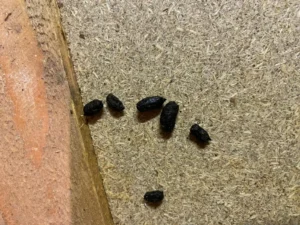
One of the most obvious signs is rat droppings near the cat flap, either inside or outside. Rat droppings are dark, pellet-shaped, and about the size of a large grain of rice. If you’re seeing these near your cat flap, rats are definitely in the area and likely using it.
You might also notice greasy smear marks around the edges of the cat flap. Rats have oily fur, and when they squeeze through tight spaces, they leave behind dark, greasy streaks. If you see these marks on or around your cat flap, that’s a strong sign rats are coming through.
Another sign is scratching or rustling sounds near the cat flap, especially at night. Rats are most active during nighttime hours, so if you hear noises near your door after dark, it could be rats trying to get in or out.
Your cat might also start acting strangely around the cat flap. If they seem nervous, refuse to use it, or spend time staring at it, they might be picking up on the scent or presence of rats.
How to Stop Rats from Coming Through Cat Flaps
The good news is that there are several ways you can stop rats from using your cat flap as their personal entrance.
The most effective solution is to upgrade to a microchip cat flap. These high-tech flaps only open when they detect your cat’s unique microchip (the one your vet implanted) or a special collar tag.
When a rat tries to get through, the flap stays locked. This completely blocks rats while still giving your cat full access.

If you can’t get a microchip flap right away, you can lock your regular cat flap at night. Most rats are active during nighttime hours, so locking the flap from dusk until dawn will block them during their most active time. You’ll just need to let your cat in and out manually during those hours.
You can also install a cat flap with a timer. These flaps can be programmed to lock and unlock at specific times. You can set it to lock during the night when rats are most active and unlock during the day when your cat wants to go out.
Another option is to add a secondary barrier. You can install a second door or screen on the inside of your cat flap. This creates an extra obstacle that makes it harder for rats to get all the way inside, even if they manage to push through the first flap.
Other Ways to Keep Rats Away from Your Home
Stopping rats at the cat flap is important, but you should also take steps to make your home less attractive to rats in general.
Start by removing food sources. Don’t leave pet food out overnight. Store all food (including pet food) in thick plastic or metal containers with tight lids that rats can’t chew through.
Clean up any spills or crumbs right away, and make sure your garbage cans have tight-fitting lids.

Keep your yard clean too. Rats love cluttered areas with lots of hiding spots. Remove piles of wood, leaves, or debris from around your home.
Trim back bushes and plants that are growing against your house, since these give rats cover and easy access to your walls.
Seal up any other entry points around your home. Check your foundation, walls, and roof for cracks or holes. Remember, rats can fit through openings as small as a quarter, so even tiny gaps need to be filled. Use steel wool or metal mesh to plug holes, since rats can’t chew through metal.
You can also use natural rat deterrents around your cat flap and home. Peppermint oil is one that many people use. Rats really don’t like the strong smell.
Soak cotton balls in peppermint oil and place them near your cat flap (just make sure they’re out of reach of your cat). You’ll need to replace them every few days as the scent fades.
What Not to Do If Rats Are Using Your Cat Flap
When you discover rats are getting in through your cat flap, it’s important to handle the situation carefully. Some common reactions can actually make things worse.
Don’t just block off the cat flap permanently without dealing with the rats first. If rats are already inside your home and you seal up their exit, they’ll be trapped inside with you

. Trapped rats will chew through walls, wires, and insulation trying to find another way out. They’ll also keep breeding inside your home.
Don’t use poison if you have pets. Rat poison is extremely dangerous to cats and dogs. If your cat eats poisoned rat bait (or catches and eats a poisoned rat), they can get seriously sick or die.
The same goes for any rat poison you put outside near the cat flap.
Don’t ignore the problem hoping it’ll go away on its own. Rats don’t just leave once they’ve found a good food source and shelter. The problem will only get worse as more rats move in and start breeding.
When to Call Professional Help
Sometimes a rat problem is too big to handle on your own, and that’s okay. There are situations where calling a professional pest control service is the smart move.
If you’re seeing rats during the daytime, that’s a red flag. Rats are normally nocturnal, so seeing them during the day usually means there are so many rats that they’re running out of space and food, forcing some to come out when they normally wouldn’t.

If you’ve tried several methods to stop rats from using your cat flap and nothing is working, a professional can assess the situation and find solutions you might have missed.
If you’re finding rat droppings in multiple rooms or areas of your home, or if you’re hearing rats in your walls or ceiling, you likely have a bigger infestation that needs professional treatment.
Professional pest control experts have access to tools and methods that aren’t available to regular homeowners. They can also find and seal entry points you might not know about, and they can set up ongoing monitoring to make sure the rats don’t come back.
Conclusion
Rats can definitely get through cat flaps, and they will if given the chance. A standard cat flap is more than big enough for rats to squeeze through, and if your home has food, warmth, and shelter, they’ll keep coming back.
The best way to stop rats from using your cat flap is to upgrade to a microchip-activated flap that only opens for your cat. If that’s not possible right now, lock the flap at night when rats are most active, and take steps to make your home less appealing to rats by removing food sources and sealing other entry points.
Don’t ignore signs that rats are using your cat flap. The sooner you address the problem, the easier it’ll be to get rid of them and keep them from coming back. Your cat can still have the freedom to come and go, and you can have peace of mind knowing rats aren’t using the same door.

Hi, my name is Ezra Mushala, i have been interested animals all my life. I am the main author and editor here at snakeinformer.com.