
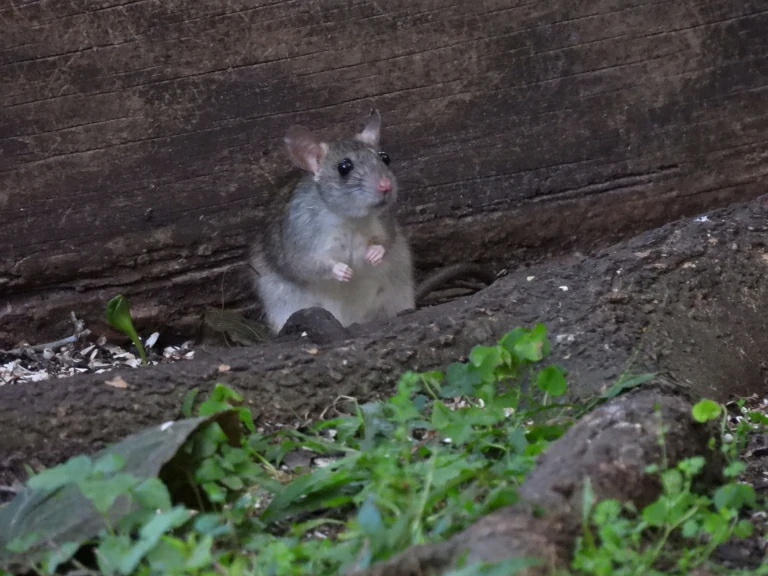
If you keep backyard chickens, you’ve probably worried about attracting rats. Chicken feed is basically a buffet for rodents, and many chicken keepers try to protect their feed by using hanging feeders instead of ground feeders.
The idea makes sense: if the feeder is hanging in the air, rats can’t reach it, right? But if you’ve noticed rats around your coop or signs that something has been getting into your feed, you’re probably wondering if hanging feeders actually work. So can rats get into hanging chicken feeders?
Yes, rats can get into hanging chicken feeders. Rats are excellent climbers and jumpers that can reach feeders hanging up to 4 feet off the ground. They’ll climb the chain or rope the feeder hangs from, jump from nearby structures, or climb up the coop walls to access hanging feeders.
Hanging feeders are better than ground feeders for rat prevention, but they’re not a perfect solution. Rats are surprisingly athletic and resourceful when it comes to reaching food sources.
How Rats Climb to Hanging Feeders
Rats have physical abilities that many chicken keepers underestimate, and these abilities let them access hanging feeders pretty easily.
Rats can climb almost any textured surface. Rough wood, wire mesh, chains, ropes, and even smooth pipes are all climbable for a determined rat.
Their claws are sharp and curved, giving them excellent grip on various materials. A rat can climb a chain or rope as easily as you climb a ladder.
If your hanging feeder is suspended by a chain, string, or rope, that’s basically a stairway for rats. They’ll climb right up the suspension and access the feeder from above.
Rats can also jump vertically up to 3 feet from a standing position. If your feeder is only 2 or 3 feet off the ground, rats don’t even need to climb anything. They can just jump up and grab it.
Their balance is incredible too. A rat can walk along a thin chain or wire without falling, making it easy for them to navigate to a hanging feeder.
Hanging Height Matters But Isn’t Enough
The height at which you hang your feeder does affect how easily rats can access it, but it’s not a complete solution.
Feeders hanging 1 to 2 feet off the ground are easily accessible to rats. They can jump this height or use nearby objects as launching points.
Feeders at 3 to 4 feet are harder for rats to reach but still not impossible. Rats can jump to catch the feeder, climb support structures, or find other ways up.
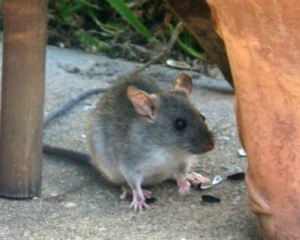
Even feeders 5 or 6 feet high can be reached if there are nearby objects rats can use. A fence post, tree branch, or the coop wall itself can serve as a climbing route.
The problem is that chickens need to be able to access the feeder too. If you hang it so high that rats can’t reach it, your chickens probably can’t reach it comfortably either.
Most practical hanging heights for chicken feeders (comfortable for chickens to use) are well within the range rats can reach.
Rats Use the Coop Structure
Your chicken coop itself provides rats with routes to reach hanging feeders.
If the feeder hangs inside the coop, rats can climb the coop walls to reach it. The rough wood or wire mesh that makes up most coops is easy for rats to climb.
Beams, rafters, and roofing structures give rats pathways to travel above the feeder, then drop down onto it from above.
Many chicken coops have roosting bars or perches. Rats will use these just like chickens do, giving them elevated positions to jump from.
Ventilation openings, windows, or gaps in the coop structure let rats enter at different heights, not just from ground level.
If your feeder hangs near a wall, rats will climb the wall and reach out to grab the feeder. They only need to get close enough to touch it.
Nearby Objects and Launching Points
Anything near your hanging feeder becomes a potential launching pad for rats.
Fences close to the feeder give rats high ground to jump from. A rat on top of a 4-foot fence can easily leap to a feeder hanging at 3 feet.

Trees, bushes, or overhanging branches provide paths to the feeder. Rats are natural climbers that spend a lot of time in trees in the wild.
Stacked materials like wood piles, hay bales, or equipment near the coop create stepping stones. Rats will use these to get closer to the feeder before making a final jump.
Even other chicken equipment like nesting boxes, waterers, or storage containers can serve as intermediate platforms.
The more cluttered the area around your chicken coop is, the easier it is for rats to find routes to your hanging feeder.
Feeder Design and Rat Access
The specific design of your hanging feeder affects how vulnerable it is to rats.
Tube feeders with perches are easy targets for rats. The perches designed for chickens work just as well for rats, giving them a stable platform to stand on while eating.
Treadle feeders that open when chickens step on a platform are better. Rats usually aren’t heavy enough to trigger the mechanism, which keeps the food covered.
Hopper-style feeders with wide openings at the bottom let rats access feed easily once they reach the feeder. The food is exposed and easy to grab.
Feeders with lids or covers that close when not in use provide more protection, but rats can still access the feeding ports on the sides.
Gravity feeders that dispense food continuously into a tray make it easy for rats. They don’t have to work to get the food, it’s just sitting there waiting.
Some automatic feeders with timers can limit access to specific times, which helps but doesn’t eliminate rat problems if rats are present during feeding times.
Spilled Feed Attracts Rats First
Often, the hanging feeder itself isn’t the first problem. The feed that chickens spill attracts rats initially.
Chickens are messy eaters that scratch and dig in feeders, flinging food onto the ground. This spilled feed is easy pickings for rats.

Ground-level feed doesn’t require any climbing or jumping. Rats will eat this first before bothering to reach the hanging feeder.
Once rats are coming to your coop regularly for spilled feed, they’ll eventually investigate the feeder itself. At that point, they’ll figure out how to reach it.
The presence of easy food on the ground also means more rats stick around. As the rat population grows, they become bolder and more likely to try accessing the hanging feeder.
Some chicken keepers think hanging feeders solve their rat problem, but they’re really just addressing part of it. If feed is still hitting the ground, you still have a problem.
Time of Day and Rat Activity
When your chickens feed affects how much of a rat problem you’ll have with hanging feeders.
Rats are mostly active at night when chickens are roosting. If your feeder is accessible 24/7, rats have all night to work on getting into it.
Chickens don’t eat at night, so any food available after dark is essentially rat food. The hanging feeder just sits there all night within reach of rats.
During the day, the presence of chickens and human activity deters rats somewhat. Rats are cautious and prefer to feed when things are quiet.
If you could somehow make feed only available during daylight hours when you’re present, you’d have fewer rat problems. But most hanging feeders don’t allow for this.
The longer the feeder is accessible, the more opportunities rats have to figure out how to reach it.
Signs Rats Are Getting Into Your Feeder
Knowing the signs helps you identify whether rats are accessing your hanging feeder.
Feed disappearing faster than your chickens would eat it indicates something else is eating. Calculate roughly how much your chickens should eat daily, and if you’re going through more than that, rats are probably helping themselves.
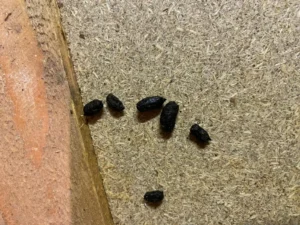
Droppings on or near the feeder are a dead giveaway. Rat droppings are dark, about half an inch long, and shaped like grains of rice. Finding these on the feeder or on the ground below it confirms rats.
Chew marks on the feeder itself show rats have been there. Rats gnaw on things constantly, so they’ll often chew on the feeder even while eating from it.
Greasy rub marks appear where rats repeatedly climb or touch surfaces. Their fur leaves dark, oily smudges on chains, ropes, or the feeder itself.
If you go out at night with a flashlight, you might actually see rats on or near the feeder. This is the most definitive proof.
Chickens acting nervous or reluctant to eat might be reacting to rat scent on the feeder. Chickens can smell predators and pests, and they don’t like using equipment that smells like rats.
Better Alternatives to Prevent Rat Access
If rats are getting into your hanging feeder, there are better solutions than just hanging it higher.
Treadle feeders are the gold standard for rat prevention. These feeders have a spring-loaded platform that chickens stand on to open the lid. Chickens are heavy enough to open it, but rats usually aren’t.
Taking feeders inside at night eliminates the overnight access rats depend on. Bring the feeder into a secure building or your house before dark, then put it back out in the morning.
Feeding only what your chickens will eat in one day reduces waste and removes the overnight food source. Monitor how much they actually eat and adjust portions.
Rodent-proof containers for feed storage matter just as much as the feeder. If rats can get into your stored feed, the hanging feeder becomes irrelevant.
Platform feeders that you can completely remove from the coop give you total control. Put feed out when chickens are eating, then remove it when they’re done.
Some people build custom feeders inside secure wire cages with openings big enough for chicken heads but too small for rats. This works but requires DIY skills.
Preventing Spilled Feed
Since spilled feed attracts rats in the first place, preventing spillage is critical.
Choose feeder designs that minimize waste. Feeders with deep trays or catchers below the feeding ports reduce spillage.
Fill feeders only partway. When feeders are overfilled, chickens scratch more aggressively and fling more feed out.
Use pelleted feed instead of crumbles or mash. Pellets are harder for chickens to fling around and less likely to fall through wire mesh.
Place a large tray or mat under the feeder to catch spilled feed. Check this tray multiple times daily and clean up any spilled feed immediately.
Train chickens not to scratch in the feeder by using anti-scratch grills or covers over the feed ports. These are available commercially or can be made from hardware cloth.
General Rat Prevention Around Chicken Coops
Dealing with rats requires more than just a better feeder. You need a comprehensive approach.
Store all chicken feed in metal containers with tight lids. Plastic bins can be chewed through, and bags are basically open invitations to rats.
Clean up spilled feed daily. Don’t let it accumulate around the coop or in the run. Even small amounts of spilled feed will attract rats.
Remove other food sources like fallen fruit from trees, pet food, or compost piles near the coop. Rats need a reason to be in your yard, and multiple food sources make your property more attractive.
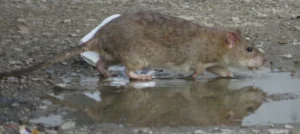
Eliminate water sources if possible. Rats need water daily, and standing water in dishes or puddles will attract them.
Keep the area around the coop clear of debris. Wood piles, junk, overgrown vegetation, and clutter provide hiding places for rats.
Seal the coop itself to prevent rats from nesting inside. Use hardware cloth with 1/4 inch mesh to cover any openings larger than a quarter inch.
Using Rat Control Methods
Sometimes prevention isn’t enough, and you need active rat control methods.
Snap traps are effective and humane when used correctly. Place them along walls and in areas where you’ve seen rat activity.
Live traps let you catch and relocate rats, though this is controversial. Some areas prohibit relocating rats, and relocated rats often die anyway.
Bait stations with rodenticide work but have risks. Poisoned rats can die in inaccessible areas creating smell problems, and chickens or pets could potentially access poison.
Never use poison around chickens unless it’s in a bait station that chickens absolutely cannot access. Chickens eating poisoned rats or finding loose poison can die.
Cats and dogs can help deter rats, but they’re not a complete solution. Some cats are good hunters, many aren’t. Dogs mostly just scare rats away temporarily.
Professional pest control might be necessary for severe infestations. They have tools and expertise that most homeowners don’t have.
Conclusion
Rats can definitely get into hanging chicken feeders. They’re excellent climbers and jumpers that can reach feeders suspended several feet off the ground. Simply hanging a feeder doesn’t solve rat problems around chicken coops.
The best solution is a combination approach: use treadle feeders or bring feeders in at night, clean up spilled feed religiously, store feed in secure containers, and implement general rat control methods around your property. Hanging feeders alone won’t keep determined rats away from chicken feed.
If you’re serious about keeping rats away from your chickens and their feed, you need to think beyond just feeder placement. Address the whole environment and make your coop and yard as unattractive to rats as possible.

Hi, my name is Ezra Mushala, i have been interested animals all my life. I am the main author and editor here at snakeinformer.com.