

When you close your cabinet doors, you probably feel like everything inside is safe and secure. The doors are shut, nothing can get in, and your food and belongings are protected.
But if you’re dealing with rats in your home, you might be worried that even closed cabinets aren’t enough. Can rats get into closed cabinets?
Yes, rats can get into closed cabinets. Even when cabinet doors are shut, rats can squeeze through small gaps around the doors, enter from underneath or behind the cabinet, or push doors open if the latches are weak. Simply closing your cabinet doors isn’t enough to keep determined rats out, especially if there’s food or shelter inside.
A closed cabinet door creates the illusion of security, but from a rat’s perspective, it’s just a minor obstacle.
Rats are surprisingly good at finding ways into spaces that seem completely sealed off. They’re flexible, persistent, and motivated by the smell of food or the promise of a safe nesting spot.
Why Closed Doors Don’t Stop Rats
Most people assume that closing cabinet doors creates a barrier rats can’t pass. Unfortunately, that’s not how rats see the situation.
Cabinet doors rarely close perfectly flush. Even when a door appears closed, there’s usually a small gap between the door and the cabinet frame.
This gap might only be a few millimeters wide, but that’s often enough for a young rat to squeeze through. Adult rats can compress their bodies to fit through openings as small as half an inch, and young rats can get through even smaller spaces.

The problem gets worse with older cabinets. Over time, wood warps, hinges loosen, and doors no longer hang quite right. What started as a tiny gap becomes a larger opening.
Magnetic catches that once held doors firmly closed lose their strength. Latch mechanisms wear out and don’t catch properly anymore. All these age-related issues make closed cabinets less secure against rats.
Rats also don’t need to go through the door to get into a closed cabinet. Most cabinets have other access points that have nothing to do with whether the door is open or closed.
The back of the cabinet might be thin material that rats can chew through, or there might not be a solid back at all. The bottom of the cabinet often has gaps where it meets the floor or wall. Pipes entering the cabinet create openings that are rarely sealed properly.
Even if your cabinet door closes perfectly and you have no gaps around pipes or underneath, rats can still get in if they’re determined enough.
They’ll chew through the door itself if the material is thin enough and if what’s inside is worth the effort. Cabinet doors made of particleboard, thin plywood, or cheap wood are no match for rat teeth.
How Rats Access Cabinets Despite Closed Doors
Rats use several methods to get into cabinets even when the doors are closed.
Squeezing through gaps is the most common method. Rats test gaps by sticking their nose into any opening they find. If their head fits through, the rest of their body can follow.
They have flexible skeletons that let them compress their bodies significantly. A gap that looks too small to you might be perfectly adequate for a rat.
Pushing doors open works surprisingly often. Magnetic catches are common on cabinet doors, but these magnets can weaken over time.
A determined rat can wedge its nose into a small gap and push hard enough to overcome a weak magnetic catch. Once the door pops open even slightly, the rat can squeeze through.
This happens most often at night when rats are active and people aren’t around to hear the noise.

Entering from alternative access points is another strategy. Rats don’t care whether your cabinet doors are open or closed if they can get in from underneath.
They’ll climb up from the floor into the cabinet through gaps at the bottom. Or they’ll come through the wall behind the cabinet if there’s a hole in the wall and no solid cabinet back. The pipes under your sink create ready-made entry holes that rats use constantly.
Chewing through materials is a rat’s ultimate solution. If all else fails and there’s something inside the cabinet that the rat really wants, it’ll just gnaw a hole through the door or side panel.
This takes time and effort, so rats usually try easier options first. But if you’re storing food directly in a cabinet (not in sealed containers), the smell motivates rats to chew their way in.
Climbing skills help rats access cabinets in unexpected ways. Rats are excellent climbers and can scale walls, pipes, and even smooth surfaces if there’s any texture to grip.
They might climb up the wall next to a cabinet and enter through a gap at the top where the cabinet meets the wall. Or they’ll climb up pipes under a sink and pop up inside the cabinet from below.
The False Security of Closed Cabinet Doors
People often rely too heavily on closed doors for protection, and this false sense of security can be dangerous.
Closing cabinet doors is a good habit, but it’s not a complete solution. If you close your cabinets and think the problem is solved, you might not take other necessary steps to keep rats out.
You might continue storing food in cardboard boxes or plastic bags that rats can smell through and easily chew into. You might not bother sealing gaps around pipes because you figure the closed door is handling things.

The result is that rats still get into your cabinets, but now you might not notice as quickly. If you’re not opening cabinets frequently because you assume everything is fine behind closed doors, rat activity can build up significantly before you discover it.
By the time you find droppings or damaged food, rats might have been living in your cabinets for weeks.
This false security is especially problematic with pantry cabinets or food storage areas. You might feel comfortable storing bulk foods, grains, or pet food in closed cabinets without additional protection
. But if rats can smell that food through gaps in the door or through other openings, they’ll find their way to it. The closed door won’t save your food from contamination.
Some people even stop checking for rats once they start keeping cabinet doors closed. They think that since the doors are shut, there’s no point in looking for signs of rats inside. This lets infestations grow unchecked. Regular inspection is important regardless of whether your doors are open or closed.
Which Closed Cabinets Are Most at Risk
Even when all your cabinet doors are closed, some cabinets are more vulnerable than others.
Kitchen sink base cabinets are the highest risk, even when closed. The openings for plumbing under the sink provide easy access that has nothing to do with the door.
Rats can climb up pipes from your crawl space or basement, squeeze through gaps around the pipes where they enter the cabinet, and be inside without ever touching the door
. The presence of water from potential leaks makes these cabinets even more attractive.

Lower cabinets with food storage are next on the list. Pantry base cabinets or lower kitchen cabinets where you store food are prime targets.
Even when closed, rats can smell food inside. They’ll work harder to find ways into these cabinets than into cabinets containing dishes or pots and pans.
Older cabinets are universally more vulnerable when closed. The door gaps are bigger, the hardware is worn, and the materials might have weak spots or damage.
If your cabinets are several decades old, don’t assume that closing the doors provides much protection. The same age that gives them character also makes them easy for rats to access.
Free-standing pantries or storage cabinets face more risk than built-in cabinets. These units sit away from the wall, giving rats access from multiple angles. Even when all the doors are closed, rats can get in from the back or sides more easily. The gap between the unit and the wall creates a perfect travel corridor for rats.
Bathroom vanity cabinets are often overlooked but still at risk. People focus on kitchen cabinets when thinking about rats, but bathroom cabinets under sinks have the same plumbing gaps that kitchen sink cabinets do.
Plus, if you store paper products like toilet paper or tissues inside, rats will target these cabinets for nesting materials even when the doors are closed.
Real Solutions Beyond Just Closing Doors
Keeping rats out of cabinets requires more than closing doors. You need multiple layers of protection.
Seal all gaps and entry points properly. This is the single most important step. Use steel wool to stuff gaps around pipes, then cover it with caulk or expanding foam. Rats can’t chew through steel wool, so this forces them to look elsewhere.
Check the bottom of cabinets where they meet the floor or wall and seal these gaps too. If your cabinet backs are thin or have holes, reinforce them with hardware cloth (metal mesh) or replace them with solid material.

Install better cabinet hardware. If your magnetic catches are weak, replace them with stronger magnets or switch to mechanical latches that actually lock.
For cabinets with valuable contents or food storage, consider childproof locks. These mechanisms make it nearly impossible for rats to push doors open even if they can reach the door.
Store food in sealed containers always. This can’t be emphasized enough. Even inside a closed cabinet, food should be in glass, metal, or thick plastic containers with tight-fitting lids.
This hides food smells that attract rats and provides a physical barrier even if rats do get into the cabinet. Cardboard boxes and thin plastic packaging are not adequate protection.
Maintain proper gaps around doors. Cabinet doors should close flush against the frame without significant gaps. If your doors don’t close properly, adjust the hinges, replace worn hardware, or install weather stripping around door edges. The tighter your doors close, the harder it is for rats to squeeze through.
Address moisture problems immediately. Fix leaking pipes under sinks right away. A drip attracts rats by providing water and creates an environment they find comfortable.
Keeping the area under sinks dry makes cabinets less appealing regardless of whether doors are open or closed.
Keep cabinets clean and organized inside. Even with closed doors, maintaining clean cabinets matters. Wipe up any spills or crumbs. Don’t let clutter accumulate.
An organized cabinet makes it easier to spot signs of rats if they do get in, and a clean cabinet is less attractive to rats in the first place.
Signs Rats Are Getting Into Your Closed Cabinets
Just because your cabinet doors are closed doesn’t mean rats aren’t getting inside. Watch for these signs.
Droppings are the clearest indicator. When you open a cabinet, check along the back edges of shelves and in corners. Rat droppings are dark brown or black, capsule-shaped, and about three-quarters of an inch long.
Fresh droppings are dark and moist, while older ones are dry and gray. Finding droppings inside a cabinet that you keep closed tells you rats have an access point that bypasses the door.
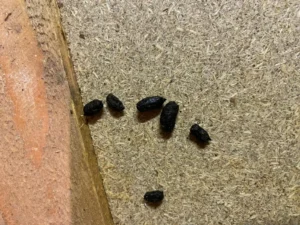
Chewed food packages inside closed cabinets mean rats have definitely been getting in. Look for holes in cardboard boxes, torn corners on plastic bags, and gnawed edges on food containers.
Rats will work through multiple layers of packaging to get to food, so check items even if they look intact from the outside.
Grease marks or smudges around door edges show rats squeezing through gaps. Rats have oily fur that leaves dark streaks on surfaces they repeatedly rub against.
If you see these marks along the inside edge of a closed cabinet door, rats are squeezing through the gap between the door and frame.
Strange smells coming from closed cabinets can indicate rat nests. Rats have a musky odor that becomes noticeable when they’ve been living in an area for a while. If you open a cabinet and notice an unusual smell, especially if it’s accompanied by shredded material, rats might have built a nest inside.
Gnaw marks on the interior of cabinets show rats have been exploring inside. Look for rough, scratched areas on shelves, in corners, or on the back of the cabinet.
Fresh gnaw marks are lighter in color because they expose fresh material underneath.
Sounds from inside closed cabinets are an obvious sign. If you hear scratching, scurrying, or chewing noises coming from a cabinet even when it’s closed, rats are definitely inside.
These sounds are most common at night when rats are most active.
What to Do When Rats Bypass Your Closed Doors
If rats are getting into your cabinets despite closed doors, you need to take comprehensive action.
Empty the affected cabinets completely. Remove everything so you can thoroughly inspect and clean. Check every item for contamination. Throw away any food that rats have touched, even if the damage seems minor. Rats carry diseases that can contaminate food.

Do a detailed inspection to find how rats are getting in. Since the closed door didn’t stop them, they’re using another route. Check around all pipes very carefully, examine the entire back of the cabinet (from inside and behind if possible), look at the bottom where the cabinet meets the floor, and inspect the sides where the cabinet meets the wall. You’re looking for any gap, crack, or hole that could serve as an entry point.
Clean and disinfect everything. Use a bleach solution (one part bleach to ten parts water) or commercial disinfectant. Spray all surfaces and let it sit for five minutes before wiping.
Wear gloves and don’t sweep or vacuum droppings, as this spreads disease particles into the air. Wipe everything with disposable paper towels that you throw away immediately.
Seal all entry points you found. Use steel wool stuffed into gaps, then seal over with caulk or foam. For larger openings, you might need metal mesh or hardware cloth.
Don’t skip this step or rats will just come back through the same holes.
Upgrade your cabinet security. If rats pushed weak magnetic catches open, replace them with stronger hardware. Install additional latches or locks if necessary.
Make sure doors fit properly and close tightly without gaps.
Set traps to eliminate rats currently in your home. Place snap traps along walls near the affected cabinets. Bait them with peanut butter and check them daily. You need to get rid of existing rats while also preventing new ones from entering.
Conclusion
Closed cabinet doors don’t keep rats out. While closing your cabinets is better than leaving them open, it’s not enough protection on its own. Rats can squeeze through small gaps around doors, enter from underneath or behind cabinets, or even chew through door materials if they’re motivated enough.
Real protection comes from sealing all entry points (especially around pipes), storing food in sealed containers, maintaining cabinet hardware so doors close tightly, and keeping your cabinets clean and well-maintained. Regular inspection helps you catch problems early before they become serious infestations.
Don’t rely on closed doors to keep rats out of your cabinets. Take comprehensive steps to make your cabinets truly rat-resistant, and you’ll protect both your food and your peace of mind.

Hi, my name is Ezra Mushala, i have been interested animals all my life. I am the main author and editor here at snakeinformer.com.