
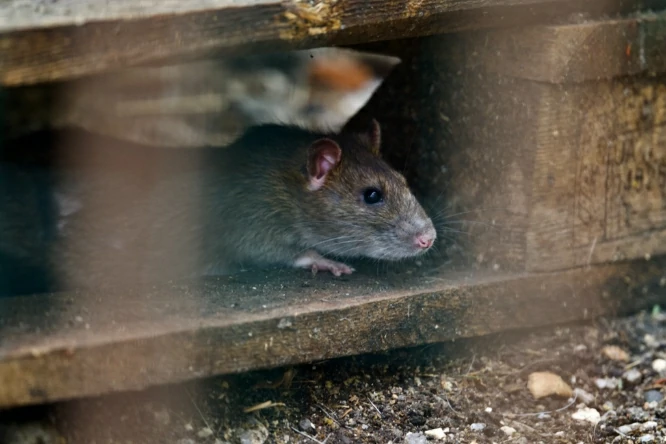
If you’ve got a letter box (or mail slot) on your front door, you might’ve wondered whether rats could use it to get inside your house. It seems like a pretty obvious entry point, especially if you’ve seen rats in your neighborhood.
Letter boxes are designed to let mail through, which means they’re basically a hole in your door that leads straight into your home. So can rats actually squeeze through them and get inside?
Yes, rats can get into a house through a letter box if the opening is big enough. Rats can squeeze through gaps as small as half an inch, and many letter boxes are bigger than that. If your letter box doesn’t have a cover or brush strip on the inside, rats can push through and get into your home.
Letter boxes are one of the easier entry points for rats because they’re right at ground level where rats are active, and they provide a direct path inside. If you’ve got rats in your area, your letter box could be a problem.
Why Letter Boxes Are Easy Entry Points for Rats
Letter boxes are convenient for mail delivery, but they’re also convenient for rats trying to find shelter. Unlike other entry points that might be hidden or hard to reach, letter boxes are right there on your front door.
Most letter boxes are designed to let envelopes and small packages through, which means they’re usually at least a few inches wide and several inches tall. That’s plenty of room for a rat to fit through.
Rats are also really good at squeezing through tight spaces. Their bodies are flexible, and if they can fit their head through an opening, the rest of their body can follow. A grown rat can squeeze through a hole about the size of a quarter (roughly half an inch), so a standard letter box is more than big enough.
Another reason letter boxes are easy targets is because they’re at ground level or close to it. Rats don’t climb up to second-story windows unless they have to. They prefer ground-level entry points where they can get in and out quickly.
How Rats Use Letter Boxes to Get Inside
Rats don’t need an invitation to check out your letter box. If they’re in your neighborhood looking for food and shelter, they’ll investigate any opening they find.
A rat will approach your door, notice the letter box, and push against it to see if it opens. Many letter boxes have flaps that swing inward, which makes it easy for a rat to push through from the outside.
Once the rat realizes the letter box leads into your house, it’ll remember that route. Rats have good memories for paths that lead to food and shelter, so if one rat finds your letter box, it might come back, and other rats might follow the same route.

Some letter boxes have two flaps (one on the outside and one on the inside). This makes it a bit harder for rats to get through, but not impossible. If both flaps can be pushed open, a determined rat can still make it inside.
What Makes a Letter Box More Vulnerable
Not all letter boxes are equally easy for rats to get through. Some factors make your letter box more vulnerable than others.
The size of the opening is the biggest factor. Larger letter boxes designed for packages are easier for rats to fit through than smaller ones meant only for standard mail.
Letter boxes without internal covers or brush strips are also more vulnerable. A brush strip is a piece of stiff bristles installed on the inside of the letter box that blocks the opening when mail isn’t being pushed through. It acts like a barrier that rats can’t easily push past.
If your letter box flap is loose or damaged, that also makes it easier for rats to get in. A tight-fitting flap that closes firmly is harder for rats to push open than one that swings freely or doesn’t close all the way.
Letter boxes that are close to the ground are more at risk. If your letter box is mounted low on your door or on a wall near the ground, rats can reach it easily. Higher-mounted letter boxes are safer because rats have to climb to reach them, which they’ll usually avoid if there are easier options.
Signs That Rats Are Using Your Letter Box
If rats are using your letter box to get inside, there are usually signs you can spot.
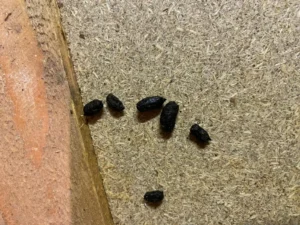
Look for droppings near your front door, both outside and inside. Rat droppings are small, dark, and shaped like grains of rice. Fresh droppings are soft and shiny, while older ones are dry and crumbly.
You might also see smudge marks around your letter box. Rats have oily fur that leaves dark, greasy marks on surfaces they rub against repeatedly. If there are smudge marks on your door or around the edges of your letter box, rats might be using it as an entry point.
Check the flap of your letter box for scratches or gnaw marks. Rats have strong teeth, and if they’re trying to widen the opening or chew through the material, you’ll see signs of damage.
Inside your house, you might notice a draft coming through the letter box, or you might hear scratching or squeaking sounds near your front door at night when rats are most active.
How to Stop Rats From Getting Through Your Letter Box
The good news is that it’s pretty easy to block rats from using your letter box as an entry point. You don’t have to seal it up completely or stop using it for mail.
The simplest solution is to install a brush strip or letter box cover on the inside. A brush strip fits inside the letter box opening and creates a barrier that blocks rats while still allowing mail to be pushed through. The stiff bristles are flexible enough for envelopes to pass but strong enough to stop rats from pushing through.
You can buy brush strips at most hardware stores, and they’re easy to install. Just measure your letter box opening and get a strip that fits. Most brush strips come with adhesive backing or screws for mounting.
Another option is a letter box cage or cover. This is a metal or plastic cage that attaches to the inside of your door and surrounds the letter box opening. Mail can still come through, but rats can’t get past the cage.
If your letter box flap is damaged or doesn’t close properly, replace it. A tight-fitting flap that closes firmly makes it much harder for rats to push their way inside.
You can also reduce the size of your letter box opening if it’s bigger than you need. Some letter boxes are designed for large packages, but if you only receive standard mail, you can install a smaller plate or cover that reduces the opening size while still allowing envelopes through.
Should You Seal Your Letter Box Completely?
If you’re dealing with a serious rat problem and you’re worried about your letter box, you might be tempted to seal it up completely. This will definitely stop rats, but it also means you won’t be able to receive mail through your door.
For most people, sealing the letter box completely isn’t necessary. Installing a brush strip or cage is usually enough to keep rats out while still allowing your mail to be delivered.
If you do decide to seal your letter box, you’ll need to set up an alternative way to receive mail. This could be a mailbox at the curb, a wall-mounted box next to your door, or a P.O. box at your local post office.
Before sealing your letter box, check with your postal service to make sure you’re still meeting delivery requirements. Some postal services require a specific type of mailbox or delivery point.
Other Entry Points to Check Besides Your Letter Box
Even if you’ve secured your letter box, rats can still find other ways into your house. Letter boxes are just one potential entry point.
Check for gaps under doors, especially your front and back doors. If there’s a space of half an inch or more between the bottom of the door and the threshold, rats can squeeze underneath. Install door sweeps to close these gaps.
Look at the areas where pipes and cables enter your house. These are common entry points because there are often gaps around the pipes that rats can use. Seal these gaps with metal mesh or expanding foam.
Inspect your foundation for cracks or holes. Rats can chew through weak spots in concrete or brick to make openings bigger. Fill cracks with concrete or metal patching material.
Check air vents, dryer vents, and exhaust vents. If the covers are damaged or missing, rats can crawl through. Replace damaged vent covers with ones made of metal mesh.
Windows and screens should also be checked. Rats can chew through old or damaged screens, especially if you leave windows open at night.
Why Rats Are Attracted to Your House
Rats aren’t randomly choosing your letter box as an entry point. They’re checking it out because something about your house is attracting them.
Food is the biggest draw. If you’ve got garbage outside, bird feeders, pet food, or compost bins, rats will be in your yard looking for easy meals. Once they’re close to your house, they’ll start investigating possible ways inside.

Water sources also attract rats. Leaky outdoor faucets, birdbaths, or puddles give rats the water they need to survive. They’ll stick around areas where water is available.
Shelter is another factor. Rats need safe places to nest, especially during cold weather. If your house looks warm and protected, they’ll try to find a way inside.
Clutter around your property can also attract rats. Piles of wood, boxes, old furniture, or overgrown vegetation give rats places to hide and nest. The more clutter you have outside, the more likely rats are to hang around and eventually try to get into your house.
What to Do If You Find Rats Inside
If rats have already gotten into your house through your letter box or another entry point, you need to act fast. Rats breed quickly, and a small problem can turn into a major infestation in just a few weeks.
First, secure your letter box with a brush strip or cage so rats can’t keep using it to get inside. Then check for other entry points and seal them up.
Set up traps in areas where you’ve seen rat activity. Snap traps work well and are more effective than glue traps or live traps. Place them along walls and in corners where rats like to travel. Bait them with peanut butter or dried fruit.
If you’ve got a serious infestation, contact a pest control professional. They can find entry points you might’ve missed and set up a treatment plan to get rid of the rats safely.
Keep your house clean and don’t leave food out. Store dry goods in metal or thick plastic containers that rats can’t chew through. Take out garbage regularly and make sure trash cans have tight lids.
Conclusion
Rats can definitely get into your house through a letter box if the opening is big enough and there’s no barrier to stop them. Since most letter boxes are large enough for rats to squeeze through, it’s a real risk if you live in an area with a rat problem.
The best way to protect your letter box is to install a brush strip or cage on the inside. This keeps rats out while still allowing mail delivery. You should also check for other entry points around your house and seal them up.
If you’ve already got rats inside, secure your letter box right away and set up traps or contact pest control. The sooner you deal with the problem, the easier it’ll be to get rid of them.

Hi, my name is Ezra Mushala, i have been interested animals all my life. I am the main author and editor here at snakeinformer.com.