
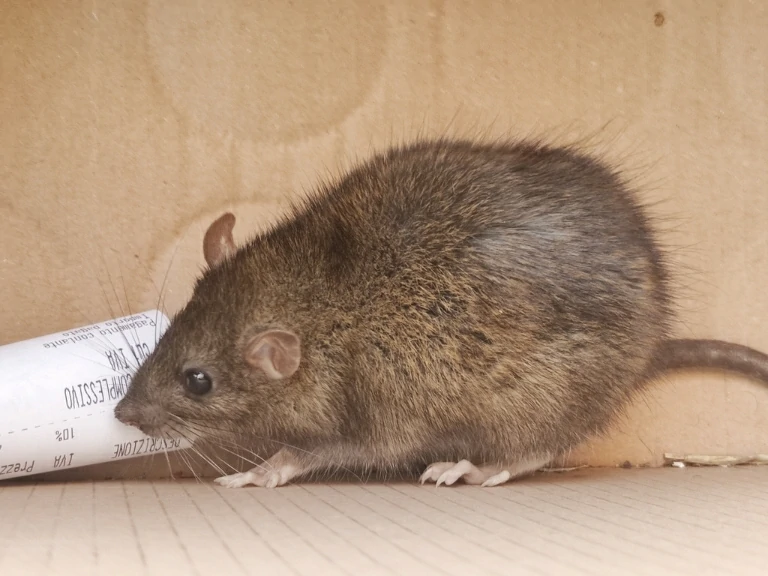
Anyone who’s dealt with rats knows they leave a trail of mess wherever they go. Droppings, urine stains, and that unmistakable musky smell seem to show up everywhere rats travel.
You might notice dark, greasy marks along walls, wet spots on surfaces, or a strong odor in areas where rats are active. This constant peeing raises a question that many people wonder about. Can rats control their bladder?
No, rats can’t fully control their bladder. They urinate frequently and involuntarily as they move around, often releasing small amounts of urine to mark their territory and leave scent trails. This constant urination is both a biological function and a communication method, but it means rats pee almost everywhere they go.
This lack of bladder control is one of the main reasons rats create such unsanitary conditions. They’re not deliberately making a mess, it’s just how their bodies work. Understanding this helps explain why rat infestations are so difficult to clean up and why they pose health risks.
Why Rats Can’t Control Their Bladder
Rats don’t have the same bladder control that humans or many other animals have.
Their urinary system works continuously. Rats produce urine throughout the day and night, and they release it frequently in small amounts rather than holding it until they find a specific spot.

Unlike dogs or cats that can hold their urine for hours and choose when to go, rats have weaker sphincter muscles and less control over when they release. The urine just comes out whenever the bladder has enough in it.
This means rats aren’t deliberately peeing on your stuff. It’s an automatic process that happens as they move around, eat, and go about their lives.
How Often Do Rats Urinate?
Rats pee constantly, and it’s not just when their bladder is full.
A rat can release urine dozens of times throughout the day and night. They don’t need a full bladder to pee, they’ll release small drops frequently as they move around.

This constant urination serves multiple purposes for rats. It’s not just waste elimination, it’s also how they communicate and navigate their environment.
If you’ve got multiple rats, the amount of urine adds up fast. Several rats can leave urine all over your home in just a few days.
Urine Marking: How Rats Use Pee to Communicate
Even though rats can’t fully control their bladder, their urination isn’t completely random either.
Rats use urine marking as a form of communication. They’ll intentionally release urine in certain spots to leave messages for other rats.
Male rats especially do this to mark their territory. By peeing in specific areas, they’re telling other males to stay away and letting females know they’re around.
Female rats also use urine marking, especially when they’re ready to mate. The scent in their urine signals to males that they’re available.
Rats also use urine to create scent trails. They’ll pee along their runways (the paths they use repeatedly) so other rats can follow the same route. It’s like leaving breadcrumbs, except with pee.
Even though this marking behavior exists, rats still can’t hold their urine like a dog or cat can. The marking is more about where they choose to release urine, not about holding it in until they find the right spot.
What Rat Urine Looks Like
Rat urine isn’t always easy to see, but there are signs you can look for.
Fresh urine is clear or slightly yellow, similar to human urine. It’s liquid and might create wet spots on surfaces.
As it dries, rat urine can leave yellowish or brownish stains, especially on porous surfaces like wood or fabric.
One of the most noticeable signs is the smell. Rat urine has a strong, musky, ammonia-like odor that gets worse over time. If you walk into a room and smell something sharp and unpleasant, it might be rat urine.
You’ll also notice dark, greasy marks along walls and runways. These marks are a combination of urine and oils from the rats’ fur. As rats rub against surfaces while peeing, they leave behind these telltale stains.
Under a UV light (blacklight), rat urine glows. This can help you find hidden urine stains that aren’t visible to the naked eye.
Where Rats Leave Urine
Since rats can’t control when they pee, they leave urine everywhere they go.
You’ll find urine along runways, which are the paths rats use repeatedly. These are usually along walls, baseboards, and edges of rooms. Rats stick to these routes and pee as they move.
Urine shows up near food sources. If rats are eating in your pantry or kitchen, they’re peeing there too. This contaminates your food and cooking surfaces.
In attics, basements, and crawl spaces, urine soaks into insulation, wood, and drywall. The smell can become overwhelming in these enclosed spaces.
On furniture and fabrics, urine creates stains and odors that are hard to remove. Rats will climb onto couches, beds, and other furniture and pee on them.
Outside, you’ll find urine near burrows, along fences, and in areas where rats travel frequently.
Basically, if rats have been there, they’ve probably peed there.
Why Rats Pee So Much
Rats urinate frequently for several reasons.
First, it’s a biological necessity. Rats eat and drink constantly, so they produce urine constantly. Their kidneys are always working to filter waste from their blood.
Second, it’s a communication tool. As mentioned earlier, rats use urine to mark territory, attract mates, and create scent trails.
Third, it’s a way to regulate their body temperature. In hot conditions, rats might urinate more to cool down.
Fourth, stress can increase urination. If a rat feels threatened or anxious, it might pee more frequently. This is why handling a wild rat often results in getting peed on.
How Rat Urine Affects Your Home
The constant urination makes rats incredibly messy and damaging pests.
They contaminate food and surfaces. Any surface a rat walks on is likely covered in urine. If they’re in your kitchen, your counters, dishes, and food are all at risk.
They create terrible odors. The ammonia-like smell of rat urine is strong and persistent. It can soak into walls, floors, and furniture, making your home smell bad.
They cause health hazards. Rat urine carries diseases like leptospirosis, which can be transmitted through contact with contaminated surfaces or by breathing in dried urine particles.
They damage property. Urine can stain wood, drywall, fabric, and other materials. It can also corrode certain surfaces over time.
They attract other rats. The scent of urine tells other rats that the area is occupied or that there’s food nearby, which can make your rat problem worse.
Diseases Spread Through Rat Urine
Rat urine is a serious health hazard because it can carry several dangerous diseases.
Leptospirosis is one of the most common. This bacterial infection is transmitted through contact with rat urine. You can get it by touching contaminated surfaces and then touching your mouth, eyes, or nose, or by getting urine on an open cut.
Symptoms of leptospirosis include fever, headache, muscle aches, vomiting, and diarrhea. In severe cases, it can cause kidney damage, liver failure, or even death.

Hantavirus is another disease linked to rodent urine. While it’s more commonly associated with deer mice, rats can carry it too. You can get hantavirus by breathing in dust that contains dried urine particles.
Rat-bite fever can also be transmitted through urine, though it’s more commonly spread through bites.
Salmonella and other bacteria can be present in rat urine and cause food poisoning if they contaminate your food.
These diseases are why cleaning up rat urine properly is so important.
How to Clean Up Rat Urine Safely
If you’ve got rat urine in your home, you need to clean it carefully to avoid getting sick.
First, ventilate the area. Open windows and doors to let fresh air in before you start cleaning.
Don’t sweep or vacuum areas with rat urine. This can kick up dust and bacteria into the air.
Wear protective gear. Put on gloves, a mask, and protective clothing before you start.
Spray the area with a disinfectant or a bleach solution (1 part bleach to 10 parts water). Let it soak for at least five minutes to kill bacteria.
Wipe down surfaces with paper towels or disposable rags. Throw these away in a sealed plastic bag.
For fabrics and soft materials that can’t be wiped down, you might need to throw them away if they’re heavily contaminated.
Mop hard floors with disinfectant.
Wash your hands thoroughly with soap and water when you’re done, even if you wore gloves.
If the urine has soaked into drywall, insulation, or wood, you might need to replace those materials. Urine can penetrate deep into porous surfaces, and the smell and bacteria can be impossible to fully remove.
Can You Train Rats Not to Pee Everywhere?
If you’ve got pet rats, you might wonder if you can train them to use a litter box like a cat.
Some pet rat owners have had success with litter training, but it’s not perfect. Rats can learn to urinate in a litter box, especially if you place the box where they naturally go most often.
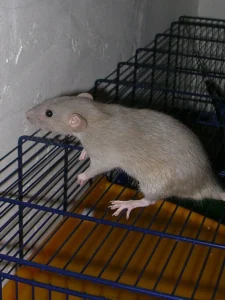
However, even trained rats won’t use the litter box 100% of the time. They’ll still release small amounts of urine as they move around, especially when scent marking.
Training works better for urination than defecation. Rats poop constantly and can’t control it at all, but they can learn to aim for the litter box when they need to pee more substantially.
Wild rats can’t be trained at all. They’re too cautious and skittish to respond to training like pet rats do.
How Rat Urine Helps You Track Them
Even though rat urine is gross and unhealthy, it can actually help you figure out where rats are going.
UV light reveals urine trails. If you shine a blacklight in a dark room, rat urine will glow. You can use this to find runways and high-activity areas.
The smell tells you where rats have been. If you notice a strong musky odor in a specific area, rats are probably active there.
Stains and grease marks show you their paths. Dark marks along walls and baseboards indicate heavy rat traffic.
You can use this information to place traps strategically. Put traps along runways where you see urine stains or smell urine.
If you clean up all the urine and then check back later, you can see if new urine has appeared. If it has, you know rats are still around.
Do Rats Pee More When Stressed?
Yes, stress can increase urination in rats.
If you corner a wild rat or try to catch it, it’ll probably pee on you. This is a stress response. The rat is scared and releases urine involuntarily.

Moving rats or changing their environment can also cause stress urination. This is why new pet rats often pee a lot when you first bring them home.
Even minor stressors like loud noises or unfamiliar scents can trigger more frequent urination.
This stress response is another reason rats pee so much when they’re in your home. They’re in an unfamiliar environment with potential threats (you and your family), so they’re constantly stressed and peeing more than usual.
Rat Urine vs. Mouse Urine
Rat urine and mouse urine are similar, but there are some differences.
Rats produce more urine because they’re bigger. A rat’s urine puddles or stains will be larger than a mouse’s.
The smell is similar, both have that musky, ammonia-like odor, but rat urine tends to be stronger because there’s more of it.
You’ll find both along runways and near nests, but rat runways are usually along walls and in more open areas, while mice tend to hide in tighter spaces.
Both carry diseases, so the health risks are comparable.
If you’re trying to figure out whether you’ve got rats or mice, the size of the urine stains (along with droppings and other signs) can give you a clue.
Why You Can’t Ignore Rat Urine
Some people might think, “It’s just pee, I’ll clean it later.” But rat urine isn’t something you should ignore.
The longer it sits, the worse it gets. The smell becomes stronger and harder to remove. The bacteria multiply and spread.
Dried urine turns into dust that you can breathe in. This is especially dangerous with diseases like hantavirus.
Urine attracts more rats. The scent tells other rats that the area is occupied or that there’s food, which can make your infestation worse.
Urine damages your home. It can stain, corrode, and weaken materials over time.
Most importantly, it’s a health hazard. You and your family are at risk of getting sick the longer you’re exposed to rat urine.
Conclusion
So, can rats control their bladder? No, they can’t fully control it. Rats urinate frequently and involuntarily as they move around, using urine both as a waste elimination method and as a way to communicate through scent marking.
This constant urination is why rats leave urine everywhere they go. It creates stains, odors, and serious health hazards in your home. Rat urine carries diseases like leptospirosis and hantavirus, and it can contaminate food, surfaces, and the air you breathe.
If you’ve got rats, expect to find urine everywhere they travel. The key is to clean it up safely and thoroughly, and to get rid of the rats before the problem gets worse. Ignoring rat urine isn’t an option, it’s a health risk that needs to be dealt with immediately.

Hi, my name is Ezra Mushala, i have been interested animals all my life. I am the main author and editor here at snakeinformer.com.