
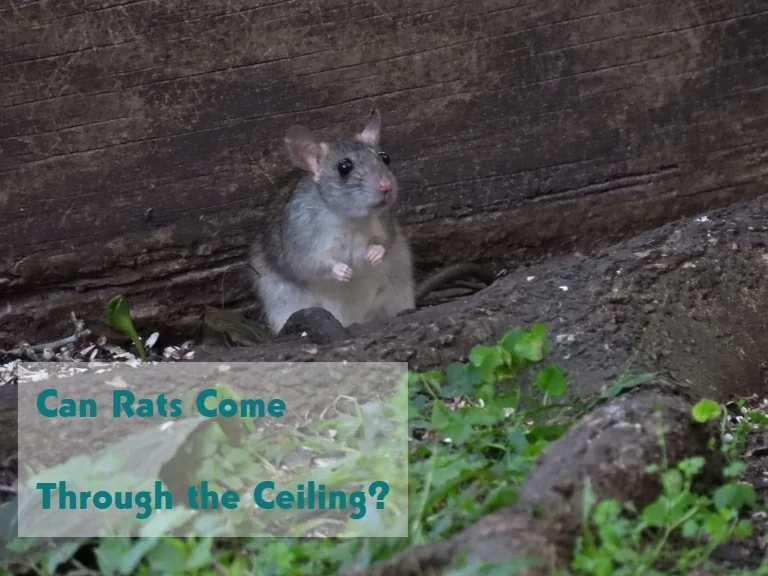
Hearing scratching sounds above your head at night is unsettling, and if you’ve been hearing these noises, you might be worried about what’s up there.
Rats love to nest in attics and roof spaces, but the real question is whether they’ll stay up there or find their way down into your living areas. So can rats come through the ceiling?
Yes, rats can come through the ceiling by chewing holes in the drywall or ceiling tiles, or by squeezing through gaps around light fixtures, ceiling fans, pipes, and vents. If rats are in your attic, there’s a good chance they’ll eventually find or create a way through your ceiling.
Ceilings aren’t as solid as they seem. They have lots of penetrations for wiring, plumbing, and ventilation, and the materials themselves (drywall, ceiling tiles, plaster) can be chewed through by determined rats.
How Rats Get Into Your Attic First
Before rats can come through your ceiling, they need to get into your attic. Common entry points include gaps under roof shingles, holes where roof vents attach, openings around chimneys, and gaps where soffits meet the roof edge.
Rats are excellent climbers and can scale the outside of your house using brick texture, siding, or nearby trees. Once they reach your roof, they search for any opening they can squeeze through.

Even small gaps are enough. Rats can fit through holes as small as a quarter, so any crack or opening in your roof structure is a potential entry point.
Older homes are especially vulnerable because materials have had time to deteriorate. Roofing, flashing, and trim that was installed decades ago might have developed gaps and holes that rats can exploit.
Why Rats Would Come Through Your Ceiling
Rats in your attic have everything they need up there: shelter, insulation for nesting, and safety from predators. But they still need food and water, and that’s usually down in your living spaces.
They can smell food from your kitchen even when they’re up in the attic. This smell motivates them to find ways down into your home where they can access that food.

During very hot or very cold weather, your living spaces are more comfortable than the attic. Rats might chew through your ceiling looking for better temperature conditions.
Sometimes rats chew through ceilings by accident while gnawing on things to keep their teeth worn down. Once they’ve made a hole, they realize it leads to a new area and start using it as an access point.
What Ceiling Materials Rats Can Chew Through
Standard drywall (also called sheetrock) is really easy for rats to chew through. It’s just compressed gypsum powder between two layers of paper. A determined rat can chew a hole through drywall in an hour or two.
Ceiling tiles, especially the acoustic tiles used in drop ceilings, offer almost no resistance to rats. These tiles are made of soft fiber material that rats can chew through or even push aside.

Older plaster ceilings are harder than drywall but still not rat-proof. Rats can chew through plaster, though it takes longer. Plaster ceilings also develop cracks over time that rats can exploit and enlarge.
Wood ceilings can be chewed through too. Rats have powerful teeth that can handle both softwoods and hardwoods, though hardwoods take more time and effort.
The only ceiling materials rats really can’t chew through are metal and concrete. If your ceiling has metal panels or a concrete slab, you’re protected. But most home ceilings are made of materials rats can damage.
Common Weak Points in Ceilings
Light fixtures create holes in your ceiling, and there are often gaps around the edges where the fixture meets the ceiling. Rats can squeeze through these gaps or chew at them to make them bigger.
- Ceiling fans are similar to light fixtures.
The mounting boxes go through your ceiling, and any gaps around them can be entry points for rats.
- Recessed lighting (can lights) are particularly problematic.
These fixtures create large openings in your ceiling, and if they’re not properly sealed from the attic side, rats can get around them easily.

- Plumbing pipes that run through your ceiling often have gaps around them.
These gaps might be hidden by trim or cover plates, but rats can find them from the attic side.
- Heating and cooling vents in your ceiling connect to ductwork in your attic.
If there are any gaps where the duct connects to the ceiling register, rats can squeeze through.
- Ceiling access panels or attic hatches are often not sealed tightly.
Rats can chew at the edges or push their way through gaps around these panels.
Signs Rats Are About to Come Through Your Ceiling
Scratching sounds directly above specific rooms, especially above kitchens or pantries, suggest rats are investigating ways down. The sounds might be concentrated in one area rather than spread throughout the attic.
- You might hear gnawing sounds as rats chew on your ceiling materials.
This sounds different from scratching and is usually more rhythmic and persistent.
- Small bits of debris falling from your ceiling are a warning sign.
If you notice fine powder or small chunks on your furniture or floor, rats might be chewing through your ceiling from above.

- Stains or discoloration on your ceiling can indicate rat urine soaking through.
Where there’s urine, there are probably rats close by or already working on creating an opening.
Bulging or sagging spots in your ceiling might mean rats have damaged the structure or are building nests in the ceiling cavity. This is a sign of advanced rat activity.
What Happens When Rats Break Through
Once a rat chews through your ceiling, you have a direct connection between your living space and your attic. The rat will likely use this hole repeatedly to travel between the two areas.
Other rats will discover and use the hole too. If you have multiple rats in your attic, they’ll all learn about the new opening and start using it as an entry point to your home.

The hole will get bigger over time. Rats will continue to chew at the edges, especially if the opening is too small for them to pass through easily.
You’ll start seeing rats inside your home, usually at night when they feel safer coming down from the attic. They’ll search your kitchen, pantry, and other areas for food.
The contamination from rats will spread from your attic into your living spaces. Rat droppings, urine, and the parasites they carry will all come through the ceiling opening.
Preventing Rats From Chewing Through Your Ceiling
The best prevention is to keep rats out of your attic in the first place. Seal all entry points on your roof and walls that rats could use to get into the attic space.
1. If rats are already in your attic, remove them as quickly as possible.
The longer they’re up there, the more likely they are to find or create ways through your ceiling.
2. Check your ceiling from the attic side and seal any gaps or penetrations.
Use steel wool and expanding foam for small gaps. For larger openings, use hardware cloth or metal flashing.

3. Pay special attention to areas around light fixtures, ceiling fans, and plumbing pipes.
These are the most common places where rats find weaknesses in your ceiling.
4. Install barriers on the attic side of your ceiling around these vulnerable spots.
Metal flashing or hardware cloth attached to the ceiling joists can protect these areas even if rats chew at them.
Removing Rats Already in Your Attic
Set traps in your attic to catch the rats before they come through your ceiling. Snap traps work well and should be placed along walls and in corners where rats travel.
Use peanut butter, dried fruit, or nuts as bait. Rats are attracted to high-protein, high-fat foods. Check traps daily and remove dead rats immediately.

You might need a lot of traps if you have a serious infestation. Don’t just set one or two traps and expect to solve the problem. Set 10 or more traps throughout your attic.
Consider calling a professional pest control company if you’re not comfortable working in your attic or if you have a large rat population. They have experience and better equipment for dealing with attic rats.
Never use poison for rats in your attic. Poisoned rats often die in inaccessible places inside your walls or ceiling cavities, where they create terrible smells that can last for weeks.
Repairing Ceiling Damage From Rats
If rats have already chewed through your ceiling, you need to repair the damage after removing the rats. Start by cleaning the area thoroughly to remove rat droppings and urine.
Wear protective gear when cleaning rat contamination. Use a mask, gloves, and protective clothing. Rat waste can carry diseases that are dangerous if you breathe them in.
Cut out the damaged section of drywall or ceiling material. Make your cut along ceiling joists so you have solid material to attach the patch to.
Before patching the hole, seal the attic side to prevent rats from coming back through. Use steel wool stuffed into any gaps, then cover with hardware cloth or metal flashing. This creates a barrier rats can’t chew through.
Install a new piece of drywall or ceiling material to match your ceiling. Tape and mud the seams, then paint to match the rest of the ceiling.
Special Concerns With Drop Ceilings
Drop ceilings (suspended ceilings with acoustic tiles) are particularly vulnerable to rats. The tiles are soft and easy to push aside, and rats can move around above the drop ceiling easily.
If you have a drop ceiling and rats in your attic, they can access the space above the drop ceiling and then push tiles up from below to get into your rooms.
Consider replacing drop ceiling tiles with something more substantial, or install hardware cloth on top of the drop ceiling grid to prevent rats from pushing through.
You might need to seal the entire drop ceiling area from the attic. This can be tricky because drop ceilings are designed to be accessible, but if rats are a problem, you need to prioritize keeping them out.
The Risk in Different Rooms
Kitchens are at highest risk because that’s where the food is. Rats in your attic will focus their efforts on finding ways into the kitchen where they can smell food.
Bathrooms are also vulnerable because they have plumbing pipes running through the ceiling, and these pipes create gaps that rats can exploit.

Bedrooms might seem safer, but rats will come through bedroom ceilings too, especially if bedrooms are directly under attractive nesting spots in the attic.
Garages with finished ceilings can be entry points. Many people don’t secure garage ceilings as well as house ceilings, making them easier targets for rats.
Health Risks From Ceiling Rats
When rats are in your attic and ceiling spaces, their droppings and urine accumulate. Some of this waste falls or seeps through your ceiling into your living spaces.
Every time rats move around in your attic, they stir up dust and particles from their waste. Some of this contaminated air can find its way into your home through gaps and penetrations in your ceiling.

If rats chew through your ceiling, you have direct exposure to whatever diseases they’re carrying. The hole in your ceiling becomes a contamination point.
Rats also carry parasites that can drop into your home. Fleas, ticks, and mites from rats can fall through ceiling gaps or come through holes rats have made.
Professional Help vs DIY
For minor rat problems where you’ve heard a couple of rats and caught them quickly, DIY methods can work. Set your own traps and seal obvious entry points yourself.
But if you have a large infestation or rats have already chewed through your ceiling in multiple places, professional help is worth the cost. Pest control companies have experience with attic rats and know where to look for entry points.

Wildlife removal specialists can also help identify and seal all the places where rats are getting into your attic. This is important because if you don’t seal every entry point, new rats will just move in after you remove the current ones.
If rats have caused significant damage to your ceiling or attic insulation, you might need contractors to repair the damage properly. Don’t skip these repairs because damaged areas remain vulnerable to future rat problems.
Conclusion
Rats can definitely come through your ceiling by chewing holes in drywall or ceiling tiles, or by squeezing through gaps around fixtures and penetrations. If you have rats in your attic, it’s only a matter of time before they find or create a way down into your living spaces.
The best approach is to remove rats from your attic as soon as you know they’re there, seal all entry points to keep new rats out, and protect vulnerable areas of your ceiling from the attic side.
Don’t ignore scratching sounds in your attic or small signs of rat activity. The problem will only get worse, and rats will eventually find their way through your ceiling if given enough time. Act quickly to protect your home and your family’s health.

Hi, my name is Ezra Mushala, i have been interested animals all my life. I am the main author and editor here at snakeinformer.com.