
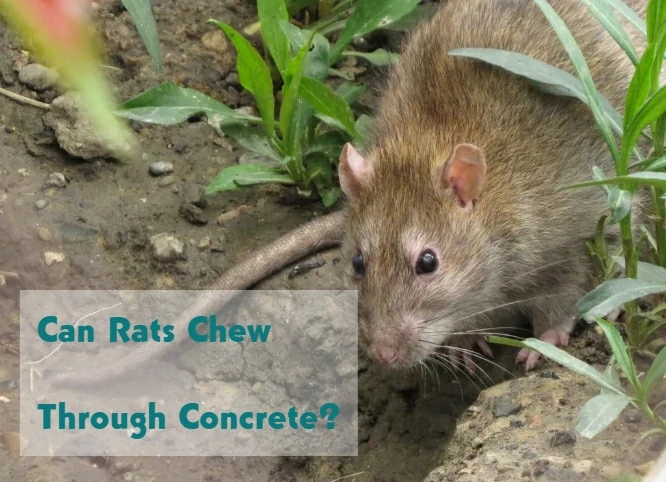
When you’re trying to rat-proof your home, you might be wondering which materials actually stop them. Rats can chew through a surprising variety of materials, from wood to plastic to soft metals. But what about concrete, one of the hardest building materials we use? Can rats chew through concrete?
No, rats cannot chew through solid, properly cured concrete. Concrete is too hard for rat teeth, and even their powerful jaws can’t make progress against intact concrete. However, rats can exploit cracks, holes, and weak spots in old or damaged concrete.
While solid concrete is rat-proof, few concrete surfaces stay perfect forever. Over time, concrete develops cracks and imperfections that rats can work at and make bigger.
Why Concrete Is Too Hard for Rat Teeth
Rat teeth are incredibly strong. They’re made of enamel on the front and softer dentine behind, which creates a self-sharpening edge as the softer material wears away faster. But even these powerful teeth have limits.
Concrete is simply harder than the material rat teeth are made from. When a rat tries to chew concrete, its teeth can’t make a dent in the material. It’s like trying to scratch steel with aluminum.
The pressure rats can generate with their bite is impressive, around 7,000 pounds per square inch. But this force doesn’t help against concrete because the material doesn’t compress or give way under that pressure.
Rats also need to chew things that their teeth can actually grip. Smooth, solid concrete doesn’t provide the texture or grip points that rats need to apply their chewing action effectively.
What Concrete Structures Rats Can Damage
While rats can’t chew through solid concrete, they can exploit existing problems. Old concrete foundations often develop cracks from settling, temperature changes, and water damage. Rats can chew at the edges of these cracks to make them bigger.
Concrete blocks (cinder blocks) are more vulnerable than poured concrete. The blocks themselves are usually too hard to chew, but the mortar between blocks is softer. Old, crumbling mortar can be chewed away by determined rats.
Thin concrete layers, like the skim coat on some types of stucco or concrete panels, might be thin enough that rats can break through by repeatedly gnawing and applying pressure.
Concrete that wasn’t mixed properly or didn’t cure correctly is weaker than it should be. This poor-quality concrete might be soft enough in spots for rats to damage.
Concrete that has been weakened by freeze-thaw cycles, salt damage, or chemical exposure loses its strength over time. These weakened areas can be vulnerable to rat damage.
How Rats Work Around Concrete Barriers
Even though rats can’t chew through concrete, they’re smart enough to find ways around it. They look for any gaps, cracks, or holes in the concrete and squeeze through these openings.
A rat can fit through a hole as small as a quarter. So even tiny cracks in your concrete foundation can be entry points if they’re wide enough.
Rats will test concrete barriers by probing with their nose and whiskers. When they find a weak spot, crack, or hole, they focus their efforts there.
They’re persistent and patient. A rat might work at a small crack for hours or even days, gradually enlarging it until they can squeeze through.
Rats also find the transitions between concrete and other materials. Where your concrete foundation meets wood framing, or where pipes pass through concrete, there are often gaps that rats can exploit.
Weak Points in Concrete Foundations
The joint where your concrete foundation meets your home’s wooden sill plate (the board that sits on top of the foundation) is a common weak spot. This area often has small gaps that rats can squeeze through or enlarge.
Areas where pipes, wires, and utilities pass through your foundation usually have holes drilled in the concrete. These holes are often bigger than they need to be, leaving gaps around the utilities that rats can access.

Foundation vents in crawl spaces create openings in your concrete foundation. If the vent screens are damaged or missing, rats have easy access through these openings.
Cracks in basement walls or foundation walls provide starting points for rats. Even hairline cracks can be widened over time by rats chewing at the edges.
The corners where foundation walls meet are stress points where cracks often develop. Check these corners carefully for any separations or gaps.
The Difference Between Old and New Concrete
Newer concrete is generally stronger and more resistant to everything, including rats. Modern concrete mixes and proper curing techniques create very hard, durable surfaces.
Older concrete, especially concrete more than 50 years old, has had decades to develop problems. Cracks form from settling, moisture damage creates weaknesses, and the surface may have eroded in places.
The quality of old concrete varies a lot depending on when and how it was poured. Some old concrete is still extremely hard and sound, while other old concrete has become crumbly and weak.
Concrete from before modern building codes might not be as thick or well-reinforced as newer concrete. Thinner concrete is more likely to crack and develop problems that rats can exploit.
Materials Rats Can Chew vs. Concrete
To understand why concrete stops rats, it helps to know what they can chew through. Rats can easily chew through wood, both soft and hard varieties. They can handle plastic, rubber, vinyl, and most synthetic materials.
Rats can chew through drywall, plaster, and brick mortar. They can even chew through soft metals like aluminum and lead (though it takes significant effort).

But when it comes to materials rats can’t chew through, the list is short: solid steel, thick iron, glass, and properly cured concrete. That’s basically it.
This makes concrete one of your best defenses against rats, as long as it’s in good condition and doesn’t have any cracks or holes.
Sealing Concrete Cracks to Prevent Rat Entry
If you find cracks in your concrete foundation, seal them as soon as possible. Small hairline cracks can be filled with concrete crack filler or hydraulic cement.
For larger cracks (wider than 1/4 inch), clean out any loose material first. Then stuff steel wool into the crack before filling with hydraulic cement or concrete repair compound.
The steel wool is important because rats can’t chew through it. Even if they try to dig out the cement over time, they’ll hit the steel wool and give up.
Make sure the repair material fully fills the crack and is smoothed flush with the surrounding concrete. Any gaps or depressions can give rats a starting point to work at.
For really large cracks or structural damage, you might need a professional concrete contractor. Major foundation repairs are beyond DIY capabilities and need proper expertise.
Protecting Utility Penetrations in Concrete
Anywhere pipes, wires, or other utilities pass through your concrete foundation, seal the gaps around them. These gaps are some of the most common rat entry points.
Use a combination of steel wool and expanding foam for gaps around pipes. Stuff the steel wool tightly around the pipe, then fill the remaining space with expanding foam.
For larger openings, you might need to use hydraulic cement or concrete repair mix. Pack it tightly around the utility and make sure there are no air pockets or gaps.
Some utilities are in sleeves or conduits that are bigger than the actual pipe or wire. These oversized holes need special attention because there can be a lot of space around the actual utility.
Check these penetrations regularly. Settlement and temperature changes can cause gaps to open up over time, even if they were properly sealed initially.
Concrete Block Walls vs. Poured Concrete
Poured concrete walls are generally more rat-resistant than concrete block walls. Poured concrete creates a solid, continuous surface with no joints or seams.
Concrete block walls have mortar joints between every block. Over time, this mortar can crack, crumble, or wash away, creating gaps that rats can exploit.

If you have a concrete block foundation, pay special attention to the mortar joints. Look for any areas where the mortar is missing, crumbling, or cracked.
Repoint damaged mortar joints by cleaning out the old, damaged mortar and replacing it with fresh mortar mix. This is tedious work but important for keeping rats out.
Some concrete blocks are hollow, and rats can sometimes get into these hollow spaces if there are openings. Make sure all block openings are properly sealed or filled.
How to Inspect Concrete for Rat Vulnerabilities
Start your inspection from the outside, walking around your entire foundation. Look at the concrete surface carefully, checking for any cracks, holes, or damaged areas.
Pay special attention to ground level and just below. This is where rats are most likely to find and exploit weaknesses. Use a flashlight to look closely at the concrete surface.

Check where the foundation meets the ground. Sometimes soil erosion exposes gaps or cracks that were previously hidden. Clear away any vegetation or debris so you can see the concrete clearly.
Inside your basement or crawl space, inspect the concrete from the other side. Sometimes damage is more obvious from inside, and you might spot problems you couldn’t see from outside.
Run your hands along the concrete surface (carefully, watching for sharp edges). You can often feel small cracks or rough spots that your eyes might miss.
When Concrete Isn’t Enough Protection
Even if your concrete foundation is perfect, rats can still get into your home through other entry points. They might come in through gaps in your siding, holes in your roof, or openings around doors and windows.
Don’t rely only on your concrete foundation to keep rats out. You need a comprehensive approach that addresses all potential entry points around your entire home.
Remember that rats are excellent climbers. They can scale walls to reach upper floors, so having a solid concrete foundation doesn’t protect your entire house.
Also consider that rats might tunnel under your foundation if it’s not deep enough. Most foundations are deep enough to prevent this, but shallow foundations or areas where the foundation doesn’t extend below the frost line might be vulnerable.
Repairing Damaged Concrete Properly
If your concrete has significant damage, proper repair is critical for keeping rats out. Don’t use quick fixes that won’t last.
For deep cracks or large holes, clean out all loose material and debris first. The repair material needs to bond to sound concrete, not to crumbled bits and dirt.
Use proper concrete repair products, not just regular concrete mix. Repair products are formulated to bond better and cure properly in patches.

Follow the product instructions carefully, especially regarding curing time and moisture. Concrete that doesn’t cure properly won’t be as strong as it should be.
For structural repairs or major foundation damage, hire a professional. These repairs need to be done right because they affect your home’s structural integrity, not just pest control.
Prevention vs. Repair
Preventing concrete damage is much easier than repairing it. Keep water away from your foundation by making sure gutters and downspouts direct water well away from your house.
Grade the soil around your foundation so it slopes away from the house. This prevents water from pooling against your foundation and causing damage.

Seal your concrete every few years with a concrete sealer. This helps prevent water penetration and freeze-thaw damage that can create cracks.
Address any foundation drainage issues. If water is constantly against your foundation, it will eventually cause problems that create rat entry points.
Fix small cracks as soon as you notice them. A small crack is easy and cheap to fix. A large crack that’s been growing for years is expensive to repair.
Signs Rats Are Testing Your Concrete
If rats are trying to find weak spots in your concrete, you might notice some signs. Fresh scratch marks on the concrete surface show where rats have been testing the material.
Small piles of concrete dust or debris near the foundation might mean rats are chewing at weak spots or mortar joints.
Rat droppings near your foundation, especially concentrated in specific spots, suggest rats are spending time there trying to find entry points.
Greasy smudge marks on the concrete show rat travel routes. If you see these marks in one area, rats are repeatedly visiting that spot, possibly because they’ve found a weakness.
The Role of Steel Wool in Concrete Repairs
Steel wool is one of your best tools for rat-proofing concrete repairs. When you’re sealing cracks or gaps in concrete, always include steel wool as part of your repair.
Rats can’t chew through steel wool. It hurts their mouths and doesn’t provide the solid grip they need to apply their chewing force effectively.
Use coarse steel wool, not the fine stuff you use for cleaning. The coarse material is tougher and rats are less likely to be able to pull it apart.
Pack the steel wool tightly into the opening. It should completely fill narrow sections of the crack or gap, creating a barrier that rats can’t get past.
After placing the steel wool, seal over it with concrete repair material or hydraulic cement. This holds the steel wool in place and creates a complete seal.
Long-Term Concrete Maintenance for Rat Prevention
Make concrete inspection part of your regular home maintenance routine. Check your foundation at least twice a year, preferably in spring and fall.
Keep detailed records of any repairs you make. Note where cracks were, what you used to fix them, and when you did the work. This helps you monitor whether problems are recurring.
Take photos of your foundation periodically. This creates a record you can compare over time to see if new cracks are developing or existing ones are getting worse.
Consider having a professional foundation inspection every 5-10 years, especially if you live in an older home. Professional inspectors can spot problems you might miss.
Budget for concrete maintenance and repairs. Setting aside money for these repairs means you can address problems promptly instead of letting them get worse because you can’t afford to fix them.
Conclusion
Rats cannot chew through solid, properly cured concrete. The material is simply too hard for their teeth to damage. This makes concrete one of the best materials for rat-proofing your home’s foundation.
However, rats can exploit cracks, holes, and weak spots in concrete. Old concrete, damaged mortar joints, and gaps around utility penetrations are all vulnerable to rat entry.
The key is to maintain your concrete in good condition, repair any damage promptly, and seal all gaps and cracks properly using materials like steel wool and hydraulic cement. While concrete itself stops rats, damaged or poorly maintained concrete won’t protect your home.

Hi, my name is Ezra Mushala, i have been interested animals all my life. I am the main author and editor here at snakeinformer.com.