
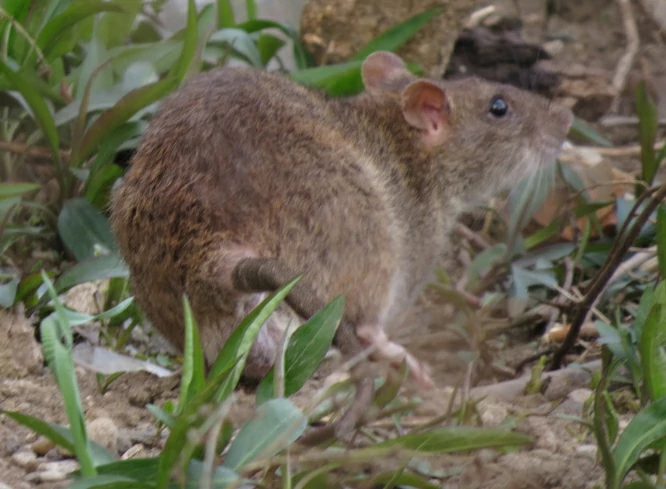
Rats and squirrels are both common rodents that people encounter regularly. They share some physical similarities and both belong to the same large group of mammals.
If you’ve seen both rats and squirrels in your area, you might wonder if these two animals can interbreed. So, can rats breed with squirrels?
No, rats cannot breed with squirrels. They’re too genetically different to produce offspring together. Rats and squirrels belong to different families within the rodent order, which makes interbreeding biologically impossible. Their different chromosome numbers and evolutionary distance prevent any successful mating.
This genetic incompatibility means you don’t have to worry about hybrid rat-squirrel creatures running around.
Each species stays separate, which is actually helpful when it comes to identifying and controlling pest problems.
Why Rats and Squirrels Can’t Breed
The fundamental reason rats and squirrels can’t interbreed is genetics. For two animals to produce offspring together, they need compatible genetic material.
Specifically, they need similar chromosome numbers and structures. Chromosomes are packages of DNA that carry genetic information.

Rats have 42 chromosomes (21 pairs). Squirrels have different numbers depending on the species, but they’re not compatible with rats.
For example, gray squirrels have 40 chromosomes, while fox squirrels have 40 chromosomes, and red squirrels have 40 chromosomes.
Even though some squirrel species happen to have 40 chromosomes (close to the rat’s 42), the structure and organization of those chromosomes are completely different.
It’s not just about the number. The genes themselves are arranged differently, and the chromosomes won’t pair up correctly during reproduction.
Think of it like trying to merge two completely different computer operating systems. Even if they have similar amounts of code, they’re fundamentally incompatible.
Different Families, Different Biology
Rats and squirrels aren’t just different species. They belong to entirely different families within the rodent order.
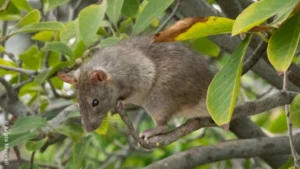
Rats belong to the family Muridae. This family includes rats, mice, gerbils, and other similar rodents.
The most common rat species are the Norway rat (Rattus norvegicus) and the roof rat (Rattus rattus).
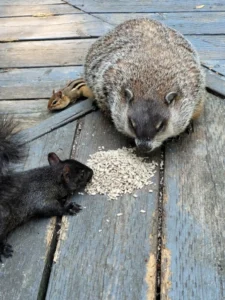
Squirrels belong to the family Sciuridae. This family includes tree squirrels, ground squirrels, chipmunks, marmots, and prairie dogs.
Common squirrel species include the eastern gray squirrel (Sciurus carolinensis), fox squirrel (Sciurus niger), and red squirrel (Tamiasciurus hudsonicus).
The evolutionary split between these two families happened millions of years ago. They’ve been on separate evolutionary paths for so long that they’re about as different as dogs are from bears (both carnivores, but very different families).
This level of genetic distance makes interbreeding impossible.
Physical Differences Between Rats and Squirrels
Even if genetics allowed it, the physical differences between rats and squirrels would make mating extremely unlikely.
Size varies significantly. Norway rats typically weigh 7 to 18 ounces and are 13 to 18 inches long (including the tail).
Gray squirrels weigh about 14 to 21 ounces and are 15 to 20 inches long (including tail).
While they’re somewhat similar in size, their body proportions are very different.
Squirrels have bushy, fluffy tails that are roughly as long as their bodies. Rat tails are long, thin, scaly, and mostly hairless.
Squirrels have large, prominent eyes adapted for life in trees. Rats have smaller eyes positioned differently on their heads.
Squirrel ears are more prominent and tufted (especially in some species). Rat ears are smaller and always hairless.
The most obvious difference is in their overall build. Squirrels are built for climbing and jumping, with powerful hind legs and sharp claws.
Rats are built for burrowing and ground travel, with more uniform body proportions.
These physical differences reflect their different lifestyles and would make any attempt at mating physically awkward or impossible.
Behavioral Differences That Prevent Breeding
Even if we removed all the genetic and physical barriers, rats and squirrels behave too differently to mate.
Squirrels are diurnal, which means they’re active during the day. They sleep at night.
Rats are nocturnal, meaning they’re active at night and sleep during the day.
This opposite activity pattern means rats and squirrels rarely even encounter each other when both are awake and active.
Mating behaviors are completely different between the two species. Each species has specific courtship rituals, vocalizations, and behaviors.
Squirrels chase each other through trees in elaborate courtship displays. Males compete for females with acrobatic performances.
Rats have much simpler courtship behaviors that happen on the ground or in burrows.
Pheromones (chemical signals) are also species-specific. Squirrels produce certain pheromones that attract other squirrels.
Rats produce different pheromones. Neither species would recognize the other as a potential mate based on scent.
Vocalizations differ too. Squirrels make chattering, barking sounds. Rats make high-pitched squeaks (often ultrasonic that humans can’t hear).
These sounds are part of communication and mating signals. Without the right signals, mating wouldn’t be triggered.
Habitat Differences
Rats and squirrels live in different habitats, which further reduces any chance of interaction.
Tree squirrels (like gray squirrels and fox squirrels) spend most of their time in trees. They build nests called dreys in tree branches.
They travel through trees using branches and only come to the ground to forage for food or bury nuts.
Rats are primarily ground-dwelling animals. Norway rats dig burrows underground or nest in low areas like crawl spaces, basements, or ground-level structures.
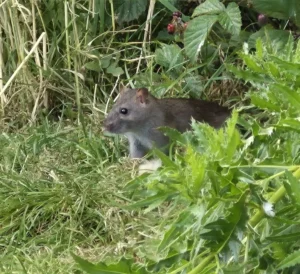
Roof rats can climb and sometimes live in attics or upper areas of buildings, but even they don’t live in trees the way squirrels do.
Ground squirrels are an exception. Species like chipmunks and prairie dogs live in burrows.
But even these squirrels don’t share burrows with rats, and they’re active during different times of day.
The different habitat preferences mean rats and squirrels simply don’t spend time in the same places at the same times.
Do Rats and Squirrels Ever Interact?
In general, rats and squirrels avoid each other.
If they do encounter each other, it’s usually competitive or aggressive, not friendly or potentially romantic.
Both species compete for some of the same food sources (nuts, seeds, grains). If they encounter each other at a food source, they might fight or chase each other away.
Rats are generally more aggressive and might attack squirrels, especially young or injured ones.
Squirrels are more agile and can easily escape into trees where rats can’t follow (except roof rats, which can climb but still aren’t as nimble as squirrels).
In urban and suburban areas where both species live close to humans, they might occasionally cross paths.
For example, both might visit bird feeders or garbage cans. But even in these situations, they tend to take turns rather than interact directly.
There’s no documented evidence of friendly or mating interactions between rats and squirrels in the wild.
Can Any Rodents Interbreed?
Some rodents can interbreed, but only if they’re very closely related.
Within the same genus (a classification category above species), some animals can produce hybrids.
For example, different species of mice within the genus Mus have been crossbred in laboratory settings.
Similarly, some closely related squirrel species within the same genus might occasionally hybridize where their ranges overlap.
But these are cases of species within the same genus. Rats (genus Rattus) and squirrels (various genera in family Sciuridae) are in completely different groups.
To use an analogy: lions and tigers can interbreed to create ligers because both are in the genus Panthera (big cats).
But lions can’t breed with house cats even though both are felines. The genetic distance is too great.
The distance between rats and squirrels is even larger than between lions and house cats.
Why People Might Think They Can Breed
There are a few reasons someone might wonder if rats and squirrels can interbreed.
First, both are rodents. People know that rodents are a group of related animals, and they might assume all rodents are close enough to interbreed.
But “rodent” is a very broad category. It includes everything from tiny mice to giant capybaras, and most of them can’t interbreed.
Second, some squirrel species and rat species are similar in size. If someone sees a ground squirrel and a rat, they might think they look similar enough to breed.
Third, there are rodent species that look intermediate between rats and squirrels. For example, tree rats or bushy-tailed woodrats have somewhat fluffy tails.
People might see these and think they’re rat-squirrel hybrids when they’re actually a separate species.
Other Animals Rats Can’t Breed With
Since we’re on the topic, rats can’t breed with most other common animals people ask about.
Rats can’t breed with mice. Even though both are in the family Muridae, they’re in different genera (Rattus vs. Mus) and have different chromosome numbers.
Rats can’t breed with hamsters, guinea pigs, or gerbils. These are all different families of rodents.
Rats can’t breed with rabbits. Despite what some people think, rabbits aren’t even rodents. They’re lagomorphs, a completely different order of mammals.
Rats can’t breed with shrews or moles. These are insectivores, not rodents at all.
The only animals rats can potentially breed with are other rat species within the genus Rattus, and even then, only closely related species.
What This Means for Pest Control
Understanding that rats and squirrels are separate species with no ability to interbreed helps with pest control.
If you have rats, you have a rat problem that requires rat-specific control methods.
If you have squirrels, you have a squirrel problem that requires different approaches.
You can’t have a hybrid infestation. Each species needs to be addressed separately.
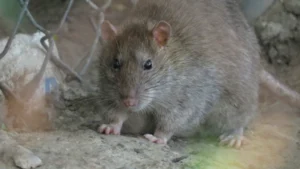
Rats are typically controlled with traps, poison baits, and exclusion methods focused on ground-level entry points and burrows.
Squirrels require different strategies, often involving tree trimming, blocking access to attics, and using traps designed for larger animals.
The signs of infestation are also different. Rat droppings are smooth, dark, and capsule-shaped, about 1/2 to 3/4 inch long.
Squirrel droppings are slightly larger, more rounded, and lighter in color.
Rats leave greasy rub marks along walls. Squirrels don’t create these marks.
Squirrels are noisy during the day (scurrying, scratching in attics). Rats are noisy at night.
By correctly identifying which species you’re dealing with, you can use the most effective control methods.
Are There Any Rat-Squirrel Hybrids?
No, there are no rat-squirrel hybrids in existence. None have ever been documented in nature or created in laboratories.
Any claims of rat-squirrel hybrids are either misidentifications or hoaxes.
What people might be seeing is probably one of these:
- A young rat that has a slightly fluffier tail than usual
- A squirrel species that has a thinner tail
- A different rodent species entirely, like a woodrat or bushy-tailed woodrat
- An albino or unusual color variant of either species
If you see something that looks like it might be a hybrid, it’s almost certainly just an unusual-looking individual of one species or the other.
The Science of Animal Hybridization
For two species to produce viable offspring, they generally need to be in the same genus and have compatible genetics.
Even then, hybrids are often sterile (unable to reproduce themselves). Think of mules (horse-donkey hybrids) or ligers (lion-tiger hybrids).
These hybrids exist because the parent species are closely related, but the hybrids usually can’t have babies of their own.
The biological barriers preventing hybridization include:
- Different chromosome numbers or structures
- Incompatible reproductive organs
- Different mating behaviors and seasons
- Biochemical incompatibilities between sperm and egg
- Embryonic development failures
Between rats and squirrels, all these barriers exist. There’s simply no biological pathway for successful hybridization.
Frequently Asked Questions
Can rats interbreed with squirrels?
No, rats cannot interbreed with squirrels. They’re completely different species with very different genetics, so breeding between them is impossible.
Can rats crossbreed with squirrels?
No, rats cannot crossbreed with squirrels. Their bodies and reproductive systems aren’t compatible, so a rat-squirrel hybrid can’t exist.
Are there rat-squirrel hybrids?
There are no rat-squirrel hybrids. Despite myths or rumors, these animals are too different to produce offspring together.
Conclusion
Rats and squirrels cannot breed with each other. They belong to different families of rodents and are too genetically distant to produce offspring.
Rats have 42 chromosomes while squirrels have 40, and even these similar numbers don’t matter because the chromosomes themselves are structured completely differently.
Physical differences, behavioral differences, opposite activity patterns (nocturnal vs. diurnal), and different habitats all further prevent any possibility of mating.
There are no rat-squirrel hybrids in existence, and none will ever naturally occur.
If you’re dealing with pest problems, you can be confident that you’re dealing with either rats or squirrels, not both breeding together.
This makes identification and control much more straightforward, as each species requires specific methods for effective management.

Hi, my name is Ezra Mushala, i have been interested animals all my life. I am the main author and editor here at snakeinformer.com.