

If you keep multiple types of rodents as pets, or if you’re just curious about animal biology, you might wonder whether rats can breed with other rodents like mice, hamsters, or gerbils. Can rats breed with other rodents?
No, rats can’t breed with other rodents like mice, hamsters, gerbils, or guinea pigs. While these animals are all rodents, they’re different species with different numbers of chromosomes, which makes breeding between them biologically impossible. Rats can only breed with other rats.
This might seem surprising since many rodents look similar and even live in similar habitats, but the genetic differences between them are actually huge when it comes to reproduction.
Why Rats Can’t Breed With Other Rodents
The inability of rats to breed with other rodents comes down to some basic biology.
Different species have different numbers of chromosomes. Rats have 42 chromosomes, while mice have 40, hamsters have 44, and gerbils have 44. For successful reproduction, the chromosomes need to pair up correctly, which can’t happen when the numbers don’t match.

Even if the chromosome numbers were the same, the genetic makeup would still be too different. Rats and mice, for example, split from a common ancestor millions of years ago. Their DNA has changed so much since then that their reproductive systems aren’t compatible anymore.
The reproductive organs of different rodent species also work differently. The timing of ovulation, the structure of reproductive organs, and the chemical signals involved in mating are all species-specific.
Behavioral barriers exist too. Different rodent species have different mating rituals, scents, and sounds. A rat wouldn’t recognize a mouse as a potential mate, and vice versa.
What Defines a Species?
Understanding what makes rats unable to breed with other rodents requires knowing what a species actually is.
A species is generally defined as a group of animals that can breed together and produce fertile offspring. This is called the biological species concept.
The key word here is “fertile.” Sometimes closely related species can produce offspring (like horses and donkeys producing mules), but those offspring are usually sterile and can’t have babies of their own.
Rats are the species Rattus norvegicus (Norway rats) or Rattus rattus (black rats). Mice are Mus musculus. These are completely separate species, not just different varieties of the same animal.
Within a species, you can have different breeds or varieties that look really different but can still breed. Fancy rats can breed with wild rats, for example, because they’re the same species. But rats can’t breed with any other rodent species.
Rats and Mice: The Closest Relatives
If rats were going to breed with any other rodent, it would probably be mice since they’re the most closely related.
Both rats and mice belong to the family Muridae (the “Old World rats and mice”). They’re cousins in the evolutionary tree.
Despite this relationship, rats and mice can’t interbreed. The genetic differences are still too great, even though they look similar and have similar lifestyles.

Rats are much bigger than mice. An adult rat weighs 200 to 500 grams, while an adult mouse weighs just 20 to 40 grams. This size difference alone would make mating physically difficult.
Their gestation periods are different too. Rats are pregnant for about 21 to 23 days, while mice are pregnant for 19 to 21 days. These differences reflect deeper biological incompatibilities.
Behaviorally, rats and mice actually tend to be hostile toward each other. In the wild, rats will sometimes kill and eat mice. This makes breeding between them even more unlikely.
Rats and Hamsters: Completely Different Families
Hamsters and rats might both be popular pets, but they’re actually quite distantly related.
Hamsters belong to the family Cricetidae, while rats belong to Muridae. These families split apart evolutionarily millions of years ago.
Hamsters have 44 chromosomes, compared to rats’ 42. This mismatch makes interbreeding impossible.

Their reproductive biology is really different. Hamsters have a much shorter gestation period (15 to 18 days) and different hormonal cycles than rats.
Hamsters are also solitary animals by nature, while rats are highly social. A hamster and a rat kept together would likely fight rather than mate.
The geographic origins are different too. Most pet hamsters come from Syrian hamsters, which evolved in the Middle East. Rats evolved in Asia. They never would have encountered each other in nature.
Rats and Gerbils: Another Impossible Match
Gerbils are another common pet rodent, but like hamsters, they can’t breed with rats.
Gerbils belong to the subfamily Gerbillinae within the Muridae family. While this makes them slightly more closely related to rats than hamsters are, they’re still far too different to interbreed.

Gerbils have 44 chromosomes (rats have 42), which creates an immediate barrier to reproduction.
Their reproductive systems work differently. Gerbils have a much longer gestation period (24 to 26 days) compared to rats (21 to 23 days).
Behaviorally, gerbils and rats are really different. Gerbils are desert animals that adapted to dry environments, while rats are more adaptable to various climates but often prefer areas with more moisture.
Gerbils also have very different social structures. They form monogamous pairs, while rats have more complex social hierarchies.
Rats and Guinea Pigs: Not Even Close
Guinea pigs might live in similar cages and eat similar food to rats, but they’re one of the most distantly related rodents when it comes to rats.
Guinea pigs belong to the family Caviidae, which is in a completely different suborder (Hystricomorpha) than rats (which are in Myomorpha). This is a massive evolutionary distance.
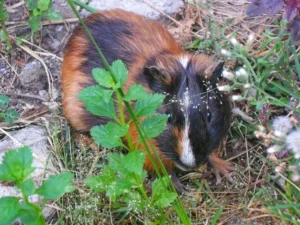
Guinea pigs have 64 chromosomes, way more than rats’ 42. This huge difference makes breeding completely impossible.
Their body size is really different. Guinea pigs are much larger than rats, weighing 700 to 1,200 grams compared to rats’ 200 to 500 grams.
Guinea pigs have a much longer gestation period (59 to 72 days) compared to rats (21 to 23 days). Their babies are also born much more developed.
Even their digestive systems work differently. Guinea pigs can’t produce their own vitamin C and need it in their diet, while rats can make their own vitamin C.
Can Different Rat Species Breed?
While rats can’t breed with other rodents, what about different species of rats?
There are over 60 species in the genus Rattus. The two most common are the Norway rat (Rattus norvegicus) and the black rat (Rattus rattus).
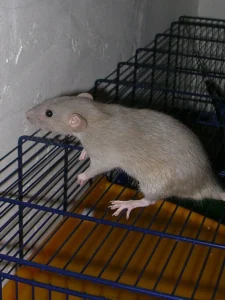
Norway rats and black rats can interbreed in some cases, though it’s rare in the wild because they prefer different habitats. When they do breed, the offspring are usually fertile, which means these two species are very closely related.
Other rat species within the Rattus genus might also be able to interbreed with each other, though this has been studied less.
However, rats can’t breed with wood rats (genus Neotoma), cotton rats (genus Sigmodon), or pack rats (genus Neotoma). Despite having “rat” in their name, these are different genera and can’t interbreed with true rats.
The ability to interbreed only exists within the same genus and even then only between closely related species.
Hybrid Animals: Why They’re Rare
You might have heard of hybrid animals like ligers (lion-tiger hybrids) or mules (horse-donkey hybrids) and wonder why rats can’t create similar hybrids with other rodents.
Hybrids are actually pretty rare in nature and only occur between very closely related species. Lions and tigers, for example, are both in the genus Panthera and only split apart evolutionarily about 2 million years ago.
Most hybrids are sterile, meaning they can’t have offspring of their own. This is because the mixed chromosomes from two different species can’t pair up correctly during reproduction.
Rats and mice are much more distantly related than lions and tigers or horses and donkeys. The evolutionary gap is too large for even sterile hybrids to form.
In laboratory settings, scientists have tried to create rat-mouse hybrids for research purposes, but these attempts have failed. The embryos don’t develop properly because the genetic instructions from the two species conflict with each other.
What Happens If You House Rats With Other Rodents?
Even though rats can’t breed with other rodents, you might wonder what happens if you keep them together.
Housing rats with other rodents is generally a bad idea and can be dangerous. Rats are much larger than mice and will often kill and eat them if kept in the same enclosure.
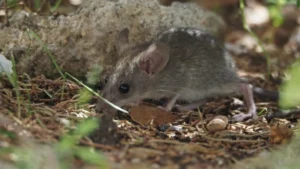
Rats can also be aggressive toward hamsters and gerbils. The size difference puts smaller rodents at serious risk of injury or death.
Even with guinea pigs, which are bigger, housing them with rats isn’t recommended. The stress of living with a predator (which is how guinea pigs would perceive rats) can cause health problems.
Different rodents also have different care needs. Rats need different bedding, food, and environmental conditions than hamsters or gerbils.
There’s also the risk of disease transmission. Different rodent species can carry different bacteria and parasites that might not affect them but could make other species sick.
Genetic Engineering and Rodent Hybrids
In modern science, there’s been some research into creating genetic hybrids between different rodent species, though not for breeding purposes.
Scientists have created cells that contain genetic material from both rats and mice (called “cybrids”), but these are just individual cells in laboratories, not living animals.
Some researchers have transplanted genes from one rodent species into another. For example, mouse genes have been put into rats to study specific traits. But this creates a genetically modified rat, not a rat-mouse hybrid.
Cloning technology has been used to create rats with specific genetic traits, but this still involves only rat DNA, not mixing DNA from different species.
The ethical concerns around creating true interspecies hybrids are significant, and most countries have strict regulations about this type of research.
Even with advanced technology, creating a viable rat-mouse hybrid that could survive and reproduce would be incredibly difficult and probably isn’t possible with current science.
Why This Matters for Pet Owners
Understanding that rats can’t breed with other rodents is important if you keep multiple types of pet rodents.
You don’t need to worry about accidentally creating hybrid babies if you keep rats in the same room as mice, hamsters, or other rodents (though you should still house them separately for safety reasons).

This knowledge also helps you understand that each rodent species needs species-specific care. What works for rats won’t necessarily work for hamsters or gerbils.
If you’re breeding rats intentionally, you know that you need another rat (of the same or very closely related species) to get babies. You can’t use a different rodent species as a substitute.
Understanding species boundaries also helps prevent dangerous situations. Since rats and other rodents can’t breed, there’s no reason to house them together, which eliminates the risk of aggression and injury.
Common Myths About Rodent Breeding
There are some persistent myths about rats and other rodents breeding that need to be cleared up.
Myth: “Rats and mice can breed and produce ‘rime’ or ‘rouse’ hybrids.” This is completely false. These terms don’t refer to real animals; they’re made-up words.
Myth: “If you keep rats and mice together, they’ll eventually adapt and breed.” Evolution doesn’t work that fast. It takes millions of years for species to diverge or converge, not one or two generations.
Myth: “Laboratory rats and mice are so genetically modified that they might be able to breed together.” While lab rodents have been selectively bred for certain traits, they’re still the same species as their wild counterparts and have the same reproductive limitations.
Myth: “Rats can breed with any rodent similar in size.” Size has nothing to do with species compatibility. Genetic makeup is what matters.
These myths probably started because rats, mice, and other rodents look similar to people unfamiliar with them, leading to assumptions about their relatedness.
The Evolutionary Distance Between Rodents
To really understand why rats can’t breed with other rodents, it helps to know how far apart they are evolutionarily.
Rats and mice split from a common ancestor about 12 to 24 million years ago. That’s an incredibly long time for genetic changes to build up.
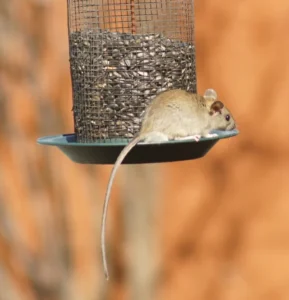
Rats and hamsters are even more distantly related, having split about 30 to 40 million years ago.
Rats and guinea pigs split about 60 to 70 million years ago. To put that in perspective, that’s around the time dinosaurs went extinct.
For comparison, humans and chimpanzees split only about 6 to 7 million years ago, and we obviously can’t breed with chimpanzees.
The genetic differences between rats and other rodents are so large that they affect everything from chromosome number to body structure to behavior to reproduction.
What About Rats and Shrews or Other Small Mammals
Sometimes people confuse rats with other small mammals that aren’t even rodents.
Shrews look similar to mice and rats but are actually insectivores, not rodents. They’re more closely related to moles and hedgehogs than to rats. Obviously, rats and shrews can’t interbreed.
Voles are rodents but belong to a different family (Cricetidae, like hamsters). Rats can’t breed with voles either.
Possums are marsupials, not even placental mammals like rats. Despite some species being called “possums” or “opossums” with rat-like appearances, they’re incredibly distantly related.
The key point is that rats can only breed with other rats (and very closely related rat species). The “rodent” category is huge and includes many different families and species that are too different to interbreed.
Conclusion
Rats can’t breed with other rodents like mice, hamsters, gerbils, guinea pigs, or any other rodent species except other rats.
The genetic differences between rat species and other rodents are too large to allow interbreeding. Different chromosome numbers, incompatible reproductive systems, and millions of years of separate evolution have made cross-species breeding impossible.
Even the closest relatives to rats, like mice, are too genetically different to produce offspring with rats.
If you keep multiple types of pet rodents, you don’t need to worry about accidental hybrid babies, but you should still house different species separately for their safety and wellbeing.
Understanding species boundaries helps us better care for our pets and appreciate the diversity of the rodent family, which includes over 2,000 different species that have adapted to almost every environment on Earth.
The only way rats can reproduce is with other rats of the same or very closely related species, and that’s how it’ll stay unless we develop some pretty extreme genetic engineering technology (which would raise serious ethical questions anyway).

Hi, my name is Ezra Mushala, i have been interested animals all my life. I am the main author and editor here at snakeinformer.com.