
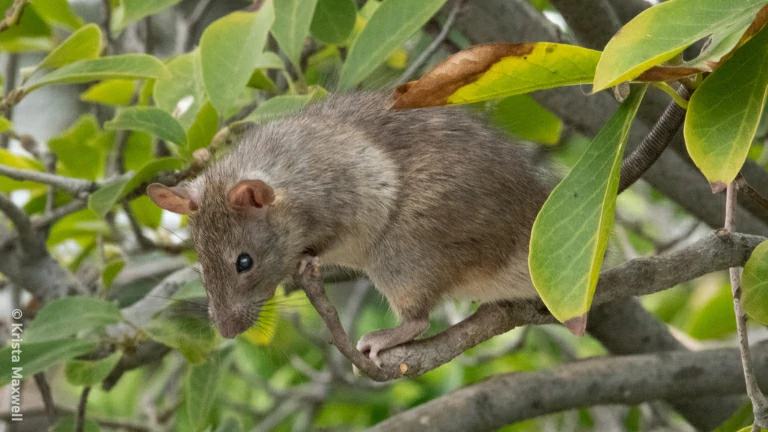
If you keep both rats and guinea pigs as pets, you might wonder whether these two species could breed if they were housed together or came into contact. They’re both rodents and they’re somewhat similar in size, so can rats breed with guinea pigs?
No, rats can’t breed with guinea pigs. These two animals are extremely different species from separate rodent families, with different chromosome numbers (rats have 42, guinea pigs have 64), incompatible reproductive systems, and over 60 million years of separate evolution. They’re too genetically different to produce offspring.
Even though they’re both rodents and might eat similar foods or live in similar cages, rats and guinea pigs are about as distantly related as two rodents can be.
The Massive Evolutionary Gap
Rats and guinea pigs aren’t even close relatives in the rodent family tree.
Rats belong to the suborder Myomorpha, which includes mice, hamsters, and gerbils. Guinea pigs belong to the suborder Hystricomorpha, which includes chinchillas, capybaras, and porcupines.
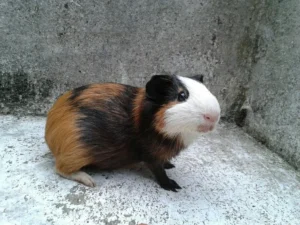
These two suborders split apart about 60 to 70 million years ago. That’s around the time the dinosaurs went extinct. This is an enormous amount of time for genetic differences to build up.
To put this in perspective, humans and lemurs are more closely related to each other than rats and guinea pigs are. And obviously, humans and lemurs can’t breed.
The evolutionary distance means that almost every aspect of their biology has changed differently. Their genes, chromosomes, organs, and reproductive systems all work in different ways.
Chromosome Numbers Don’t Match
One of the biggest barriers to rats and guinea pigs breeding is their chromosome count.
Rats have 42 chromosomes (21 pairs). Guinea pigs have 64 chromosomes (32 pairs). This is a huge difference.
For successful reproduction, chromosomes need to pair up during the creation of sperm and eggs, and then pair up again when the egg is fertilized. When the numbers don’t match, this process can’t happen correctly.
Even if a rat sperm somehow fertilized a guinea pig egg (or vice versa), the embryo wouldn’t develop. The genetic instructions would be all mixed up and contradictory.

The only animals that can sometimes produce hybrid offspring despite chromosome differences are very closely related species (like horses with 64 chromosomes breeding with donkeys that have 62 chromosomes). But even then, the offspring (mules) are usually sterile.
Rats and guinea pigs are so distantly related that even sterile hybrid offspring aren’t possible.
Reproductive Systems Work Completely Differently
Beyond chromosomes, the actual reproductive biology of rats and guinea pigs is totally different.
Guinea pigs have one of the longest gestation periods of any rodent, lasting 59 to 72 days (about 2 to 2.5 months). Rats have a gestation period of just 21 to 23 days (about 3 weeks).
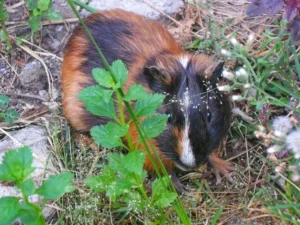
This massive difference reflects completely different developmental processes. Guinea pig babies are born fully furred, with their eyes open, and able to eat solid food within days. Rat babies are born hairless, blind, and completely helpless.
The hormonal cycles that control reproduction are different too. Guinea pigs have an estrous cycle of about 15 to 17 days, while rats have a cycle of just 4 to 5 days.
Even the physical structure of their reproductive organs is different. The shape, size, and internal anatomy don’t match up, which would make mating physically impossible even if the animals tried.
Size Differences Matter
While rats and guinea pigs might seem similar in size compared to, say, a mouse and a cow, the size difference is still significant.
Adult rats typically weigh 200 to 500 grams (0.4 to 1.1 pounds). Large male rats might reach 600 grams.
Adult guinea pigs typically weigh 700 to 1,200 grams (1.5 to 2.6 pounds). They’re roughly twice as heavy as rats and have a much bulkier body shape.
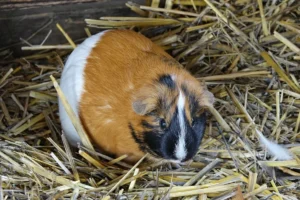
This size difference would make physical mating difficult. The proportions of their bodies don’t match in a way that would allow successful mating, even if they tried.
Beyond just weight, guinea pigs are stockier and have shorter legs relative to their body size. Rats are more elongated and agile.
Behavioral Barriers
Even if all the genetic and physical barriers didn’t exist, rats and guinea pigs wouldn’t recognize each other as potential mates.
Mating behavior in animals involves specific signals. Rats use particular scents (pheromones), sounds (ultrasonic calls that humans can’t hear), and physical behaviors to attract mates.
Guinea pigs use completely different signals. Male guinea pigs do a “rumble strut” where they walk in a swaying motion while making rumbling sounds. They also produce different pheromones than rats.
A rat wouldn’t recognize a guinea pig’s mating signals, and a guinea pig wouldn’t recognize a rat’s signals. They literally speak different languages when it comes to reproduction.
In nature, different species avoid wasting energy on mating attempts that won’t produce offspring. This is why animals have evolved species-specific mating behaviors.
What Happens If You House Them Together?
Even though rats and guinea pigs can’t breed, housing them together is still a bad idea for several reasons.
Rats can be aggressive toward guinea pigs. While rats are smaller, they have sharp teeth and can bite. They might see guinea pigs as threats or competition rather than potential mates.
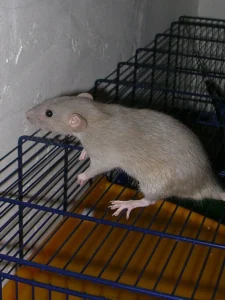
Guinea pigs are prey animals and can be easily stressed. Living with rats (which guinea pigs might perceive as predators) can cause chronic stress that leads to health problems.
They have different dietary needs. While both eat vegetables, guinea pigs need vitamin C in their diet (they can’t make their own), while rats can produce vitamin C internally. They also need different amounts of protein and other nutrients.
Their housing requirements are different too. Rats need vertical space and climbing opportunities, while guinea pigs need more floor space but don’t climb. Guinea pigs need hiding spots to feel secure, while rats are more social and open.
Disease transmission is a concern. Different rodent species can carry different bacteria and parasites that might not bother one species but could make the other sick.
Guinea Pigs Can Only Breed With Other Guinea Pigs
Just like rats can only breed with other rats, guinea pigs can only breed with other guinea pigs.
Within the guinea pig species, there are different breeds like the American, Abyssinian, Peruvian, and Skinny Pig. All of these can breed with each other because they’re the same species (Cavia porcellus).
Guinea pigs can’t even breed with their closest relatives like wild cavies (though domestic guinea pigs are descended from wild cavies and are very closely related).
They definitely can’t breed with chinchillas, capybaras, or other members of the Hystricomorpha suborder, even though these are more closely related to guinea pigs than rats are.
The genetic boundaries between species are strict, and guinea pigs are no exception to this rule.
Why People Might Think They Can Breed
There are a few reasons why someone might mistakenly think rats and guinea pigs could breed.
Both are common pet rodents that are often sold in the same pet stores, sometimes in nearby cages. This proximity might make people think they’re more similar than they are.
They’re somewhat similar in size, unlike the huge size difference between, say, a mouse and a guinea pig. This similarity might make breeding seem more plausible.
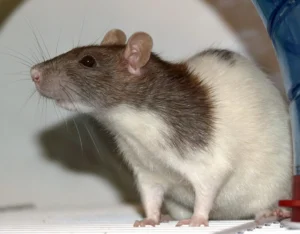
Both are rodents, which is a pretty broad category. People might not realize just how diverse the rodent order is. There are over 2,000 species of rodents, making it the largest order of mammals.
Some people might confuse “rodent” with “species,” not realizing that rats and guinea pigs are as different as cats and dogs (which are both carnivores but can’t interbreed).
Urban legends and internet myths can spread misinformation. Once someone hears that “rats and guinea pigs can breed,” they might repeat it without checking the facts.
No Hybrid Animals Between Rats and Guinea Pigs
Unlike some animal pairs that can produce hybrid offspring (like lions and tigers making ligers), rats and guinea pigs can’t create any type of hybrid.
Hybrids only occur between very closely related species, usually within the same genus. Lions and tigers are both in the genus Panthera. Horses and donkeys are both in the genus Equus.
Rats are in the genus Rattus. Guinea pigs are in the genus Cavia. These genera are in different families entirely (Muridae for rats, Caviidae for guinea pigs).
The genetic distance is so large that even with advanced genetic engineering, creating a rat-guinea pig hybrid would be essentially impossible with current technology.
Even if scientists somehow managed to combine genetic material from both species, the resulting embryo wouldn’t survive. The genes would give conflicting instructions for how to build an organism.
Scientific Studies on Rodent Breeding
Scientists have studied rodent reproduction extensively because rodents are commonly used in research.
Studies have confirmed that breeding is only possible within the same species or between very closely related species (like different rat species in the genus Rattus).

Research has shown that even closely related species often can’t produce viable offspring. When they can, the offspring are usually sterile (like mules from horse-donkey crosses).
There have been attempts to create genetic hybrids in laboratories using cell fusion technology, but these create individual cells with mixed DNA, not living animals.
The scientific consensus is clear: rats and guinea pigs are too different to breed, even in controlled laboratory settings with artificial insemination.
This research also helps us understand the mechanisms that keep species separate and how evolution works to create reproductive barriers.
What About Other Cavy Species?
Guinea pigs belong to the Cavy family, and you might wonder if rats can breed with other cavy species.
Capybaras are the largest rodents in the world and are also cavies. But rats can’t breed with capybaras either, despite both being rodents. The genetic differences are just as large.
Wild cavies (like Cavia aperea, one of the ancestors of domestic guinea pigs) also can’t breed with rats.
Chinchillas are often grouped with cavies in pet stores, but they’re actually in a different family (Chinchillidae) and also can’t breed with rats.
Rock cavies, mountain cavies, and other cavy relatives are all off-limits for rat breeding, just like guinea pigs are.
The Hystricomorpha suborder is completely separate from the Myomorpha suborder (where rats live), making any interbreeding impossible.
The Importance of Species Boundaries
Understanding that rats and guinea pigs can’t breed is part of understanding how species work in biology.
Species boundaries exist to maintain genetic integrity. If animals could breed with any other animal, their unique adaptations and traits would get mixed up and potentially lost.
These boundaries are created by genetic incompatibility (different chromosomes), physical incompatibility (different body structures), and behavioral incompatibility (different mating signals).
Evolution works through these boundaries. Each species evolves to fit its particular environment and lifestyle. Guinea pigs evolved for life in South American grasslands, while rats evolved for life in Asian forests and eventually human settlements.
Breaking down these barriers would require millions of years of evolution or incredibly advanced genetic engineering that we don’t currently have.
Keeping Rats and Guinea Pigs as Pets
If you want to keep both rats and guinea pigs, you absolutely can, but they need to be housed completely separately.
Each species needs species-specific care. Rats need rat food, rat-appropriate cages with climbing space, and rat-specific veterinary care. Guinea pigs need guinea pig food (with added vitamin C), guinea pig cages with lots of floor space, and guinea pig-specific vet care.
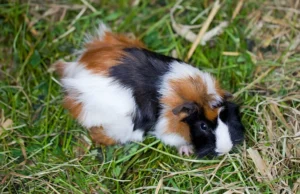
They can live in the same room without problems. Just because they can’t breed doesn’t mean they can’t coexist in your home (in separate enclosures).
Never put them in the same cage, even temporarily. The stress and potential for injury or disease transmission aren’t worth the risk.
Handle them separately and wash your hands between handling sessions. This prevents the spread of any bacteria or parasites from one species to the other.
Each species has different social needs too. Rats are highly social and need at least one rat companion. Guinea pigs also need companions (at least one other guinea pig) but form different social structures than rats.
Common Myths Debunked
Let’s clear up some common myths about rats and guinea pigs breeding.
Myth: “If you keep them together long enough, they’ll adapt and be able to breed.” Evolution doesn’t work that fast. It takes millions of years, not a few generations.
Myth: “I’ve seen hybrid rat-guinea pig babies.” You’ve either seen a large rat, a small guinea pig, or a completely different animal. Hybrid offspring don’t exist.
Myth: “With artificial insemination, rats and guinea pigs could breed.” Even with advanced reproductive technology, the genetic incompatibility is too great. The embryo wouldn’t develop.
Myth: “They’re both rodents, so they must be able to breed.” The rodent order includes over 2,000 species from many different families. Being in the same order doesn’t mean they can interbreed.
These myths probably persist because people don’t realize how diverse and complex the rodent family tree is.
Conclusion
Rats can’t breed with guinea pigs under any circumstances. The genetic, physical, and behavioral differences between these two species are too large to allow reproduction.
With 60 million years of separate evolution, different chromosome numbers (42 vs. 64), completely different reproductive systems, and no recognition of each other as potential mates, breeding is impossible.
This isn’t a matter of them not wanting to breed or needing the right conditions. It’s biologically impossible, like trying to mix oil and water.
If you keep both rats and guinea pigs as pets, you can safely house them in the same room (in separate cages) without worrying about hybrid babies.
Understanding species boundaries helps us appreciate the diversity of life and better care for our pets. Rats and guinea pigs are both wonderful animals in their own right, but they’re fundamentally different species that need different care and can’t produce offspring together.
The only way rats can reproduce is with other rats, and the only way guinea pigs can reproduce is with other guinea pigs. That’s how nature designed them, and that’s how it’ll stay.

Hi, my name is Ezra Mushala, i have been interested animals all my life. I am the main author and editor here at snakeinformer.com.