
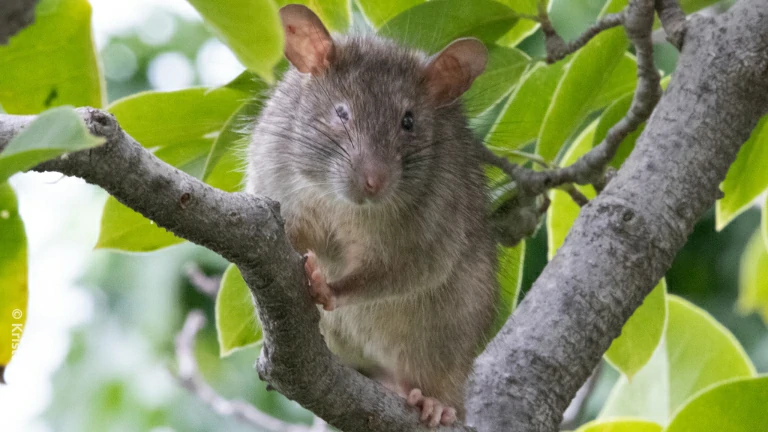
If you keep pet rats and you’re worried about them escaping or coming into contact with wild rats, you might wonder whether they could breed together. Can pet rats breed with wild rats?
Yes, pet rats can breed with wild rats because they’re the same species (Rattus norvegicus). Pet rats are just domesticated versions of wild Norway rats, so they’re genetically compatible and can produce healthy, fertile offspring. However, this is a really bad situation if it happens, both for the pet rat and for disease control reasons.
Even though breeding is biologically possible, it’s something you absolutely want to prevent for multiple important reasons.
Pet Rats Are Domesticated Wild Rats
To understand why pet rats can breed with wild rats, you need to know where pet rats come from.
Pet rats are domesticated Norway rats (Rattus norvegicus). They’re not a different species, just a domesticated version of the same species that lives in sewers and alleys.
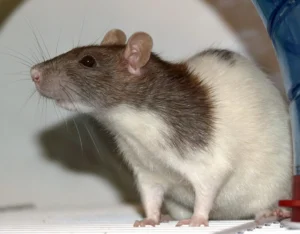
Domestication started in the 1800s when people began breeding wild rats for use in rat-baiting (a cruel blood sport) and later for laboratory research. Over time, breeders selected for traits like calmness, friendliness, and interesting coat colors.
Despite over 100 years of selective breeding, pet rats are still genetically very similar to wild rats. The differences are mainly behavioral and cosmetic, not fundamental genetic changes.
They have the same number of chromosomes (42), the same basic body structure, and the same reproductive system. From a biological standpoint, they’re the same species.
This is different from, say, dogs and wolves. While dogs and wolves can also interbreed (because they’re the same species), dogs have been domesticated for over 10,000 years and have much more significant differences from wolves than pet rats have from wild rats.
Why Breeding Between Them Is Definitely Possible
The biological compatibility between pet rats and wild rats is pretty much complete.
They have identical chromosome numbers and structures. When a pet rat and wild rat mate, their chromosomes pair up perfectly during reproduction, just like they would if two pet rats or two wild rats mated.

The reproductive cycles are the same. Both come into heat every 4 to 5 days, have the same gestation period (21 to 23 days), and produce similar-sized litters (6 to 12 pups on average).
Physical mating is completely possible. Pet rats and wild rats are similar enough in size and structure that mating can occur without physical problems.
Behavioral barriers are minimal. While pet rats are calmer and more trusting of humans, they still have the same basic mating behaviors as wild rats. A pet rat would recognize a wild rat as a potential mate.
The offspring would be fully fertile. Unlike hybrids between different species (like mules), offspring from pet and wild rat matings can reproduce normally.
What Would the Offspring Look Like?
If a pet rat and wild rat did breed, the offspring would show a mix of traits from both parents.
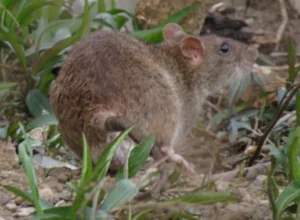
Color would likely be the most obvious difference. Wild rats are typically brown or grayish-brown (called agouti coloring). Pet rats come in many colors: white, black, beige, blue, and more.
The babies would probably show a mix, with some looking more like wild rats and others showing pet rat colors.

Temperament would vary among the offspring. Some might be as friendly as the pet rat parent, others might be as skittish as the wild rat parent, and many would fall somewhere in between.
Size might be slightly different. Fancy pet rats are sometimes bred to be slightly larger than wild rats, though the difference isn’t huge.
Coat type could vary too. Some pet rats have different coat types (rex, hairless, satin), and these traits might show up in some of the hybrid offspring.
The babies would be healthy and normal. This isn’t like crossing two different species where you might get health problems. These are the same species, so the offspring would be as healthy as any purebred rat.
The Dangers of Pet and Wild Rat Contact
Even though breeding is biologically possible, it’s something you really want to prevent because of serious health and safety risks.
Disease transmission is the biggest concern. Wild rats carry all sorts of diseases that pet rats don’t have. These include leptospirosis, hantavirus, rat-bite fever, plague, and various parasites like mites, lice, and worms.
If your pet rat mates with a wild rat, it could catch these diseases. Many of them can be fatal to rats and some can also be transmitted to humans.
Wild rats are also much more aggressive than pet rats. A mating encounter might turn violent, with the wild rat attacking and injuring your pet rat.
Your pet rat, being used to humans and life in a cage, wouldn’t survive well in the wild. If they escaped and encountered wild rats, they’d be at a huge disadvantage.
For female pet rats, pregnancy from a wild rat could be especially dangerous if the female is small and the male wild rat is large. This could lead to birthing complications.
What About Wild Rats Entering Your Home?
If wild rats get into your home where you keep pet rats, breeding could theoretically happen, but there are usually barriers.
Pet rats are typically kept in cages. A wild rat would have to get into the cage for mating to occur, which is unlikely (though not impossible if the cage isn’t secure).
Wild rats are usually cautious and would be stressed by the presence of humans. They’re more likely to avoid areas with human activity, which is where pet rats are kept.
The scent of humans and domestic life might be off-putting to wild rats. Your home probably doesn’t smell like an attractive habitat to a wild rat, even if there are other rats present.
However, don’t count on these barriers. If you have signs of wild rats in your home (droppings, gnaw marks, sounds in the walls), you need to address the problem immediately and keep your pet rats secured.
Male wild rats might be more likely to approach a cage with a female pet rat in heat because the scent would be attractive to them.
Escaped Pet Rats and Wild Populations
If a pet rat escapes and encounters wild rats, breeding could definitely happen.
Pet rats are sexually mature at 8 to 12 weeks old. An escaped female pet rat could become pregnant quickly if she encounters male wild rats.
An escaped male pet rat could impregnate wild female rats, spreading domestic rat genes into the wild population.
However, escaped pet rats usually don’t survive long in the wild. They’re not as cautious or skilled at finding food and shelter as wild rats. Many fall victim to predators, starvation, or the elements within days or weeks.
Female pet rats that do get pregnant in the wild face additional challenges. Pregnancy and nursing require extra calories, and a pet rat might not be able to find enough food.
The domestication process has made pet rats less fearful and less reactive to danger. These traits are great for pets but terrible for survival in the wild.
Historical Examples of Breeding
There are documented cases of pet rats breeding with wild rats, though they’re not common.
Laboratory facilities that keep rats for research sometimes have issues with wild rats getting into their facilities. When this happens, breeding can occur if the barriers between captive and wild populations break down.
In the early days of rat domestication (late 1800s and early 1900s), wild-caught rats were regularly bred with domesticated rats to introduce new traits or increase genetic diversity.
Some rat breeders have deliberately introduced wild rat genetics to their breeding programs to increase genetic diversity or to introduce wild-type coloring. This is controversial in the pet rat community.
Urban areas where pet rats are released or escape sometimes show evidence of domestic rat traits (like unusual colors) appearing in wild rat populations, suggesting interbreeding has occurred.
However, these cases are relatively rare compared to the millions of pet rats kept worldwide. Most pet rats never encounter wild rats.
Preventing Contact Between Pet and Wild Rats
If you keep pet rats, here’s how to make sure they never breed with wild rats.
Secure your rat cage properly. Make sure it has no gaps larger than half an inch. Wild rats can squeeze through surprisingly small openings.
Keep your rats indoors. Never keep pet rats in outdoor enclosures like sheds or garages where wild rats might have access.
If you have signs of wild rats in your home, deal with the infestation immediately. Don’t wait until they might come into contact with your pet rats.
Never release pet rats outdoors. If you can’t keep your rats anymore, rehome them through a rescue or responsible individual. Releasing them is cruel (they’ll likely die) and could spread domestic rat genes into wild populations.
If you move your rats outside for any reason (like during cage cleaning), supervise them constantly and make sure they’re in a secure carrier or temporary enclosure.
Check your home regularly for signs of wild rats: droppings, gnaw marks, greasy rub marks on walls, sounds of scratching or running.
Genetic Diversity Concerns
The ability of pet and wild rats to interbreed has some interesting implications for genetics.
Pet rats, especially purebred fancy rats, sometimes have limited genetic diversity because of inbreeding within breeding lines. This can lead to health problems.
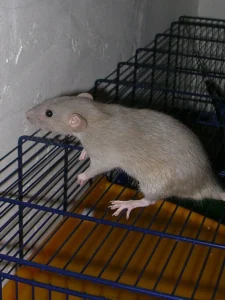
Some breeders argue that occasionally introducing wild rat genetics could improve genetic diversity and health. However, this is controversial because of disease risks.
Wild rat populations could theoretically be affected by escaped pet rats breeding into the population. Traits like reduced fear of humans could make the resulting rats harder to control as pests.
Unusual coat colors appearing in wild rat populations (like white or beige rats) usually indicate that pet rats have bred into the population at some point.
Research facilities sometimes use wild-caught rats to increase genetic diversity in their laboratory rat colonies, showing that the genetic compatibility is well-established.
The Ethics of Deliberate Breeding
Some people wonder if deliberately breeding pet rats with wild rats would be ethical or beneficial, and the answer is generally no.
Disease risk is the primary concern. Wild rats carry diseases that could kill pet rats and potentially spread to humans. Bringing wild rats into contact with pet rats is dangerous.
Wild rats wouldn’t adjust well to captivity. Their stress levels would be high, which is cruel to the animals.
There’s no real benefit to creating these crosses. Pet rats are already healthy and well-adapted to life as pets. Wild rat genetics don’t add anything useful.
For pest control purposes, introducing pet rat traits into wild populations could actually make the problem worse by creating rats that are less afraid of humans and human environments.
Most rat breeding organizations and pet rat communities strongly discourage any attempts to breed pet rats with wild rats.
What If It Happens Accidentally?
If your pet rat does somehow breed with a wild rat (perhaps an escape you didn’t know about), here’s what you need to know.
The offspring will need veterinary care. They should be checked for parasites and diseases that the wild rat parent might have passed on.

Quarantine any potentially exposed rats from your other pets. Keep them separated until a vet has confirmed they’re healthy.
The offspring might be harder to socialize than purebred pet rats. They might inherit some of the wild rat’s wariness and aggression.
Consider whether you want to keep the offspring. They might make more challenging pets than typical fancy rats.
If you decide to rehome the offspring, be honest about their background. Some people might want them for research or educational purposes.
Never release these rats into the wild. They’re not truly wild rats and might not survive, but they could also introduce domestic traits into wild populations.
Comparing to Other Domesticated Animals
The relationship between pet rats and wild rats is similar to other domesticated animals and their wild counterparts.
Dogs and wolves can breed (they’re the same species), just like pet rats and wild rats. But dogs have been domesticated much longer, so the behavioral differences are greater.
Domestic cats and wildcats can breed. Like rats, the genetic compatibility is complete, but the behavioral differences make it rare in most situations.
Domestic rabbits and wild rabbits can breed in some cases, though the genetic compatibility depends on which species of wild rabbit (there are many).

Farm chickens can breed with wild jungle fowl (their ancestors), showing that domestication doesn’t necessarily create reproductive barriers.
In all these cases, breeding between domestic and wild forms is generally discouraged because of disease risks and welfare concerns.
Long-Term Evolution and Separation
An interesting question is whether pet rats and wild rats will eventually become separate species.
Currently, they’re not on track to become separate species. The genetic differences are still small, and gene flow between populations (through escaped pets) keeps them connected.
For true speciation to occur, pet rats and wild rats would need to be completely isolated from each other for many thousands or millions of years while evolving different traits.
The level of isolation needed for speciation isn’t present. Pet rats escape or are released, and they can then breed with wild rats, maintaining genetic connection.
Selective breeding in pet rats is creating behavioral and physical differences, but these aren’t the kind of fundamental changes that would create reproductive incompatibility.
It’s more likely that pet rats will develop into a distinct subspecies rather than a completely separate species, similar to how dog breeds are different but still interfertile.
Conclusion
Pet rats can definitely breed with wild rats because they’re the same species (Rattus norvegicus). The two groups are genetically compatible, have the same number of chromosomes, and can produce healthy, fertile offspring.
However, this is something you absolutely want to prevent because of serious disease risks to your pet rats and potential safety concerns.
Wild rats carry diseases that pet rats don’t have, and contact between them could expose your pets to fatal infections. Wild rats might also be aggressive toward pet rats.
Keep your pet rats in secure cages, never release them outdoors, and address any wild rat infestations in your home immediately.
The fact that pet and wild rats can breed shows how recently rats were domesticated. Unlike dogs, which have been separated from wolves for over 10,000 years, rats have only been domesticated for about 150 years.
This genetic compatibility is interesting from a biological perspective, but from a practical standpoint, it’s just another reason to make sure your pet rats and wild rats never come into contact with each other.

Hi, my name is Ezra Mushala, i have been interested animals all my life. I am the main author and editor here at snakeinformer.com.