
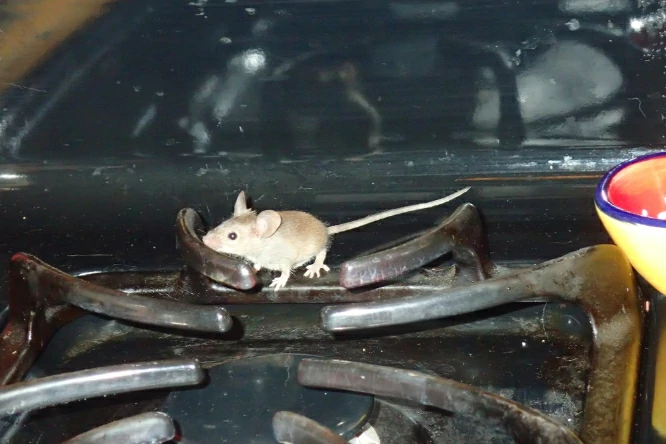
When you’re trying to figure out how mice are getting into your home, you might not think to look up. Most people focus on ground-level entry points like doors, foundations, and basement windows.
But mice are excellent climbers, and they can access higher areas of your home, including your ceiling vents. Can mice actually come in through ceiling vents?
Yes, mice can come in through ceiling vents if the vents aren’t properly screened or if the screening is damaged. Mice can climb up your walls or access your roof, and from there they can enter through roof vents, attic vents, or any ceiling vents that connect to the outside or to your attic space.
Ceiling vents are necessary for air circulation and ventilation, but without proper screening, they can provide easy access for mice looking for a way into your warm, sheltered home.
Types of Ceiling Vents That Let Mice In
Not all ceiling vents are the same, and some are more vulnerable to mouse entry than others.
Bathroom exhaust vents are common entry points. These vents pull moisture and odors from your bathroom and expel them outside through a duct. If the exterior vent cover is damaged or missing its screen, mice can climb into the duct from outside.
Kitchen exhaust vents have the same problem. The vent that removes cooking odors and steam leads outside, and if it’s not properly screened, mice can enter.

HVAC supply and return vents in your ceiling are usually connected to ductwork that runs through your attic or between floors. If mice are already in your attic, they can enter these vents from inside your home’s structure.
Attic ventilation vents (like soffit vents, ridge vents, and gable vents) are designed to let air flow through your attic. If these vents don’t have proper screening or if the screening is damaged, mice can use them to get into your attic. From there, they can access ceiling vents that open into your rooms.
Recessed lighting fixtures in your ceiling can also act like vents. The gaps around these fixtures can allow mice to move between your attic and your rooms.
How Mice Access Ceiling Vents
You might wonder how mice even get up to your ceiling vents in the first place. There are several pathways they use.
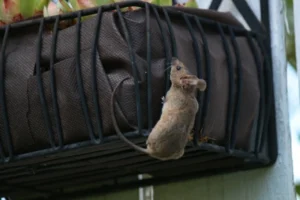
Mice are excellent climbers. They can climb rough surfaces like brick, stone, stucco, and even wood siding. This means they can climb up the outside of your house to reach your roof.
Once on your roof, mice can access roof vents, ridge vents, and any other openings. They can also get into your attic through damaged soffit vents, gable vents, or gaps in your roof structure.
From your attic, mice have access to the spaces between your floors and ceilings. They can travel through wall cavities and eventually find ceiling vents that open into your rooms.
Mice can also climb up inside your walls using pipes, wires, and wall studs for grip. Once they’re in the wall cavity, they can access ceiling vents that are mounted in or near walls.
Trees and vegetation near your house can provide easy access to your roof. If tree branches hang over or touch your roof, mice can simply walk along the branches and onto your roof.
Signs Mice Are Using Your Ceiling Vents
If mice are entering through or living near your ceiling vents, you’ll usually notice specific signs.
Scratching or scurrying sounds above you are the most obvious clue. These sounds might come from your attic, from inside your ceiling, or from the area around specific vents. The sounds are usually loudest at night when mice are most active.
Mouse droppings near or around ceiling vents are a clear sign. Look at the vent covers in your ceilings. If you see small, dark, pellet-shaped droppings on or near them, mice have been there.
You might notice smudge marks (dark, greasy streaks) on your ceiling around vents. These marks are from the oils in mouse fur rubbing against surfaces as they travel.
Strange odors coming from your vents can indicate mice. Mouse urine has a strong, ammonia-like smell, and dead mice create an even worse odor.
If you see a mouse actually run across your ceiling or disappear into a ceiling vent, that’s obviously a clear sign they’re using these openings.
Sometimes you might notice your ceiling vent covers are loose or have been pushed out of place. Mice can dislodge lightweight vent covers as they move around.
The Dangers of Mice in Ceiling Vents and Ducts
Having mice in your ceiling vents and ductwork creates several serious problems.
Health concerns are at the top of the list. Mice leave droppings and urine in your ducts, and when your HVAC system runs, it can blow these particles into the air you breathe. This can trigger allergies and spread bacteria.
Mice can carry diseases like hantavirus and salmonella. While the risk from airborne particles is relatively low, it’s still a concern, especially for people with weakened immune systems or respiratory issues.
Structural and system damage is another major problem. Mice chew constantly because their teeth never stop growing. If they’re in your ceiling or ductwork, they might chew on insulation, wood framing, or even electrical wiring.
Chewed wires are a serious fire hazard. Many house fires are started by rodents chewing through electrical wiring.
Mice also build nests using flammable materials like paper, fabric, and insulation. If these nests are near wiring or heat sources, they can catch fire.
The noise from mice running around in your ceiling or vents can be really disturbing, especially when you’re trying to sleep.
If mice die in your vents or ductwork, the smell can be terrible and hard to get rid of. Dead mice can take weeks to fully decompose, and during that time, the odor spreads through your ventilation system.
How to Inspect Ceiling Vents for Mouse Entry
If you suspect mice are using your ceiling vents, you need to do a thorough inspection.
Start by looking at all the ceiling vents inside your home. Get a ladder if needed and look closely at each vent cover. Check for droppings, smudge marks, or any signs of damage.
Remove vent covers that can be easily taken off (like bathroom fan covers and some HVAC vents) and look inside with a flashlight. You might see droppings, nesting materials, or even mice.
Go outside and inspect the exterior vent covers. These are usually on your roof or on the walls near your roofline. Look for bathroom and kitchen exhaust vents. Check that they have screens or louvers that are intact and properly attached.
If you can safely access your roof, check roof vents, ridge vents, and any other openings. Look for gaps, damaged screening, or missing covers.
Go into your attic if you have access. Look at all the ventilation openings (soffit vents, gable vents, etc.) and check for signs of mice. Look for droppings, nesting materials, chewed insulation, or actual mice.
While in the attic, trace your ductwork and look for any gaps or holes where mice might be entering the ducts.
Check recessed lighting fixtures from the attic side. These often have gaps that mice can squeeze through.
How to Block Mice From Ceiling Vents
Once you’ve found problem areas, you need to seal them up to keep mice out.
For exterior vent covers that don’t have screens, install screens or replace the covers with screened versions. The screen mesh should have openings no larger than ¼ inch to keep mice out.
If the existing screens are damaged, replace them. You can buy replacement screens at hardware stores, or you can buy new vent covers that include screens.
Make sure all exterior vent covers are securely attached. Loose covers can be pushed aside by mice or blown off by wind.
For bathroom and kitchen exhaust vents, you can install vent covers with built-in backdraft dampers. These dampers close when the fan isn’t running, which helps keep mice (and cold air) from coming in.
In your attic, cover any ventilation openings that don’t have proper screening. Use hardware cloth (metal mesh) with ¼-inch openings. Secure it with screws or staples so it can’t be pushed aside.
For gaps around recessed lighting fixtures, you can use special covers designed to seal these fixtures. These covers are important for fire safety too, not just for keeping mice out.
If you find holes or gaps in your ductwork, seal them with metal tape or mastic sealant. Don’t use regular duct tape because it doesn’t hold up well over time.
For ceiling vents inside your home, make sure the covers fit snugly. If there are gaps around the edges, you might need to replace the covers with ones that fit better.
Cleaning Contaminated Vents and Ducts
If mice have been in your ceiling vents or ductwork, you should clean and disinfect these areas.
Before you start, put on protective gear. Wear gloves, a mask (preferably an N95 respirator), and eye protection. Mouse droppings can carry disease, and you don’t want to breathe in particles.
For ceiling vent covers, take them down and wash them with hot, soapy water. You can also use a disinfectant. Let them dry completely before putting them back up.
If there are mouse droppings in your ducts (and you can reach them), carefully vacuum them up using a HEPA filter vacuum. Don’t sweep or use a regular vacuum because that can spread particles into the air.
Spray the area with a disinfectant solution. You can use a mixture of bleach and water (1 part bleach to 10 parts water) or a commercial disinfectant.
For extensive contamination or if mice have nested in your ducts, you might need to hire a professional duct cleaning service. They have specialized equipment to clean ductwork thoroughly.
If insulation in your attic has been contaminated with mouse droppings and urine, it might need to be replaced. Heavily contaminated insulation can’t be effectively cleaned and should be removed and replaced.
After cleaning, seal up all entry points so mice can’t come back and contaminate everything again.
Preventing Future Problems With Ceiling Vents
After you’ve dealt with the immediate mouse problem, there are steps you can take to prevent it from happening again.
Inspect your exterior vent covers regularly, at least twice a year. Check them in spring and fall before the weather extremes of summer and winter.
Keep trees and vegetation trimmed back from your house. Branches should be at least 6 feet away from your roof to make it harder for mice to access your roofline.
Make sure your attic ventilation is adequate. Good airflow helps keep your attic dry, which makes it less attractive to mice looking for a place to nest.
Check your attic periodically for signs of mice. Catching an infestation early makes it much easier to deal with.
If you’re replacing your roof or doing other exterior work, that’s a good time to upgrade your vent covers to more mouse-resistant versions.
Consider installing vent covers with built-in animal guards. These are specifically designed to keep rodents and other animals out while still allowing proper ventilation.
When to Call a Professional
Some ceiling vent mouse problems are beyond DIY fixes and require professional help.
If you have mice in your ductwork but can’t reach the area where they’re nesting, a pest control professional can help. They have tools and techniques to access hard-to-reach areas.
If your ducts are extensively contaminated, a professional duct cleaning service can clean and sanitize them properly.
If you’re not comfortable climbing on your roof to inspect or repair exterior vents, hire a roofing professional or handyman to do it safely.
If you have a serious mouse infestation (seeing or catching multiple mice regularly, finding large amounts of droppings), a pest control company can help you get rid of them more effectively than DIY methods.
If mice have damaged your insulation, wiring, or ductwork, you might need contractors who specialize in these areas to make repairs.
The cost of hiring professionals is worth it if it means the job is done safely and effectively. Trying to DIY a complex mouse problem can end up costing more in the long run if you don’t fix it properly the first time.
Conclusion
Mice can definitely come in through ceiling vents if the vents aren’t properly screened or if the screening is damaged. These entry points are often overlooked because people don’t think to look up when searching for how mice are getting in.
Bathroom exhaust vents, kitchen exhaust vents, HVAC vents, and attic ventilation openings are all potential entry points. Mice can climb up your exterior walls or use nearby trees to access your roof, and from there they can find unprotected vents.
Once mice are in your ceiling vents and ductwork, they pose health risks by contaminating your air supply, and they can cause damage by chewing on wires and insulation.
You can keep mice out of your ceiling vents by installing proper screening on all exterior vent covers, making sure screens have openings no larger than ¼ inch, and sealing any gaps around vents and ductwork.
Regular inspections of your vents and attic can help you catch mouse problems early before they become serious. If you find signs of mice, address the problem right away by sealing entry points and cleaning contaminated areas.
With proper screening and maintenance, your ceiling vents can do their job of ventilating your home without also providing a highway for mice to get inside.

Hi, my name is Ezra Mushala, i have been interested animals all my life. I am the main author and editor here at snakeinformer.com.