
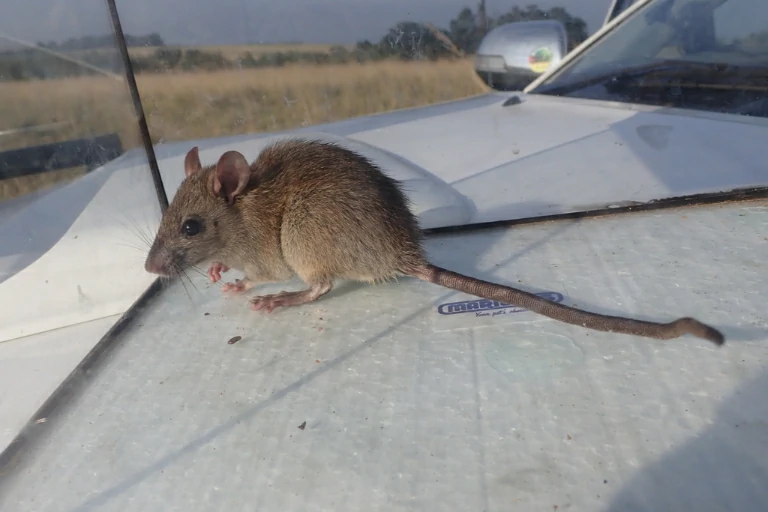
Mice and rats are both common rodent pests that often infest the same areas. They look somewhat similar, and both belong to the rodent family.
If you have both mice and rats in your home or yard, you might wonder if they can interbreed and create hybrid offspring. So, can mice and rats breed with each other?
No, mice and rats cannot breed with each other. They’re different species with different numbers of chromosomes, which makes interbreeding biologically impossible. Even though they’re both rodents, they’re too genetically different to produce offspring together.
This is actually good news for pest control. If mice and rats could breed, you’d have even more serious problems to deal with.
Fortunately, the genetic barriers between these two species prevent them from creating hybrid rodents.
Why Mice and Rats Can’t Breed
The main reason mice and rats can’t breed is chromosomes. Chromosomes are structures in cells that carry genetic information (DNA).
For two animals to breed and produce viable offspring, they need to have compatible chromosome numbers and structures.

Rats have 42 chromosomes (21 pairs). Mice have 40 chromosomes (20 pairs).
This difference means their genetic material can’t combine properly during reproduction.
Even if a mouse and rat tried to mate, the sperm and egg wouldn’t be able to form a viable embryo because the chromosomes wouldn’t match up correctly.
It’s similar to why humans can’t breed with chimpanzees, even though we’re closely related. The genetic differences are too big.
For two species to interbreed, they need to be very closely related genetically. Usually, only animals within the same genus (a classification category in biology) can produce hybrids.
Mice and rats aren’t even in the same genus. Mice belong to the genus Mus, while rats belong to the genus Rattus.
This means they’re quite distantly related, despite both being rodents.
What Species Are Mice and Rats?
Understanding the exact species helps explain why they can’t breed.
The most common house mouse is Mus musculus. This is the small rodent you typically find in homes, with large ears, a pointed nose, and a thin tail.
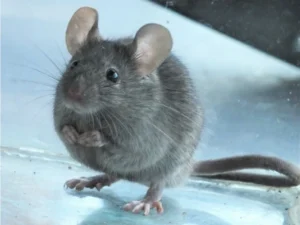
The most common rat species are the Norway rat (Rattus norvegicus) and the roof rat (Rattus rattus).
Norway rats are larger, with heavy bodies, small ears, and thick tails. Roof rats are slimmer with larger ears and longer tails.
Even though both mice and rats are rodents (members of the order Rodentia), and both are in the family Muridae, they’re separated into different subfamilies and genera.
This level of genetic separation makes interbreeding impossible.
Physical Differences Between Mice and Rats
Even if genetics didn’t prevent breeding, the physical differences between mice and rats would make mating very difficult.
Size is the most obvious difference. Adult mice weigh 1/2 to 1 ounce and are about 5 to 8 inches long (including the tail).
Adult rats weigh 7 to 18 ounces and are 13 to 18 inches long (including the tail). That’s a huge size difference.
A rat is roughly 5 to 10 times heavier than a mouse. The physical mechanics of mating would be nearly impossible.
Their body proportions are also different. Mice have large ears relative to their head size, while rat ears are smaller in proportion.
Mouse tails are thin and slightly hairy. Rat tails are thick, scaly, and nearly hairless.
These differences aren’t just cosmetic. They reflect deeper biological and genetic differences that prevent interbreeding.
Behavioral Differences That Prevent Breeding
Even if mice and rats could physically mate, their behaviors would likely prevent it.
Mice and rats have different social structures and mating behaviors. These behaviors are instinctive and species-specific.
Mice use specific pheromones (chemical signals) to communicate and attract mates. Rats use different pheromones.
Without the right chemical signals, one species wouldn’t recognize the other as a potential mate.
Mating calls and behaviors are also different. Male mice make ultrasonic vocalizations (sounds too high for humans to hear) to attract females.

These calls are species-specific. A female mouse recognizes the calls of male mice, but wouldn’t respond to rat vocalizations.
Courtship behaviors differ too. The way mice approach and interact during mating is different from how rats do it.
These instinctive behaviors are hardwired and wouldn’t translate between species.
Additionally, mice and rats don’t typically share the same spaces. Rats are larger and more aggressive.
If rats and mice encounter each other, the rat will usually kill or chase away the mouse. They’re competitors, not potential mates.
Do Mice and Rats Live Together?
In general, mice and rats don’t coexist peacefully.
Rats are much larger and more aggressive than mice. If a rat encounters a mouse, it will often kill and sometimes eat it.
This is why you typically don’t find large populations of both species in the same immediate area.
If you have a rat infestation in your attic, you probably won’t have mice there too. The rats will drive them out or kill them.
However, you might have both species on your property in different locations. For example, rats might live in your crawl space while mice nest in your walls.
Or you might have rats in your garage and mice in your kitchen. They’re using different parts of the same structure.
Even in these cases, they’re not interacting or breeding. They’re simply both taking advantage of available resources in separate areas.
Can Any Rodents Interbreed?
Some rodent species can interbreed, but only if they’re very closely related.
For example, different species within the same genus sometimes can produce hybrids.
In laboratory settings, scientists have created hybrids between different mouse species (different species within the genus Mus).
But these are still mice breeding with other mice, just different species of mice.

The same is true for some rat species. Different types of rats within the genus Rattus might occasionally interbreed if they overlap in the wild.
But mice (Mus) can’t breed with rats (Rattus) because they’re in completely different genera.
To use an analogy: it’s like dogs and wolves being able to interbreed (they’re both in the genus Canis), but dogs can’t breed with cats even though both are carnivores.
The genetic distance between mice and rats is similar to the distance between dogs and cats.
What Happens If Mice and Rats Are in the Same Area?
If you have both mice and rats on your property, they’ll generally avoid each other.
Mice will stay away from areas where rats are active because rats pose a threat to them.
Rats might use their size advantage to dominate the best food sources and nesting areas, pushing mice into less desirable spots.
In some cases, the presence of rats will actually reduce mouse populations because the rats kill mice they encounter.

But this doesn’t mean rats are a solution to a mouse problem. You still have a rat problem, which is arguably worse.
Rats cause more damage than mice because they’re larger. They chew bigger holes, eat more food, and leave more droppings.
They’re also more difficult to get rid of because they’re smarter and more cautious than mice.
If you have both species, you need to address both infestations separately using appropriate traps and control methods for each.
Why People Might Think Mice and Rats Can Breed
There are a few reasons people sometimes think mice and rats can interbreed.
First, people often confuse young rats with adult mice. A juvenile rat looks somewhat similar to an adult mouse at first glance.
If someone sees different-sized rodents together, they might assume it’s a mouse-rat hybrid when it’s actually just rats of different ages.

Second, there are rodent species that fall between mice and rats in size. For example, wood rats (pack rats) are smaller than Norway rats but larger than house mice.
People might see these and think they’re hybrids when they’re actually a separate species.
Third, in some languages and regions, people use the words “mouse” and “rat” loosely and might call any small rodent a mouse and any large one a rat.
This can create confusion about what species are actually present.
Can Other Species Breed With Mice or Rats?
Mice and rats can’t breed with most other animals, but there are some exceptions within their own groups.
As mentioned earlier, different species of mice can sometimes interbreed with each other if they’re closely related.
For example, house mice (Mus musculus) have occasionally interbred with other mice in the genus Mus in laboratory settings.
Similarly, different rat species within Rattus might interbreed if their ranges overlap.
But mice and rats can’t breed with other common rodents like squirrels, hamsters, guinea pigs, or chipmunks.
These animals are all rodents, but they belong to different families or subfamilies and are too genetically different.
Why This Matters for Pest Control
Understanding that mice and rats can’t interbreed is actually useful for pest control.
It means you don’t have to worry about hybrid rodents that combine the worst traits of both species.
You also don’t have to worry about one infestation leading to a mixed population that’s harder to control.
However, it does mean that if you have both species, you need to use control methods appropriate for each.
Mice and rats have different behaviors, different preferences for bait and trap types, and different patterns of movement.
Mouse traps are usually too small to catch rats. Rat traps can catch mice, but they might not trigger properly because mice are so light.
Bait preferences can also differ. While both species eat similar foods, they might prefer different baits in traps.
If you’re not sure which species you’re dealing with, look at the droppings. Mouse droppings are tiny (about 1/8 to 1/4 inch long) and pointed at the ends.
Rat droppings are much larger (about 1/2 to 3/4 inch long) and have blunt ends.
You can also look at the size of gnaw marks. Mouse teeth leave small, fine marks. Rat teeth leave larger, rougher marks.
Once you know which species you have, you can choose the right control methods.
What If You See Small and Large Rodents Together?
If you see what looks like different-sized mice and rats in the same area, you’re probably seeing rats of different ages.
Baby rats (called pups) are born very small, about the size of a large grape. They grow quickly but go through stages where they’re much smaller than adults.
A young rat might look similar to an adult mouse in size, but you can tell them apart by looking at their proportions.
Young rats have larger feet relative to their body size compared to mice. Their heads are also broader and blunter.
If you’re seeing rodents of multiple sizes in the same area, it probably means you have a breeding population of one species, not a mixed population.
This is actually a sign that the infestation is established and reproducing, which means you need to take action quickly.
Frequently asked Questions:
Can mice and rats crossbreed?
Can mice and rats interbreed?
No, mice and rats can’t interbreed. They’re closely related rodents, but they’re different species with mismatched genetics, so mating between them can’t produce babies.
Conclusion
Mice and rats cannot breed with each other. They’re too genetically different, with different chromosome numbers that make interbreeding impossible.
Even though both are rodents, they belong to different genera (Mus for mice and Rattus for rats), which means they’re quite distantly related.
Physical size differences, behavioral differences, and incompatible mating signals also prevent any attempts at interbreeding.
If you have both species on your property, they’ll generally avoid each other, with rats often dominating better territory and sometimes killing mice.
You’ll need to use appropriate control methods for each species separately, since they have different behaviors and preferences.
The good news is that you don’t have to worry about hybrid rodents combining the worst traits of both species. Each infestation can be addressed with species-specific control strategies.

Hi, my name is Ezra Mushala, i have been interested animals all my life. I am the main author and editor here at snakeinformer.com.