
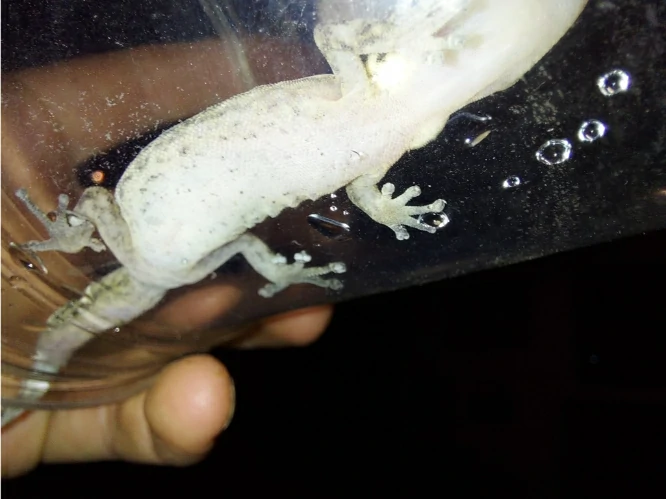
If you keep finding lizards in your house, you might be looking at your walls and wondering how they’re getting in. Small cracks in your foundation, walls, or around windows seem like potential entry points. Can lizards actually squeeze through cracks to get into your home?
Yes, lizards can definitely come through cracks. They’re incredibly flexible and can squeeze through openings as small as a quarter-inch. Cracks in your foundation, walls, around windows and doors, and near utility lines are all common entry points for lizards looking for shelter or food.
This is actually one of the most common ways lizards get into homes. Their bodies are designed to fit through tight spaces, and they’re really good at finding even the smallest openings
Understanding which cracks are most vulnerable helps you keep them out.
Why Lizards Are So Good at Squeezing Through Cracks
Lizards have several physical features that make them perfect for getting through tiny openings. Their body design is built for squeezing into tight spaces.
Their bodies are really flexible. Unlike mammals with rigid skeletons, lizards can compress their rib cages and flatten their bodies. This lets them squeeze through gaps that look way too small for them.
Their heads are often the widest part of their body. If a lizard can fit its head through a crack, the rest of its body can usually follow.
They’ll push their snout into an opening, wiggle their head through, and then pull the rest through.
Research on lizard locomotion shows that their scales slide over each other smoothly, which helps them slip through tight spaces.
The scales don’t catch on rough surfaces like fur or feathers might.
Their limbs can fold close to their bodies. When squeezing through a crack, lizards tuck their legs in tight against their sides.
This makes them much thinner than they look when they’re walking normally.
Small lizards are especially good at this. Species like house geckos and anoles that commonly get into homes are naturally tiny and flat.
They can fit through cracks you might not even notice.
Common Types of Cracks Lizards Use
Not all cracks are equal when it comes to lizard entry. Some types of openings are much more likely to let lizards in than others. Knowing where to look helps you focus your sealing efforts.
Foundation cracks are prime entry points. Your home’s foundation can develop cracks from settling, temperature changes, or moisture.
These cracks often start small but get bigger over time. Lizards hanging around your foundation will definitely find and use these openings.
Cracks around windows and doors are super common. The caulk or weatherstripping that seals these areas can dry out, shrink, or fall off completely. This leaves gaps that lizards can slip through easily.
Gaps where utility lines enter your home are often overlooked. When electricians, plumbers, or cable installers drill holes for their lines, they don’t always seal them properly. The gaps around pipes, wires, and cables are perfect lizard highways.
Cracks in exterior walls happen from many causes. Temperature changes make materials expand and contract. Water damage can crack stucco or siding.
Even just age can create small fissures that lizards can use.
Gaps under doors are technically cracks too. If there’s space between the bottom of your door and the threshold, that’s an open invitation for lizards.
They don’t need much room, just a quarter-inch or so.
How Small a Crack Can a Lizard Fit Through?
The answer might surprise you. Lizards can fit through much smaller openings than you’d think possible just by looking at them.
Most small lizards can squeeze through a crack that’s about a quarter-inch wide. That’s roughly the width of a pencil. If you can slide a pencil through a gap, a lizard can probably get through too.
Baby lizards and very small species like geckos can fit through even tinier spaces. Some can manage openings as small as an eighth of an inch.
That’s barely wider than a credit card’s thickness.
The crack doesn’t need to be very long either. A short crack of just an inch or two is enough if it’s wide enough. Lizards will work their way through bit by bit, wiggling and pushing until they’re through.
Vertical cracks are just as usable as horizontal ones. Lizards are excellent climbers and can work their way up or down through a crack just as easily as going sideways.
Even irregular cracks work. The opening doesn’t need to be smooth or consistent. Lizards can navigate through jagged, uneven cracks by adjusting their body position as they go.
Why Lizards Look for Cracks to Enter Homes
Lizards aren’t trying to invade your home or cause problems. They have practical reasons for seeking out and using cracks to get inside.
They’re looking for food. Homes have lots of insects, especially around foundations, windows, and doors. Spiders, ants, flies, and other bugs attract lizards.
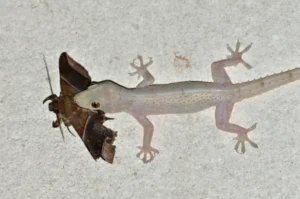
If a lizard spots prey near a crack, it might follow the bugs inside.
They need shelter. Lizards are vulnerable to predators like birds, cats, and larger reptiles. Cracks offer hiding spots and protection.
A crack that leads into your home is even better because it’s predator-free and climate-controlled.
Temperature regulation drives a lot of lizard behavior. They’re cold-blooded and need to manage their body temperature. During hot summer days, the cool air coming from a crack in your air-conditioned house is really appealing. In cooler weather, the warmth from your heated home attracts them.
They’re seeking water. Lizards need to drink and prefer humid environments. Bathrooms and kitchens have moisture, and lizards can sense this.
A crack near a bathroom or kitchen might lead them to water sources.
Sometimes it’s just exploration. Lizards are curious creatures that investigate their environment.
They don’t know a crack leads into your house, they just see a potential hiding spot or pathway and check it out.
Where to Check for Cracks Around Your Home
If you want to keep lizards out, you need to find and seal the cracks they’re using. Here’s where to look for the most common entry points.
Start with your foundation. Walk around your entire house and look carefully at where the foundation meets the ground. Look for any cracks, gaps, or crumbling concrete. Pay special attention to corners where two walls meet.
Check all around windows and doors. Look at the caulk sealing the frame to the wall. If it’s dried, cracked, or missing, that’s a lizard entry point.
Don’t forget to check the top and bottom of windows, not just the sides.
Look where utility lines enter your house. Find where electrical wires, cable lines, phone lines, gas pipes, and water pipes come through your walls.
Often there are gaps around these that were never properly sealed.
Check your exterior walls carefully. Look for cracks in stucco, siding, or brick. Even hairline cracks can grow over time and become large enough for lizards.
Don’t forget about higher areas. Lizards are good climbers. Check the soffit (the underside of your roof overhang), fascia boards, and anywhere wood meets masonry. These areas often have gaps.
Look at your garage door seal. The rubber seal at the bottom of garage doors can wear out or tear. This creates a gap that lizards love to use.
How to Seal Cracks to Keep Lizards Out
Once you’ve found cracks, you need to seal them properly. Different types of cracks need different sealing methods. Here’s what works best.
- For small cracks in foundation or walls, use exterior-grade caulk. Silicone or polyurethane caulk works well because it stays flexible and doesn’t crack over time. Clean the crack first, then apply the caulk and smooth it with a wet finger or caulk tool.
- Larger foundation cracks need concrete filler or hydraulic cement. These products are stronger than caulk and can handle structural cracks. Follow the product instructions carefully for the best seal.
- Gaps around windows and doors need new weatherstripping or caulk. Remove old, dried weatherstripping and replace it with fresh material. For gaps between the frame and wall, use paintable caulk that matches your trim.
- Utility line openings need expanding foam sealant. This foam expands to fill irregular gaps completely. Spray it into the space around pipes and wires, let it expand and harden, then trim off any excess with a knife.
- For gaps under doors, install door sweeps. These rubber or bristle strips attach to the bottom of your door and seal the gap to the floor. They’re easy to install and really effective.
- Consider using steel wool for gaps around pipes before sealing with foam. Lizards can’t chew through steel wool, and it provides extra protection. Stuff it into the gap, then seal over it with expanding foam.
What Types of Lizards Come Through Cracks?
Different lizard species have different abilities when it comes to squeezing through cracks. Some are much more likely to use this method to enter homes than others.
House geckos are probably the number one crack invaders. These tiny lizards are flat, flexible, and commonly live around human buildings.
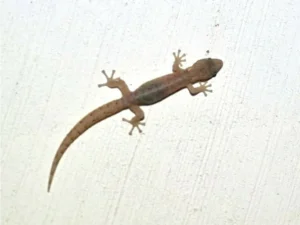
They’re perfectly designed for getting through small gaps. If you have house geckos in your area, cracks are definitely how they’re getting in.
Anoles (green anoles and brown anoles) are also common crack users. They’re slightly larger than house geckos but still small enough to fit through quarter-inch gaps.
They’re attracted to the insects around foundations and windows.
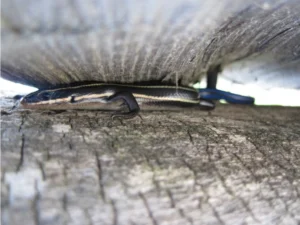
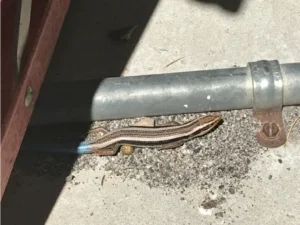
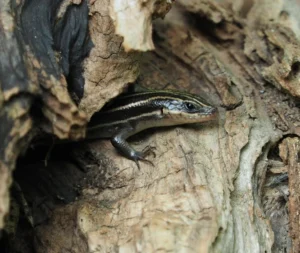
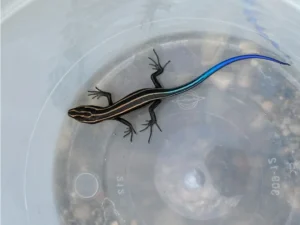
Skinks are ground-dwelling lizards that often find their way through foundation cracks.
They’re smooth and cylindrical, which helps them slip through openings easily. Five-lined skinks and similar species are common home invaders in many areas.
Young lizards of any species are more likely to come through cracks than adults. Baby lizards are much smaller and more flexible than full-grown ones. They can fit through truly tiny openings.
Larger lizards like iguanas, monitors, or large fence lizards can’t fit through normal household cracks. They’re way too big. If you’re finding large lizards in your house, they’re coming through doors or much larger openings, not cracks.
Time of Year When Lizards Use Cracks Most
Lizards don’t use cracks to enter homes equally throughout the year. Their activity follows seasonal patterns that you should know about.
Late summer and early fall are peak times for lizard home invasions. Baby lizards hatch during summer and start exploring their environment.
There are suddenly way more lizards around, and they’re all looking for good places to hide.
As weather cools in fall, lizards actively seek warm shelter for the coming winter. Your heated home becomes really attractive. They’ll search out every possible entry point, including tiny cracks they might have ignored in warmer months.
Spring brings another wave of lizard activity. As temperatures warm up, lizards wake up from winter dormancy and become active again.
They’re hungry and looking for food, which might lead them through cracks into your home where bugs are plentiful.
During extreme weather (heat waves or cold snaps), lizards might desperately seek temperature-controlled shelter. They’ll use cracks they might normally avoid. Your air-conditioned or heated home offers relief from dangerous temperature extremes.
Rainy seasons also drive lizards indoors. Heavy rain floods their normal hiding spots and drowns insects. They look for dry shelter and food, which your house provides.
Can Lizards Make Cracks Bigger?
You might wonder if lizards can actually create or enlarge cracks to get into your home. Here’s what they can and can’t do.
Lizards can’t chew through solid walls or create new cracks. They don’t have the strong jaws or teeth needed for that. They’re not like rodents that can gnaw through wood or soft materials.
But lizards can slightly enlarge existing small cracks through repeated use. When a lizard squeezes through a crack many times, the friction and pressure can slowly wear away soft materials like old caulk or crumbling concrete.
They might also clear debris from cracks, making them more usable. A crack partially filled with dirt or cobwebs might seem too small, but a lizard will push through the loose material and discover the crack is actually big enough.
Multiple lizards using the same crack can accelerate wear. If you have many lizards regularly using one entry point, the constant traffic will break down the edges of the crack faster than if it was unused.
Still, the main issue isn’t lizards making cracks bigger, it’s existing cracks getting bigger naturally through weathering, settling, and age. Sealing cracks properly stops this progression.
Indoor Cracks Lizards Might Use
Once a lizard is inside your house, it might use interior cracks to move between rooms or hide. Understanding their indoor routes helps you track them down.
Gaps under interior doors let lizards move freely between rooms. If you’ve seen a lizard disappear and can’t find it, it probably went under a door to another room.
Cracks behind baseboards are popular lizard highways. The small gap between your baseboard trim and the floor or wall is perfect for lizard travel. They can get behind the baseboard and move through your house unseen.
Openings around heating vents and air returns give lizards access to wall cavities. Once they’re in the wall, they can travel vertically and horizontally throughout your house.
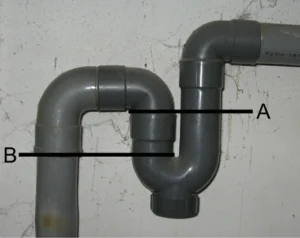
Gaps where pipes go through floors or walls are indoor entry points for lizards already in your house. The space around sink drains, toilet flanges, and shower plumbing often have small gaps.
Ceiling cracks or gaps around light fixtures can let lizards access attic spaces. They might climb walls and use these openings to hide in the attic during the day.
Do Sealed Cracks Always Work?
After you seal cracks, you might wonder if lizards will find other ways in or if your sealing job will hold up. Here’s what to expect.
Properly sealed cracks are very effective at keeping lizards out. If you use the right materials and seal thoroughly, lizards can’t get through. They’ll bump into the sealed area and have to look elsewhere.
But sealing isn’t permanent without maintenance. Studies on building maintenance show that caulk and weatherstripping deteriorate over time from sun exposure, temperature changes, and moisture. You’ll need to check and reseal every few years.
New cracks can form even after you seal existing ones. Houses settle, materials expand and contract, and weather causes wear. Make crack inspection part of your regular home maintenance routine.
Lizards might find different entry points after you seal their usual routes. They’re persistent when looking for shelter or food.
Seal one crack, and they might find another you missed. This is why thorough inspection is so important.
Professional sealing tends to last longer than DIY jobs. If you’re dealing with persistent lizard problems, consider hiring a pest control professional or handyman who specializes in exclusion work. They know all the common entry points and use commercial-grade materials.
Other Animals That Use Cracks
Lizards aren’t the only creatures that can squeeze through cracks to enter your home. Understanding what else might use these entry points helps you appreciate why sealing is important.
Mice and rats are champion crack squeezers. Research on rodent entry into buildings confirms that mice can fit through holes as small as a dime, and rats can squeeze through quarter-sized openings.
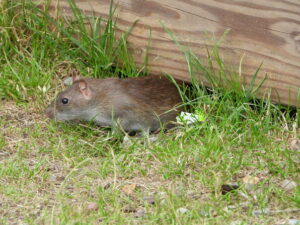
They’re much more destructive than lizards though, as they chew and cause damage.
Snakes can definitely use cracks to enter homes. Small snakes are incredibly flexible and can squeeze through openings even smaller than their head diameter.
In areas with lots of snakes, crack sealing is really important for peace of mind.
Insects easily use cracks that are way too small for lizards. Ants, cockroaches, spiders, and beetles can fit through hairline cracks.
Sealing major cracks helps with insects too, though you’ll never seal every tiny opening.
Scorpions in desert areas commonly use foundation cracks to enter homes. They’re flat and flexible like lizards and actively hunt for insects indoors at night.
Frogs and toads occasionally use cracks near ground level. They’re not as common as lizards in homes, but in areas with lots of amphibians, they might wander in through foundation cracks looking for bugs.
When Professional Help Is Needed
Sometimes dealing with lizards and cracks is more than you want to handle yourself. Here’s when to call in professionals.
If you’re finding lots of lizards regularly despite your efforts to seal cracks, you might be missing entry points. A pest control professional trained in exclusion work can do a thorough inspection and find every possible opening.
When you have structural cracks in your foundation, you need more than just caulk. Foundation repair specialists can fix serious cracks that might indicate settling or structural problems. This protects your home and keeps pests out.
If you’re dealing with lizards and other pests (like rodents or insects), a comprehensive pest management plan might be necessary. Professionals can address all your pest issues at once with a combination of exclusion and treatment.
When cracks are in hard-to-reach areas like second-story walls or high rooflines, professionals have the equipment and safety gear to seal them properly. Don’t risk injury trying to seal high or dangerous areas yourself.
If you’ve sealed cracks but suspect lizards are getting in through more complex routes (like wall voids or roof structures), professionals can use inspection cameras and other tools to find hidden pathways.
Maintaining Your Crack Sealing Long-Term
Sealing cracks once isn’t enough. You need ongoing maintenance to keep lizards out permanently. Here’s how to maintain your home’s defenses.
Inspect your foundation and exterior walls at least twice a year. Do this in spring and fall when weather changes create new cracks. Walk around your entire house looking for new openings or deteriorating seals.
Check weatherstripping and door sweeps annually. These wear out from constant use and exposure. Replace them as soon as you notice gaps or damage.
After major weather events (storms, temperature extremes, earthquakes), check your sealing work. Severe weather can create new cracks or damage existing seals.
Keep a caulk gun and supplies on hand for quick repairs. When you spot a new crack, seal it immediately before lizards discover it. Small repairs now prevent bigger problems later.
Consider resealing window and door frames every 3-5 years even if they look okay. Caulk deteriorates gradually, and preventive resealing is easier than dealing with invading pests.
Keep vegetation trimmed away from your house. Plants growing against walls can hide cracks and make inspection difficult. They also provide highways for lizards to reach upper-level cracks.
Conclusion
Lizards can definitely come through cracks, and this is actually one of their main ways of entering homes. They’re incredibly flexible and can squeeze through openings as small as a quarter-inch.
Any crack in your foundation, walls, around windows and doors, or near utility lines is a potential lizard entry point.
The good news is that sealing cracks is straightforward and effective. Use appropriate materials for different types of cracks, do thorough inspections to find all openings, and maintain your sealing work over time.
Check your home’s exterior regularly, especially in spring and fall. Pay attention to foundations, window frames, door thresholds, and anywhere utilities enter your house. Small cracks grow into big problems if ignored.
Remember that lizards aren’t trying to invade your home, they’re just looking for food, water, shelter, and comfortable temperatures.
By eliminating their easy entry points through crack sealing, you can peacefully coexist with outdoor lizards while keeping them outside where they belong.

Hi, my name is Ezra Mushala, i have been interested animals all my life. I am the main author and editor here at snakeinformer.com.