
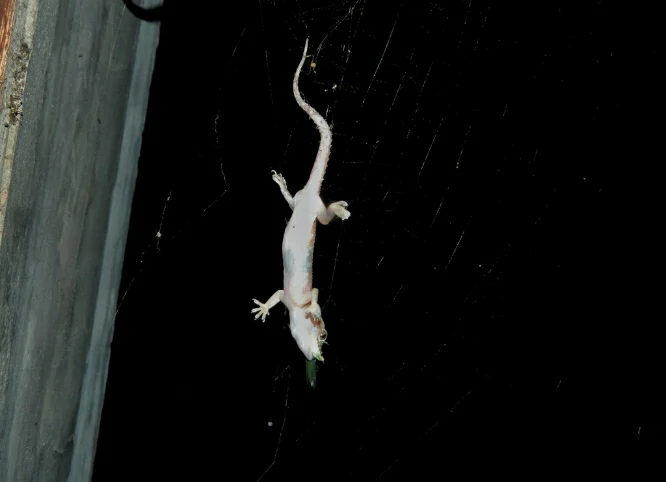
If you’ve spotted a lizard near your air vent, you might be worried it came from inside your ventilation system. Air vents seem like perfect pathways for small animals to sneak into your home. Can lizards actually come through air vents?
Yes, lizards can come through air vents, but it’s not very common. They’d need to get into your ductwork first, usually through damaged areas or gaps in your HVAC system. Most modern ventilation systems have filters and screens that make it hard for lizards to get all the way through to your living space.
While it’s possible, several things usually stop lizards from making the full journey through your vent system.
Understanding how they might get in and what stops them can help you keep your home lizard-free.
How Do Lizards Get Into Vent Systems?
For a lizard to come out of your air vent, it first needs to find a way into your ductwork. This doesn’t happen through the vents inside your house, it happens from outside or in hidden areas.
The most common entry point is through damaged or missing screens on exterior vents. Your home has vents on the outside that allow fresh air in and stale air out.
If these vents don’t have screens, or if the screens are torn or rusted, lizards can crawl right in.
Gaps in your ductwork also give lizards access. If you have ducts running through your attic, crawl space, or walls, and there are holes or disconnected sections, a lizard exploring those areas might squeeze through.
Research on lizard movement shows they’re really flexible and can fit through openings that look way too small.
Roof vents are another way in. Many homes have turbine vents or ridge vents on the roof for attic ventilation.
If your ductwork connects to or runs through your attic, and there are gaps, a lizard could get from the roof into your ducts.
Sometimes lizards get into vent systems by accident while looking for shelter.
They don’t plan to end up in your house, they’re just exploring what seems like a safe, dark space.
What Usually Stops Lizards From Coming Through Vents?
Even when lizards get into your vent system, several barriers usually prevent them from reaching your living space. Most of the time, they get stuck or turn back before you ever see them.
Air filters are your first line of defense. Most HVAC systems have filters that catch dust and particles.
These filters also block larger objects like lizards. A lizard would have to get past this filter to reach your vent, which is really hard.
The constant airflow in active vent systems pushes against anything trying to move through.
When your heating or cooling is running, air moves through the ducts with pretty strong force. A small lizard trying to climb against this flow would get blown back.
The environment inside ducts isn’t good for lizards. It’s dark, there’s no food, no water, and the temperature changes dramatically.
Lizards need stable conditions and access to food. Your ductwork doesn’t offer either of these things.
The journey is also long and confusing. Even if a lizard gets into your ductwork, it has to navigate through many feet of branching passages to find a vent that leads to your house. Most lizards won’t make it that far.
Many vents have louvers or slats that are hard for lizards to squeeze through.
The openings might look big enough, but the angle of the slats makes it difficult for a lizard to actually get out into your room.
Which Types of Vents Are Most Vulnerable?
Not all vents are equally likely to let lizards through. Some types of ventilation systems are more vulnerable than others based on their design and location.
Floor vents in older homes can be easier access points. These vents often sit directly on ductwork that runs through crawl spaces. If there are gaps in the crawl space where the ducts connect, a lizard might get in and climb up to the vent.
Basement vents are also more vulnerable because they’re closer to ground level where lizards naturally live. A lizard exploring your basement might find a vent opening and wander in.
Return air vents typically have fewer barriers than supply vents. Supply vents blow air into your room and have filters upstream.
Return vents suck air out of your room and might not have the same protection.
Bathroom and kitchen exhaust vents that lead directly outside are prime entry points. These vents go straight from your room to the exterior of your house. If the outside cover is damaged, a lizard can crawl in and end up in your bathroom or kitchen pretty quickly.
Wall vents near the ground are more accessible to lizards than ceiling vents. Lizards are good climbers, but they’re more likely to explore openings at or near ground level first.
What Types of Lizards Might Get Into Vents?
If a lizard does make it into your vent system, it’s going to be a small species. Larger lizards are too big to fit through the typical openings in ductwork.
House geckos are probably the most common vent invaders. These tiny lizards are excellent climbers and often live around human buildings. They’re small enough to fit through vent screens and gaps, and they’re attracted to the insects that gather around vents.
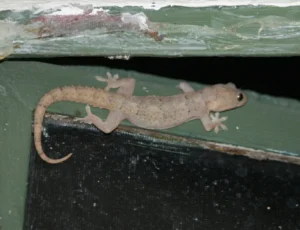
Anoles (those little green or brown lizards common in warm climates) are also small enough to potentially get into vents. They’re curious and will investigate any opening they find while hunting for food.
Young lizards of various species might accidentally wander into vents. Baby lizards are much smaller than adults and can fit through tinier openings. They’re also less experienced and might not realize they’re getting into a bad situation.
Skinks, which are small, smooth-scaled lizards, can sometimes squeeze through vent openings. They’re ground-dwelling lizards that might explore basement or floor vents.
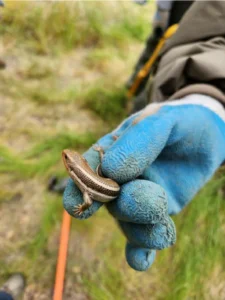
You don’t have to worry about large lizards like iguanas or monitors coming through your vents. They’re way too big to fit through vent screens or ductwork openings.
Signs a Lizard Might Be in Your Vent System
If a lizard gets into your ductwork, there are several clues you might notice before you actually see it. Catching these signs early can help you address the problem.
Strange scratching or scurrying sounds coming from your vents are the first clue. You’ll especially notice these sounds when your HVAC system isn’t running. Lizards make noise when they move around in the metal ducts.
A bad smell coming from your vents could mean a lizard died in your ductwork. If a lizard gets stuck and can’t find its way out, it’ll eventually die. The decomposing body creates a really unpleasant odor that gets blown through your vents when the system runs.
You might see droppings near your vents. Lizard droppings are small, dark, and usually have a white tip (that’s uric acid, the lizard version of urine). If you notice these near a vent, a lizard might be living in your ductwork.
Sometimes you’ll actually see a lizard peeking out from behind a vent cover or sitting on the vent itself. This is pretty rare, but it’s a clear sign one got into your system.
Unexplained dust or debris coming from your vents when the system runs might indicate something is moving around in there. Lizards can knock loose dust and particles as they move through the ducts.
How to Keep Lizards Out of Your Vents
The best way to deal with lizards in your vents is to stop them from getting in there in the first place. Here are the most effective prevention methods.
- Check all exterior vents regularly. Walk around your house and look at every vent that leads outside. Make sure all screens are intact with no holes, rust, or gaps. Replace any damaged screens immediately.
- Install mesh screens over vents that don’t have them. Some older homes have exterior vents with no screening at all. You can buy universal vent screens at hardware stores and install them yourself. Make sure the mesh is small enough that even tiny lizards can’t squeeze through.
- Seal gaps in your ductwork. If you can access your ducts in the attic, basement, or crawl space, check them for holes or disconnected sections. Use metal tape (not regular duct tape, which deteriorates) or mastic sealant to close any openings.
- Keep the areas around your vents clean. Don’t let plants grow too close to exterior vents, and remove any debris or hiding spots nearby. Studies show that lizards are less likely to hang around if there aren’t good places to hide close by.
- Replace your HVAC filters regularly. A clean, properly installed filter creates another barrier between any lizards in your ductwork and your living space. It also helps your system work better and improves air quality.
- Consider having your ducts professionally sealed. If you live in an area with lots of lizards and you’re worried about them getting in, an HVAC professional can seal your entire duct system. This prevents air leaks and keeps pests out.
What to Do If You Find a Lizard in Your Vent
If you actually see a lizard in or near your vent, here’s how to handle it safely without hurting yourself or the lizard.
First, turn off your HVAC system. You don’t want to hurt the lizard by pulling it into the fan, and you don’t want to push it deeper into your ductwork. Turn the system off at the thermostat.
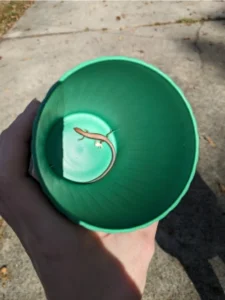
If the lizard is visible at the vent opening, you can try to catch it yourself. Use a small box or container and gently guide the lizard into it. Wear gloves if you’re worried about getting scratched, though most small lizards won’t hurt you.
You might be able to remove the vent cover to reach the lizard better. Most vent covers are held on with screws or clips. Take the cover off carefully, catch the lizard, and then put the cover back on.
Once you catch it, take the lizard outside and release it far from your house. Don’t kill it, these lizards are harmless and they actually help by eating bugs you don’t want around.
If the lizard is deep in your ductwork and you can’t reach it, you’ll need professional help. An HVAC technician can access your ducts and remove the lizard safely. They can also check for entry points while they’re at it.
Never use poison or sticky traps in your ductwork. If a lizard dies in there, you’ll have to deal with the smell for weeks. Plus, the decomposing body can attract flies and other pests.
Are Lizards in Vents Dangerous?
Having a lizard in your vent system isn’t dangerous, but it’s definitely annoying. Understanding the actual risks helps you respond appropriately without panicking.
The lizards that get into vents are almost always harmless species. Small house geckos and anoles don’t bite people, and even if they did, they’re not venomous. They’re more scared of you than you are of them.
The main problem is if a lizard dies in your ductwork. The smell can be really bad and last for several weeks. A dead lizard can also attract flies, beetles, and other insects that feed on dead animals.
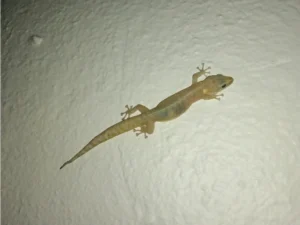
Lizards can leave droppings in your vents, which isn’t great for air quality. Their waste can carry bacteria, though the risk of getting sick from this is low if your HVAC system has good filters.
In very rare cases, a lizard could interfere with your HVAC system’s operation. If it gets into the actual mechanical parts (not just the ducts), it might damage sensors or block airflow. But this almost never happens.
The noise from a lizard in your vents can be disturbing, especially at night. The scratching and scurrying sounds might keep you awake or make you worry something worse is in your ducts.
Other Pests That Come Through Vents
Lizards aren’t the only small animals that might use your vent system as a way into your house. If you live in an area with wildlife, you might deal with other visitors too.
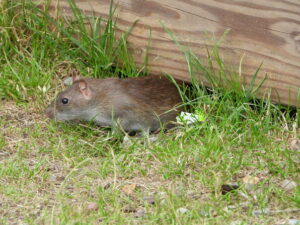
Mice and rats definitely get into vent systems. They’re even better at squeezing through small spaces than lizards are. Research on building pest entry shows that rodents are attracted to ductwork because it provides shelter and sometimes warmth.
Snakes occasionally follow lizards or rodents into ductwork. If you have lizards or mice in your vents, a small snake might come looking for them. This is rare, but it happens in some areas.
Birds sometimes nest in exterior vent openings, especially dryer vents and bathroom exhaust vents. While they don’t usually come all the way through to your living space, their nests can block airflow and create fire hazards.
Insects are by far the most common vent invaders. Cockroaches, spiders, wasps, and ants can all get into your ductwork. They’re much smaller than lizards, so they have an easier time getting past screens and filters.
Squirrels and chipmunks might get into attic vents or roof vents. From there, they could potentially access your ductwork if it runs through the attic. But they’re usually more interested in nesting in the attic itself.
When to Call a Professional
Sometimes dealing with a lizard in your vent system is more than a DIY job. Here’s when you should call in professional help.
If you keep finding lizards in your vents even after sealing gaps and fixing screens, you might have a bigger problem. A professional can do a thorough inspection of your entire HVAC system and find entry points you missed.
When you hear a lizard in your ducts but can’t see it or reach it, an HVAC technician has the tools and experience to access your ductwork safely. They can remove the lizard without damaging your system.
If you smell something dead in your vents but can’t locate the source, professionals can find and remove it. They can also clean and sanitize your ductwork to get rid of the odor and any bacteria.
When your HVAC system seems damaged or isn’t working right after a lizard invasion, don’t try to fix it yourself. You could make things worse or even void your warranty. Call a licensed technician.
If you’re dealing with multiple pests in your vents (lizards plus rodents or insects), you might need both an HVAC professional and a pest control expert to solve the problem completely.
Differences Between Heating and Cooling Vents
You might wonder if lizards are more likely to come through heating vents versus cooling vents, or if there’s any difference. Here’s what you need to know.
In most homes, heating and cooling use the same ductwork. The same vents that blow hot air in winter blow cold air in summer. So there’s no real difference in terms of lizard access.
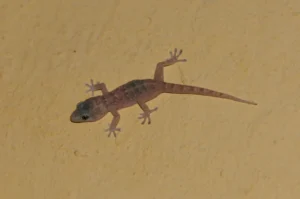
Lizards might be more attracted to heating vents during cold weather because they’re looking for warmth. Lizards are cold-blooded and need external heat sources. A warm vent might draw them in from outside.
Cooling vents blow cold air, which lizards generally avoid. They won’t purposely go toward a cold air source. But if a lizard is already in your ductwork, cold air won’t necessarily drive it out either.
The bigger factor is whether vents are supply vents (blowing air into the room) or return vents (sucking air out). Supply vents have stronger airflow that might prevent lizards from coming through. Return vents have gentler suction that’s easier for a lizard to work against.
Can Duct Cleaning Help?
You might wonder if getting your ducts professionally cleaned can help prevent or solve lizard problems. Here’s what duct cleaning can and can’t do.
Duct cleaning removes dust, debris, and organic buildup from your ductwork. This makes the environment less attractive to insects, which in turn makes it less attractive to lizards that eat insects.
During a professional duct cleaning, technicians can spot and report any gaps, holes, or damage in your ducts. This helps you find and fix potential entry points for lizards.
If a lizard died in your ducts, professional cleaning can remove the remains and sanitize the area. This gets rid of the smell and prevents health issues.
But duct cleaning alone won’t keep lizards out if you still have gaps in your system or damaged exterior vents. You need to seal entry points too.
Regular duct cleaning (every 3-5 years) is good for air quality and HVAC efficiency. While it’s not specifically for pest control, it can help as part of a broader prevention strategy.
Conclusion
Lizards can come through air vents, but it’s not very common. They need to find a way into your ductwork first, usually through damaged exterior vents or gaps in the ducts themselves. Even then, filters, airflow, and the hostile duct environment usually stop them.
The best prevention is to check and maintain your vent system regularly. Make sure all exterior vents have intact screens, seal any gaps in your ductwork, and replace your HVAC filters on schedule.
If you do find a lizard in your vent, turn off your HVAC system and try to catch it safely. Release it outside far from your house, then find and seal the entry point it used.
Remember that lizards aren’t trying to invade your home. They’re just looking for shelter, water, and food. They end up in vents by accident, not by design. Treating them humanely while protecting your home is the best approach.

Hi, my name is Ezra Mushala, i have been interested animals all my life. I am the main author and editor here at snakeinformer.com.