

Hamsters and rats are both popular small pets that belong to the rodent family. They’re similar in some ways, like their size, their need for cages, and their gnawing behavior.
If you keep both types of pets or you’re just curious about rodent genetics, you might wonder whether these two species could mate and produce offspring. Can hamsters and rats breed together?
No, hamsters and rats can’t breed together. They’re different species from different subfamilies within the rodent family, and their genetics are too different to create offspring. Even if a hamster and rat were to mate, no pregnancy would result because their DNA isn’t compatible.
This isn’t just unlikely or rare. It’s completely impossible. Hamsters and rats are separated by millions of years of evolution, and while they’re both rodents, they’re about as different from each other as dogs are from bears. Their reproductive systems simply can’t work together to create hybrid offspring.
Why Hamsters and Rats Can’t Crossbreed
For two animals to breed successfully, they need to be very closely related genetically. Their chromosomes (structures that carry genetic information) need to be similar enough to pair up and combine properly when sperm meets egg.
Hamsters and rats have completely different numbers of chromosomes. Syrian hamsters have 44 chromosomes, while rats have 42 chromosomes. Dwarf hamsters have even different numbers depending on the species (22-28 chromosomes in some species).

But it’s not just about the number of chromosomes. The actual genetic code, the size and shape of chromosomes, and how genes are organized are all completely different between hamsters and rats. Even in a laboratory setting, you couldn’t force their genetic material to combine properly.
When animals are this genetically different, their sperm and eggs simply don’t recognize each other. The rat sperm wouldn’t be able to penetrate a hamster egg, and vice versa. The biological mechanisms that allow fertilization to happen are species-specific.
Hamsters and Rats Are From Different Subfamilies
To understand why hamsters and rats can’t breed, it helps to look at how they’re classified scientifically. Both are rodents in the order Rodentia, but that’s where their close relationship ends.
Rats belong to the subfamily Murinae (Old World rats and mice). This group includes rats, mice, and their close relatives. Hamsters belong to the subfamily Cricetinae (hamsters and New World rats and mice). These subfamilies split apart evolutionarily many millions of years ago.
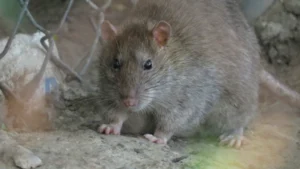
To put this in perspective, the genetic difference between hamsters and rats is similar to the difference between cats and dogs. Both are carnivores, but they’re in completely different families and can’t interbreed.
Even within the hamster group, different species of hamsters can’t always breed together. Syrian hamsters and dwarf hamsters, for example, are different enough that they can’t produce offspring even though they’re both hamsters.
They Wouldn’t Even Try to Mate
Even setting aside the genetic impossibility, hamsters and rats wouldn’t attempt to mate with each other in the first place. Animals are attracted to potential mates of their own species through specific signals like smell, appearance, and behavior.
Female hamsters in heat release pheromones (chemical signals) that attract male hamsters. These pheromones are species-specific. A rat wouldn’t recognize or respond to hamster pheromones, and a hamster wouldn’t recognize rat pheromones.

The courtship behaviors are also completely different. Rats have their own mating rituals and behaviors that hamsters don’t share. The physical act of mating is also different between species, with different postures and behaviors.
In reality, if you put a hamster and rat together, they’d be more likely to fight than to attempt mating. Both species can be territorial, and they’d probably see each other as threats rather than potential mates.
Examples of Animals That Can Crossbreed
To better understand why hamsters and rats can’t breed, it helps to look at animals that can crossbreed. These examples show just how closely related animals need to be for breeding to work.

Horses and donkeys can breed to create mules or hinnies. These animals are both in the genus Equus and are very closely related. Even so, their offspring (mules) are almost always sterile and can’t reproduce.
Lions and tigers can breed to create ligers or tigons. Both are big cats in the genus Panthera. Like mules, these hybrids often have health problems and fertility issues.
Different species of hamsters generally can’t breed with each other. Syrian hamsters and Roborovski dwarf hamsters, for example, can’t produce offspring even though they’re both hamsters. They’re too genetically different.
Notice that all successful crossbreeding happens between animals in the same genus or very closely related species. Hamsters and rats don’t meet this requirement at all.
Hamsters and Rats Shouldn’t Be Housed Together
Even though breeding isn’t possible, you shouldn’t keep hamsters and rats in the same cage for many other reasons. Both species are better off separated.
First, they have different social needs. Rats are highly social animals that need companionship from other rats. Most hamster species (especially Syrian hamsters) are solitary and prefer to live alone. Housing them together would stress both animals.
Second, size differences can be dangerous. Rats are generally larger than many hamster species. A rat could seriously injure or kill a hamster, even if the rat didn’t mean to be aggressive. Even if you have a large hamster and a young rat, size differences change as they grow.

Third, they have different habitat needs. Hamsters need deep bedding for burrowing, while rats need vertical space and climbing opportunities. Their dietary needs also differ slightly. Trying to meet both species’ needs in one cage would be difficult.
Finally, territorial aggression is a real risk. Both hamsters and rats can be territorial. Putting them together would likely result in fighting, with one or both animals getting injured.
Different Care Requirements
Beyond housing, hamsters and rats have different care needs that make keeping them together impractical. Hamsters are nocturnal and most active at night. While rats can be active at various times, they’re often awake during the day too.
Hamsters generally prefer to be left alone and don’t enjoy as much handling as rats do. Rats, on the other hand, are intelligent and social animals that need daily interaction and playtime with their owners.
The lifespan differs too. Hamsters typically live 2-3 years, while rats live about 2-3 years as well, but the timing of their life stages is different. This means their health needs and behaviors change at different rates.
Temperature and humidity preferences also vary between species. While both tolerate similar ranges, hamsters are a bit more sensitive to extreme temperatures than rats.
What Rodents Can Breed Together?
Even within the rodent order, crossbreeding is extremely limited. Most rodents can only breed within their own species, and even that has limitations.
Different color varieties or breeds of the same rat species can breed together. For example, a Dumbo rat and a standard rat can breed because they’re the same species (Rattus norvegicus) with just different physical traits.
Black rats (Rattus rattus) and brown rats (Rattus norvegicus) are both rats but are different species. There are extremely rare reports of them interbreeding, but it’s very uncommon and the offspring usually have problems.
Mice and rats can’t breed together even though they seem similar. They’re in different genera and are too genetically different. The same is true for hamsters and gerbils, hamsters and mice, or any other combination of different rodent species.
The rule is simple: if they’re different species, they almost certainly can’t breed, even if they’re both rodents.
Myths About Rodent Crossbreeding
There are various myths and misconceptions about rodents breeding together. Some people claim to have seen “hamster-rat hybrids” or similar impossible combinations, but these are always misidentifications.
Sometimes people see a large hamster or unusual-looking rat and assume it must be a hybrid. But genetic testing would show these animals are simply normal variations within their species, not hybrids.
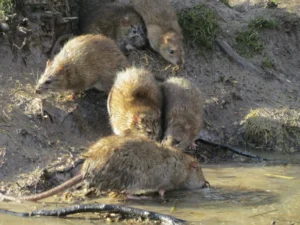
In some cases, people might have pregnant hamsters or rats and not realize it, then assume the other species in the house must be the father. But the pregnancy happened before they got the animal, or happened through contact with the same species.
Pet stores sometimes mislabel animals too. An animal sold as a hamster might actually be a different species of rodent, leading to confusion about what can breed with what.
Scientific Reasons Crossbreeding Fails
At a cellular level, there are many reasons why hamster and rat breeding would fail. The sperm from one species has specific proteins on its surface that need to match receptors on the egg of the same species. Hamster eggs don’t have receptors for rat sperm, and rat eggs don’t have receptors for hamster sperm.
Even if fertilization somehow happened (which it can’t), the embryo would fail to develop. The genetic instructions from hamsters and rats are too different. The embryo wouldn’t know how to form organs, how to divide cells properly, or how to develop into a functioning organism.
Chromosome pairing during cell division requires chromosomes of similar size and gene content. Hamster and rat chromosomes can’t pair properly, which means cell division would fail immediately.
The placenta (which connects the developing embryo to the mother) is also species-specific. A rat embryo couldn’t develop in a hamster uterus, and a hamster embryo couldn’t develop in a rat uterus, even if fertilization were possible.
Legal and Ethical Considerations
Even if hamster-rat crossbreeding were somehow possible (which it isn’t), there would be serious ethical concerns about creating hybrid animals. Most countries have regulations about genetic modification and creating hybrid species.

Hybrid animals often suffer from health problems. They may have shortened lifespans, chronic pain, organ dysfunction, or other issues because their mixed genetics don’t work properly together.
Creating hybrids for novelty or curiosity when it would result in suffering is considered unethical by most animal welfare organizations and veterinarians.
Fortunately, since hamster-rat breeding is biologically impossible, these ethical concerns are purely theoretical for this particular combination.
Focus on Proper Single-Species Care
Instead of wondering about impossible crossbreeds, it’s better to focus on providing excellent care for whichever species you choose to keep. Both hamsters and rats make wonderful pets when their specific needs are met.
If you want to keep both hamsters and rats, keep them in completely separate cages in different areas if possible. This prevents stress from seeing or smelling each other and eliminates any risk of escape and confrontation.
Learn about the specific care requirements for each species. Rats need social interaction with other rats and with humans. Hamsters (especially Syrians) need to be housed alone and have different enrichment needs.
Both species need proper diet, clean cages, veterinary care, and enrichment activities. Meeting these species-specific needs will give you healthy, happy pets.
Frequently Asked Questions
Can rats and hamsters crossbreed?
No, rats and hamsters can’t crossbreed. They’re different species with incompatible chromosomes, so even if they tried to mate, they couldn’t produce babies.
Can rats and hamsters interbreed?
No, rats and hamsters can’t interbreed. Even though they’re both small rodents, their genetics are just too different for reproduction to work.
Can rats and hamsters create hybrids?
No, rats and hamsters can’t create hybrids. There’s no such thing as a rat-hamster mix because their DNA simply doesn’t match up well enough to form viable offspring.
Conclusion
Hamsters and rats can’t breed together. They’re different species from different subfamilies of rodents, and their genetics are completely incompatible. No fertilization would occur if they were to mate, and even in a laboratory setting, their genetic material couldn’t be combined to create viable offspring.
The genetic differences between hamsters and rats are similar to the differences between cats and dogs. They’re both rodents, but that doesn’t make them closely related enough to breed. Even different species of hamsters generally can’t breed with each other.
If you keep both hamsters and rats as pets, house them separately and provide species-appropriate care for each. There’s no risk of crossbreeding, but there are many other good reasons to keep these species apart.

Hi, my name is Ezra Mushala, i have been interested animals all my life. I am the main author and editor here at snakeinformer.com.