
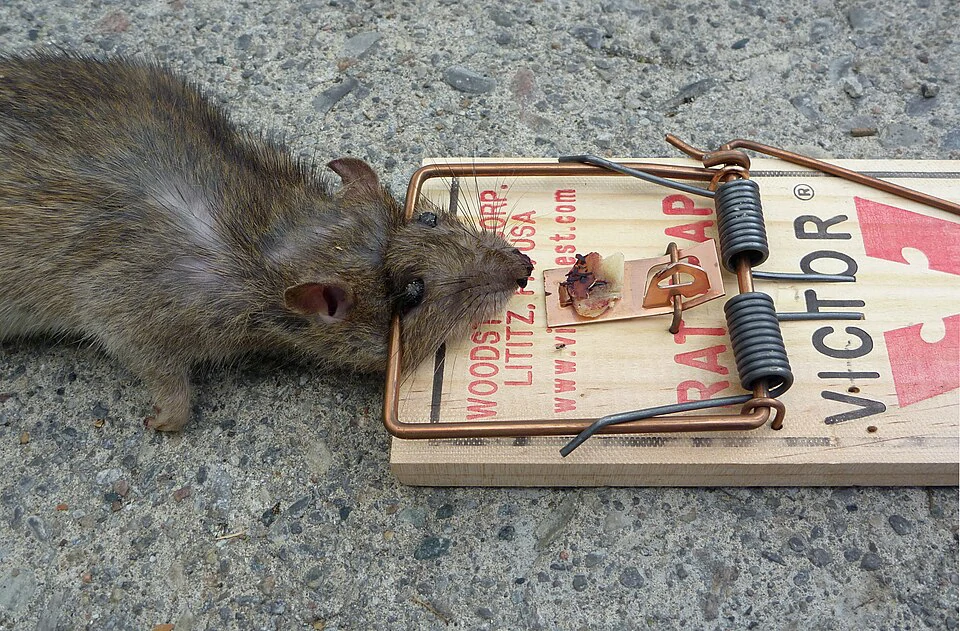
You’re checking rat traps in your basement or garage, maybe barefoot or just in socks, and suddenly you wonder what would actually happen if you accidentally stepped on one.
It’s a pretty reasonable fear if you’ve ever heard how loud these things snap. Can a rat trap break your toe?
Yes, a rat trap can break your toe, especially the smaller toes. The metal bar on a standard snap trap has enough force to fracture the bones in your toes, particularly if you step on it with your full weight or if the trap catches you on the end or side of your toe where the bones are thinnest.
The good news is that not every encounter with a rat trap will break bones. But it’ll definitely hurt, and you could end up with serious bruising, cuts, or yes, a fracture if things line up the wrong way.
How Much Force Does a Rat Trap Actually Have?
A standard wooden or plastic rat trap uses a spring-loaded metal bar to kill rats quickly. When that bar snaps down, it’s moving fast and hits hard.
The force varies depending on the trap model, but most rat traps generate somewhere between 5 to 10 pounds of pressure when they snap shut. That might not sound like much, but it’s concentrated in a very small area.
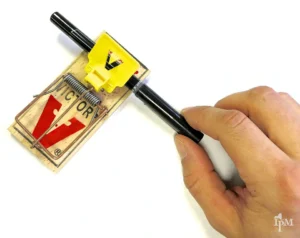
When you compare that to a mouse trap, rat traps are significantly stronger. Mouse traps have enough force to hurt, but they’re less likely to break bones. Rat traps are built to kill a much larger animal.
The speed of the snap matters too. That metal bar comes down in a fraction of a second, and the impact is sudden and sharp. Your toe doesn’t have time to move out of the way.
Why Your Toes Are Vulnerable to Breaks
Your toes have small bones called phalanges. These bones are pretty delicate, especially in your smaller toes (the pinky toe and the one next to it).
The bones in your big toe are thicker and stronger, so they can handle more impact. But your little toe bones are thin and can crack or break with surprisingly little force.
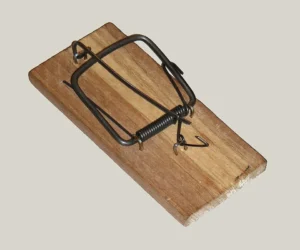
When a rat trap snaps down on your toe, the metal bar usually catches you across the top or side. This puts all that pressure on a very small section of bone.
If the trap catches you right at a joint, the risk of injury goes up. Joints are where bones connect, and they’re more vulnerable than the solid shaft of the bone.
What Happens When a Rat Trap Hits Your Toe
The immediate sensation is intense pain. That metal bar comes down hard, and even if it doesn’t break the bone, it’s going to hurt like crazy.
You’ll probably see bruising pretty quickly. The impact damages blood vessels under the skin, and blood pools in the tissue. Your toe might turn purple, blue, or black.
Swelling is almost guaranteed. The soft tissue around the bone will puff up as your body responds to the injury. This can make it hard to wear shoes for several days.
If the bone actually breaks, you might feel a snap or crack when it happens. Sometimes you’ll hear it too, though not always. The pain will be sharp and won’t go away.
Bleeding is possible if the metal bar breaks the skin. This is more likely if you’re barefoot or wearing thin socks. The cut might not be deep, but it can still bleed quite a bit.
How to Tell If Your Toe Is Actually Broken
After you’ve been hit by a rat trap, you need to figure out if you’ve got a break or just bad bruising. The symptoms can overlap, but there are some clues.
If you can’t move your toe at all without extreme pain, that’s a sign something might be broken. Bruising alone usually allows some movement, even if it hurts.
Look at the shape of your toe. If it’s sitting at a weird angle or looks crooked compared to your other toes, that suggests a fracture. Bones that are broken can shift out of place.
The location of the pain matters. A break usually hurts in one specific spot, right where the bone cracked. Bruising tends to ache over a larger area.
If the pain gets worse over the first few hours instead of staying the same or getting a bit better, that’s concerning. Broken bones typically hurt more as swelling increases.
You might also hear or feel a grinding sensation when you move the toe. This is called crepitus, and it happens when the broken ends of the bone rub together. It’s a pretty clear sign of a fracture.
Should You Go to the Doctor?
Not every toe injury needs a doctor visit, but some definitely do. If you think your toe might be broken, it’s better to get it checked.
Go to urgent care or the emergency room if your toe is obviously deformed or pointing the wrong direction. This means the bone has shifted significantly and might need to be set back in place.
If you can’t put any weight on your foot at all, that’s another reason to get medical attention. Even a broken toe usually allows some weight bearing, so if you can’t do that, something else might be going on.
Severe pain that doesn’t improve with ice and over-the-counter pain medication is worth getting checked. You shouldn’t have to suffer through unbearable pain at home.
Any break in the skin needs attention too. Open wounds have a risk of infection, and if there’s a broken bone under a cut, that’s called an open fracture. These need proper cleaning and possibly antibiotics.
What Doctors Do for Broken Toes
If you end up at the doctor with a suspected broken toe, they’ll start with an examination. They’ll look at your toe, feel along the bone, and ask you to move it if you can.
X-rays are the standard way to confirm a break. The doctor will take pictures from different angles to see exactly where the fracture is and whether the bone has moved out of position.
For most toe fractures, treatment is actually pretty simple. Your doctor will probably buddy tape your injured toe to the toe next to it. This keeps the broken bone stable while it heals.
You might get a special shoe or boot to wear. This protects your toe and makes walking less painful. Some fractures don’t need this, and regular shoes with a stiff sole will work fine.
Pain medication helps with the discomfort. Your doctor might prescribe something stronger than what you can buy over the counter, especially for the first few days.
If the bone is badly displaced, you might need it set back in place. This is called a closed reduction. The doctor will pull and manipulate your toe to realign the bone, usually after giving you numbing medication.
Healing Time and What to Expect
A broken toe usually takes about 4 to 6 weeks to heal. The exact time depends on which toe was broken and how bad the fracture is.
Your little toe might heal a bit faster because it’s smaller. Your big toe takes longer because it bears more weight when you walk.
For the first few days, you’ll need to rest and keep your foot elevated as much as possible. This helps reduce swelling and pain. Ice packs for 15-20 minutes at a time can also help.
You can usually walk on a broken toe after the first few days, but it’ll be uncomfortable. Use the special shoe your doctor gave you, or wear shoes with a very stiff sole that doesn’t bend.
As the bone heals, the pain will gradually decrease. By week 3 or 4, you should notice a significant improvement. But the toe might still feel a bit sore or stiff.
Full recovery, where your toe feels completely normal again, can take 2 to 3 months. Some people have lingering stiffness or occasional aches, especially in cold weather.
Complications That Can Happen
Most broken toes heal just fine, but complications can occur. One issue is when the bone doesn’t heal straight, which can cause chronic pain or make your toe look crooked.
Arthritis can develop in the toe joint years later, especially if the break was near a joint. This causes stiffness and pain that comes and goes.
Infection is a risk if the skin was broken when the trap hit you. Signs of infection include increasing redness, warmth, pus, or red streaks running up from your toe toward your ankle.
Some people develop chronic pain even after the bone heals. This might be from nerve damage or from the bone healing in a slightly off position.
A condition called complex regional pain syndrome is rare but can happen after any trauma. This causes severe, burning pain that’s out of proportion to the injury and can affect your whole foot.
Can You Prevent a Rat Trap from Breaking Your Toe?
The best prevention is simple: don’t stick your toes near rat traps. But if you’re setting or checking traps, there are ways to stay safer.
Always wear shoes when you’re anywhere near rat traps. Thick-soled shoes, work boots, or even sturdy sneakers will protect your toes if you accidentally step on a trap.
Pay attention to where you’re walking. It sounds obvious, but a lot of accidents happen when people are distracted or rushing. Take your time in areas where traps are set.
Use a long stick or tool to trigger traps before you pick them up. This is especially smart if you’re checking a trap that might still be set or if you can’t clearly see whether it’s been triggered.
Mark the locations of your traps somehow. You could use bright tape on the floor nearby or make a mental map. This helps you remember to be careful in those specific spots.
If you’re setting multiple traps, do them one at a time. Don’t carry a handful of set traps around, that’s just asking for trouble.
Types of Rat Traps and Injury Risk
Not all rat traps pose the same level of danger to your toes. Traditional snap traps are the most likely to cause injury because of how they’re designed.
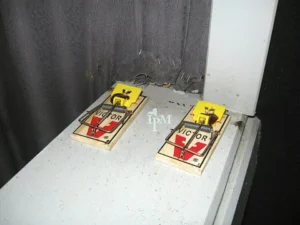
Wooden Victor-style traps have been around forever. These have a strong spring and a thick metal bar. They’re very capable of breaking a toe if you step on one.
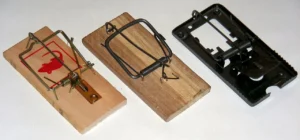
Plastic snap traps work similarly but sometimes use a slightly different mechanism. Some have a quick-release feature that might reduce the time your toe is trapped, but they still hit hard.
Electronic rat traps won’t break your toe with mechanical force, but they can deliver a shock if you touch the wrong part while they’re active. This is a different kind of injury but still serious.
Glue traps won’t break bones, but stepping on one barefoot is a nightmare. You’ll be stuck, and getting the glue off your foot is difficult and messy.
Live traps have a door that closes when the rat enters. If your toe somehow got in the way when this closes, it could get pinched, but these are generally safer than snap traps.
Other Injuries Rat Traps Can Cause to Toes
Even if a rat trap doesn’t break your toe, it can still cause other injuries. Deep bruising can be really painful and limit your mobility for days.
Cuts from the metal bar are common, especially if the edges are sharp or if you’re barefoot. These cuts might need stitches if they’re deep enough.
Crushing injuries to the soft tissue can happen even without a bone break. This damages muscles, tendons, and blood vessels in your toe. The toe might work fine eventually, but recovery takes time.
Nerve damage is possible if the trap compresses nerves in your toe. This can cause numbness, tingling, or weird sensations that might last for weeks or even become permanent.
Some people lose a toenail after getting hit by a rat trap. The impact damages the nail bed, and the nail eventually falls off. A new one will grow back, but it takes months.
Conclusion
A rat trap can absolutely break your toe, especially your smaller toes where the bones are thinnest. The metal bar on these traps comes down with enough force to fracture bone, particularly if it catches you at the right (or wrong) angle.
Even if your toe doesn’t break, you’re still in for pain, bruising, and swelling. Cuts are common too, especially if you’re barefoot when the trap gets you.
The best prevention is simple: wear shoes whenever you’re in areas where rat traps are set. Pay attention to where you’re walking and take your time when checking or setting traps.
If you do get caught by a trap and think your toe might be broken, don’t just tough it out. Get it checked by a doctor, especially if you can’t bear weight, the toe looks deformed, or the pain is severe.
Most broken toes heal well with simple treatment like buddy taping and wearing proper shoes. You’ll be back to normal in about 4 to 6 weeks in most cases.
The experience might make you more careful around rat traps in the future, which honestly isn’t a bad thing. These devices are designed to kill animals quickly, and they don’t care if it’s a rat or your toe that triggers them.

Hi, my name is Ezra Mushala, i have been interested animals all my life. I am the main author and editor here at snakeinformer.com.