
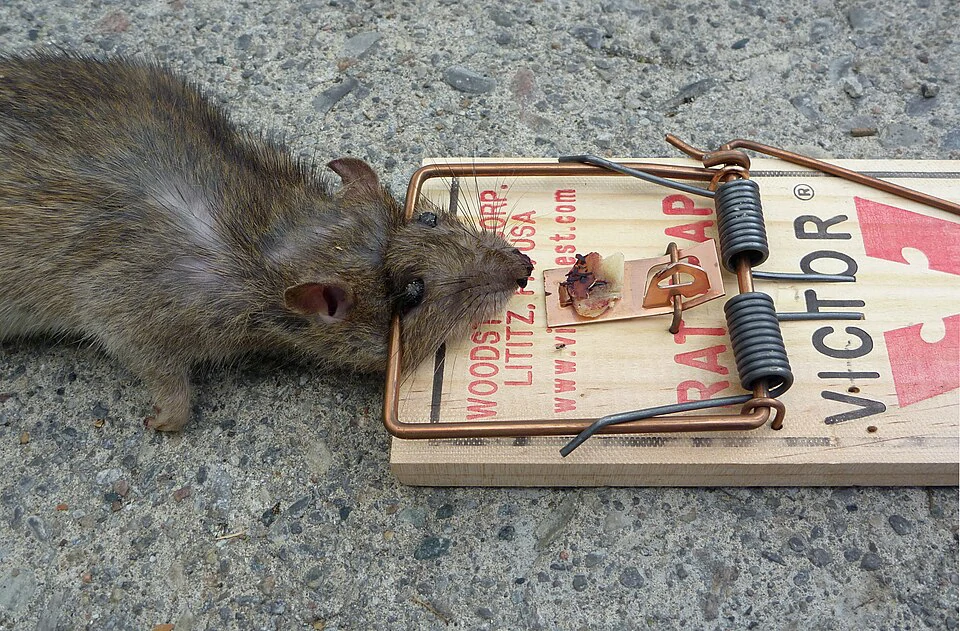
Setting rat traps can be nerve-wracking, especially when you’re trying to place bait or position the trap in tight spaces. That metal bar snaps down with surprising force, and getting your finger caught sounds like a nightmare. Can a rat trap break your finger?
A standard snap rat trap can break your finger, though it’s more likely to cause severe bruising, cuts, and possibly fracture small bones rather than completely breaking larger finger bones. The trap’s spring delivers about 8-12 pounds of force, which is enough to cause serious injury to fingers, especially if it catches you at the joint or on the tip of your finger.
While rat traps are designed to kill rats quickly, they can definitely injure human fingers badly enough to need medical attention.
The severity depends on the size and type of trap, where exactly it catches you, and how quickly you can get your finger free.
How Much Force Does a Rat Trap Actually Have?
A standard Victor-style rat trap (the classic wooden or plastic base with a metal snap bar) has a spring that delivers approximately 8 to 12 pounds of force when it snaps shut.
This doesn’t sound like much compared to bigger traps, but it’s concentrated on a very small area, which makes it more dangerous.
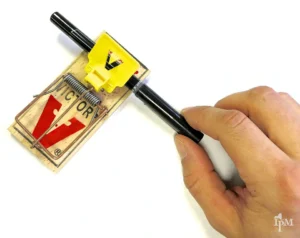
When force is concentrated on a small point, it causes more damage than the same force spread out over a larger area. This is the same principle that makes a sharp knife cut better than a dull one, or why high heels leave dents in floors while flat shoes don’t.
The metal bar on a rat trap is thin and moves very fast. When it catches your finger, all that force hits a narrow line across your finger.
This can easily break skin, cause deep bruising, and damage the structures inside your finger like tendons, nerves, and small bones.
For comparison, a mouse trap delivers about 2 to 4 pounds of force. That’s enough to hurt and might break the skin, but it’s much less likely to cause serious injury.
Rat traps are designed to kill animals that are much larger and tougher than mice, so they need significantly more power.
There are also heavy-duty rat traps designed for larger rodents or multiple catches. These can deliver 15 to 20 pounds of force or even more. If one of these catches your finger, you’re almost guaranteed to have a serious injury that needs medical attention.
What Injuries Can Actually Happen?
The most common injury from a rat trap is severe bruising and a deep cut where the metal bar hits your finger.
The bar can break the skin and cut into the soft tissue underneath. These cuts often bleed a lot because fingers have lots of blood vessels running through them.
Fractures are definitely possible, especially with certain types of finger bones. The small bones at the tip of your finger (called distal phalanges) are more vulnerable than the thicker bones closer to your hand.
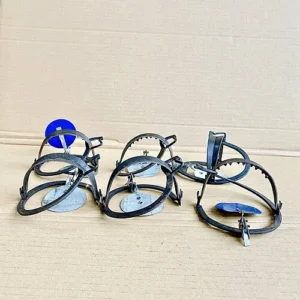
If the trap catches you right on a fingertip or across a joint, it can crack or fracture these bones.
If the trap catches your finger at a joint (like a knuckle), it can damage the joint capsule and ligaments that hold the joint together.
This type of injury can cause long-term problems with pain and stiffness, even after everything heals. Joint injuries often take longer to heal than simple cuts or bruises.
Nerve damage is another serious possibility. Your fingers are full of nerves that control sensation and movement.
If the trap damages these nerves, you might experience numbness, tingling, or loss of feeling in part of your finger. In severe cases, this damage can be permanent.
Tendon injuries can also happen. Tendons are the tough cords that connect your muscles to your bones and let you move your fingers.
If a rat trap damages a tendon, you might lose the ability to bend or straighten your finger properly. Tendon injuries usually require medical treatment and sometimes surgery to fix.
The fingernail and nail bed can be damaged if the trap catches you there. Damage to the nail bed can cause the nail to grow back deformed or not grow back at all. It can also lead to painful infections if bacteria get trapped under the damaged nail.
Factors That Affect How Bad the Injury Is
Where the trap catches you makes a huge difference in how badly you’re hurt. If it catches just the skin on the side of your finger, you might get away with just a bruise and a small cut.
But if it catches you right across a bone or joint, the injury will be much worse.
The angle matters too. If your finger is lying flat when the trap snaps and it catches you perpendicularly (straight across), you’ll take the full force of the impact.
If your finger is at an angle, some of the force might be deflected and cause less damage.
How fast you react can also affect the injury. If you feel the trap starting to catch your finger and you jerk your hand away instantly, you might pull free before the trap closes all the way. But jerking your hand away can also cause the trap to scrape or cut you as it slides off.
The size and strength of your hands matter. People with larger, stronger hands and thicker bones are less likely to break bones from a rat trap than people with smaller, more delicate hands.
Children are at much higher risk of serious injury because their bones are smaller and not fully developed.
Your pain tolerance doesn’t affect the actual damage, but it affects how you react. Some people panic and make the injury worse by pulling or twisting their caught finger.
Staying calm and carefully opening the trap is much safer, even though it’s hard to do when you’re in pain.
Different Types of Rat Traps and Their Dangers
The classic snap trap is what most people think of when they hear “rat trap.” These have a spring-loaded metal bar that snaps down when triggered.
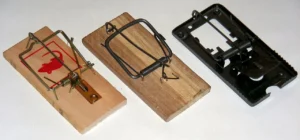
They’re the most common type and the ones most likely to injure fingers because people have to get close to set them and place bait.
Electronic rat traps deliver a high-voltage electric shock to kill rats instantly. If you stick your finger in one of these while it’s on, you’ll get shocked.
The shock isn’t usually strong enough to be life-threatening for humans, but it definitely hurts and can cause muscle spasms. Some models have safety features that prevent them from operating when open.
Glue traps don’t cause injury in the same way, but getting your finger stuck on one is incredibly annoying and painful.
The glue is very strong and pulling your finger free can tear skin. You’ll need to use oil or a special solvent to safely remove the glue without damaging your skin.
Live catch traps are the safest for humans. These are cage-style traps that capture the rat alive without harming it.
The worst that can happen is you might pinch your finger when closing the door, but it’s not going to cause serious injury.
Bucket traps and other homemade trap designs vary widely in how dangerous they are. Some are completely safe for humans, while others can cause injuries similar to snap traps.
Always think about how the trap works and where your fingers will be when you’re setting it up.
What to Do If a Rat Trap Catches Your Finger
First, don’t panic and don’t just rip your finger free. The trap is already closed, so pulling against it will just make the injury worse.
Take a breath and assess the situation. Is the trap fully closed or just partially closed on your finger?
Carefully open the trap by pushing back on the spring-loaded bar. Most snap traps have a bar you can push back to release the mechanism.
Use your other hand to do this slowly and gently. Once the pressure is off, carefully remove your finger.
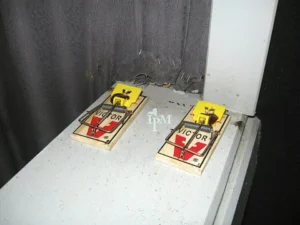
Immediately wash the injury with soap and clean water. Rat traps can have bacteria on them from previous catches or from sitting in dusty areas.
Cleaning the wound reduces the risk of infection. Let the wound bleed a little bit at first, as this can help flush out bacteria.
Apply pressure with a clean cloth or bandage to stop any bleeding. Most cuts from rat traps will stop bleeding within a few minutes of applying steady pressure. If bleeding doesn’t stop after 10 to 15 minutes of pressure, you probably need medical attention.
Ice the injury to reduce swelling and pain. Wrap ice in a cloth (don’t apply ice directly to skin) and hold it on the injured area for 15 to 20 minutes.
This is especially important if you suspect you might have broken a bone or damaged a joint.
Watch for signs you need to see a doctor.
These include: severe pain that doesn’t improve with ice and over-the-counter pain medication, obvious deformity of the finger, inability to move the finger normally, numbness or tingling that doesn’t go away, or signs of infection like increasing redness, warmth, swelling, or pus.
How to Set Rat Traps Safely
The best way to avoid getting caught in a rat trap is to be very careful when setting them. Always pay full attention to what you’re doing.
Don’t set traps when you’re tired, distracted, or in a hurry. Most trap injuries happen because people get careless.
Use a tool to hold the trap or trigger it instead of your fingers. Some people use a pencil, stick, or long-nose pliers to place bait and set the trigger while keeping their fingers away from the snap bar.
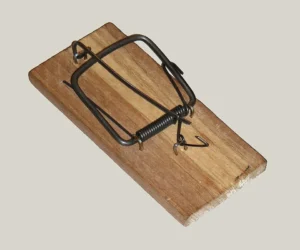
This is much safer than trying to hold the trap with one hand while baiting it with the other.
Set the trap on a stable surface before you arm it. Trying to hold the trap in mid-air while setting it makes it much more likely to go off accidentally.
Put it on a table or the floor where it won’t move around while you’re working with it.
Place the bait before you set the trap, if possible. Some traps let you place bait on the trigger pad before you pull back the snap bar.
This is safer than trying to carefully place bait after the trap is already armed and ready to snap.
When you’re ready to set the trap, pull the bar back slowly and carefully. Keep your fingers away from the path the bar will travel when it snaps.
Many traps have a metal staple or catch that holds the bar in place once it’s set. Make sure this catch is properly engaged before you let go.
After the trap is set, carefully move your hands away. Don’t hover over the trap or lean your fingers on it while you’re positioning it where you want it.
Carry armed traps by the edges, never by the top where the bar might catch your fingers if it goes off.
Are There Safer Alternatives to Traditional Snap Traps?
Electronic traps are generally safer for humans to set up because you don’t have to interact with any spring-loaded mechanisms.
You just place bait inside, close the door, and turn it on. The main risk is getting shocked, but most models won’t operate unless the door is properly closed.
Bucket traps with self-resetting mechanisms are very safe for humans. These work by having rats walk up a ramp and fall into a bucket.
Some designs use a rolling can or spinning platform that dumps the rat into the bucket. There are no springs or snap bars to catch your fingers.
Live catch traps are the safest option if you’re willing to deal with releasing or disposing of live rats afterwards. These cage-style traps just close a door when the rat enters. The worst you’ll do is pinch a finger when closing the door, and even that’s pretty hard to do.

Poison baits avoid the trap injury issue entirely, but they create different problems. Rats can die in walls or other inaccessible places and create terrible smells.
Poison is also dangerous for pets and children, and it’s not a humane way to kill rats because they suffer before they die.
Professional pest control is worth considering if you’re not comfortable setting traps yourself. Pest control professionals have experience setting all types of traps safely and know how to do it without getting hurt.
This is especially worth it if you have a serious rat problem that needs many traps.
Why Rat Traps Are So Powerful
Rat traps are designed to kill quickly, which is actually more humane than traps that just injure or trap the rat.
A quick kill means less suffering for the animal. To achieve this quick kill, the trap needs to deliver enough force to break the rat’s neck or skull instantly.
Rats are surprisingly tough animals. They have strong bones and thick skulls relative to their body size.
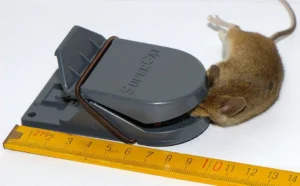
A trap that doesn’t have enough force might just injure the rat without killing it, which is cruel and also means the rat might escape or struggle free.
The spring mechanism in a rat trap is carefully calibrated to deliver the right amount of force. Too little and the rat might survive.
Too much and the trap becomes unnecessarily dangerous to set and handle. Manufacturers try to find the sweet spot that’s effective on rats but not more powerful than needed.
Traditional snap traps have been around for over a hundred years because they work well. They’re cheap, simple, reliable, and kill rats quickly when properly set.
Despite many newer designs being invented, the basic snap trap design is still one of the most effective rat control tools available.
The fact that these traps are powerful enough to be dangerous to human fingers is an unavoidable side effect of making them effective at killing rats. This is why it’s so important to respect rat traps and handle them carefully. They’re not toys, and they shouldn’t be treated casually.
Teaching Children About Trap Safety
Children should never be allowed to set rat traps or handle armed traps. Their smaller hands and fingers are more vulnerable to serious injury, and they might not understand how dangerous the traps are.
Even older children should only help with traps under direct adult supervision.
If you have rat traps set around your home, make sure children know where they are and that they shouldn’t touch them. Explain that the traps can hurt them badly. It’s better to scare them a little with the truth than to downplay the danger and have them get injured.
Place traps in areas where children and pets can’t accidentally encounter them. Use tamper-resistant bait stations when possible.
These are boxes that rats can enter but that are designed to keep fingers (and paws) out of the trap mechanism.
If a child does get caught in a rat trap, stay calm so they don’t panic. Carefully open the trap as described earlier and then provide first aid.
Even if the injury seems minor, consider having a doctor check it because children’s bones and soft tissues can be damaged in ways that aren’t immediately obvious.
Conclusion
A rat trap can definitely break your finger, though it’s more likely to cause severe bruising, deep cuts, and possible fractures of smaller finger bones rather than completely snapping larger bones in half.
Standard snap traps deliver 8 to 12 pounds of force concentrated on a small area, which is more than enough to cause serious injury to fingers, especially at joints or fingertips.
The key to avoiding these injuries is treating rat traps with respect and following proper safety procedures when setting them.
Use tools to keep your fingers away from the snap mechanism, pay full attention to what you’re doing, and consider safer alternatives like electronic or live catch traps if you’re uncomfortable with traditional snap traps.
If you do get caught in a rat trap, carefully open it before removing your finger, clean the wound thoroughly, and watch for signs you need medical attention.
Most trap injuries can be treated at home, but don’t hesitate to see a doctor if you suspect broken bones, nerve damage, or infection.

Hi, my name is Ezra Mushala, i have been interested animals all my life. I am the main author and editor here at snakeinformer.com.