

If you’ve spotted a rat around your home or property, you might be wondering what type it is. The two most common rat species you’ll come across are the black rat and the brown rat.
While they might look similar at first glance, these two rats are actually quite different in appearance, behavior, and where they like to live. So, what are the differences between black rats and brown rats?
Black rats (roof rats) and brown rats (Norway rats) are the two main rat species found around homes. Black rats are smaller, more agile climbers that prefer high places like attics and trees. Brown rats are larger, heavier, and prefer ground-level areas like basements and burrows. They differ in size, tail length, appearance, and behavior.
Both species can cause problems for homeowners, but knowing which type you have helps you predict where they’re nesting, how they’re getting in, and what control methods will work best.
Quick Comparison Table
| Feature | Black Rat (Roof Rat) | Brown Rat (Norway Rat) |
|---|---|---|
| Scientific Name | Rattus rattus | Rattus norvegicus |
| Body Length | 6-8 inches | 7-10 inches |
| Tail Length | Longer than body (8-10 inches) | Shorter than body (6-8 inches) |
| Total Weight | 5-9 ounces | 12-16 ounces |
| Body Shape | Slender and sleek | Thick and bulky |
| Ear Size | Large ears | Small ears |
| Nose Shape | Pointed snout | Blunt snout |
| Fur Color | Black, dark brown, or gray | Brown, gray-brown, or tan |
| Tail Appearance | Dark on top, lighter underneath | Uniform color, thick and scaly |
| Preferred Habitat | Trees, attics, upper floors | Basements, ground level, burrows |
| Climbing Ability | Excellent climber | Can climb but prefers ground |
| Swimming Ability | Can swim but avoids water | Strong swimmer |
| Nesting Location | High places (attics, roofs, trees) | Low places (basements, crawl spaces) |
| Diet Preference | Fruits, nuts, grains | Meat, fish, grains, garbage |
| Activity Pattern | Nocturnal | Nocturnal |
| Droppings Shape | Pointed at ends, curved | Blunt at ends, capsule-shaped |
| Life Span | About 1 year in wild | About 1 year in wild |
| Geographic Range | Warmer coastal regions | Throughout US and colder climates |
Physical Differences Between Black Rats and Brown Rats
The easiest way to tell these rats apart is by looking at their physical features.
Body size is the first giveaway. Brown rats are noticeably bigger and heavier than black rats. An adult brown rat can be nearly twice the weight of a black rat. Brown rats look stocky and muscular, while black rats are lean and streamlined.

Tail length is the most reliable way to identify which rat you have. A black rat’s tail is longer than its head and body combined. If you see a rat and the tail looks really long, it’s probably a black rat. Brown rats have shorter tails that don’t reach past the length of their bodies.
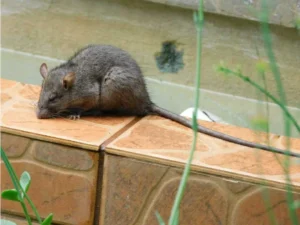
Ear size differs between species. Black rats have large, prominent ears that you can see easily. Brown rats have smaller ears that are partially hidden in their fur.

Snout shape helps with identification too. Black rats have pointed, delicate snouts. Brown rats have blunter, broader noses that look more robust.
Fur color can be misleading despite the names. Black rats aren’t always black. They can be dark brown, gray, or even have lighter coloring. Brown rats are usually brownish-gray but can vary. The names don’t always match the actual colors you’ll see.

Body build is distinct between the two. Black rats are slender with a sleek appearance. They look athletic and nimble. Brown rats are thick and heavy-bodied with a more compact shape.
Where Each Type of Rat Prefers to Live
The habitat preferences of these two rats are completely different, which is really useful for identification.
Black rats are high-level dwellers. They’re most comfortable up high in trees, attics, roofs, and upper floors of buildings. This is why they’re called roof rats. If you’re finding rats in your attic or hearing them above your ceiling, you probably have black rats.

Brown rats stick to ground level. They prefer basements, crawl spaces, first floors, and outdoor burrows. They’re excellent diggers and will create tunnel systems underground. If you’re finding rats in your basement or under your porch, they’re likely brown rats.
Black rats in nature live in trees and dense vegetation. They’re arboreal (tree-dwelling) by nature and brought this behavior with them when they moved into human habitats.
Brown rats are burrowers in nature. They dig elaborate tunnel systems with multiple entrances and nesting chambers. Even when they live in buildings, they prefer the lowest levels.

This habitat difference affects where you’ll find evidence of each species. Black rat droppings might be on rafters, beams, or high shelves. Brown rat droppings will be along baseboards, in corners at floor level, or near food sources on lower floors.
Climbing and Movement Abilities
How these rats move around is one of their biggest differences.
Black rats are amazing climbers. They can scale vertical walls, walk along thin wires and branches, and jump between surfaces with ease. Their long tails help them balance, and their lightweight bodies make climbing effortless.

They can walk along power lines, climb up the outside of buildings, and even run upside-down on ceiling beams if needed. This climbing ability is how they access upper floors and attics so easily.
Brown rats can climb when they have to, but they’re not graceful about it. Their heavier bodies make climbing more difficult. They prefer to stay on the ground where they can use their strength and bulk to their advantage.
Brown rats are better swimmers than black rats. They can swim long distances and even come up through plumbing if they need to. Black rats will swim if forced to, but they avoid water when possible.

For jumping, black rats can leap several feet horizontally or vertically. Brown rats can jump too, but not as far or as high as black rats.
Behavior and Activity Patterns
Both rats are nocturnal, but their behavior patterns differ in other ways.
Black rats are more cautious and skittish. They’re suspicious of new objects in their environment and might avoid traps for a while. This wariness makes them a bit harder to catch sometimes.
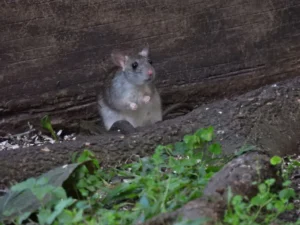
Brown rats are bolder and more aggressive. They’re less afraid of new things and will investigate changes in their environment more quickly. This can make trapping slightly easier.
Black rats are less social within their own species. They don’t live in huge groups like brown rats sometimes do. You might find one or two black rats in an attic rather than a whole colony.
Brown rats are highly social and live in larger groups. A brown rat infestation can grow really quickly because they reproduce fast and live together in colonies.

Territorial behavior is strong in brown rats. Males especially will fight viciously to defend their territory. Black rats are less aggressive toward each other.
Both species mark their territories with urine, but brown rats are more aggressive about marking and defending their space.
Diet and Food Preferences
What these rats like to eat shows some differences, though both are opportunistic feeders.
Black rats prefer plant-based foods. They love fruits, nuts, seeds, and grains. If you have fruit trees, a bird feeder, or stored grains, black rats will be attracted to these.
They’re pickier eaters than brown rats. If better food is available, black rats will choose the high-quality option over settling for garbage.
Brown rats eat basically anything. They’re true omnivores and will eat meat, fish, grains, vegetables, garbage, pet food, and even each other if food is scarce.

Brown rats need more food and water daily than black rats because they’re bigger. They eat about 10% of their body weight each day and drink frequently.
Black rats can survive with less water than brown rats. They get moisture from the fruits and vegetables they eat.
Geographic Distribution
Where you live affects which rat species you’re likely to encounter.
Black rats prefer warmer climates. They’re most common in coastal areas, southern states, and regions with mild winters. Cities in California, Florida, Texas, and along the Gulf Coast often have black rat problems.
Brown rats live everywhere, including cold climates. They’re the dominant rat species in northern states, cities with harsh winters, and inland areas. They handle cold much better than black rats.

In areas where both species exist, they usually don’t compete directly because they use different parts of the environment. Black rats stay high, brown rats stay low, so they can coexist without too much conflict.
If you live in a colder region and find rats, they’re almost certainly brown rats. In warmer coastal areas, you could have either species, but black rats are more likely if the rats are in upper areas of your home.
Droppings and How to Tell Them Apart
Rat droppings are one way to identify which species you’re dealing with when you can’t see the rats themselves.
Black rat droppings are smaller and thinner. They’re about a half inch long, pointed at both ends, and often slightly curved like a banana. The droppings might be scattered around rather than in concentrated piles.
Brown rat droppings are larger and blunter. They’re about three-quarters of an inch long, shaped like capsules with blunt rounded ends, and look thicker overall. Brown rats often leave droppings in concentrated areas near food sources or along travel routes.
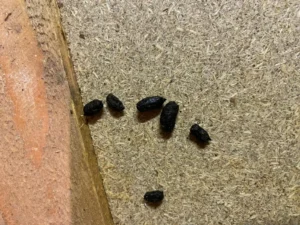
Fresh droppings from both species are dark, moist, and shiny. Old droppings are dry, crumbly, and dull gray.
Where you find the droppings also helps with identification. Droppings on high surfaces (rafters, shelves, top of cabinets) suggest black rats. Droppings at ground level (along baseboards, in corners, under sinks) suggest brown rats.
Which Rat Is More Dangerous or Destructive?
Both rats cause problems, but in slightly different ways.
Brown rats are generally considered more destructive because they’re bigger and stronger. They can chew through thicker materials, cause more damage to structures, and contaminate larger amounts of food with their droppings.
Brown rats are more aggressive toward humans if cornered. They’re more likely to bite if they feel threatened. Black rats usually try to escape rather than fight.
Both species carry diseases and parasites, so neither is “safer” to have around. They can both spread bacteria, viruses, and bring fleas, mites, and ticks into your home.
Black rats were historically associated with spreading the bubonic plague in medieval Europe (though fleas were the actual carriers). Today, both rat species can carry similar diseases.

Fire risk from chewed electrical wiring is a concern with both species, but black rats in attics might be more likely to chew wires since that’s where electrical systems often run.
Brown rats near foundations can cause structural problems by burrowing under buildings. Black rats don’t burrow, so they don’t pose this particular risk.
How to Control Each Species
Your approach to getting rid of rats should consider which species you have.
For black rats in attics or upper areas: Focus on sealing entry points on your roof and upper walls. Trim tree branches away from your house (at least six feet of clearance). Set traps in the attic along rafters and in corners. Remove any fruits or nuts from trees promptly.

For brown rats at ground level: Seal entry points in your foundation and lower walls. Set traps along baseboards and in areas where you see droppings. Look for and destroy burrows around your property. Secure garbage cans and remove outdoor food sources.
For both species: Use snap traps with appropriate bait (peanut butter works for both, but fruits and nuts work better for black rats while meat or bacon works better for brown rats). Place traps perpendicular to walls with the bait end facing the wall.
Don’t use poison if you can avoid it, especially for black rats in attics or brown rats in walls. Dead rats in inaccessible places create terrible smells that last for weeks.
Professional pest control might be necessary for large infestations of either species, but especially for brown rats which can have bigger populations.
Can Black Rats and Brown Rats Interbreed?
No, black rats and brown rats can’t interbreed. They’re different species with different numbers of chromosomes, so they can’t produce offspring together.
In areas where both species live, they generally avoid each other. Brown rats are bigger and more aggressive, so they tend to dominate ground-level areas if they encounter black rats there.
Black rats avoid competition by staying in upper areas where brown rats rarely go.
This separation by habitat height is probably why both species can survive in the same general area without one completely driving out the other.
Which Rat Species Is in Your Home?
If you’re trying to figure out which rat you have, ask yourself these questions:
Where are you finding evidence? Attic, roof, or upper floors suggests black rats. Basement, crawl space, or ground level suggests brown rats.
What does the area look like? Coastal, warm climate makes black rats more likely. Inland or cold climate makes brown rats more likely.
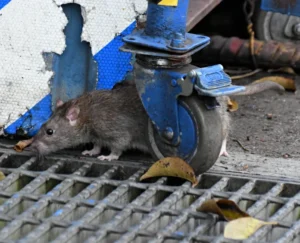
If you saw the rat, what did it look like? Small and sleek with a really long tail means black rat. Large and bulky with a shorter tail means brown rat.
Can you see the droppings? Pointed curved droppings suggest black rats. Blunt capsule-shaped droppings suggest brown rats.
What’s damaged or disturbed? Fruit trees, high shelves, or attic insulation suggests black rats. Burrowing under structures or basement items suggests brown rats.
Conclusion
Black rats and brown rats are very different species with distinct characteristics. Black rats are smaller, more agile climbers that prefer high places and eat mostly plant-based foods. Brown rats are larger, heavier animals that stay at ground level, burrow, and eat just about anything.
Knowing which species you’re dealing with helps you target your control efforts more effectively. Look for rats in attics and upper areas, focus on sealing roof access and trimming trees.
For brown rats in basements and ground-level areas, seal foundation entry points and eliminate ground-level food sources.
Both species can cause significant damage and health concerns, so dealing with either type of infestation quickly is important. Understanding their different behaviors, habitats, and preferences gives you the best chance of solving your rat problem for good.

Hi, my name is Ezra Mushala, i have been interested animals all my life. I am the main author and editor here at snakeinformer.com.