
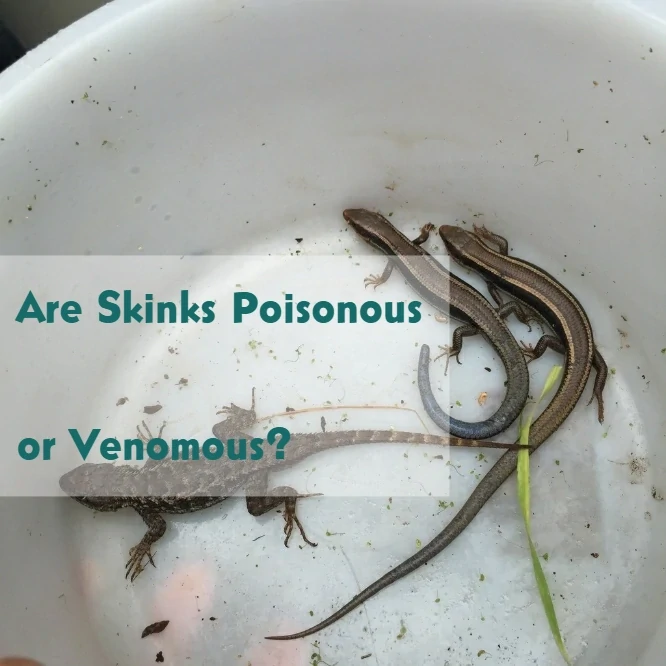
Skinks are small lizards that you’ll often see darting around gardens, yards, and outdoor spaces. With their shiny scales and quick movements, they’re pretty common in many parts of the world.
If you’ve spotted one and wondered whether it’s safe to be around, you’re probably asking: are skinks poisonous or venomous?
No, skinks aren’t poisonous or venomous. They don’t make toxins in their skin, and they don’t have venom in their bite. If you ever pick one up or one runs past your foot, there’s no danger at all, because skinks rely on speed and hiding, not poison or venom.
This means skinks are completely safe to have around your home, yard, or garden.
They’re actually helpful because they eat insects and other small pests.
Understanding the Difference Between “Poisonous” and “Venomous”
Before we talk more about skinks, it’s important to know what the words poisonous and venomous actually mean.
A lot of people use them like they’re the same thing, but they’re really not.
- If an animal is venomous, it has to bite or sting you to inject its toxins into your body. Think of snakes, spiders, or scorpions. They actively deliver their toxins through fangs, stingers, or barbs.
- If an animal is poisonous, you have to touch it, eat it, or absorb its toxins through your skin or mucous membranes. Poison dart frogs are a good example. Their skin secretes toxins that can make you sick if you touch them.
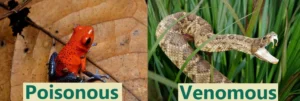
Skinks don’t fit into either category. They don’t produce toxins at all, which makes them safe to be around.
Why Do Some People Worry Skinks Might Be Poisonous?
There are a few reasons why people worry that skinks might be poisonous or venomous. Understanding these myths can help clear things up.
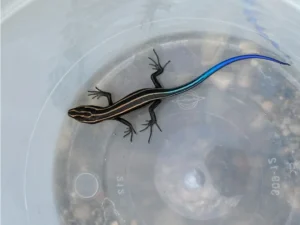
First, some skinks have really bright blue tails. In nature, bright colors often mean “danger” or “I’m poisonous.” But with skinks, the bright tail is actually just a defense trick.
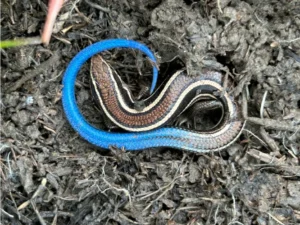
When a predator goes after a skink, it’s often attracted to that bright blue tail. The skink can then drop its tail (which keeps wiggling), giving the skink time to escape while the predator is distracted.
Second, skinks move really fast and have sharp little teeth. People sometimes assume that anything that bites must be venomous, but that’s not true.
Also, there are some old myths and stories in different cultures about lizards being poisonous.
These stories get passed down and make people nervous around any small lizard, including skinks.
What Really Happens If a Skink Bites You?
Skinks can bite, but they usually won’t unless you’re trying to catch them or handle them roughly. Even then, they’d rather run away than bite.
If a skink does bite you, it’ll feel like a small pinch. Their teeth are tiny and their jaws are weak, so they can’t do much damage.
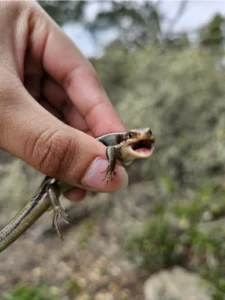
You won’t get sick from a skink bite. There’s no venom being injected and no toxins entering your body.
The bite might leave a small mark or maybe a tiny scratch, but that’s about it. It’ll probably hurt less than a paper cut.
The biggest risk from a skink bite is actually just basic infection from bacteria. This is true of any small wound, not something specific to skinks.
Simple Ways to Treat a Skink Bite
If a skink does manage to bite you, treating it is really simple. You handle it just like you would any other minor scratch or scrape.
First, wash the bite area with soap and warm water. This removes any dirt or bacteria that might have gotten on your skin.
You can apply a small amount of antibiotic ointment if you want. This isn’t usually necessary, but it doesn’t hurt.
Cover it with a small bandage if the skin is broken, though most skink bites won’t even break the skin. If it does break the skin, keep an eye on it for a day or two.
Signs of infection include redness that spreads, warmth around the bite, swelling, or pus. If you see any of these, just visit your doctor. But honestly, this is really rare with skink bites.
The Truth About Blue-Tailed Skinks
One specific myth that won’t go away is about blue-tailed skinks being poisonous. This is probably the most common skink myth out there.
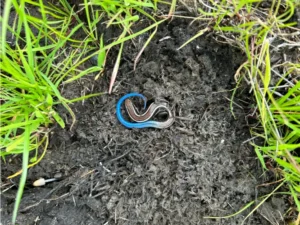
Blue-tailed skinks (which are usually just young five-lined skinks or broad-headed skinks) are completely harmless. That bright blue tail isn’t a warning about poison. It’s just a defense mechanism.
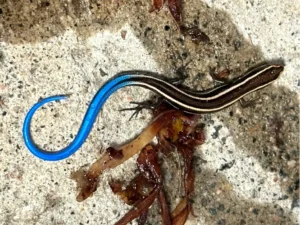
Some people claim that if a dog or cat eats a blue-tailed skink, it’ll get sick. While pets might vomit or have an upset stomach after eating a skink, this isn’t because of poison.
The upset stomach happens because the pet ate something its digestive system isn’t used to processing. It’s the same reason your dog might throw up after eating grass or a bug.
Also, the skink itself is probably stressed and scared, which can cause it to release its bowels. Eating skink poop along with the skink isn’t pleasant and can upset a pet’s stomach.
Why Skinks Are Actually Good to Have Around
Now that you know skinks aren’t dangerous, you might be wondering if they’re helpful. The answer is yes, they’re actually really beneficial.
Skinks eat insects like crickets, beetles, grasshoppers, and caterpillars. They also eat spiders, which many people don’t want around their homes.
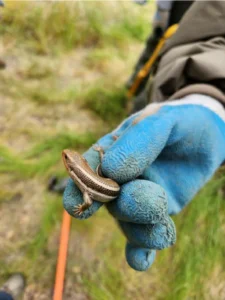
A single skink can eat dozens of insects every week. This natural pest control means fewer bugs bothering you and less damage to your garden plants.
They’re also part of the food chain. Birds, snakes, and other predators eat skinks, which helps keep ecosystems balanced.
Unlike some other animals, skinks don’t damage your property, carry diseases that affect humans, or create messes. They’re quiet, clean, and keep to themselves.
How Do Skinks Defend Themselves Without Poison or Venom?
Since skinks don’t have venom or poison, they’ve developed other ways to protect themselves from predators. These methods are pretty clever.
The most famous defense is tail dropping. When a predator grabs a skink’s tail, the tail breaks off and keeps wiggling. This distracts the predator while the skink runs away.
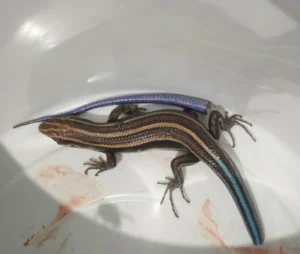
The tail will grow back over time, though it might not look exactly the same as the original. It’s usually a bit shorter and a different color.
Skinks are also incredibly fast. They can dart into cracks, under rocks, or into leaf litter in the blink of an eye.
Their shiny scales make them slippery and hard to hold onto. If a predator does catch one, the skink might squirm free because it’s so smooth.
Some skinks can also change their color slightly to blend in with their surroundings. This helps them avoid being seen by predators in the first place.
How Skinks Compare to Other Dangerous Lizards
While skinks are harmless, there are some lizards out there that can actually hurt you. It’s good to know the difference.
The Gila monster and Mexican beaded lizard are the only truly venomous lizards in North America. They’re large, slow-moving, and look completely different from skinks.
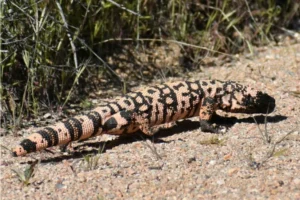
Komodo dragons are venomous too, but you won’t run into one unless you’re in Indonesia. They’re massive lizards that can grow over 10 feet long.
Some lizards, like the Tokay gecko, have powerful bites that can break skin and hurt quite a bit. But even their bites aren’t venomous, just painful.
Skinks are small, fast, and have weak bites. If you see a large, slow-moving lizard with bumpy skin and a thick body, it’s definitely not a skink.
What to Do If You Find a Skink in Your House
Sometimes skinks accidentally get inside homes, especially during hot weather when they’re looking for cooler spots. Don’t panic if this happens.
The skink is probably more scared than you are. It’s lost and wants to get back outside just as much as you want it gone.
The easiest way to remove a skink is to gently guide it toward an open door or window using a broom or piece of cardboard. Don’t try to grab it with your hands.
You can also place a small box or container over the skink, slide a piece of cardboard underneath, and carry it outside. This works well if the skink is on a flat surface.
Don’t use glue traps or poisons to deal with skinks. These are cruel and unnecessary since skinks are harmless and actually helpful.
Teaching Kids About Skinks
If you have children, teaching them about skinks is a great opportunity. Kids are naturally curious about wildlife, and skinks are safe enough to observe.
Explain that skinks are friends, not pests. They help keep bugs away and won’t hurt anyone as long as they’re left alone.
Teach kids to observe skinks from a distance rather than trying to catch them. Chasing or grabbing skinks stresses the animals out and might result in a bite.
If your child does catch a skink, have them release it gently and quickly. The longer you hold a skink, the more stressed it gets.
Remind kids to wash their hands after touching any outdoor animal. This is just basic hygiene and prevents the spread of any bacteria.
Common Skink Species You Might See
There are several types of skinks you might see in North America, and none of them are poisonous or venomous. Here are the most common ones.
Five-lined skinks are probably the most widespread. Young ones have bright blue tails, while adults have brown bodies with faint stripes.
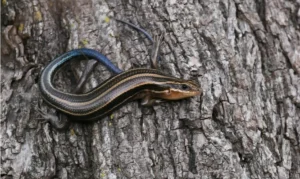
Broad-headed skinks look similar to five-lined skinks but are larger. Males have orange-red heads during breeding season.
Coal skinks are smaller and have four light stripes running down their bodies. They prefer wet, wooded areas.
Western skinks live in the western United States and have clear stripes down their backs. They’re common in gardens and rocky areas.
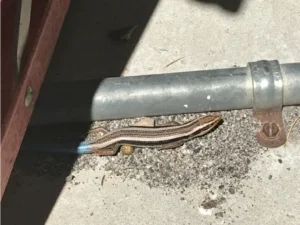
Great Plains skinks are larger and have dark-edged scales that create a pattern. They’re found in the central United States.
What Happens if Your Pets Try to Catch a Skink?
If you have dogs or cats, you might worry about what happens if your pet catches a skink. The good news is that skinks won’t poison your pets.
Most pets will leave skinks alone once they realize how fast they move. But some curious or playful pets might try to catch them.
If your dog or cat does catch and eat a skink, watch for signs of an upset stomach. This might include vomiting, diarrhea, or lack of appetite.
These symptoms happen because your pet’s stomach isn’t used to digesting lizards, not because the skink is poisonous. The symptoms usually go away on their own within a day.
If your pet seems really sick, has trouble breathing, or the symptoms last more than 24 hours, call your vet. But this is rare and usually means something else is wrong.
The best approach is to supervise your pets when they’re outside. This protects both your pets and the local wildlife.
Living Alongside Skinks Without Causing Harm
Skinks are part of a healthy ecosystem, and learning to live alongside them benefits everyone. They don’t need much from you, and they give back by controlling pests.
Don’t use pesticides in your yard. These chemicals kill the insects that skinks eat and can also harm the skinks themselves.
Leave some natural areas in your yard where skinks can hide. Rock piles, log piles, and areas with ground cover give skinks safe places to live.
If you have outdoor cats, consider keeping them inside or supervised. Cats kill millions of small animals every year, including helpful creatures like skinks.
Don’t disturb skink eggs if you find them. Skinks usually lay their eggs under rocks or in rotten logs. Just leave them alone and let nature take its course.
Appreciate skinks for what they are: helpful, harmless little lizards that make your outdoor space more interesting and balanced.
Conclusion
Skinks are neither poisonous nor venomous, which makes them completely safe to have around your home and yard.
While they might bite if you try to catch them, the bite is harmless and won’t inject any toxins.
The myths about poisonous skinks, especially blue-tailed ones, are just that – myths. These lizards are actually beneficial because they eat insects and other pests naturally.
If you see skinks in your yard, consider yourself lucky. They’re a sign of a healthy ecosystem, and they’ll help keep pest populations under control without you having to do anything.
Just let them be, and they’ll continue doing their job of keeping your outdoor space balanced and healthy.

Hi, my name is Ezra Mushala, i have been interested animals all my life. I am the main author and editor here at snakeinformer.com.