
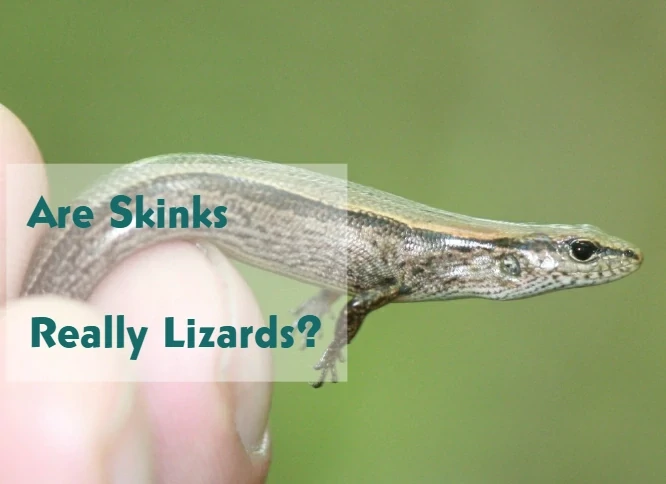
If you’ve ever seen a skink slide across a garden wall or slip into a pile of leaves, you might have stopped and thought, “What is that thing?” They’re smooth, shiny, and move in a kind of hypnotic way that makes them look different from most lizards you’ve seen.
Some people notice their short legs or long bodies and wonder if they’re actually snakes, lizards without legs, or something else. So the big question is: are skinks lizards?
Yes, skinks are lizards. They belong to the same reptile group as most lizards, called Squamata, and everything about their body, behavior, and biology matches lizard traits. Even though skinks sometimes look unusual (smooth, long, almost snake-like) they’re still lizards at heart. Their scales, body shape, how they reproduce, and what they eat all line up with normal lizard biology.
Once you know what makes a lizard a lizard and how skinks fit, it’s easy to see they’re just a special kind of lizard that has some unique tricks.
What Makes An Animal A Lizard In The First Place?
Before we focus on skinks, it helps to know what makes an animal a lizard. Lizards are reptiles in the order Squamata, and they share some traits:
-
Dry, scaly skin
-
Legs (though some lizards do not have legs)
-
External ears
-
Movable eyelids
-
A tail that can sometimes drop off to escape predators
-
Laying eggs or giving live birth depending on the species
Skinks check every box. They have scales, tails that can drop if grabbed, eyes with movable eyelids, and external ears.
They might look different because of their short legs or long bodies, but underneath, they’re just lizards.
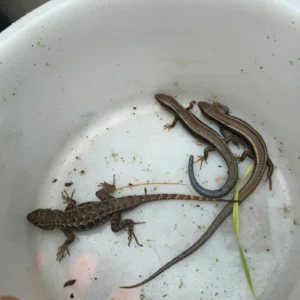
These traits aren’t just for show. Scales help keep water in and protect the skink. Movable eyelids and ears help them notice danger.
Dropping a tail gives them a chance to escape predators. These are all traits that make a lizard a lizard, and skinks have all of them.
Why Skinks Look Different From Other Lizards
Skinks can confuse people at first. Many have long bodies, short legs, and smooth, shiny scales. Some even look almost like tiny-legged snakes.
Their shape makes people wonder if they’re really lizards.
Here’s the thing: lizards come in all shapes and sizes. Tiny geckos can fit on your fingertip. Giant monitors are huge.
Skinks are just the kind that evolved for smooth movement and quick escapes, which explains their long bodies and short legs.
Their smooth, shiny scales also make them look unusual. Most lizards have rougher, patterned scales. Skinks’ scales overlap tightly and are glossy, which helps them slide through grass, sand, or leaves.
That shine makes them look exotic, but it’s still a lizard trait. Their body and scales help them escape predators because they can slip into narrow spaces fast.
How Skink Tails Prove They Are Lizards
One of the easiest ways to tell a lizard is by its tail, and skinks have this too. Like many lizards, skinks can drop their tails to escape predators.
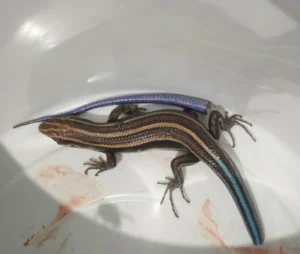
The tail keeps moving on the ground while the skink darts away, giving the predator something to focus on. Over time, the skink grows a new tail.
This is classic lizard behavior. You don’t see it in amphibians, snakes, or many other animals, which is why it’s a strong clue skinks are lizards.
Some skinks also store fat in their tails, giving them extra energy for tough times. So the tail isn’t just for defense, it’s also a little survival kit.
The Way Skinks Move And Why It’s Totally Lizard-Like
Skinks move close to the ground in a smooth way that can look snake-like, but it’s all lizard behavior. Their legs are short, so they use their long bodies to push forward.
Some species, especially in deserts, even tuck their legs in and slither. This helps them move fast and escape predators.
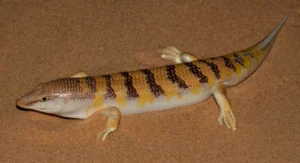
Even with this, skinks have the same skeleton and muscles as other lizards. Their spine, skull, and limb bones all match normal lizard anatomy.
So while they move in a way that can trick you, they’re just specialized lizards.
Watching a skink dash across sand or leaves is almost hypnotic. Their long bodies, short legs, and wavy movement let them react instantly to threats, making them some of the fastest small lizards in the world.
How Skinks Breathe And Digest Like Other Lizards
Skinks breathe air like other lizards. They never go through a water-breathing larval stage like frogs. From hatching to adulthood, they rely on lungs for oxygen.
Their digestive system is just like other lizards. They eat insects, worms, small animals without bones, and sometimes fruit or plants.
Their teeth are made to grab and chew food, not swallow whole like many amphibians. This diet and hunting style is typical for lizards.
Some bigger skinks, like the giant skinks in the Solomon Islands, can even eat small mammals or birds, showing how flexible their feeding habits are.
Skink Skin Shines But Still Counts As Classic Lizard Scales
One reason people mistake skinks for something else is their skin. Their scales are smooth and shiny, unlike the rough or patterned scales of some other lizards.
But these scales are still made of keratin, the same material as other lizard scales.
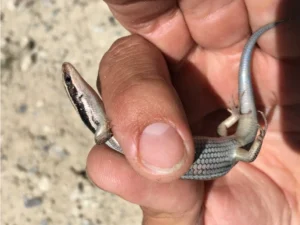
The tight, overlapping scales help skinks keep moisture, reduce friction when moving, and protect them from small injuries. This is classic lizard stuff. Their skin might look unusual, but it’s just a different version of what all lizards have.
Some skinks shed their outer skin in patches as they grow, another classic lizard trait. This keeps them healthy and free from parasites.
How Skinks Lay Eggs Or Give Live Birth And Why That Shows They’re Lizards
Skinks reproduce like other lizards. Most lay eggs on land, with leathery shells to protect the babies. Some even guard their eggs. Other species, like skinks in cold areas, give live birth.
Frogs, in contrast, usually lay soft, jelly-like eggs in water. Tadpoles hatch and change into adults. Skinks skip that.
The babies hatch looking like tiny adults, fully scaled, and able to breathe air and walk. This shows they’re lizards.
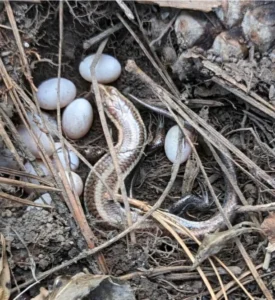
Some skinks also show parental care. For example, Solomon Islands skinks wrap their eggs in leaves or bury them underground.
This is unusual for reptiles but still fits normal lizard behavior.
Are All Skinks The Same Or Do They Come In Lots Of Lizard Varieties?
Skinks are actually a huge family of lizards, with over 1,500 species around the world. They vary in size, shape, color, and where they live.
Some are tiny and live in tropical forests. Others are bigger and live in deserts. Some have stripes, some are spotted, some are plain brown.
Even with all the variety, all skinks share key lizard traits: scaly skin, external ears, movable eyelids, and tails that can drop.
No matter how different they look, they are clearly lizards.
Even their behaviors vary. Some dig burrows, some climb trees, and some live near water.
This variety shows how flexible lizards can be, and skinks are just one branch of that big lizard family tree.
Why Some People Think Skinks Aren’t Lizards
The confusion usually comes from how they look. Their smooth, long bodies, shiny scales, and short legs make them look different from the lizards most people picture, like anoles or iguanas.

Add their fast, smooth movement, and it’s easy to see why people might guess “snake” or “frog” first.
But their body, behavior, and biology tell the truth. They’re just a special group of lizards that evolved differently from the ones most people know.
Skinks In The Ecosystem And The Role They Play Like Other Lizards
Like other lizards, skinks play an important role in nature. They eat insects and pests, helping keep local populations in balance.
They are food for birds, snakes, and bigger reptiles. Their life, reproduction, and survival habits match normal lizard life, proving they belong in the lizard family.
In some areas, skinks are natural pest control. Gardeners often see fewer ants, beetles, and grasshoppers when skinks are around.
Their presence also shows a healthy environment, since they are sensitive to pollution and habitat changes.
Do Skinks Bite Or Sting Like Some Other Lizards?
Some lizards, like monitor lizards, have strong bites or venom, but skinks do not. They’re usually harmless to humans, though they can bite if handled roughly.
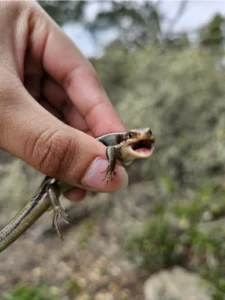
Their teeth are tiny and meant for insects, not fighting big predators.
This gentle nature is normal for smaller lizards. While they share lizard biology, they’ve adapted for speed and survival instead of aggression.
How Skinks Regulate Their Temperature Like Other Lizards
Skinks are cold-blooded reptiles, meaning they rely on the environment to control their body temperature.
They bask in the sun to warm up, hide in shade or burrows to cool down, and change when they’re active based on temperature.
Frogs, in contrast, rely more on moisture and humidity to control themselves. Skinks’ behavior here is exactly what you’d expect from lizards.
Some desert skinks even change color slightly to absorb or reflect heat better, showing smart lizard adaptations to tough environments.
Why Skinks Thrive In Gardens And Homes Like Other Lizards
Skinks are often found near homes, gardens, or warm outdoor spots. They do well here because they eat pests and find hiding places.
This is normal lizard behavior: opportunistic, adaptable, and careful. They’re not frogs looking for water, or snakes hunting big prey.
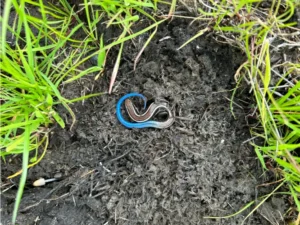
They’re lizards making the most of their surroundings.
Some skinks even use compost piles, woodpiles, and backyard ponds, showing how adaptable they are.
Their ability to live near humans without causing problems is another reason people enjoy having them around.
How Long Do Skinks Live And What Does That Tell Us About Them?
Most skinks live between 5 and 10 years in the wild, though some bigger species live longer, especially in captivity.
Their lifespan is similar to many other small-to-medium lizards.
They grow fast, reproduce several times, and change their behavior to survive seasonal changes, just like other lizards.
Skinks Communicate In Surprising Ways And Show They Are Lizards
While skinks aren’t known for complex social behavior, some species communicate in small ways.
They use body movements, tail waving, and scent marking to claim territory or attract mates. This is normal for many lizards.
Even small gestures, like flicking the tongue or changing posture, can give important information to nearby skinks.
Conclusion
Skinks are clearly lizards. Even with their unusual bodies, short legs, smooth shiny scales, and fluid movements, they meet every biological, body, and behavior trait that defines lizards.
They breathe air, have scaly skin, move on land, lay eggs with leathery shells (or give live birth), and hatch as tiny adults.
Their tails can drop off, their jaws are built for insects, and their role in ecosystems matches other lizards.
The next time you see a skink darting across the ground or slipping into a garden corner, you can confidently say you’re watching a lizard.
It may look different, it may move strangely, but underneath all the shine and speed, it’s a lizard through and through.

Hi, my name is Ezra Mushala, i have been interested animals all my life. I am the main author and editor here at snakeinformer.com.