

You’re watching a shark glide through the water on a nature documentary, barely moving its fins, looking calm and effortless.
The ocean around it is cold, dark, and deep, yet the shark looks completely unfazed, like it belongs there in a way nothing else does. At some point, a simple question pops into your head, the kind people have been asking for years. Are sharks cold blooded?
Yes, sharks are cold blooded, which means their body temperature mostly matches the temperature of the water around them. But some species can actually keep parts of their bodies warmer than the ocean. They don’t control their body heat the way mammals do, but they’re also not as simple as people often think.
That one sentence alone already hints at why sharks confuse so many people. They’re cold blooded, but not in the way a lot of people imagine when they hear that phrase.
To really understand what’s going on, it important to understand how sharks live, how they move, and how their bodies quietly solve problems that seem impossible at first.
Understanding Cold-Blooded vs. Warm-Blooded
Before we dive into the specifics of sharks, let’s clear up the terms cold-blooded and warm-blooded.
Being cold blooded, or ectothermic, basically means an animal doesn’t produce enough internal heat to keep its body temperature steady. Instead, its temperature rises and falls with its surroundings.
For sharks, that surrounding is water, and water has a huge effect on body heat because it pulls warmth away much faster than air does.

Water takes heat away about 25 times faster than air, which means even a small drop in temperature can cool a shark much faster than it would affect a land animal.
So if a shark swims into colder water, its body temperature drops. If it moves into warmer water, its body warms up. There’s no internal thermostat keeping things at one perfect number.
On the other hand, warm-blooded, or endothermic, animals can generate internal heat through their metabolism, letting them keep a steady body temperature no matter the conditions outside.
This is very important for animals that live in places with changing climates, because it helps them stay active and hunt or search for food efficiently.
But here’s where sharks start breaking expectations: unlike a lot of other cold-blooded animals, sharks don’t get sluggish or helpless when the water is cold.
They stay fast, alert, and strong, even in water that would make other fish slow down a lot.
That’s not because they’re secretly warm blooded.
It’s because evolution gave them some clever tricks, including special blood vessels, smart swimming strategies, and muscle adaptations that help them keep going when other fish would freeze up.
Why Sharks Don’t Act “Cold Blooded” At All
If sharks are cold blooded, then why don’t they behave like it?
This is usually the moment people start doubting the whole idea. After all, sharks can chase prey at high speed, travel across oceans, and hunt in cold, deep water without looking slowed down at all.
The key thing to understand is that cold blooded doesn’t mean weak or slow. It just means heat comes from the environment instead of being made inside their body like it is in mammals and birds.

Sharks solve this in a few ways, starting with constant movement. Swimming keeps water flowing over their muscles and gills, which helps with oxygen and keeps their bodies working efficiently.
Moving also creates a bit of heat from muscle activity, even if it doesn’t fully control their temperature.
Then there’s their size. Many sharks are big, and bigger bodies lose heat more slowly than smaller ones. A large shark in cool water doesn’t cool down instantly.
It holds onto warmth longer, which gives it an advantage.
Still, that’s only part of the story. Layers of muscle, fat in some species, and even where their internal organs sit help sharks keep heat better than many other cold-blooded fish.
Some sharks also have denser red muscle fibers, which are better at making energy and holding warmth.
These muscles help with swimming long distances and chasing prey for a long time, which is why you rarely see a large predatory shark slowing down in cold water.
The Sharks That Bend The Rules
Here’s where things get really interesting.
While all sharks are technically cold blooded, some species can keep parts of their bodies warmer than the water around them. This is called regional endothermy, and it’s one of the coolest tricks in the ocean.
Species like great white sharks, mako sharks, and salmon sharks have special blood vessel systems that work like heat exchangers.

Warm blood leaving active muscles passes close to cold blood coming in from the gills. Heat moves between them, warming the blood before it flows back through the body.
What this means in real life is simple but powerful. Their swimming muscles, stomach, and sometimes even their brains and eyes stay warmer than the water around them. Not warm like a mammal lounging on land, but warm enough to make a difference.
That extra warmth helps muscles contract faster, digestion happen more efficiently, and reaction times stay sharp. It’s one reason great white sharks can suddenly explode into action when ambushing seals, even in chilly coastal waters.
They’re still cold blooded overall. Their body temperature still follows the ocean. But they’ve blurred the line in a way that makes the label feel incomplete.
Some scientists think this partial warmth also helps with long-distance travel. Sharks moving through cooler waters can keep performing well longer without using extra energy.
It may also help female sharks during pregnancy, keeping embryos warmer and supporting faster growth.
Being Cold Blooded Actually Helps Sharks
It’s easy to think being cold blooded is a disadvantage, but for sharks, it’s actually part of why they’ve survived for hundreds of millions of years.
Warm-blooded animals use a lot of energy just staying warm. Sharks don’t have to do that. Their energy goes into swimming, growing, reproducing, and hunting instead of heating their bodies all the time.
This efficiency lets sharks survive long periods without food. Some species can go weeks or even months between meals, especially bigger sharks that eat big prey.

A warm-blooded predator that size would need to eat far more often just to stay alive.
Being cold blooded also lets sharks live in places where food isn’t always easy to find. Deep ocean waters, long migrations, and seasonal changes are easier to handle when your metabolism isn’t constantly demanding fuel.
In a way, sharks trade temperature control for endurance. This energy efficiency also helps their immune system, letting them fight infections and heal faster than many other fish.
Some researchers also suggest being cold blooded helps sharks deal with sudden changes in the environment, like El Niño events or shifts in prey numbers, giving them an edge over predators that burn more energy.
How Does Water Temperature Shape Shark Behavior?
Because sharks are cold blooded, water temperature quietly shapes almost everything they do.
You’ll often see sharks moving between different depths or areas depending on the season. This isn’t random. Warmer water speeds up their metabolism, while colder water slows it down. Sharks adjust their behavior to stay in a temperature range that works best for them.
For example, many coastal sharks move closer to shore in warmer months and go to deeper or different waters when it gets cooler. Open-ocean sharks may travel thousands of miles following warm currents.
Even daily movement can be influenced by temperature. Some sharks hunt in warmer surface waters at night and rest in cooler depths during the day, or the other way around, depending on the species.
Sharks are constantly balancing energy use, body function, and opportunity. Temperature also affects reproduction. Some species move to warmer waters to spawn, where eggs or young can grow faster.
Some sharks also match hunting to seasonal prey. For instance, sandbar sharks in the Atlantic adjust depth and location based on water temperature and prey movement, showing just how finely tuned their cold-blooded bodies really are.
Cold Blooded Animals Are Not Simple
One of the biggest mistakes people make is thinking cold-blooded animals are simple or basic. Sharks prove that wrong in a big way.
Their nervous systems are well developed. Their senses, especially smell and electroreception, are extremely sharp. Their muscles are powerful, efficient, and built for long-term swimming.

All of this works in a body that doesn’t control heat the way ours does. Instead of fighting their environment, sharks work with it. Their bodies are designed to work with the ocean, not against it.
Temperature becomes a tool instead of a limit.
That’s a big reason sharks haven’t changed much for millions of years. When something works this well, evolution doesn’t rush to replace it.
Some species have survived multiple mass extinctions thanks to this adaptable, energy-efficient design.
How Does Cold Water Affects Different Shark Species?
Not all sharks handle cold water the same way. Size, metabolism, and hunting style matter a lot. Smaller sharks tend to stay in warmer regions because they lose heat faster.
Tropical reefs, shallow coasts, and warm currents let them stay active, darting after prey with speed and agility that colder water wouldn’t allow.

Larger sharks can go into cooler waters, especially those with partial heat-retention systems. Great whites are a perfect example.
They hunt in cold waters off South Africa and California but move through warmer regions along the way. Deep-sea sharks go even further.
Living in cold, dark water all the time, they move slowly, have low metabolisms, and rely on ambush or scavenging instead of chasing fast prey.
Even feeding can change with temperature. Some sharks focus on slower, energy-saving prey in colder months rather than chasing fast prey.
Their cold-blooded bodies don’t try to overpower the environment, they adapt to it, finding ways to survive wherever they roam.
Tropical vs. Polar Sharks
This adaptability is even clearer when you compare tropical and polar sharks. Tropical species, like reef sharks and blacktip reef sharks, live in warm waters near coral reefs or shallow coasts.

Their metabolism thrives on warmth, keeping them fast, agile, and active hunters.
Polar sharks, like the Greenland shark, live in icy Arctic and sub-Arctic waters. Near-freezing temperatures slow them down, so they save energy, move carefully, and rely on ambush hunting instead of bursts of speed.
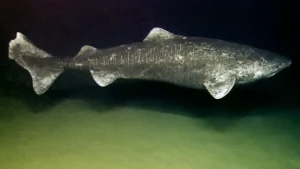
Their low metabolism, slow digestion, and decades-long growth mean some Greenland sharks can live over 400 years.
Some sharks, like great whites and salmon sharks, bridge the gap. They move across warm and cold waters, using partial heat in certain muscles or organs to stay active in colder regions.
This shows how cold-blooded bodies affect sharks differently: tropical sharks rely on warmth for speed, while polar sharks survive through energy saving and endurance.
How Do Sharks Regulate Their Temperature Without Basking in the Sun?
People often compare sharks to lizards, which bask in the sun to warm up. Sharks obviously can’t do that, so how do they manage?
The answer is water movement and location.
Instead of basking, sharks swim into warmer layers. Sunlight warms surface water, especially in shallow areas, and sharks can raise their body temperature just by swimming there. When they need cooler water, they go deeper.
Ocean currents also help. Warm currents act like underwater highways, carrying heat across long distances. Sharks use these currents during travel, gaining warmth and saving energy from flowing water.
Some species also match activity to seasonal changes. For example, tiger sharks in the Atlantic follow warm currents north in summer and go south when water cools. It’s a smart, low-energy way to manage body temperature.
Even wind mixing, upwellings, and thermal layers can influence where sharks spend their time, showing how sensitive they are to temperature patterns.
The Difference Between Sharks And Warm-Blooded Predators
Comparing sharks to dolphins or whales really shows what cold blooded means.
Dolphins are mammals. They make their own heat, keep a steady internal temperature, and need a lot of food to fuel that. They breathe air, rest regularly, and sleep in short bursts.

Sharks don’t need that. They don’t need to surface for air, and they use less energy. Their bodies are slower-burning machines built to last.
Neither system is better. They’re just different ways to survive in the ocean.
Some researchers point out that cold-blooded sharks can survive longer on limited food, while warm-blooded marine mammals need constant calories.
It’s a trade-off between energy efficiency and raw power.
Why This Question Keeps Coming Up
So why do people keep asking if sharks are cold blooded?
Part of it is how sharks act. They don’t fit the stereotype. They’re too active, too fast, and too dominant to feel like what people expect a cold-blooded animal to be.
Another part is the word itself. “Cold blooded” sounds extreme, almost emotional, like it means heartless or lifeless. In reality, it’s just a description of how body temperature works.
Once you understand that, the confusion fades. Sharks aren’t warm blooded in disguise. They’re cold blooded specialists that figured out how to thrive anyway.
Conclusion
Sharks are cold blooded, but that simple label doesn’t tell the full story. Their body temperature mostly follows the water around them, yet some species can keep critical parts warmer to stay fast, sharp, and efficient.
Instead of slowing them down, being cold blooded actually helps sharks survive, save energy, and live in a huge range of ocean environments.
When you look at how they move, hunt, and travel, it’s clear that sharks aren’t limited by their biology at all. They’re shaped perfectly by it.

Hi, my name is Ezra Mushala, i have been interested animals all my life. I am the main author and editor here at snakeinformer.com.