

When most people think about rodent problems in their homes, they picture either mice or rats scurrying across the floor. Both are unwelcome houseguests, but there’s a big difference between finding a mouse in your kitchen and discovering rats in your walls.
While mice can definitely be a nuisance and carry some health risks, rats are on a completely different level when it comes to the damage they cause and the dangers they bring.
If you’ve ever wondered why pest control experts get more concerned about rats than mice, there are some very good reasons. So are rats more dangerous or than mice?
Rats are more dangerous than mice because they’re larger and more aggressive, carry more serious diseases, cause much worse structural damage with their constant gnawing, contaminate more food, reproduce at alarming rates, and are significantly harder to eliminate once they’ve infested a property.
The size difference alone makes rats a bigger threat, but that’s just the beginning. Rats also behave differently than mice, they’re bolder, more destructive, and more likely to pose direct health risks to you and your family.
Understanding these differences can help you recognize why a rat problem needs immediate attention.
Rats Are Much Larger and More Aggressive
The first thing you’ll notice if you come face to face with a rat is its size. While mice typically weigh less than an ounce and measure just a few inches long, rats can weigh over a pound and grow up to 18 inches long (including their tail).
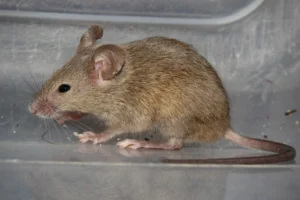
This size difference isn’t just about appearances. Larger body size means rats need more food, more water, and more space, so they’re more likely to invade multiple areas of your home to meet their needs.
Rats are also much more aggressive than mice when cornered or threatened. A mouse will almost always run away if it sees you, but a rat might stand its ground, especially if it’s protecting a nest or feels trapped.

There have been documented cases of rats biting people, particularly children or individuals who are sleeping. While mice can bite too, they rarely do, and their small size means their bites cause minimal damage.
The aggression extends to other animals as well. Rats have been known to attack and kill small pets like hamsters, birds, or even kittens. Mice generally avoid confrontation with other animals.
They Carry More Serious Diseases
Both rats and mice can carry diseases, but rats are associated with some of the most dangerous pathogens known to humans. Throughout history, rats have been responsible for spreading devastating diseases, including the bubonic plague.
While the plague isn’t a major concern in modern cities, rats today still carry leptospirosis, hantavirus, rat-bite fever, and salmonella. These diseases can be transmitted through rat urine, droppings, bites, or even just breathing in dust contaminated with rat waste.

Leptospirosis is particularly dangerous because it can cause kidney damage, liver failure, and even death if not treated quickly. You can get it just by touching surfaces contaminated with rat urine, and then touching your mouth, nose, or eyes.
Hantavirus is another serious threat. While it’s rare, it can be fatal in up to 38% of cases. You can contract it by breathing in dust that contains dried rat urine or droppings, which can happen when you’re cleaning out an infested area.
Rats also carry more parasites than mice. Fleas, ticks, and mites that live on rats can spread additional diseases to humans and pets. A single rat can host dozens of parasites at once.
The amount of waste rats produce also matters. Because they’re larger and eat more, they produce significantly more urine and droppings than mice. More waste means more opportunities for disease transmission.
Rats Cause Much More Structural Damage
Rats have incredibly strong teeth that never stop growing, so they have to gnaw constantly to keep them worn down. This means they’ll chew on basically anything they come across, and they can do it with frightening efficiency.
Unlike mice, which might nibble on cardboard boxes or wooden furniture, rats can chew through concrete, lead pipes, cinder blocks, and even soft metals like aluminum. They’ve been known to gnaw through electrical wiring, which can cause house fires.
The National Fire Protection Association estimates that rodents are responsible for about 25% of house fires with unknown causes.
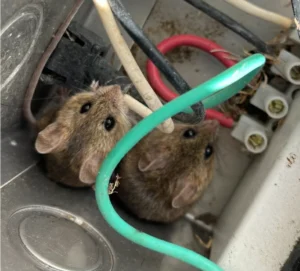
Given that rats are more likely to chew through electrical wiring than mice (because their teeth are stronger), they’re probably responsible for a larger share of these fires.
Rats can also cause serious damage to your home’s foundation and walls. They’ll burrow into insulation, chew holes in drywall, and create tunnels through the structure of your house that can weaken it over time.
Plumbing damage from rats is particularly expensive to fix. They’ll chew through plastic pipes, create leaks in your walls, and cause water damage that can cost thousands of dollars to repair.
In commercial settings, rats can destroy inventory, contaminate products, and damage expensive equipment. A single rat infestation in a warehouse or restaurant can result in tens of thousands of dollars in losses.
They Contaminate Much More Food
Rats eat about 1 to 2 ounces of food per day, which is significantly more than the tiny amount mice consume. But the real problem isn’t just what they eat, it’s what they contaminate.
For every bit of food a rat actually eats, it contaminates much more with its urine, droppings, and the oils from its fur. Rats urinate constantly as they move around (it’s how they mark their territory), so they’re basically leaving a trail of contamination wherever they go.
Studies have shown that a single rat can contaminate up to 10 times the amount of food it actually consumes. In a pantry or food storage area, this means you might have to throw away a huge portion of your food supply after just one rat visits.
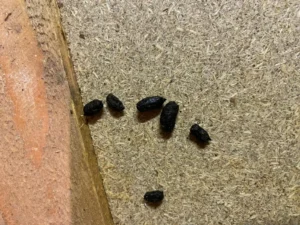
Rats are also less picky about what they eat compared to mice. They’ll chew through metal cans, plastic containers, and thick packaging to get to food. This means even food you thought was safely stored might be at risk.
The smell of rat contamination is also much worse than mouse contamination. Rat urine has a strong, pungent ammonia smell that can linger in your home even after the rats are gone.
In commercial food facilities, finding evidence of rats can lead to failed health inspections, forced closures, and significant financial losses. The FDA has strict rules about rodent contamination, and rats leave much more obvious evidence than mice.
Rats Reproduce at Alarming Rates
Both mice and rats reproduce quickly, but rats can create larger infestations faster because each litter contains more babies. A female rat can have 6 to 12 babies per litter, while mice typically have 5 to 6.
Rats also reach sexual maturity quickly. A baby rat can start reproducing when it’s just 3 to 4 months old, which means you can go from a couple of rats to dozens within a single season.
Female rats can have up to 7 litters per year under ideal conditions (like inside your warm, food-filled home). Do the math, and a single pair of rats could theoretically produce hundreds of offspring in just one year.

What makes this worse is that rats live longer than mice. While a mouse might live 1 to 2 years, rats can live 2 to 3 years or even longer in protected environments. This gives them more time to reproduce and establish large colonies.
Rats also have better survival rates for their young. Because they’re larger and more capable of defending their nests, more baby rats survive to adulthood compared to baby mice.
The speed at which rats reproduce means that even if you manage to kill a few, the population can quickly bounce back if you don’t eliminate the breeding adults.
They’re Much Harder to Eliminate
Rats are significantly more intelligent than mice, which makes them harder to trap and poison. They’re cautious by nature and will often avoid new objects in their environment (like traps) until they’ve determined they’re safe.
This behavior is called “neophobia” (fear of new things), and it means rats might ignore traps for days or even weeks before they’ll approach them. Mice, on the other hand, are curious and will usually investigate new objects right away.
Rats also learn from experience. If they see another rat get caught in a trap or get sick from poison bait, they’ll avoid those dangers. This means you can’t just set out a few traps and expect to catch all the rats.
The size and strength of rats mean you need different, more robust traps. Regular mouse traps won’t kill a rat, they’ll just injure it, making it even more cautious and harder to catch.
Rats are also better at finding and exploiting entry points into your home. They can squeeze through holes as small as a quarter (mice can get through dime-sized holes, but rats are strong enough to make small holes bigger by gnawing).
Once rats establish a colony in your home, they create complex burrow systems with multiple entry and exit points. You might block one hole, but they’ll just use another one you didn’t know about.
Professional exterminators often say that rat infestations require much more time, effort, and money to eliminate compared to mouse infestations. You’re looking at weeks or even months of treatment rather than days.
Rats Do More Damage to Outdoor Spaces
If rats are living in your yard or garden, they’ll cause significantly more damage than mice would. Rats dig extensive burrow systems that can undermine patios, walkways, and even building foundations.
These burrows can be several feet deep and contain multiple chambers for nesting, food storage, and waste. A single rat colony’s tunnel system can extend for 20 to 30 feet underground.
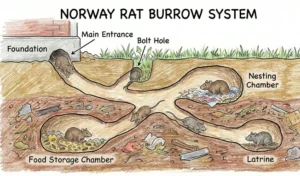
Rats will also destroy your garden much faster than mice. They’ll eat vegetables, fruits, seeds, and bulbs. They’re strong enough to dig up newly planted seeds and can strip a tomato plant or berry bush overnight.
If you have chickens, ducks, or other small farm animals, rats pose a serious threat. They’ll steal eggs, contaminate feed, and even attack baby chicks. They’ve also been known to chew on the feet of roosting birds.
Rats can cause damage to vehicles parked outside too. They’ll climb into engine compartments looking for warmth and nesting materials, then chew through wires, hoses, and insulation. This can lead to expensive repairs.
Outdoor rats also attract other pests. Their burrows can become home to snakes, spiders, and insects. The presence of rats can basically turn your yard into a haven for all kinds of unwanted wildlife.
They Pose Greater Risks to Pets
While mice might startle your cat or dog, rats can actually harm them. Large rats have been known to fight back against cats, and smaller dogs can get bitten if they try to catch a rat.
Rats carry parasites like fleas and ticks that can jump onto your pets and infest your home. These parasites can transmit diseases to both pets and humans.
If your pet catches and kills a rat, there’s a risk they could get sick from diseases the rat was carrying. Leptospirosis, in particular, can be transmitted to dogs through contact with rat urine.
Rat poison poses another serious danger to pets. Because rats are larger, people often use more powerful poisons to kill them. If your dog or cat eats a poisoned rat (or finds the poison bait), it could be fatal.
Rats also compete with pets for food. If you leave pet food out, rats will find it and contaminate it. Some rats become bold enough to eat from pet food bowls even when pets are nearby.
Rats Adapt Better to Control Efforts
One of the most frustrating things about rats is how well they adapt to human attempts to control them. They’re constantly evolving to overcome the methods we use to kill them.
Many rat populations have developed resistance to common rodenticides. First-generation anticoagulant poisons that used to work well now have little effect on some rat colonies.

This resistance spreads quickly because surviving rats pass it on to their offspring. Within a few generations, an entire rat population in an area can become resistant to certain poisons.
Rats also adapt their behavior based on what works. If they learn that food in a certain location is poisoned, they’ll avoid that area and find food elsewhere.
Their intelligence means they can problem-solve their way around obstacles. They’ll figure out how to access food storage areas, bypass barriers, and find new entry points into buildings when old ones are blocked.
Some urban rat populations have even adapted to human schedules. They’ve learned when garbage is put out, when people are most likely to drop food, and when it’s safest to be active.
The Psychological Impact Is Greater
There’s something uniquely disturbing about seeing a rat in your home compared to seeing a mouse. Maybe it’s the size, the bold behavior, or just the knowledge of what rats are capable of.
People report higher levels of stress and anxiety when dealing with rat infestations compared to mouse problems. The fear of encountering a large rat, especially in your bedroom or kitchen, can affect your sleep and peace of mind.
Rats are also associated with filth and poverty in many cultures, so having them in your home can feel embarrassing. People are often reluctant to tell friends or family about a rat problem because of the stigma.
The sounds rats make are also more disturbing. Their scratching, gnawing, and squeaking is louder than mouse sounds, and hearing them moving around in your walls at night can be genuinely frightening.
Children can be particularly affected by the presence of rats. The fear of rats can develop into a phobia that lasts into adulthood.
Conclusion
Rats are worse than mice in almost every measurable way. They’re bigger, more aggressive, carry more dangerous diseases, cause more structural damage, contaminate more food, reproduce faster, and are significantly harder to get rid of once they’ve moved in.
While mice can certainly be a problem, a rat infestation is a serious issue that requires immediate professional attention. The longer you wait to address it, the worse it gets, and the more expensive and difficult it becomes to eliminate.
If you suspect you have rats in your home, don’t try to handle it yourself with store-bought traps and poison. The intelligence and adaptability of rats means you’ll likely just waste time and money.
Call a professional exterminator who has the tools, knowledge, and experience to deal with these dangerous pests effectively.

Hi, my name is Ezra Mushala, i have been interested animals all my life. I am the main author and editor here at snakeinformer.com.