

If you’ve ever watched two geckos cross paths, you might’ve wondered what’s really going on between them.
Maybe you saw one gecko slowly moving across a branch while another watched from the corner, almost like two strangers sizing each other up.
Or maybe you’ve seen videos of geckos piled together in a warm spot and thought, “Do they actually like each other?”
It’s a normal question, because when animals share space, we want to know whether they get along or if there’s tension behind the scenes. So are geckos friendly to each other?
Most gecko species aren’t friendly with each other at all. They’re solitary animals that like their own space, and many will fight, chase, or bite if another gecko gets too close. Some species can tolerate each other under the right conditions, but very few geckos naturally enjoy company or form friendships.
This surprises a lot of people at first. When you see cute geckos sharing a warm rock or resting side by side, it looks friendly. But reptiles don’t see things the way social mammals do.
Two geckos close together aren’t cooperating or bonding. They’re usually just using the same resource, like heat, shelter, or food, and they happen to be near each other because the environment put them there.
To really understand whether geckos are friendly to each other, you have to look at how they behave in the wild, how they communicate, and what happens when two individuals share the same space.
Once you see the full picture, it becomes clear that “friendliness” isn’t part of most geckos’ natural lives.
Why Most Geckos Prefer To Live Alone
In the wild, nearly every gecko species lives alone. They hunt alone, hide alone, bask alone, and sleep alone. Their whole survival plan is built on staying out of other geckos’ way. This isn’t because they’re mean or aggressive. It’s just how they evolved.
A gecko’s world is full of competition. Every gecko is trying to find the best hiding spot, the warmest rock, the safest branch, and the juiciest insects.

If two geckos want the same thing, one of them has to leave. Sharing isn’t part of their instinct. Avoiding conflict is.
So instead of forming groups, geckos spread out. Each one picks its own territory or area to control.
If another gecko enters that space, it becomes uncomfortable fast. You’ll see tail lifts, jaw gaping, chasing, and sometimes biting. It’s not personal. It’s survival.
In gecko language, space is everything. A calm gecko is a gecko that’s alone.
Do Geckos Ever Act Friendly Toward Each Other?
Not in the emotional way we think of friendliness. Geckos don’t have bonding instincts like dogs, cats, or even some birds do. They don’t feel companionship.
They don’t enjoy group time. And they don’t form long-term friendships with other geckos.
What people often mistake for friendliness is either tolerance or necessity.
For example, two leopard geckos may rest near each other when they’re young.

But this isn’t social behavior. It’s survival. Hatchlings naturally stay near warmth and security, and sometimes that means staying close together.
As they grow older, this behavior fades. Adults don’t think in terms of teamwork.
Geckos don’t groom each other. They don’t protect each other. They don’t share food. They don’t comfort each other when stressed. They’re built to live independently.
If you see two geckos calm in the same space, that’s not friendliness. That’s peace caused by routine, plenty of space, and the absence of conflict.
Why People Sometimes Think Geckos Get Along
A lot of misunderstandings happen because people notice certain behaviors and assume there’s emotional meaning behind them. =
But in geckos, these behaviors usually have simple explanations.
When geckos are near each other on a warm surface
This looks friendly, but they’re just sharing the best heat source available. They’re not bonding. They’re surviving.
When two females seem to tolerate each other
Female geckos can be calmer toward each other, but this is tolerance, not friendship. One may still dominate the other without obvious fighting.
When geckos appear to cuddle or stack
This is a temperature-driven behavior. The warmest spot becomes crowded because resources are limited. It’s not social closeness.
When a male approaches a female gently
This isn’t friendliness either. It’s mating behavior.
Humans tend to project emotions onto animals. But geckos just don’t operate with social motivations.
Are There Any Gecko Species That Are More Social Than Others?
A few geckos are more tolerant than others, but even the “social” species aren’t social in the way most people expect.
Crested Geckos
These geckos are sometimes seen together in the wild, but they’re not interacting. They’re simply using the same tree or branch system.
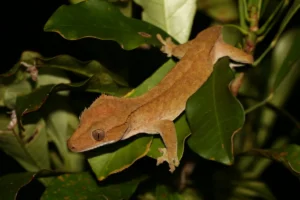
They don’t like being handled together and can still stress each other out.
Gargoyle Geckos
They’re slightly more tolerant but still territorial. Two males will fight.
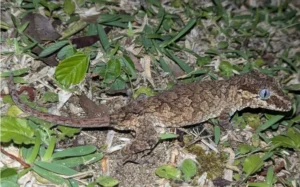
Females sometimes tolerate each other, but only if they have lots of space.
Leopard Geckos
Some females can coexist if they’re the right personalities, but this is never guaranteed. Males always fight.
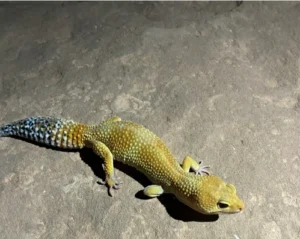
Even females can bully each other silently.
House Geckos
These geckos live close together around human homes, but each one still keeps its own space. They just happen to use the same hunting grounds around porch lights.
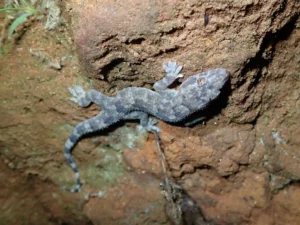
Even the most tolerant species don’t form bonding relationships. The best they can do is coexist.
Why Male Geckos Almost Never Get Along
If you put two male geckos together, almost every time, the result is the same. One becomes dominant, and the other becomes stressed, injured, or killed.
This is because male geckos defend territory the most aggressively. They rely on territory to attract females and survive.
To a male gecko, another male is never a friend. It’s always competition. Even if a male doesn’t fight immediately, he may show subtle signs of dominance, like blocking food, controlling hiding spots, or preventing the other from basking.
These behaviors are easy to miss until the weaker gecko becomes thin, stressed, or ill.
In the wild, males solve this naturally. One wanders away and finds his own space. But in a tank or small area, he can’t escape, so conflict continues until one suffers.
Can Female Geckos Be Friendly With Each Other?
Female geckos are usually calmer than males, but that doesn’t mean they’re friendly. They simply don’t have the same drive to fight over territory.
Their conflicts are quieter. Instead of biting or chasing, they may show stress in subtle ways.
Two females might appear calm together but still:
- block each other from hiding spots
- intimidate without fighting
- steal food
- cause each other long-term stress
- create silent dominance relationships
A lot of people don’t recognize these signs, because they expect fighting to be obvious. But female geckos can stress each other out without ever throwing a single bite.
And stress in reptiles builds slowly. A gecko may look fine for weeks or months before the symptoms appear.
That’s why living together is often misunderstood as “friendliness.” What looks peaceful may actually be quiet bullying.
How Geckos Communicate With Each Other
Understanding how geckos communicate helps explain why they don’t get along well. Their signals aren’t warm or inviting.
Most of their communication is defensive or territorial.
Tail movements
A fast tail wave usually means “Back off.”
A slow wave means the gecko is alert and trying to warn another.
Vocal sounds
Some geckos chirp or click when threatened or annoyed.
Tokay geckos even shout loud calls to declare territory.
Jaw displays
Opening the mouth wide is a sign of threat.
It’s meant to scare away, not welcome.
Body posture
A lifted body or stiff legs show dominance.
A lowered body shows fear.
Almost all communication is about claiming space, warning others, or expressing fear. There’s nothing about bonding, comfort, or friendship in the reptile sense.
Do Geckos Ever Help Each Other Or Show Kindness?
Not in the way social species do. Geckos don’t share resources. They don’t help wounded individuals. They don’t watch out for each other.
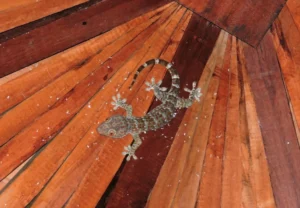
Each one is responsible for itself. Even mating interactions are brief and often rough.
Some animals evolved to work together. Wolves hunt in groups. Elephants care for their young as a family. Birds flock for protection.
But geckos never needed teamwork to survive. They succeed by being alone, staying hidden, and keeping their distance.
A gecko might seem to show kindness when it doesn’t chase a tank mate or doesn’t fight. But that isn’t kindness. That’s neutrality.
The absence of conflict doesn’t equal friendship. It just means both geckos feel they have enough space and resources to avoid each other.
Do Baby Geckos Stay Together Or Behave Socially?
No. Baby geckos are independent from birth. Unlike mammals, gecko hatchlings don’t stay with siblings or parents.
The moment they hatch, they scatter. There’s no family structure, no learning from parents, and no shared development.
Even hatchlings can show territorial behavior toward each other. They may compete for food or hiding spots right away.
This is another reason geckos never evolved friendliness. Their instincts are built for separation from day one.
What Happens When Two Geckos Are Forced To Live Together?
This is where problems show up the fastest. When geckos share a space, even if they aren’t fighting visibly, one usually becomes dominant.
The dominant gecko controls:
- food
- basking areas
- hiding spots
- the best parts of the enclosure
The submissive gecko survives in whatever space is leftover. Without obvious injuries, people think everything is fine.
But the submissive gecko becomes stressed inside.
Stress in geckos can lead to:
- poor appetite
- hiding constantly
- weight loss
- dull coloration
- slow healing
- infections
- reduced immunity
Many people only notice when the weaker gecko gets sick, and by that time the relationship was never friendly in the first place. It was quiet competition.
Why We Misunderstand Gecko Behavior So Easily
Humans are social animals. We look for relationships everywhere. When we see two geckos near each other, our brains interpret it like we interpret our own behavior.
We assume closeness means connection.

But reptiles work differently. They don’t seek connection. They seek comfort, safety, and survival.
Two geckos near each other in the wild usually means they both want the same warm rock, not that they’re friends sharing it.
This misunderstanding leads to a lot of myths. People see two geckos resting together and think it’s bonding. They see babies together and assume they need company. They see tolerance and think it’s affection.
To understand geckos fully, you have to think like a reptile, not like a person. A reptile’s comfort zone is peaceful solitude.
Are Geckos Ever Truly Social In Any Situation?
The only time geckos gather naturally is during mating or when resources force them together. Neither situation is based on social desire.
During mating season
Males seek out females, but these interactions are short and often rough.
During feeding in dense areas
House geckos gather near porch lights because food is abundant. But they still keep their distance. Each hunts alone.
When space is extremely limited
If shelter is rare, several geckos may squeeze into the same crack or hole. But once they’re out, they go back to being solitary.
None of these situations are social by nature. They’re just survival responses.
Conclusion
The answer is no, not in the way humans think of friendliness. Geckos are solitary animals that prefer to be alone.
They don’t form friendships. They don’t bond. They don’t enjoy company. They tolerate each other only when space, heat, or resources force them together.
Some geckos can coexist peacefully if conditions are perfect, especially females of certain species. But even then, it’s not friendliness. It’s calm neutrality.
Understanding this helps you care for geckos better, because you stop expecting social behavior from an animal that was never meant to live socially.
When you let a gecko live the way it naturally prefers, you see its true behavior shine. And that’s where the real beauty of these animals shows. Not in friendship, but in peaceful independence.

Hi, my name is Ezra Mushala, i have been interested animals all my life. I am the main author and editor here at snakeinformer.com.