
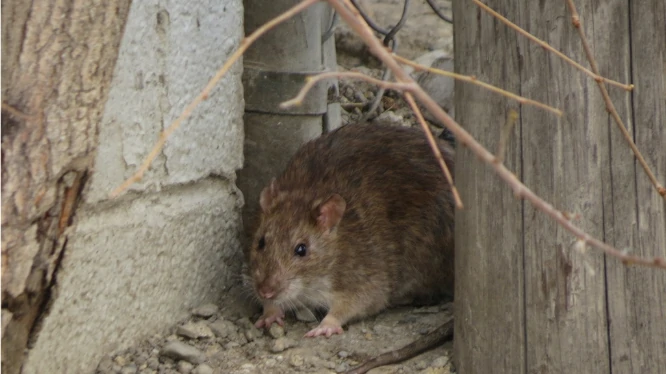
Rats are incredibly adaptable animals that can survive in almost any environment. You’ve probably seen them in cities, in sewers, in homes, and even near bodies of water. This might make you wonder about their relationship with water.
Some people think rats hate water and can’t swim, while others have heard stories about rats swimming up through toilet pipes. So are brown rats actually good swimmers?
Yes, brown rats can swim very well. They’re natural swimmers that can tread water for up to 3 days, swim up to half a mile, and hold their breath underwater for 3 minutes. Rats can even swim up through plumbing and come up through toilets.
Understanding how well brown rats can swim is important whether you’re dealing with a rat problem or just curious about these animals. Their swimming ability is actually one reason they’re so successful at surviving in different environments.
How Well Can Brown Rats Swim?
Brown Rats aren’t just capable of swimming, they’re actually really good at it. This surprises a lot of people who think of rats as land animals that avoid water.
Brown Rats can swim for long distances without getting tired. They’re capable of swimming up to half a mile without stopping, which is pretty impressive for such a small animal.
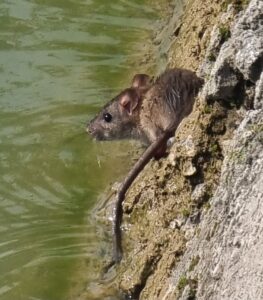
They can also tread water for an incredibly long time. Studies have shown that rats can stay afloat and keep swimming for up to 3 days in some cases.
Rats are strong swimmers who can handle currents and rough water. They don’t just dog-paddle on the surface, they actually swim with purpose and direction.
Their swimming technique is efficient. Rats use their legs to paddle and their tail as a rudder to steer. This makes them pretty agile in the water.
Young rats learn to swim instinctively. They don’t need to be taught, it’s just something they can do naturally from a young age.
Why Brown Rats Are Good Swimmers
Rats didn’t develop swimming abilities by accident. There are good evolutionary reasons why they’re such competent swimmers.
In the wild, rats often live near water sources. Rivers, streams, ponds, and wetlands are common rat habitats because water means food and resources.

Being able to swim means rats can escape predators more easily. If a rat is being chased, it can jump into water and swim away, which many predators can’t or won’t follow.
Swimming also helps rats find food. They can access food sources on the other side of water barriers that other animals can’t reach.
Rats need to drink water regularly, and being comfortable around water means they can access water sources safely.
Their body structure supports swimming. Rats have strong legs, flexible bodies, and that long tail that works perfectly as a steering mechanism in water.
Even pet rats, which have been bred for generations in captivity, still have these swimming instincts. It’s just built into what they are as animals.
Can Brown Rats Hold Their Breath Underwater?
Swimming on the surface is one thing, but rats can also dive underwater when they need to. This ability makes them even more capable in aquatic environments.
Rats can hold their breath for up to 3 minutes underwater. This is a pretty long time for a small mammal.
They’ll dive underwater to escape predators, find food, or navigate through submerged passages. In sewers, rats often swim through water-filled pipes.

When a rat dives, it closes off its nose and throat to prevent water from getting in. This is an automatic reflex, kind of like how humans naturally hold their breath underwater.
The rat’s body is streamlined enough to swim underwater with reasonable efficiency. They’re not as good as otters or beavers, but they can definitely get around.
This breath-holding ability is part of why rats can swim up through toilet pipes. They can navigate several feet of water-filled plumbing while holding their breath.
Brown Rats Swimming Through Sewers and Pipes
One of the most disturbing facts about rat swimming ability is that they can navigate through plumbing systems. This is how rats sometimes end up coming up through toilets.
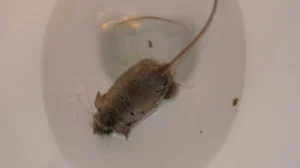
Rats live in sewer systems in many cities. These underground networks provide shelter, protection, and access to food waste.
When rats are in sewers, they encounter water-filled pipes regularly. They don’t see these as barriers, they just swim through them.
A rat can swim up through the curved pipe at the bottom of a toilet (called a P-trap). This requires swimming several feet underwater while navigating bends in the pipe.
Rats are motivated to explore pipes because they lead to food sources and new territories. A pipe that goes up into a building looks like an opportunity to a rat.
Modern plumbing is supposed to prevent this with traps and barriers, but in older buildings or poorly maintained systems, rats can definitely make it through.
This doesn’t happen all the time, and it’s pretty rare, but it does happen often enough that you should always put the toilet lid down if you live in an area with rats.
Do Brown Rats Like Swimming?
Just because rats can swim doesn’t mean they enjoy it. There’s a difference between being able to do something and actually wanting to do it.
Most rats will avoid water if they have a choice. They’d rather stay dry and comfortable than get wet unnecessarily.
Rats typically only swim when they have to. This might be to escape danger, cross a barrier, find food, or explore new territory.

Pet rats vary in how they feel about water. Some pet rats will play in shallow water, while others really hate getting wet.
You can’t force a rat to like swimming. Some rats are more comfortable around water than others, and this seems to be an individual personality thing.
If you give a rat a choice between swimming across water or walking around it, most rats will choose to walk around.
However, rats won’t panic or freak out if they fall into water. They’ll calmly swim to the edge and climb out. This shows they’re comfortable with their swimming abilities even if they don’t seek out water.
How Far Can Brown Rats Swim?
The swimming endurance of rats is actually pretty remarkable when you look at the numbers. They can cover surprising distances in water.
Brown Rats can swim continuously for up to half a mile without stopping. This is about 800 meters, which is a lot for an animal that weighs less than a pound.
In terms of time, rats can swim continuously for several hours if they need to. Some studies have shown rats swimming for 15 to 20 hours straight.

The record for rat swimming endurance is about 3 days, though this is under extreme circumstances and not something a rat would normally do.
These abilities mean rats can cross rivers, streams, and ponds easily. A body of water that would stop many animals is just a minor obstacle for a rat.
In flood situations, rats can swim for long enough to reach high ground or shelter. This is one reason rats survive floods pretty well.
Swimming this far requires a lot of energy though. A rat that swims a long distance will be exhausted and need food and rest afterward.
Can All Brown Rats Swim?
While rats in general are good swimmers, not every individual rat has the same abilities. There are some variations to be aware of.
Healthy adult rats are the best swimmers. They have the strength, coordination, and endurance needed for extended swimming.
Baby rats can swim instinctively, but they’re not as strong or capable as adults. They’ll get tired faster and can’t swim as far.

Old rats can still swim, but their endurance is reduced. An old rat might manage a few minutes in the water but couldn’t swim for hours like a young adult rat.
Sick or injured rats might struggle with swimming. If a rat is weak or has mobility problems, swimming becomes much harder or even impossible.
Obese rats (which can happen with pet rats that are overfed) don’t swim as well as fit rats. The extra weight makes swimming more difficult.
Rats with respiratory problems will struggle because swimming requires good breathing control. If a rat can’t breathe properly, it can’t hold its breath or regulate its breathing in water.
Swimming vs Drowning: When Rats Get in Trouble
Even though rats are good swimmers, they can still drown under certain circumstances. Understanding when this happens is important.
Rats can drown if they can’t find a way out of the water. They can swim for a long time, but eventually, they’ll get exhausted.
Smooth-sided containers like buckets or bathtubs are dangerous because rats can’t climb out. The rat can swim in circles until it’s too tired, then it drowns.
Cold water is more dangerous than warm water. Cold saps a rat’s energy faster, and hypothermia can set in, making the rat too weak to swim.
Fast-moving water like rapids or strong currents can overwhelm a rat. While they can handle some current, really strong water can sweep them away and tire them out quickly.
Rats can also drown if they’re injured or sick before they go into the water. A rat that’s already weak might not have the strength to swim for long.
If a rat gets tangled in something underwater (like plants or debris), it might not be able to surface and could drown.
The good news is that rats are usually smart enough to avoid situations where they can’t get out of water. They won’t jump into a bucket on purpose because they know they couldn’t get out.
Rats Swimming in Different Water Conditions
Rats don’t just swim in calm, clean water. They can handle various water conditions, which is part of why they’re so adaptable.
Rats can swim in dirty water, sewage, and contaminated water without major problems. They’re not picky about water quality when it comes to swimming.

In cold water, rats can still swim, but their endurance is reduced. They lose body heat faster in cold water, so they’ll get tired quicker.
Warm water is easier for rats. They can maintain their body temperature better and swim for longer in warm water than in cold.
Saltwater doesn’t seem to bother rats much. They can swim in ocean water or salt marshes just as well as in freshwater.
Choppy water and waves are more challenging but not impossible. Rats can handle moderate waves, though really rough water might be too much.
Rats can swim in water with some current. They’re strong enough to make progress even when the water is flowing, though very strong currents can push them around.
The main thing rats need is a way to get out of the water. As long as they can reach the shore or climb out somewhere, they can handle just about any water condition.
How Swimming Helps Brown Rats Survive
The ability to swim gives rats a major survival advantage in many situations. This is one reason they’re such successful animals.
Swimming lets rats escape from predators. If a cat, dog, or other predator is chasing a rat, the rat can jump into water where many predators won’t follow.
It helps rats access new food sources. A rat colony near a river can swim across to raid gardens or crops on the other side.
Swimming allows rats to colonize islands and isolated areas. Rats have spread to many islands around the world partly because they can swim between land masses.
In flood situations, swimming keeps rats alive. While many animals drown in floods, rats can swim to safety and find high ground.
Sewer systems become highways for rats partly because of their swimming ability. They can navigate water-filled pipes that other animals can’t.
Swimming also helps rats maintain their territory. A body of water that other animals see as a barrier is just part of the territory for rats.
This swimming ability is one reason rats are considered such successful urban pests. They can go places and do things that other rodents can’t.
What to Do If a Rat Is Swimming in Your Pool or Pond
Sometimes you might find a rat swimming in your pool, pond, or other body of water on your property. Here’s how to handle this situation.
Don’t panic. The rat is probably just trying to get out and will leave on its own if it can find an exit.
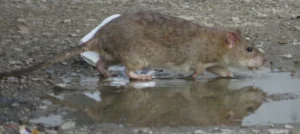
Provide a way out. Put a board, branch, or rope from the water to the edge so the rat can climb out.
Don’t try to catch the rat while it’s in the water. A panicked rat might bite, and handling wet rats is difficult.
If the rat gets out on its own, it’ll likely run away immediately. Rats don’t want to hang around near humans if they can help it.
After the rat leaves, you might want to figure out how it got into your yard and block that entrance point.
If you find a drowned rat in your pool, use gloves or a net to remove it. Don’t touch it with bare hands because rats can carry diseases.
Clean and chlorinate your pool thoroughly after a rat has been in it. The rat probably left bacteria and other contaminants in the water.
If rats keep getting into your pool or pond, you might need to put up barriers or fencing to keep them out.
Conclusion
Brown Rats are excellent swimmers that can tread water for up to 3 days, swim distances of half a mile, and hold their breath underwater for 3 minutes. This swimming ability is built into their biology and gives them major advantages for survival.
Whether you’re dealing with a rat problem or keeping rats as pets, understanding their swimming capabilities is important. Rats won’t be stopped by water barriers, can navigate through plumbing systems, and can access areas that seem unreachable.
While most rats prefer to stay dry, they won’t hesitate to swim when they need to. This makes them more adaptable and harder to control than rodents that can’t swim. It’s just one more thing that makes rats such successful animals in almost any environment they encounter.
If you’re trying to keep rats out, don’t count on water to stop them. And if you have pet rats, don’t assume they can’t handle water. They’re much more capable swimmers than most people realize.

Hi, my name is Ezra Mushala, i have been interested animals all my life. I am the main author and editor here at snakeinformer.com.