
Most people picture sharks as fierce predators that give birth to live young, but the truth about shark reproduction is actually way more interesting and varied than that. Some sharks do give live birth, but others lay eggs in the ocean.
These eggs are totally different from bird eggs or any other eggs you’re probably familiar with. What do shark eggs look like?
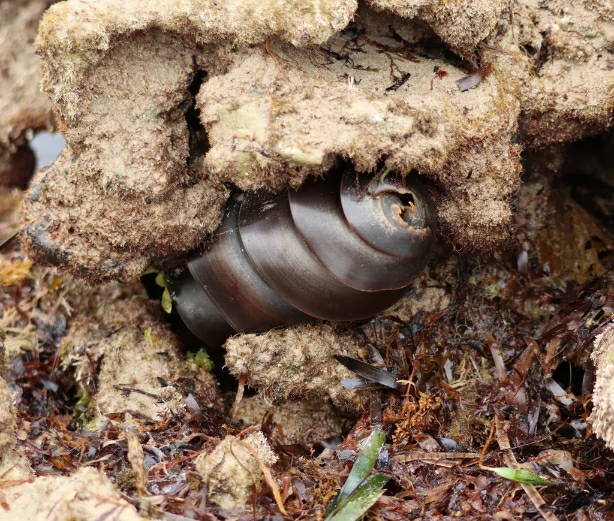
Shark eggs look like dark, leathery pouches with long tendrils at the corners. They’re often called “mermaid’s purses” because of their distinctive rectangular or spiral shape. The eggs are tough, flexible cases that protect developing baby sharks inside.
Not all sharks lay eggs, only about 40% of shark species reproduce this way. But the eggs they produce are some of the most unique and fascinating structures in the ocean.
The Basic Shape and Structure
Shark eggs don’t look anything like chicken eggs or other eggs you’d see on land. They’re not round, white, or fragile.
Most shark eggs are rectangular or pouch-shaped, measuring anywhere from 2 to 10 inches long depending on the species. The shape helps them attach to underwater structures.
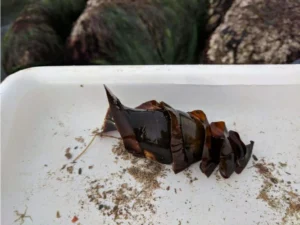
The eggs are made from a tough, leathery material called collagen. This isn’t a hard shell like bird eggs have, but a flexible case that can bend without breaking.
Each corner of the egg case usually has a long, curly tendril. These tendrils wrap around seaweed, coral, or rocks to anchor the egg in place so it doesn’t drift away.
The color ranges from dark brown to almost black when the eggs are fresh. This dark coloring helps them blend in with rocks and seaweed on the ocean floor.
The entire structure is designed to protect the baby shark growing inside while allowing water to flow through for oxygen and waste removal.
Why They’re Called Mermaid’s Purses
The nickname “mermaid’s purse” has been used for centuries by people who find these egg cases washed up on beaches.
The rectangular shape with the tendrils at each corner really does look like a small, ornate purse or pouch. It’s easy to imagine a mermaid carrying one.
This name is so common that many people don’t even know they’re actually looking at shark eggs when they find them on the beach.
Skate and ray eggs (which are close relatives of sharks) also get called mermaid’s purses, though they have slightly different shapes and sizes.
The romantic name has helped make these fascinating objects more recognizable and has sparked interest in shark reproduction among beachcombers and ocean enthusiasts.
Different Shark Species Have Different Egg Shapes
While all shark eggs share some basic features, different species produce eggs with unique characteristics.
Horn shark eggs are spiral-shaped, looking like large corkscrews. The mother shark uses her mouth to twist the egg into crevices in rocks where it stays firmly wedged.
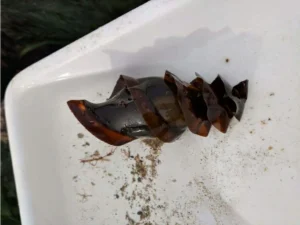
Port Jackson shark eggs are similar to horn shark eggs, with a distinctive spiral ridge running around the outside. These can be 4 to 5 inches long.
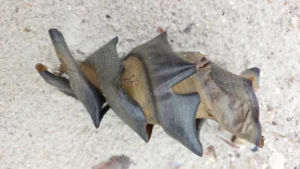
Cat shark eggs are the classic rectangular “mermaid’s purse” shape with long tendrils at each corner. These are the most common type you’ll find washed up on beaches.
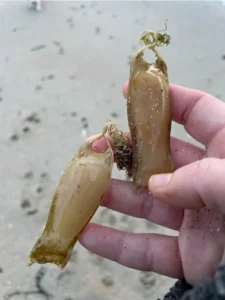
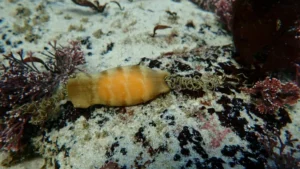
Swell shark eggs are larger and more rounded than cat shark eggs, with shorter, thicker tendrils. They’re often amber-colored rather than dark brown.
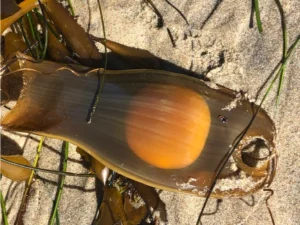
Bamboo shark eggs are elongated and cylindrical with tufts of fibers at each end instead of distinct tendrils. They look almost like small brushes.
What’s Inside Shark Eggs?
When a shark egg is first laid, it contains a fertilized embryo that’s tiny compared to the size of the egg case.
The embryo is surrounded by yolk, which provides all the nutrition the baby shark needs to develop. Think of it like a packed lunch that lasts for months.
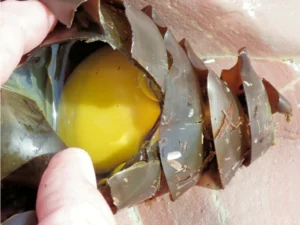
The egg case is filled with a thick, gel-like substance that cushions the embryo and keeps it safe from bumps and pressure changes.
As the baby shark grows, you can actually see it through the translucent parts of the egg case. The developing shark becomes visible as a darker shape inside.
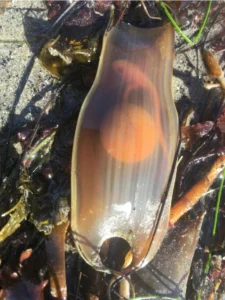
The egg case has small pores or slits that allow fresh seawater to flow in and waste products to flow out. This keeps the environment inside healthy for the growing shark.
Near the end of development, the baby shark will have absorbed most of the yolk and will be large enough to survive on its own outside the egg.
How Long Baby Sharks Stay in Eggs
The development time inside shark eggs varies widely depending on the species and water temperature.
Most shark species that lay eggs have incubation periods of 6 to 12 months. This is much longer than bird eggs, which typically hatch in weeks.
Some species take even longer. The frilled shark, which lays eggs in deep, cold water, has an incubation period that can last up to 3.5 years.
Water temperature affects development speed. Warmer water speeds up development, while colder water slows it down.
The baby shark doesn’t hatch all at once. As it grows, it gradually starts breaking down the egg case material and eventually pushes its way out when it’s ready.
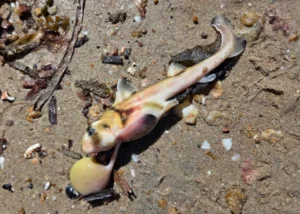
Unlike bird eggs where the babies all hatch around the same time, shark eggs laid by the same mother might hatch days or even weeks apart.
Where Do Sharks Lay Their Eggs?
Female sharks are really picky about where they lay their eggs. The location needs to provide protection and good conditions for development.
Rocky reefs with lots of crevices and overhangs are popular spots. The eggs can be wedged into protected areas where predators can’t easily reach them.
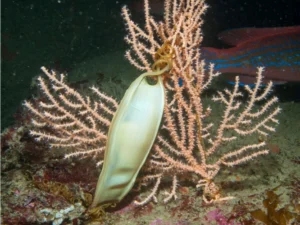
Kelp forests and seagrass beds provide excellent hiding spots. The tendrils on the eggs wrap around the vegetation, holding them securely in place.
Some sharks lay eggs in relatively shallow water where sunlight can penetrate. Warmer temperatures in these areas help eggs develop faster.
Others prefer deeper, cooler water where there’s less disturbance from waves and fewer predators. These eggs take longer to develop but might be safer.
Female sharks often return to the same laying sites year after year, especially if the location has proven successful for hatching eggs.
How Shark Eggs Attach to Things
The tendrils on shark eggs aren’t just decoration. They’re crucial for keeping eggs in place during the long development period.
When a female shark lays an egg, the tendrils are soft and sticky. As seawater hits them, they harden and become more rope-like.
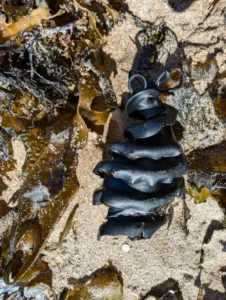
The tendrils naturally curl and twist as they harden, wrapping around anything nearby like seaweed stalks, coral branches, or rock protrusions.
Some species have incredibly long tendrils that can be twice as long as the egg case itself. This gives them more chances to catch onto something secure.
Once attached, the eggs are surprisingly difficult to dislodge. They can withstand strong currents and wave action without breaking free.
The anchoring system is so effective that eggs can stay in place for the entire development period, even in areas with strong water movement.
Finding Shark Eggs on the Beach
Empty shark egg cases frequently wash up on beaches after the baby sharks have hatched. These are safe to touch and make interesting souvenirs.
Fresh egg cases that still have the baby shark inside are much rarer to find on beaches. If you do find one, you should put it back in the water.
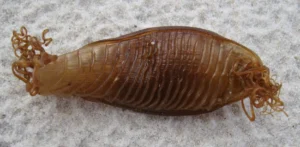
Empty cases often look lighter in color, more brittle, and sometimes have torn or damaged areas where the baby shark broke out.
The best time to find shark egg cases is after storms when strong waves dislodge eggs from the ocean floor and wash them ashore.
Some beaches are better for finding shark eggs than others. Coastlines near rocky reefs or kelp forests tend to have more egg cases washing up.
Check the high tide line where debris accumulates. Shark eggs often get tangled in seaweed and other organic material that washes ashore.
The Difference Between Shark Eggs and Skate Eggs
Sharks aren’t the only animals that lay these leathery pouches. Skates and rays (which are related to sharks) also lay similar eggs.
Skate eggs tend to be more symmetrical and rectangular than shark eggs. They usually have a horn or point at each corner rather than long, curly tendrils.
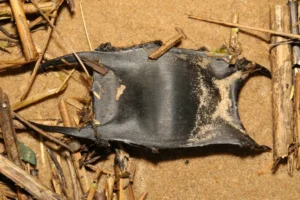
Shark egg tendrils are typically longer and more flexible, designed to wrap around objects. Skate egg horns are shorter and stiffer.
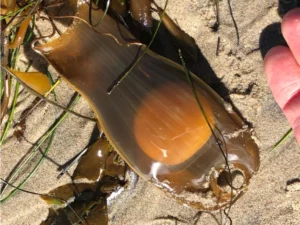
Skate eggs often have a more uniform thickness throughout, while shark eggs might have thicker or reinforced areas.
The size can help with identification too. Most skate eggs are smaller than shark eggs, though there’s some overlap depending on species.
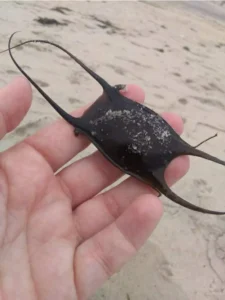
If you find one on the beach and aren’t sure what it is, there are online identification guides where you can report your find and help scientists track these species.
Which Sharks Lay Eggs and Which Don’t?
Sharks have three different reproductive strategies, and only one involves laying eggs.
Oviparous sharks lay eggs. This group includes cat sharks, horn sharks, bamboo sharks, and swell sharks among others. About 40% of all shark species are oviparous.
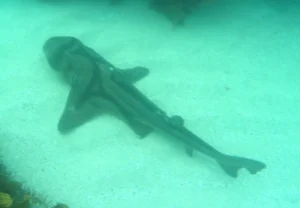
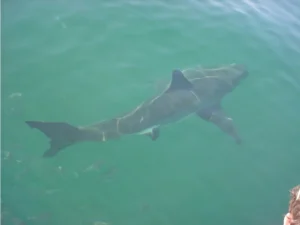
Viviparous sharks give birth to live young, similar to mammals. The babies develop inside the mother and are born fully formed. Great white sharks, bull sharks, and hammerhead sharks do this.
Ovoviviparous sharks are a middle ground. The eggs develop inside the mother’s body, and the babies hatch internally before being born live. Tiger sharks and nurse sharks reproduce this way.
The species that lay eggs tend to be smaller sharks that live in coastal areas. Large, open-ocean sharks almost always give live birth.
Why Some Sharks Lay Eggs Instead of Live Birth
Laying eggs requires less energy from the mother shark than carrying babies to full term inside her body.
The mother can lay her eggs and then leave to continue hunting and living her life. She doesn’t need to carry the weight of developing young or provide them with nutrients from her own body.
Eggs can be laid in protected areas that might be too shallow or restricted for adult sharks to stay in. This gives baby sharks safe nursery areas.
For species that live in colder water or deeper areas, egg-laying allows development to happen over long periods without stressing the mother.
The tough egg cases provide excellent protection from most predators. Many animals that would eat a newborn shark can’t break into the egg case.
Threats to Shark Eggs
Despite the protection egg cases provide, shark eggs face many dangers during their long development period.
Large predators like octopuses can attack shark eggs. Octopuses are smart enough to figure out how to open the cases and eat the developing embryos.
Strong storms can tear eggs from their anchoring points and wash them onto beaches where they dry out and die.
Ocean pollution affects shark eggs. Oil spills, chemical runoff, and plastic debris can contaminate the water flowing through egg cases.
Climate change is warming ocean temperatures, which can affect development timing and egg survival rates. Some species’ eggs are adapted to specific temperature ranges.
Fishing nets and trawling equipment can damage or destroy eggs attached to the seafloor, even when fishermen aren’t targeting sharks.
What Happens When Baby Sharks Hatch?
The hatching process takes time and isn’t as dramatic as birds pecking their way out of eggs.
As the baby shark grows larger, it starts producing enzymes that weaken the egg case material. This makes the case softer and easier to break through.
The baby shark pushes and wriggles its way out through a split that forms in the egg case. This can take hours or even days.
Once free, the baby shark is fully formed and ready to hunt. Unlike many newborn animals, baby sharks don’t need parental care.
They instinctively know how to swim, hunt, and avoid predators. Their survival skills are built-in from the moment they hatch.
The empty egg case remains behind, eventually detaching from its anchor point and floating away. This is why you find empty cases on beaches.
How to Identify What Species an Egg Came From
If you find a shark egg on the beach, you can often figure out what species laid it by looking at its features.
Measure the egg case and note its shape. Different species produce different sized eggs with distinctive shapes.
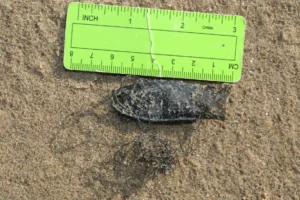
Look at the tendrils or horns at the corners. Their length, thickness, and curliness can identify the species.
Note the color. Most eggs are dark brown or black, but some species produce lighter or amber-colored cases.
Check for any ridges, bumps, or textures on the surface. Some species have distinctive patterns or reinforced areas.
Take photos and measurements, then compare them to online identification guides. Scientists actually encourage people to report their finds to help track shark populations.
Conclusion
Shark eggs are remarkable structures that look nothing like the eggs most people are familiar with. These dark, leathery pouches with long tendrils protect baby sharks during months of development in the ocean.
The variety of shapes and sizes among different shark species shows how these animals have adapted their reproductive strategies to different environments and conditions.
If you find a shark egg case on the beach, you’re holding a piece of one of nature’s most successful designs for protecting young in a harsh environment.
These “mermaid’s purses” have been doing their job for millions of years, helping sharks survive and thrive in oceans around the world.

Hi, my name is Ezra Mushala, i have been interested animals all my life. I am the main author and editor here at snakeinformer.com.