
When you think about how animals have babies, you probably picture most fish laying eggs in the water. Sharks are fish, so it makes sense to wonder if they follow the same pattern.
But sharks are pretty different from your typical goldfish or tuna. Some people are surprised to learn that not all sharks reproduce the same way. So, do sharks lay eggs?
Some sharks lay eggs, but most don’t. About 70% of shark species give birth to live young, while only 30% actually lay eggs. The sharks that do lay eggs are called oviparous sharks, and they produce egg cases that people often call “mermaid’s purses.”
The way sharks have babies is actually more varied than you might think. Unlike most fish that just release thousands of tiny eggs into the water and hope for the best, sharks have developed three different ways to reproduce.
Each method gives their babies a better chance at survival, which is probably why sharks have been around for over 400 million years.
The Three Ways Sharks Have Babies
Sharks don’t all reproduce the same way, and that’s what makes them really interesting. If you look at all the different shark species in the ocean, you’ll find three main reproduction methods.
Each one works differently, and each has its own advantages depending on where the shark lives and how it survives.
The first method is egg laying (oviparity), where the mother shark produces an egg case and deposits it somewhere safe.
The second is live birth with a placenta (viviparity), which is basically like how humans have babies.
The third is live birth without a placenta (ovoviviparity), where the eggs hatch inside the mother and she gives birth to fully formed babies.
Understanding these different methods helps explain why some sharks lay eggs while others don’t. It’s not random.
It actually depends on the species and what works best for their survival in their specific environment.
Sharks That Lay Eggs (Oviparous Sharks)
About 30% of all shark species lay eggs, and if you’ve ever walked along a beach, you might have actually seen one of these egg cases washed up on shore.
| Shark Species | Common Name | Egg Case Description | Eggs per Clutch |
|---|---|---|---|
| Scyliorhinus canicula | Small-spotted catshark | Dark brown “mermaid’s purse” with curly ends that stick to rocks. | 2 eggs at a time. |
| Cephaloscyllium ventriosum | Swell shark | Thick, spiral-shaped cases that attach to kelp or rocks. | 2 eggs at a time. |
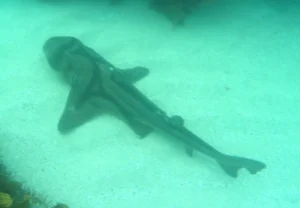
| Heterodontus francisci | Horn shark | Short, rectangular cases with curled ends tucked in reef cracks. | 1–2 eggs at a time. |
| Scyliorhinus stellaris | Nursehound | Large, golden-brown purse-like cases that stick to rocks. | 2 eggs at a time. |
| Galeus melastomus | Blackmouth catshark | Small, rectangular cases with long ends that attach to the ocean floor. | Usually 2 eggs at a time. |
| Apristurus brunneus | Brown catshark | Slender, dark egg cases hidden in soft sand or mud. | 2 eggs at a time. |
| Heterodontus portusjacksoni | Port Jackson shark | Thick, spiral cases that twist into seaweed or reef cracks. | 2 eggs at a time, laid over a few weeks. |
| Scyliorhinus torazame | Cloudy catshark | Dark, purse-shaped cases with long ends stuck to rocks. | 2 eggs at a time. |
| Chiloscyllium punctatum | Brownbanded bamboo shark | Brown, elongated cases placed in coral cracks. | 2–4 eggs at a time, sometimes more in aquariums. |
| Hemiscyllium ocellatum | Epaulette shark | Short, rectangular cases tucked into coral cracks. | Usually 2 eggs at a time. |
These egg-laying sharks are called oviparous sharks, and they include some species you’ve probably heard of.
Horn sharks, swell sharks, catsharks, and bamboo sharks all lay eggs. Port Jackson sharks do too.
When these sharks are ready to reproduce, the female produces a tough, leathery egg case (not a hard shell like a chicken egg).
She then deposits this case in a safe spot, usually wedged between rocks or tucked into seaweed where it won’t float away.
These egg cases are pretty cool looking. They’re usually rectangular or spiral-shaped, with tendrils on the corners that help anchor them to rocks or plants.
People call them “mermaid’s purses” because of their pouch-like appearance. If you hold one up to the light (when it’s fresh), you can actually see the baby shark developing inside.
The baby shark stays in this case for several months, depending on the species. During this time, it’s living off the yolk inside the case, slowly growing and developing.
When it’s finally ready, the baby shark breaks out and swims away, fully formed and ready to hunt on its own.
Sharks That Give Birth to Live Young
Most sharks (about 70%) give birth to live babies instead of laying eggs. This might surprise you if you think of sharks as “just big fish,” but it’s true.
| Shark Species | Common Name | Live Birth Details | Pups per Litter |
|---|---|---|---|
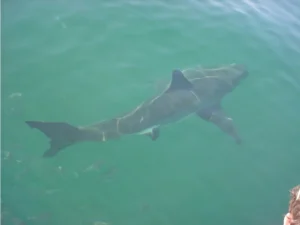
| Carcharodon carcharias | Great white shark | Babies are born fully formed in deep coastal waters and are ready to swim and hunt from birth. | 2–14 pups per litter. |
| Carcharhinus leucas | Bull shark | Gives birth to fully formed pups in shallow, warm waters. | 1–13 pups per litter. |
| Galeocerdo cuvier | Tiger shark | Pups are born ready to swim and hunt. | 10–80 pups per litter. |
| Carcharhinus melanopterus | Blacktip reef shark | Pups are born in coral reef areas and are independent right away. | 2–5 pups per litter. |
| Sphyrna lewini | Scalloped hammerhead | Gives birth in protected bays and estuaries. | 15–30 pups per litter. |
| Mustelus mustelus | Common smoothhound | Pups are born fully formed and start feeding on small fish right away. | 6–20 pups per litter. |
| Carcharhinus amblyrhynchos | Grey reef shark | Gives birth to live pups in shallow reefs. | 1–6 pups per litter. |
| Negaprion brevirostris | Lemon shark | Pups are born in mangrove areas for safety. | 4–17 pups per litter. |
| Sphyrna mokarran | Great hammerhead | Babies are born fully formed and can hunt small prey immediately. | 6–42 pups per litter. |
| Carcharhinus plumbeus | Sandbar shark | Gives birth in shallow coastal waters. | 4–15 pups per litter. |
| Carcharhinus falciformis | Silky shark | Pups are born in open waters and are independent from birth. | 1–16 pups per litter. |
These sharks fall into two categories based on how the babies develop inside the mother.
The first group (viviparous sharks) have a placenta, just like mammals do. The babies develop inside the mother and get nutrients through this placental connection.
Great white sharks, bull sharks, hammerhead sharks, and blue sharks all reproduce this way.
The pregnancy can last anywhere from 9 to 12 months (or even longer for some species), and when the babies are born, they’re fully developed and ready to survive on their own.
The second group (ovoviviparous sharks) is a bit different. The eggs actually develop and hatch inside the mother’s body, but there’s no placental connection.
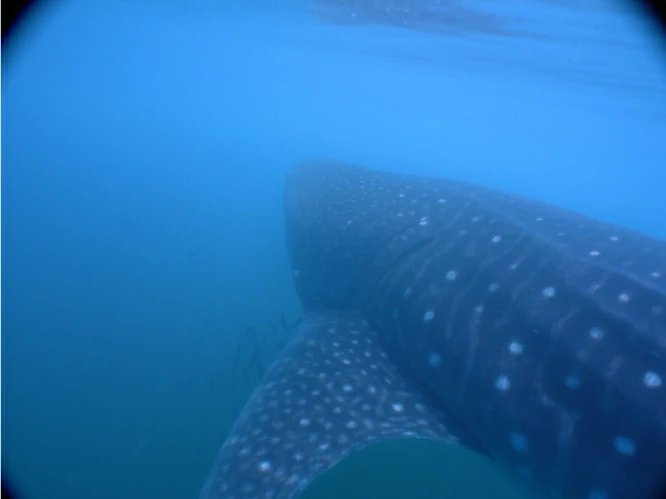
The baby sharks rely on their yolk sacs for nutrition while they’re inside. Tiger sharks, whale sharks, and mako sharks reproduce this way.
When the mother gives birth, the babies have already hatched from their eggs internally and come out as fully formed sharks.
Both methods have a big advantage over laying eggs. The babies are protected inside the mother’s body while they develop, which means they’re much safer from predators.
When they’re finally born, they’re bigger and stronger than they would be if they hatched from an egg case stuck to a rock somewhere.
Why Some Sharks Lay Eggs and Others Don’t
You might wonder why some sharks evolved to lay eggs while others give birth to live young. The answer comes down to survival strategy and environmental factors. Each method works better in different situations.
Sharks that lay eggs tend to be smaller species that live in relatively safe, coastal environments.
If you’re a smaller shark living near the ocean floor where there are plenty of hiding spots, laying eggs in a protected location can work really well.
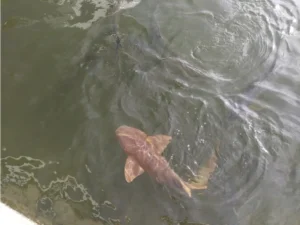
The mother doesn’t have to carry the babies around inside her body, which means she can stay mobile and hunt more easily.
The egg cases are tough and protective, and if she hides them well, they have a decent chance of surviving.
Sharks that give birth to live young are often larger species or those that live in more dangerous, open-ocean environments.
If you’re a great white shark swimming across vast stretches of open water, you can’t exactly find a safe rocky crevice to hide an egg case.
Carrying the babies inside your body and giving birth to fully formed young makes more sense. The babies are born bigger, stronger, and more capable of surviving in a dangerous environment.
There’s also the matter of how many babies survive. Egg-laying sharks can produce more eggs at once (since they don’t have to carry them), but many of those eggs get eaten by predators.
Live-bearing sharks have fewer babies at a time, but those babies have a much higher survival rate. This is because they’re born fully developed and their mother protected them during the most vulnerable stage of development.
What Shark Egg Cases Look Like
If you want to find a shark egg case, your best bet is to walk along the beach after a storm.
They wash up pretty regularly, especially in areas where egg-laying sharks are common. Once you know what to look for, they’re actually not that hard to spot.
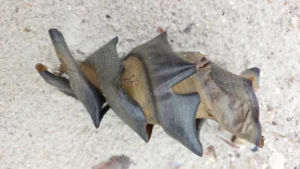
Most egg cases are dark brown or black and have a leathery texture (not hard like a bird egg). They’re usually about 2 to 4 inches long, though this varies by species.
The shape depends on what kind of shark laid it. Some are rectangular with curved tendrils at each corner. Others are spiral-shaped with a corkscrew design that helps them anchor into the sand or between rocks.
If you find one on the beach, it’s probably empty. The baby shark already hatched and swam away, or the egg didn’t survive. You can tell if it’s empty by looking for an opening at one end where the baby emerged.
Fresh egg cases (ones that still have a baby inside) are heavier and feel different. If you hold them up to a bright light, you might be able to see the developing shark inside, along with the yolk it’s feeding on.
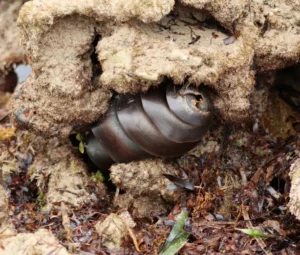
Some countries and marine organizations actually encourage people to report shark egg case findings. Scientists use this information to track where different shark species are breeding and to monitor population health.
So if you find one, you might want to take a photo and report it to a local marine conservation group.
How Long Do Shark Eggs Take to Hatch?
The time it takes for a shark egg to hatch varies quite a bit depending on the species and water temperature. Generally, you’re looking at anywhere from 6 to 12 months, though some species take even longer.
Smaller shark species with smaller eggs tend to hatch faster. A small catshark egg might hatch in about 5 to 6 months. Larger species like the horn shark can take 9 to 12 months.
Water temperature plays a big role too. Warmer water speeds up development, while colder water slows it down. This is why the same species might have different hatching times depending on where the mother laid the eggs.
During this whole time, the baby shark is growing inside the egg case and living off the yolk. If you could watch the process (which scientists have done in aquariums), you’d see the tiny embryo gradually getting bigger and more developed.
First, you’d see basic body structures forming. Then fins would develop, and eventually you’d have a fully formed miniature shark moving around inside the case.
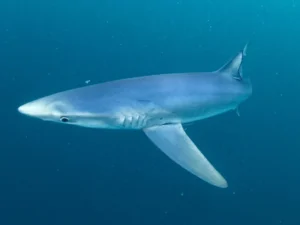
When the baby is finally ready to hatch, it doesn’t break the egg case all at once. Instead, it wiggles and pushes its way out through one end of the case over a period of hours or even days.
Once it’s out, it swims away immediately. There’s no parental care in egg-laying sharks.
The mother deposited the egg months ago and moved on, so the baby is completely on its own from the moment it emerges.
Caring for Shark Eggs in Aquariums
Some aquariums and research facilities actually raise sharks from eggs, and it’s a delicate process. If you’ve ever wondered how they do it, there’s a lot more involved than just putting an egg in a tank and waiting.
First, the egg case needs to be in water with the right temperature, salinity, and oxygen levels. The conditions have to match what the species would experience in the wild.
Too warm and the baby develops too fast and might not form properly. Too cold and development slows down or stops entirely. The water also needs to be well-oxygenated because the baby shark is breathing through the egg case membrane.
Aquarium staff check the eggs regularly by shining a light through them (a process called candling). This lets them see if the embryo is developing normally and if the yolk supply is adequate.
If something looks wrong, they can sometimes adjust conditions to help, though there’s only so much they can do once the egg is laid.
When the baby is close to hatching, staff watch carefully. Sometimes babies get stuck trying to emerge from the case, and they might need gentle assistance.
Once the shark hatches, it goes into a special nursery tank where it can grow safely before being moved to a larger exhibit or released into the wild (if it’s part of a conservation program).
What Is The Survival Rate of Shark Eggs in the Wild?
Laying eggs might seem like a risky strategy, and honestly, it is. Shark egg cases face a lot of dangers during those long months of development, and not all of them make it.
Predators are the biggest threat. Fish, crabs, seabirds, and other animals will eat shark eggs if they find them. Even though the egg cases are tough and leathery, they’re not indestructible.
A determined predator can tear one open. This is why mother sharks try to hide the eggs in rocky crevices, kelp forests, or other protected spots where predators are less likely to find them.
Environmental factors also play a role. If a storm rips an egg case loose from where it was anchored, it might wash up on shore where the embryo dies from exposure.
Changes in water temperature or oxygen levels can kill developing sharks. Pollution is another problem. If the water quality drops, the embryo might not develop properly or might die before hatching.
Scientists estimate that survival rates for shark eggs vary widely by species and location, but generally, only a fraction of laid eggs result in sharks that make it to adulthood.
This is one reason egg-laying sharks produce multiple eggs during breeding season. It’s a numbers game. If you lay enough eggs and hide them well enough, at least some will survive.
Despite these challenges, the strategy has worked for millions of years. Egg-laying sharks are still around and thriving in many parts of the ocean, which shows that the method is effective enough when conditions are right.
Conclusion
So do sharks lay eggs? The answer is that some do, but most don’t. About 30% of shark species are egg layers, producing those distinctive leathery egg cases you might find on the beach.
The other 70% give birth to live young in one form or another. Each method has its advantages, and the diversity in shark reproduction is part of what makes these animals so successful.
If you’re interested in sharks, keep an eye out for egg cases next time you’re at the beach. Finding one is like discovering a small piece of the shark life cycle.
Just remember that if it’s empty, a baby shark already made its way into the ocean. If it seems full and heavy, leave it where you found it (or carefully return it to the water).
That egg case might contain the next generation of sharks, continuing a reproductive strategy that’s worked for hundreds of millions of years.

Hi, my name is Ezra Mushala, i have been interested animals all my life. I am the main author and editor here at snakeinformer.com.