
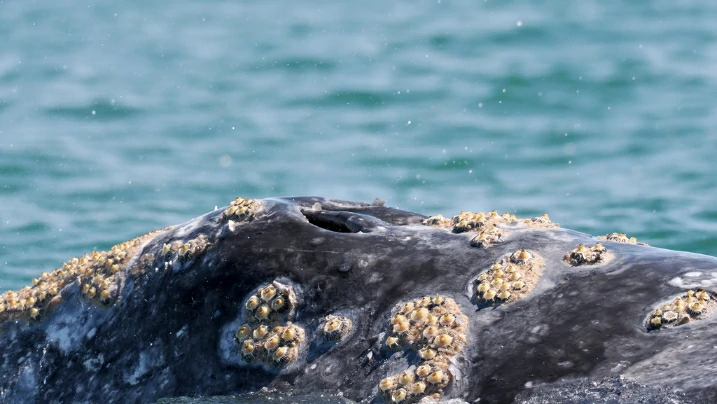
If you’ve ever looked closely at pictures of whales, you might have noticed they’re often covered in weird white or grayish lumps. Those lumps are barnacles, small creatures that attach themselves to the whale’s skin and stay there for life.
With some whales carrying hundreds or even thousands of barnacles, it raises a question: do barnacles actually hurt whales?
No, barnacles generally don’t hurt whales in small numbers. However, when too many barnacles attach to a whale, they can cause irritation, drag in the water, and in rare cases, infections. Most whales tolerate barnacles without serious problems, but heavy infestations can affect sick or weak whales more severely.
The relationship between whales and barnacles is complicated. For the most part, whales seem to live just fine with barnacles attached to them.
But like having a passenger you didn’t invite, barnacles do affect the whale in various ways, and not all of them are good.
What Barnacles Actually Are
Before we can understand if barnacles hurt whales, it helps to know what barnacles are. They’re not parasites or plants. Barnacles are actually small crustaceans, which means they’re related to crabs, shrimp, and lobsters.
Barnacles start life as tiny larvae floating in the ocean. When they find a good surface to attach to (like a whale, a rock, or a ship), they cement themselves in place and build a hard shell around their body.
Once attached, a barnacle never moves again. It stays in that spot for its entire life, which can be several years. The barnacle feeds by opening its shell and using feathery legs to catch tiny food particles from the water.
How Barnacles Attach to Whales
Barnacles attach to whales using one of the strongest natural glues known to science. This cement is so strong that it’s basically impossible to remove a barnacle without damaging either the barnacle or the whale’s skin.
The barnacle larvae swim around until they find a whale, then they land on the whale’s skin and release their cement. Within hours, they’re permanently stuck.
Over the next few days, they build their protective shell.
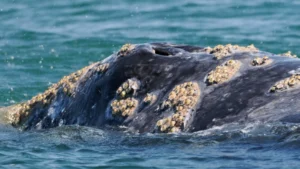
Barnacles usually prefer certain areas on the whale’s body. You’ll often see them on the head, fins, tail, and around the mouth.
These areas have slower-moving water flowing over them, which makes it easier for barnacles to feed.
Do Barnacles Cause Pain When They Attach?
Scientists don’t think the actual attachment process causes much pain for whales. Whale skin is really thick (several inches in some species), and barnacles only attach to the outer layers.
However, the attachment probably does cause some irritation. Imagine having something glue itself to your skin and then start growing there.
Even if it doesn’t hurt badly, it’s not comfortable.
Some whales seem bothered by barnacles and will rub against rocks or the ocean floor, possibly trying to scrape them off.
Other whales don’t seem to care at all and just live with their barnacle passengers.
How Many Barnacles Can Live on a Whale?
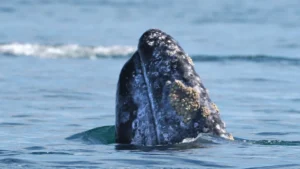
The number of barnacles on a whale varies a lot. Some whales have just a few barnacles, while others are absolutely covered in them. Gray whales and humpback whales tend to have the most barnacles.
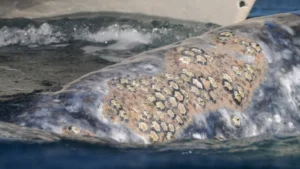
A single gray whale can carry over 400 pounds of barnacles. That’s like having an extra passenger that weighs as much as a large adult human.
When you think about it that way, it seems like it would be pretty annoying.
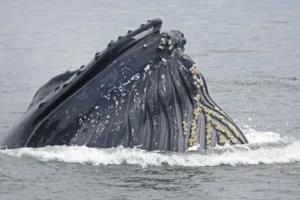
Humpback whales can have barnacles covering large areas of their body, especially around their head, jaw, and flippers.
Some individual humpbacks have been photographed with thousands of barnacles attached.
Can Barnacles Damage Whale Skin?
Yes, barnacles can damage whale skin, especially when there are a lot of them. The cement they use to attach themselves goes into the outer layers of skin.
When barnacles eventually die and fall off, they can leave behind pits or scars.
If the whale’s skin is already damaged or if the whale is sick, barnacles can make things worse. They might attach to wounds or irritated areas, which can slow down healing.
In really bad cases, barnacles can create areas where infections can start. Bacteria and other organisms might grow in the spaces between barnacles or in damaged skin around the barnacles.
How Barnacles Slow Whales Down
One of the biggest problems with barnacles is that they create drag. Whales are built to move smoothly through water, but barnacles make their skin rough and bumpy.
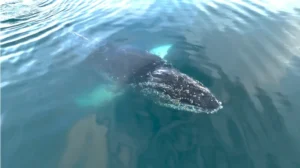
This is similar to how barnacles slow down ships. The extra drag means the whale has to work harder to swim at the same speed. For a whale that’s migrating thousands of miles, this extra work adds up.
Imagine trying to swim wearing clothes covered in bumps and lumps. You’d get tired much faster than if you were swimming in a smooth swimsuit.
That’s basically what barnacles do to whales.
Whales with heavy barnacle coverage might swim slower or use more energy during migration. This could affect how much food they need to eat and how tired they get.
Different Whale Species and Barnacles
Not all whale species get barnacles the same way. Some species are barnacle magnets, while others rarely have any at all.
Gray whales and humpback whales get tons of barnacles. These whales tend to move slowly and spend time in coastal waters where barnacle larvae are common.
They also have rougher skin that’s easier for barnacles to attach to.
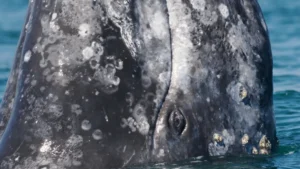
Right whales also get a lot of barnacles, especially on their heads. Some right whales have such heavy barnacle coverage that it changes the shape of their head.
On the other hand, fast-swimming whales like blue whales and fin whales have very few barnacles.
Their smooth skin and high swimming speed make it hard for barnacles to attach and survive.
Are Barnacles Parasites?
Technically, barnacles aren’t parasites. A parasite is an organism that harms its host while benefiting itself. Barnacles benefit from living on whales (they get a free ride and food from the moving water), but they don’t actively harm the whale in most cases.
Scientists call the relationship between whales and barnacles “commensal,” which means one organism benefits and the other isn’t really affected.
However, this isn’t completely accurate because barnacles do create drag and can cause some problems.
It’s more accurate to say that barnacles are somewhere between being completely harmless and being true parasites.
They’re opportunistic hitchhikers that cause some minor inconvenience.
Can Barnacles Kill Whales?
Barnacles alone won’t kill a healthy whale. But for whales that are already sick, injured, or very old, heavy barnacle coverage can make survival harder.
A sick whale that’s covered in barnacles has to work extra hard to swim because of the drag. This uses up energy that the whale needs for healing or finding food.
The extra weight and drag could be the difference between survival and death for a weak whale.
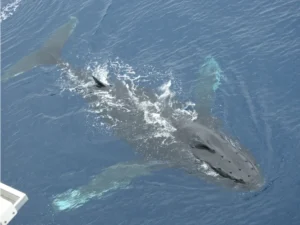
There are also cases where barnacles have covered a whale’s blowhole (the nostril on top of its head). If barnacles block the blowhole, the whale can’t breathe properly, which is obviously a serious problem.
Young whales seem to be more affected by barnacles than healthy adults. A calf with heavy barnacle coverage might struggle to keep up with its mother during migration.
How Whales Try to Remove Barnacles
Whales have a few ways of dealing with barnacles, though none of them work perfectly. Some whales breach (jump out of the water) repeatedly, and scientists think this might help knock off some barnacles.
Whales also rub against rocks, the ocean floor, or even boats to try to scrape barnacles off.
You can sometimes see whales rolling and rubbing in shallow water, possibly trying to remove barnacles.
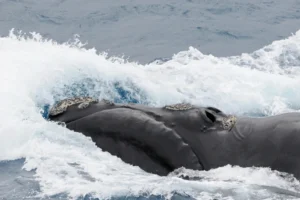
Gray whales are famous for going into shallow lagoons and rubbing against the sandy bottom. This is thought to help remove dead skin and some barnacles.
Despite these efforts, whales can’t remove all their barnacles. The cement is just too strong, and the barnacles are wedged into the skin.
Other Creatures That Live with Barnacles on Whales
Barnacles aren’t the only things living on whales. Where there are barnacles, there are often other creatures too.
Whale lice (actually a type of crustacean, not a true louse) often live among the barnacles.
Whale lice eat dead skin and might actually help clean the whale, but they can also irritate the skin.
They tend to gather in areas where the whale can’t easily rub them off, like around the eyes, blowholes, and genital areas.
Some scientists think whale lice are more annoying to whales than barnacles are. Whales seem to spend more effort trying to remove whale lice than barnacles.
Can Barnacles Be Removed from Whales?
In theory, yes, but it’s really difficult and might not be a good idea. When barnacles are forcibly removed, they often tear the whale’s skin because the cement goes into the skin layers.
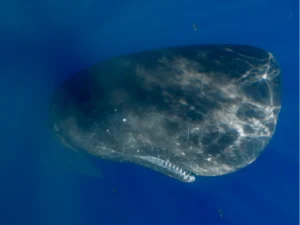
Removing barnacles could leave the whale with open wounds that might get infected. Also, whales aren’t easy to handle.
You can’t just ask a 40-ton animal to sit still while you scrape off barnacles.
There have been a few cases where people helped remove barnacles from beached or stranded whales during rescue operations. But this is usually only done if the barnacles are causing serious problems, like blocking the blowhole.
Why Some Whales Have More Barnacles Than Others
Several factors affect how many barnacles a whale gets. Slow-moving whales attract more barnacles because it’s easier for barnacle larvae to land on them and attach.
Whales that spend time in coastal waters where barnacle larvae are common get more barnacles. Whales that live in the open ocean far from shore have fewer chances to pick up barnacles.
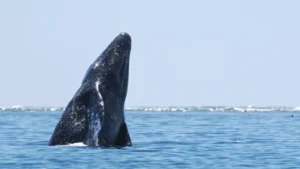
The whale’s skin texture matters too. Rougher skin gives barnacles more surface area to attach to. Older whales often have rougher, more scarred skin, which might explain why they sometimes have more barnacles.
A whale’s health also plays a role. Healthy whales that move normally might be better at preventing barnacle buildup. Sick or injured whales that move slowly or abnormally might accumulate more barnacles.
The Benefits of Barnacles on Whales
Believe it or not, barnacles might actually help whales in some small ways. Scientists have found that the rough texture created by barnacles might help reduce drag in certain situations, similar to how golf ball dimples help with aerodynamics.
Barnacles might also provide some protection to the whale’s skin in areas that get a lot of sun exposure or physical damage.
The hard barnacle shells could act like armor in some situations.
Some researchers think barnacles might help keep whale skin clean by competing with harmful organisms for space. If barnacles are taking up space on the skin, there’s less room for potentially harmful bacteria or parasites.
How Climate Change Affects Barnacles on Whales
Climate change is changing ocean temperatures and chemistry, which might affect barnacle populations. Warmer water might mean more barnacle larvae in areas where whales feed or migrate.
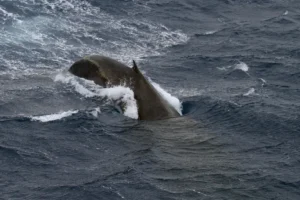
If barnacle populations increase, whales might end up with heavier barnacle loads. This could be a problem for whales that are already stressed by other climate change effects like shifting food sources or warmer water.
Ocean acidification might also affect barnacles since they build shells from calcium carbonate. If it becomes harder for barnacles to build strong shells, they might not survive as well on whales.
Conclusion
Barnacles generally don’t cause serious harm to healthy whales. Most whales live perfectly normal lives even when covered in hundreds of barnacles. The main issues are the extra drag and weight, some skin irritation, and occasional infections.
However, for whales that are already struggling because of injury, illness, or old age, barnacles can make life harder. The extra energy needed to swim with all those barnacles might be more than a weak whale can spare.
The relationship between whales and barnacles is a good example of how nature isn’t always simple. Barnacles aren’t really parasites, but they’re not completely harmless either.
They’re somewhere in between, taking advantage of whales without causing too much trouble in most cases.

Hi, my name is Ezra Mushala, i have been interested animals all my life. I am the main author and editor here at snakeinformer.com.