
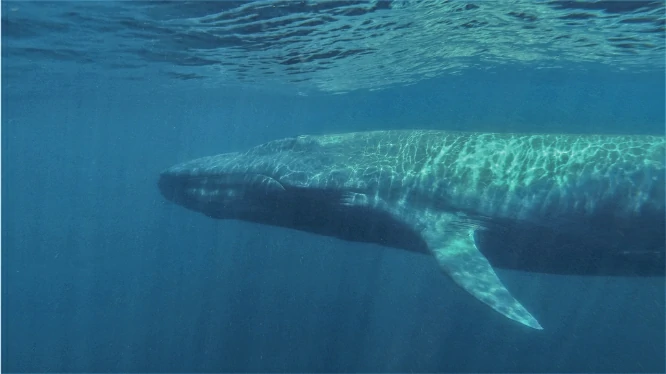
Whales spend their entire lives in the ocean, swimming through water just like fish do. But there’s one huge difference between whales and fish: whales are mammals, which means they breathe air just like we do.
This raises a pretty interesting question. If whales breathe air but live underwater, can they actually drown?
Yes, whales can drown. Even though they live in water, whales need to breathe air to survive. If a whale can’t reach the surface to breathe, or if water gets into its lungs, it can drown just like any other mammal.
This might seem strange at first. How can an animal that’s perfectly built for ocean life drown in its own home? But when you think about it, whales face the same basic challenge that any air-breathing animal would face underwater.
They need oxygen from the air, and if they can’t get it, they’ll suffocate.
Why Whales Need to Breathe Air
Whales are mammals, not fish. Their ancestors actually lived on land millions of years ago before moving back into the ocean. Because of this history, whales kept their mammalian features, including lungs.
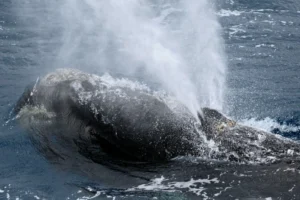
Unlike fish, which have gills that pull oxygen directly from the water, whales have lungs that need to breathe air. They can’t extract oxygen from water the way fish do.
This means whales need to regularly swim to the surface and breathe. They can hold their breath for a long time (some species can stay underwater for over an hour), but eventually, they have to come up for air or they’ll die.
How Does Drowning Happen in Whales?
Drowning happens when a whale can’t get to the surface to breathe. There are several ways this can happen, and none of them are good.
If a whale gets tangled in fishing nets or lines, it might not be able to swim up to breathe. The whale will struggle and use up its oxygen, and if it can’t break free in time, it’ll drown.
Sick or injured whales might be too weak to make it to the surface. If a whale is hurt by a boat, attacked by predators, or suffering from illness, it might not have the strength to keep swimming up for air.
Baby whales are especially at risk. When a calf is first born, it needs help getting to the surface for its first breath. If the mother or other adults don’t help quickly enough, the baby can drown within minutes.
Whales Getting Trapped and Drowning
One of the most common causes of whale drowning is getting trapped in fishing gear. This is called bycatch, and it’s a serious problem for whales around the world.
When a whale swims into a fishing net or gets wrapped up in fishing lines, it can’t move freely. Whales are strong, but thick nets and ropes can hold them down.
The trapped whale will use up its oxygen trying to escape. If rescuers don’t find it in time, the whale will eventually run out of air and drown. This can happen in less than an hour for some species.
Even if the whale manages to break free, it might be too exhausted or injured to survive.
Can Whales Drown If They’re Upside Down?
Being upside down can actually be really dangerous for whales. While they won’t drown instantly just from being flipped over, it can lead to drowning if they can’t right themselves.
Whales need to be in the correct position to breathe properly. Their blowhole (the nostril on top of their head) needs to be above water when they surface. If a whale is upside down or sideways, it can’t position its blowhole correctly.
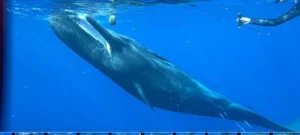
An upside-down whale will also have a much harder time swimming to the surface. Whales are built to swim right-side up, and trying to swim upside down takes way more energy and might not even work.
What Happens to Beached Whales?
When whales beach themselves (get stuck on shore), drowning becomes a risk even though they’re not underwater. This seems backward, but here’s why it happens.
A beached whale’s own weight crushes its body when it’s out of water. In the ocean, water supports the whale’s weight, but on land, gravity does serious damage. The whale’s weight can press down on its lungs and make breathing really difficult.
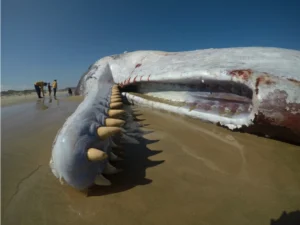
The whale can also overheat on land, which weakens it further. Add in stress and injuries from the beaching, and the whale becomes too weak to breathe properly.
If a beached whale gets pulled back into the water but is too weak to swim, it can drown because it can’t keep its blowhole above water. This is why rescuing beached whales is so tricky.
Do Whales Ever Drown While Sleeping?
Whales have figured out a clever way to sleep without drowning, but it’s not foolproof. Whales can rest one half of their brain at a time while keeping the other half awake.
The awake half makes sure the whale keeps swimming and comes up to breathe when needed. It’s called unihemispheric sleep, which just means sleeping with one brain hemisphere at a time.
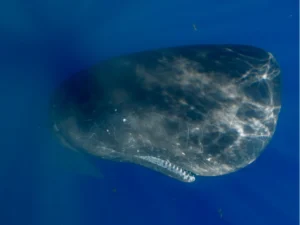
But if a whale is sick, injured, or extremely exhausted, this system can fail. The whale might become too weak to keep swimming, even with half its brain awake. When this happens, the whale can sink and drown.
Old or very sick whales sometimes drown in their sleep because they just don’t have the energy to keep going.
Baby Whales and Drowning Risk
Newborn whale calves are at high risk for drowning, especially in their first few hours of life. When a calf is born underwater, it needs to breathe within minutes or it’ll die.
The mother usually helps by pushing the calf to the surface right after birth. In some species, other females in the group (called aunties) help out too. They’ll support the baby and make sure it reaches air quickly.
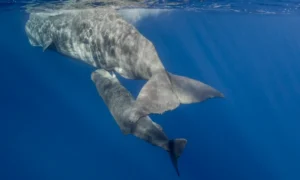
For the first few weeks, the calf stays very close to the surface and takes frequent breaths. It hasn’t learned to hold its breath for long yet. If something separates the calf from its mother during this time, it can easily drown.
Calves born during storms or in rough seas are at even higher risk because the waves make it harder to breathe.
Whales Drowning from Ship Strikes
When ships hit whales, the injuries can be bad enough to cause drowning. A whale hit by a large ship might suffer broken bones, internal injuries, or damage to its spine.
These injuries can make it impossible for the whale to swim properly. If the whale can’t swim, it can’t reach the surface to breathe. Even if the whale doesn’t die immediately from the impact, it might drown soon after.
Ship strikes are one of the leading causes of death for large whales in busy shipping lanes. The whales simply can’t move out of the way fast enough when a big ship is coming.
Can Water Get Into a Whale’s Lungs?
Yes, water can get into a whale’s lungs, and when it does, the results are bad. Whales have a special flap that covers their blowhole when they’re underwater, but this system isn’t perfect.
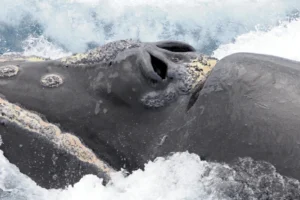
If a whale breathes in at the wrong time (like when a wave crashes over it), water can rush into the blowhole. If enough water gets into the lungs, the whale can drown.
This is more likely to happen when whales are sick, injured, or in rough seas. A healthy whale is really good at timing its breaths to avoid getting water in its lungs, but things can go wrong.
Drowning from Pollution and Chemical Exposure
Pollution in the ocean can also lead to drowning, though it works indirectly. When whales swim through areas with chemical spills or heavy pollution, these toxins can affect their nervous system.
Some pollutants can make whales disoriented or weak. A confused or weakened whale might have trouble navigating to the surface or might not breathe often enough.
Oil spills are especially dangerous. If a whale surfaces to breathe in the middle of an oil slick, it might inhale oil fumes or get oil in its blowhole. This can damage the lungs and make breathing difficult.
How Long Does It Take for a Whale to Drown?
The time it takes for a whale to drown depends on how long it can hold its breath and what’s happening to it. Different whale species can hold their breath for different amounts of time.
A whale that’s trapped but calm might survive for 30 to 90 minutes before drowning, depending on the species. But if the whale is panicking and struggling, it’ll use up its oxygen much faster.
A whale that’s seriously injured might drown in just a few minutes if it can’t swim at all. Baby whales can drown in less than 10 minutes if they can’t reach the surface.
The actual drowning process is similar to drowning in any mammal. The whale runs out of oxygen, loses consciousness, and eventually dies from lack of air.
Signs That a Whale Is in Danger of Drowning
People who work with whales know what to look for when a whale might be drowning. If you see these signs, the whale needs help fast.
A whale swimming weakly or struggling to reach the surface is in trouble. Healthy whales surface smoothly and regularly. A whale that’s barely breaking the surface or can’t seem to stay up is running out of energy.
Whales floating at odd angles or upside down are in serious danger. This usually means they’re too weak to swim properly.
A whale that surfaces but doesn’t blow properly (exhale forcefully) might have water in its lungs or be too weak to breathe normally.
Can Whales Survive Temporary Drowning?
Unlike humans, whales don’t really have a concept of “near-drowning” that they can recover from. If a whale goes too long without oxygen and loses consciousness, it almost always dies.
There are very rare cases where whales have been resuscitated by humans after being trapped, but this is extremely unusual. Once a whale stops breathing, it’s usually too late.
This is different from humans who can sometimes be revived after drowning. The difference is that whales are so large that their bodies shut down quickly once oxygen runs out.
How Climate Change Affects Whale Drowning Risk
Climate change is making the oceans more dangerous for whales in ways that could increase drowning deaths. Stronger and more frequent storms make the ocean surface rougher, which can make breathing harder.
Warming oceans are also changing where whales can find food. This forces whales to travel longer distances and dive deeper, which increases the risk of exhaustion and drowning.
Changes in ocean currents can push whales into dangerous areas, like busy shipping lanes where ship strikes are more likely. Dead zones (areas with very low oxygen in the water) are also growing, which might stress whales even though they breathe air.
Whale Rescue and Preventing Drowning
When people find a whale in danger of drowning, time is critical. Rescuers need to act fast to save the animal. If a whale is tangled in fishing gear, teams will try to cut it free. This is dangerous work because whales are huge and can accidentally hurt rescuers.
For beached whales, rescuers try to keep the whale cool and wet while figuring out how to get it back in the water safely. Sometimes they use slings and boats to move the whale.
Prevention is even more important than rescue. Many organizations work to reduce the risk of whale drowning by pushing for safer fishing practices, slower ship speeds in whale areas, and better protection of whale habitats.
Other Ways Whales Die Besides Drowning
While drowning is a real risk, whales can die from many other causes too. Natural causes include old age, disease, and starvation. Predators like orcas can kill smaller whales or young calves.
Human-caused deaths include ship strikes (even if they don’t lead to drowning), pollution, noise pollution that disorients whales, and climate change effects. Whales can also die from plastic ingestion when they accidentally swallow trash.
Understanding all these threats helps scientists and conservation groups protect whales better.
Conclusion
Whales can definitely drown, even though they’re perfectly adapted to ocean life. The key thing to remember is that whales are mammals that breathe air. No matter how good they are at swimming and diving, they still need to reach the surface regularly.
Drowning happens when something stops a whale from breathing, whether that’s getting trapped in fishing gear, being too sick or injured to swim, or being caught in dangerous conditions. Baby whales are especially at risk.
The fact that whales can drown reminds us how vulnerable these massive animals really are. Even though they’re some of the biggest creatures on Earth, they still need our help to stay safe in increasingly dangerous oceans.

Hi, my name is Ezra Mushala, i have been interested animals all my life. I am the main author and editor here at snakeinformer.com.