
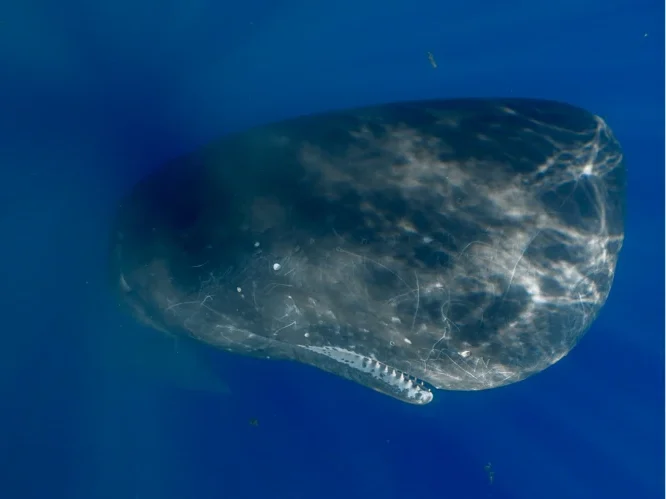
Stories of people being swallowed by whales have been around for centuries. From the biblical tale of Jonah to modern news reports, these stories capture our imagination and make us wonder if it’s really possible.
But with all the whale and human interactions throughout history, has a whale actually ever swallowed a person?
No verified case exists of a whale actually swallowing a human. While people have briefly ended up inside a whale’s mouth by accident, there’s no confirmed incident of someone being fully swallowed and going down a whale’s throat. Most historical accounts claiming this happened have been proven false or greatly exaggerated.
The confusion comes from people mixing up “being in a whale’s mouth” with “being swallowed.” These are very different things.
Getting briefly caught in a whale’s mouth during feeding can happen, but actually being swallowed and surviving is another matter entirely.
The Story of Jonah and the Whale
The most famous whale swallowing story comes from the Bible.
According to the Book of Jonah, a prophet named Jonah was swallowed by a large fish (often pictured as a whale) and survived in its belly for three days before being vomited onto shore.
This story is thousands of years old and is considered a religious text, not a historical account. Most biblical scholars view it as a parable or allegory rather than a literal event that happened.
From a biological standpoint, surviving three days inside a whale’s stomach is impossible.
There’s no air to breathe, the stomach acid would cause fatal burns, and the crushing pressure would kill you within minutes.
Still, this story has influenced how people think about whales for millennia and led to many people believing whale swallowing is possible.
The James Bartley Story from 1891
One of the most repeated “true” stories about whale swallowing involves a whaler named James Bartley.
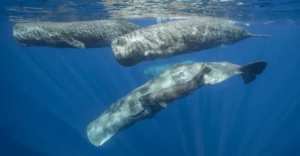
According to the tale, in February 1891, Bartley was hunting whales off the Falkland Islands when a sperm whale attacked his boat.
The story claims Bartley was swallowed by the whale and missing for several hours.
When the whale was later killed and cut open, Bartley was supposedly found alive inside its stomach, though his skin had been bleached white by the stomach acid.
This story was repeated in newspapers and books for decades and is still sometimes cited as proof that whale swallowing can happen.
But here’s the problem: historians have thoroughly investigated this story and found it to be false.
Researchers tracked down the ship’s records and even found the captain’s wife, who stated that no such incident ever occurred.
The whole story appears to be made up, possibly as a publicity stunt or just a tall tale that got out of hand.
The 2021 Lobster Diver Incident
In June 2021, a real incident happened that many people initially described as a whale “swallowing” a person.
Michael Packard, a commercial lobster diver, was working off the coast of Provincetown, Massachusetts when a humpback whale accidentally scooped him up.
Packard later described being inside the whale’s mouth in complete darkness. He said he could feel the whale’s muscles moving and thought he was going to die. However, after about 30 to 40 seconds, the whale surfaced and spit him out.
This is an important case because it’s well-documented with multiple witnesses. But notice what didn’t happen: the whale didn’t swallow him.
Packard never went down the whale’s throat. He was in the mouth only, and the whale quickly released him.
Packard had bruises and soft tissue damage but no life-threatening injuries.
The whole incident shows that yes, you can briefly end up in a whale’s mouth by accident, but you won’t get swallowed because the whale’s throat is too small and the whale doesn’t want you there.
Why Do These Stories Keep Appearing?
False stories about people being swallowed by whales keep popping up for several reasons. First, whales are mysterious creatures.
For most of human history, people knew very little about them. This mystery made it easy for stories to grow and spread.
Second, whales are huge. When you see a humpback whale with its mouth open during feeding, that mouth looks big enough to swallow anything.
People assume that if something can fit in the mouth, it can be swallowed.
Third, these stories are exciting. A tale about someone surviving inside a whale is much more interesting than the truth, which is that whale throats are too small to swallow people. Exciting stories spread faster than boring facts.
Finally, some historical accounts might be based on people who drowned or were killed during whaling accidents, and the details got changed as the story was told and retold.
What Actually Happens in Whale Encounters
Real documented cases of close whale encounters usually involve people getting bumped, hit, or briefly caught near the whale during feeding.
These incidents can be dangerous, but they’re not about being swallowed.
Whales can accidentally hit swimmers or small boats with their fins, tails, or bodies. These collisions can cause serious injuries or death, not because the whale is attacking, but simply because whales are massive and powerful.
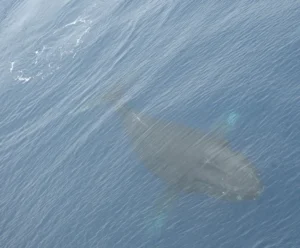
Kayakers sometimes get flipped when a whale surfaces too close to them. Divers have been knocked around by curious whales. But in all these documented cases, no one has been swallowed.
The closest thing to “swallowing” is when someone briefly ends up in a whale’s mouth during feeding, like the lobster diver incident.
But these situations last seconds and end with the person being released, not swallowed.
The Throat Size Problem
The main reason whales don’t swallow humans is simple biology. Most whales have throats that are way too small to fit a person through, even though their mouths are enormous.
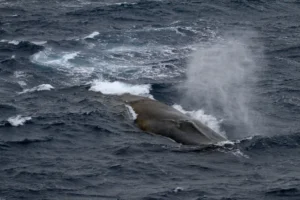
A blue whale, the largest animal on Earth, has a throat only about 10 to 15 inches wide. That’s roughly the size of a large dinner plate. Your head alone is bigger than that.
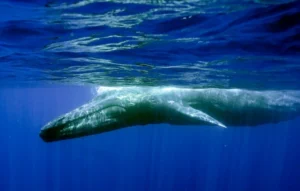
Humpback whales have slightly larger throats, maybe 15 to 18 inches across. Still nowhere near big enough for a person to fit through.
These whales evolved to eat tiny prey like krill and small fish. They never needed large throats, so they never developed them. The narrow throat is actually important for their filtering feeding method.
Could a Sperm Whale Swallow a Human?
Sperm whales are the one exception. They have throats large enough to swallow a human. Sperm whales hunt giant squid that can be 30 feet long or more, so they need big throats.
However, there’s no verified case of a sperm whale ever swallowing a person either. Sperm whales dive deep to hunt squid and don’t feed at the surface where humans usually are.
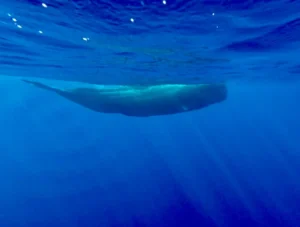
Sperm whales also seem to know what their food looks like. They’re not going to mistake a human for a squid. If they did accidentally get a person in their mouth, they’d likely spit them out.
The James Bartley story, which involved a sperm whale, has been proven false. So even with the one whale species that could physically swallow a person, there’s no real case of it happening.
Have There Been Deaths from Whale Encounters?
While no one has been swallowed by a whale, people have died from whale encounters. These deaths usually happen from being hit by the whale’s body, tail, or flippers, or from drowning after a boat capsizes.
In the 1800s and early 1900s, many whalers died when whales they were hunting attacked their boats. The whales would ram boats, smash them with their tails, or drag harpooned boats underwater. Some whalers drowned, and others were killed by the impact.
Modern deaths from whales are rare but still happen occasionally. Most involve small boats being capsized by whales that surface too close or breach (jump) and land on the boat.
In 2020, a whale capsized a boat off the coast of Australia, and one person drowned. The whale likely didn’t even realize the boat was there. It was just coming up to breathe and accidentally hit the boat.
How Whales Actually Feed
Understanding how whales feed helps explain why swallowing humans doesn’t happen. Baleen whales use a filtering system. They open their mouths wide and take in huge gulps of water full of small fish or krill.
The whale’s throat has special grooves that expand like an accordion to hold all this water. Then the whale pushes its tongue up, forcing water out through the baleen plates while keeping the food inside.
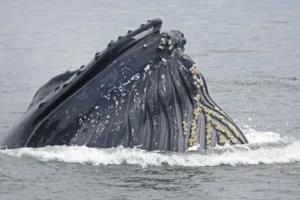
The food gets trapped in the baleen, and the whale then swallows it. But this whole system is designed for tiny prey. A human would completely break this feeding method and would physically get stuck.
Sperm whales hunt differently. They use echolocation to find squid in deep water, then catch them with their teeth. But they’re hunting at depths of 1,000 to 7,000 feet, not at the surface where humans are.
Can Animals Actually Swallow Large Prey?
Some animals can swallow prey that seems impossibly large, which makes people think whales should be able to do the same. But these animals have very different anatomy than whales.
Large snakes like anacondas can swallow prey bigger than their own head. They have special jaws that unhinge and skin that stretches. They also have wide throats relative to their body size.

Some large fish can swallow prey that’s a significant portion of their body weight. Their mouths and throats are proportionally much larger than a baleen whale’s.
Whales, despite being the biggest animals on Earth, don’t have this ability. Their throats are proportionally tiny compared to their body size.
The Role of Whale Myths in Culture
Stories of whales swallowing people have become part of human culture worldwide. Beyond Jonah, many cultures have their own whale swallowing tales.
These stories often carry moral lessons or religious meanings. They’re not really about the whales themselves, but about human experiences like facing fears, being punished and redeemed, or surviving impossible odds.
The fact that these stories aren’t scientifically accurate doesn’t make them less important to the cultures that tell them. They’re myths that serve a purpose beyond just describing what whales do.
However, it’s important to separate cultural stories from biological facts. Myths are valuable, but they shouldn’t shape our understanding of how whales actually behave.
Modern Technology and Whale Documentation
Today, we have cameras, underwater recording devices, and thousands of people with smartphones recording whale encounters. If whale swallowing was something that actually happened, we’d have clear evidence by now.
Instead, what we see in all these videos and photos is that whales are generally careful around humans. When accidental contact happens, it’s brief and the whale usually tries to avoid the person.
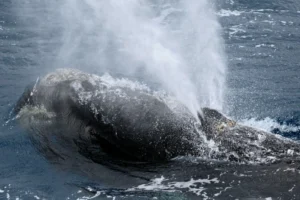
The lobster diver incident was caught on video and clearly showed what happened. The diver was in the whale’s mouth for seconds and was then released. If whale swallowing was common or even possible, we’d have more documented cases like this, but going further.
The lack of any verified modern incidents, despite all our technology and the millions of people who interact with whales, is pretty strong evidence that whale swallowing doesn’t happen.
What Marine Biologists Say About Whales Swallowing Humans
Marine biologists and whale experts are very clear on this topic. There are no verified cases of a whale swallowing a human. The anatomy doesn’t allow it for most species, and the behavior doesn’t support it.
Dr. Joy Reidenberg, a whale anatomy expert, has explained that even if a person got into a whale’s mouth, the esophagus (throat) is too narrow for them to fit through. The person would get stuck.
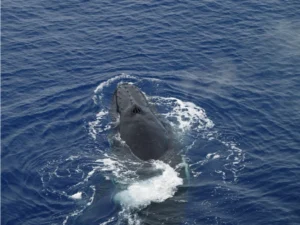
Other experts point out that whales have good awareness of what’s around them. They can feel objects in their mouth and would realize immediately that a human isn’t food. The natural response would be to spit the person out.
Scientists who study whale feeding behavior note that whales are actually quite careful feeders. They’re not mindlessly gulping down everything in their path.
The Danger of Getting Too Close
While whales won’t swallow you, getting too close to feeding whales is still dangerous. The lobster diver incident is a perfect example. He wasn’t hurt badly, but he easily could have been.
Being inside a whale’s mouth, even briefly, exposes you to powerful forces. The whale’s tongue weighs several tons and is incredibly muscular. Being tossed around in a whale’s mouth could cause broken bones or other serious injuries.
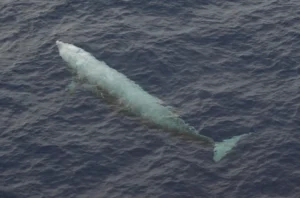
There’s also the risk of drowning if the whale dives with you still in its mouth, or if you’re disoriented when it spits you out and can’t find your way to the surface.
Boats near feeding whales risk being capsized or hit. Whale watching guidelines exist for good reasons. They keep people safe and avoid disturbing the whales.
How to Stay Safe Around Whales
If you’re whale watching or in an area where whales are present, follow these safety guidelines. Stay at least 100 feet away from whales (regulations vary by location, but this is a common minimum).
Never swim toward a whale or try to touch one. This is dangerous for you and stressful for the whale. If you’re in the water and a whale approaches, stay calm and still. Don’t make sudden movements.
If you see signs that whales are feeding (lots of birds diving, disturbed water surface, multiple whales in one area), keep extra distance.
Feeding whales are less aware of their surroundings and more likely to accidentally bump into boats or swimmers.
Listen to guides and follow their instructions. Professional whale watching operators know how to keep you safe while letting you enjoy seeing these amazing animals.
Conclusion
Despite centuries of stories and myths, there’s no verified case of a whale ever actually swallowing a human. People have briefly ended up in whales’ mouths by accident, but this is very different from being swallowed.
The biology is clear: most whales physically can’t swallow humans because their throats are too small.
The one species that could (sperm whales) doesn’t hunt at the surface and has never been documented doing this.
The persistent myths about whale swallowing come from old stories that were exaggerated or made up, from people misunderstanding what happened in real incidents, and from the natural human tendency to find large, mysterious animals fascinating and scary.
While you won’t be swallowed by a whale, you should still respect these powerful animals and keep a safe distance. The real dangers from whales are being hit, bumped, or caught in the wake of a diving whale, not being eaten.

Hi, my name is Ezra Mushala, i have been interested animals all my life. I am the main author and editor here at snakeinformer.com.