
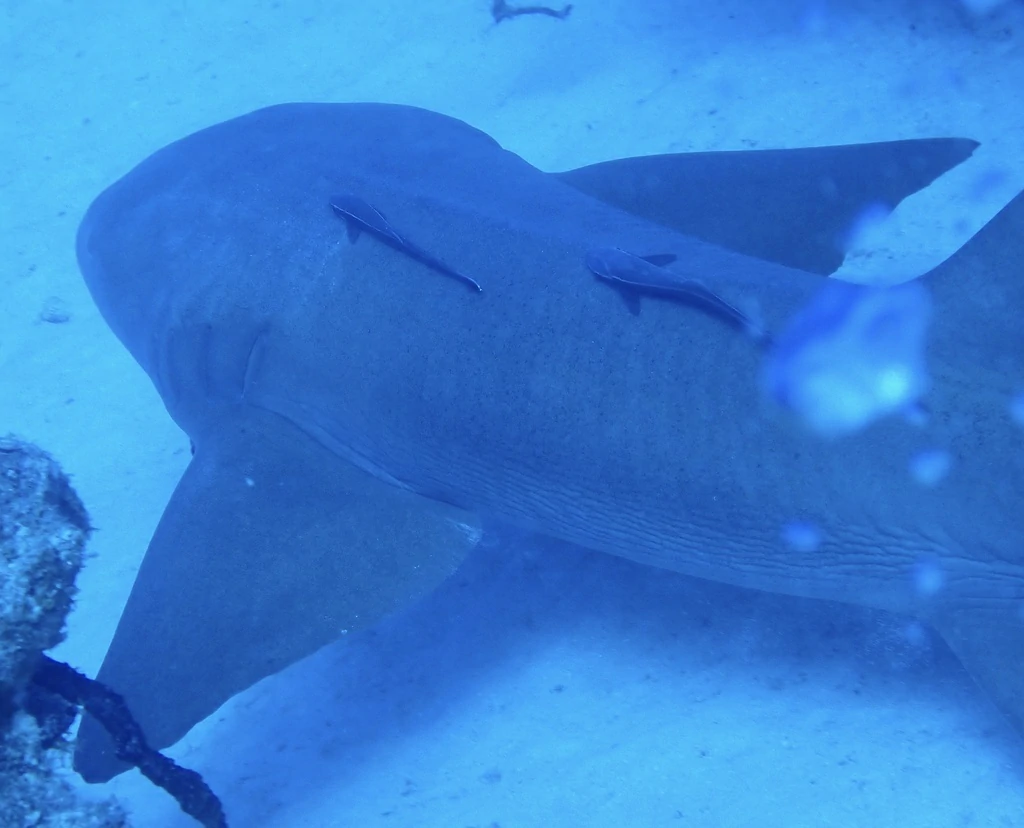
Sharks are some of the ocean’s most interesting predators, and if you’ve ever watched a documentary about them, you’ve probably noticed they never seem to stop swimming.
They’re always on the move, cruising through the water even when they’re not hunting. But why do sharks have to keep moving?
Most sharks need to keep swimming to breathe. Unlike bony fish, many sharks don’t have muscles that can pump water over their gills. If they stop moving, water stops flowing over their gills, and they can’t get the oxygen they need to survive.
This type of breathing is called “ram ventilation,” and it basically means the shark has to ram water into its mouth and over its gills by swimming forward.
It’s like how you need to keep pedaling a bike to keep moving forward. If the shark stops, the water flow stops, and it can’t breathe.
Interestingly, ram ventilation isn’t just a quirky trait, it shapes the shark’s whole life.
Their muscles, fins, and body shape have changed over time to help them move through water as efficiently as possible.
Fast, streamlined bodies help them cover long distances without using too much energy, which is why you rarely see these sharks staying in one place.
How Sharks Breathe While Swimming
When a shark swims, water enters through its mouth and flows over its gills. The gills pull oxygen out of the water (kind of like how your lungs pull oxygen out of the air you breathe).
Then the water exits through gill slits on the sides of the shark’s head.
For many shark species, this process only works when they’re moving forward. The forward motion creates water flow.
Without that motion, there’s no water flow, and without water flow, there’s no oxygen.
This is why you’ll often see sharks in aquariums swimming in circles or figure-eight patterns. They’re not just restless. They’re actually breathing.
And in the wild, this constant motion also helps them regulate body temperature and maintain balance in the water column.
Some sharks can even adjust the angle of their mouths and gill slits to maximize oxygen intake when swimming at different speeds.
The structure of shark gills is especially well suited for ram ventilation. Each gill contains thin filaments packed with blood vessels, maximizing the surface area for oxygen exchange as water rushes past.
The faster the shark swims, the more water moves over these surfaces, increasing oxygen uptake.
Some fast-swimming sharks can even slightly open and close their mouths to regulate how much water flows through their gills, depending on activity level.
When cruising slowly, they allow a steady stream of water in. When chasing prey, the increased speed naturally boosts oxygen flow without extra effort.
Not All Sharks Need to Keep Moving
Here’s where it gets interesting. Not every shark species needs to swim constantly to breathe. Some sharks have what’s called “buccal pumping,” which means they can actively pump water over their gills even when they’re sitting still.
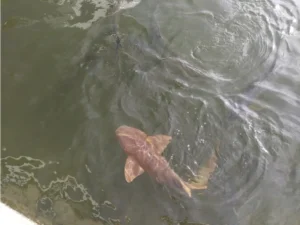
Nurse sharks are a good example. You can find them resting on the ocean floor during the day, just chilling out. They use muscles in their cheeks and mouth to suck water in and push it over their gills.
Bottom-dwelling sharks like wobbegongs and angel sharks can do this too. They spend a lot of time lying on the seafloor waiting for prey to swim by, so they really need to be able to breathe without moving.
These sharks also tend to have broader, flatter bodies, which helps them blend in with the seafloor while lying in wait for prey.
Buccal pumping gives them the freedom to conserve energy, ambush prey, and stay camouflaged without worrying about suffocation.
Sharks that use buccal pumping often live where hiding works better than chasing. Coral reefs, rocky bottoms, and sandy flats give them cover, and staying still helps them avoid being seen.
Because they don’t have to swim constantly, these sharks usually have slower metabolisms. They can survive longer between meals and don’t burn as much energy each day. That’s why nurse sharks are often seen resting together for hours.
Which Sharks Can’t Stop Swimming ?
Great white sharks are probably the most famous sharks that need to keep moving.
These massive predators can weigh over 2,000 pounds, and they cruise through the ocean almost non-stop.
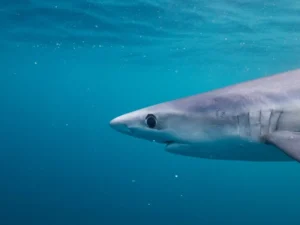
Mako sharks are another example. They’re actually the fastest sharks in the ocean, reaching speeds of up to 45 miles per hour. But even when they’re not sprinting, they’re still swimming steadily to keep water flowing over their gills.
Whale sharks (the biggest fish in the ocean) also need to keep swimming. Even though they’re gentle giants that eat tiny plankton, they still rely on ram ventilation to breathe.
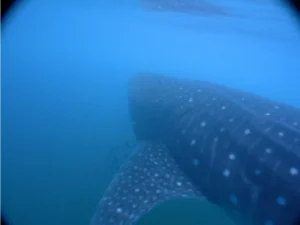
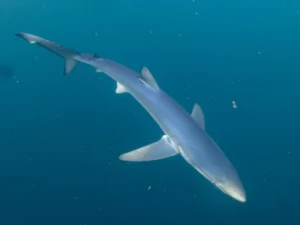
Hammerhead sharks, blue sharks, and thresher sharks are all in the same boat. If they stop swimming, they stop breathing.
It’s interesting to think that even the largest, slowest-moving sharks like whale sharks are constantly on the move. Despite their size, their bodies are adapted to glide efficiently, conserving energy while still getting enough oxygen.
These sharks are usually apex predators, with very few animals hunting them. Moving all the time helps them stay alert, look for prey, and avoid danger. Their senses, especially the lateral line and electroreception, work best while swimming.
Many of these sharks are also partly warm-blooded. Sharks like great whites and makos can keep parts of their body warmer than the water, which gives more muscle power and faster reactions. That extra heat uses more oxygen, making nonstop swimming even more important.
How Sharks Manage to “Sleep” Without Stopping
If you’re wondering how sharks that need to keep moving actually sleep, you’re not alone. Scientists have been trying to figure this out for years.
The answer is pretty interesting. These sharks don’t sleep the way you and I do. They don’t close their eyes and go unconscious for hours at a time.
Instead, they seem to have periods of reduced activity where parts of their brain rest while other parts stay alert. It’s kind of like how dolphins sleep with half their brain at a time.
During these rest periods, the shark keeps swimming (because it has to), but it’s basically on autopilot. The swimming becomes automatic, requiring less brain power, while other parts of the brain get some rest.
Some scientists think certain sharks might use ocean currents to help them “rest” while still moving. They position themselves in a current that pushes water over their gills, so they don’t have to swim as hard.
Some sharks also swim more slowly during these periods, reducing their energy expenditure while still maintaining oxygen flow. It’s a delicate balance; enough movement to breathe, but minimal effort to let their bodies recuperate.
Researchers also think sharks might enter a light sleep instead of deep sleep. During this time, reflexes like swimming and breathing keep working, but they are less aware of their surroundings.
Some sharks may sleep more during the day and be more active at night, or the opposite, depending on when they hunt. This flexible rest lets them recover without ever fully stopping.
Sharks’ Bodies Need Movement to Stay Afloat
There’s actually another reason why many sharks need to keep swimming, and it has nothing to do with breathing. It’s about staying afloat.
Unlike bony fish (which have a swim bladder that acts like a balloon to help them float), sharks don’t have swim bladders. Their skeletons are made of cartilage instead of bone, which helps, but they’re still denser than water.
This means if a shark stops swimming, it starts to sink. The forward motion and the shape of their fins create lift, kind of like how an airplane’s wings create lift to keep it in the air.
So even if a shark could breathe while sitting still, it would slowly sink to the bottom. For sharks that live in the open ocean (where the bottom might be thousands of feet down), sinking isn’t really an option.
Their large, oil-filled livers help with buoyancy a bit. The oil is less dense than water, which helps them not sink as quickly. But it’s still not enough to keep them floating without any movement.
Sharks’ pectoral fins act like wings, allowing them to generate lift as they move forward. This is why their swimming technique isn’t just about speed, it’s also about maintaining vertical position in the water column.
Buoyancy affects how much energy a shark uses to swim. Sharks near the surface can use lift more easily, while deep-water sharks often have bigger livers or special body shapes to stop them from sinking.
Some species tilt their bodies slightly upward, using lift from water to stay level. This constant adjustment shows how swimming, breathing, and buoyancy all work together in shark survival..
What Happens If a Shark Stops Swimming?
If a shark that relies on ram ventilation stops swimming for too long, it will suffocate. Just like you would if you stopped breathing.
The shark’s body uses up the oxygen in its blood pretty quickly, and without new oxygen coming in through the gills, the shark’s organs start to fail.
This is actually why you sometimes see sharks that have been caught in fishing nets die even if they’re released. If they were trapped and couldn’t swim for too long, they may have already suffocated before they were freed.
It’s also why catch-and-release fishing with sharks needs to be done very carefully and quickly. The longer the shark is out of the water or unable to swim freely, the more dangerous it becomes for the animal.
Some shark species can survive brief periods without swimming if the water is really rich in oxygen or if they’re in cooler water (which holds more oxygen). But it’s still incredibly risky for them.
Even minor injuries or exhaustion can make a shark more vulnerable if it stops swimming. Predators or low oxygen environments can quickly turn a brief pause into a fatal situation.
Stress makes things worse. When a shark panics or struggles, its muscles use oxygen faster. This speeds up suffocation if water doesn’t flow over the gills.
Why Keeping Sharks in Aquariums Is So Tricky
Keeping sharks that need to keep swimming in aquariums is actually pretty challenging. The tank needs to be big enough for the shark to swim continuously without constantly running into walls.
Many aquariums that keep large sharks use circular or oval-shaped tanks. This design lets the sharks swim in a continuous path without having to turn around sharply.
Some facilities even create artificial currents in the tanks to help the water flow over the sharks’ gills more easily. This can reduce how much the shark needs to swim while still keeping it oxygenated.
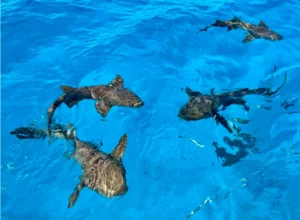
But despite these efforts, some shark species just don’t do well in captivity. Great white sharks, for example, have been notoriously difficult to keep in aquariums. Most attempts have failed, with the sharks refusing to eat or injuring themselves.
Smaller shark species, like bamboo sharks or epaulette sharks, tend to adapt better because they can use buccal pumping and don’t need constant swimming.
Aquariums have to manage water quality carefully for these sharks. Oxygen, temperature, and current all have to stay in a narrow range to prevent stress.
Some tanks use slow currents so sharks can glide without extra effort. Even with this, it’s hard to copy the open ocean, which is why only a few species can stay in tanks long-term.
Why Did Sharks Evolve This Way?
You might wonder why some sharks evolved to need constant swimming while others didn’t. It actually comes down to their lifestyle and where they live.
Sharks that hunt in the open ocean need to cover huge distances to find food. Being constantly on the move is already part of their lifestyle, so ram ventilation works perfectly for them.
These sharks are also built for speed and efficiency. Ram ventilation is actually a pretty efficient way to breathe when you’re already swimming all the time. It requires less energy than actively pumping water over your gills.
Bottom-dwelling sharks, on the other hand, use a sit-and-wait hunting strategy. They need to stay still to ambush prey, so they evolved the ability to pump water over their gills while stationary.
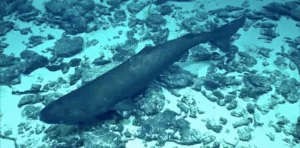
It’s a great example of how different species adapt to their specific environments and hunting styles. Their anatomy, muscle distribution, and even brain function reflect the constant motion they require.
Evolution doesn’t care about comfort. It favors what helps survival and reproduction. For open-ocean sharks, moving all the time gives better access to food, faster growth, and more success at reproducing.
Over millions of years, traits that help nonstop swimming became locked in. Once a species evolved ram ventilation and high-speed swimming, there was no pressure to go back to resting respiration.
Other Animals That Need to Keep Moving
Sharks aren’t the only animals that need to keep moving to survive. Some species of tuna have the same problem. They rely on ram ventilation too, so they’re basically swimming non-stop their entire lives.
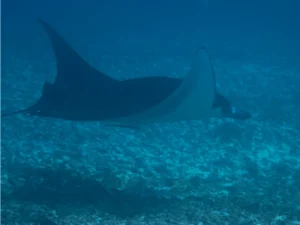
Certain species of rays (which are closely related to sharks) also need to keep moving to breathe. Manta rays, for example, are constantly gliding through the water.
Even some marine mammals face similar challenges, though for different reasons. Dolphins and whales need to consciously swim to the surface to breathe air. They can’t breathe automatically like we do, so they never fully fall asleep.
It’s pretty wild when you think about it. While you’re lying in bed at night getting a full night’s sleep, there are millions of sharks, tuna, and other creatures in the ocean that haven’t stopped moving in years.
Some jellyfish and other invertebrates drift passively in the current, but active hunters like sharks and tuna are in a constant state of motion. Their survival literally depends on it.
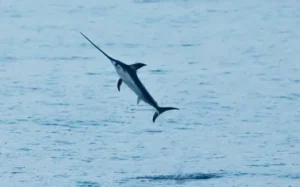
Some billfish, like marlin and swordfish, also need to swim constantly to get enough oxygen. These animals share traits with sharks, like streamlined bodies and high endurance.
Even birds show a distant similarity. Swifts can stay in the air for months, sleeping briefly while flying. Different environments, same rule: movement helps survival.
How Sharks Handle the Energy Cost of Constant Swimming
Keeping moving all the time isn’t just a breathing issue, it’s a major energy investment. Sharks burn calories even when they’re not hunting, which is why they’re so efficient at catching prey when they do.
They’ve evolved streamlined bodies, powerful tails, and strong muscles to reduce drag. Even so, they need to eat regularly to maintain that energy output. Fasting for too long while constantly swimming can lead to exhaustion or malnourishment.
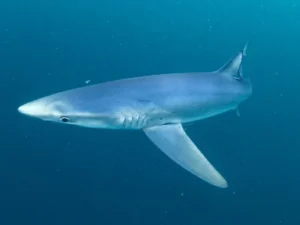
Some species, like great whites, alternate between bursts of fast swimming and slower cruising speeds to manage energy. It’s a delicate balance between oxygen intake, buoyancy, and food requirements.
To meet their energy needs, sharks eat very efficiently. They digest food slowly and get as much nutrition as possible. Their stomachs can stretch to hold big meals, fueling long periods of swimming after a hunt.
Sharks also change activity based on food. When prey is scarce, they may cruise slower to save energy, showing that even constant swimmers pace themselves.
Do Baby Sharks Have to Keep Moving Too?
Yes. For species that rely on ram ventilation, swimming starts almost right after birth. Baby great whites, makos, and blue sharks start moving as soon as they’re born, with no parent help.
This early independence is risky, but it makes sure only strong, well-adapted sharks survive. From day one, swimming is not optional. It’s life.
Can Sharks Ever Truly Rest?
Sharks don’t rest the way humans do, but they aren’t machines either. Their nervous systems are efficient, letting repetitive motion happen without mental strain.
Over time, evolution made their muscles and brains used to constant swimming. For a shark, stopping would feel far more unnatural than moving.
Conclusion
So why do sharks have to keep moving? For many species, it’s a matter of survival. They need constant forward motion to push water over their gills so they can breathe.
Without that water flow, they’d suffocate.
Not all sharks have this problem, though. Bottom-dwelling species like nurse sharks can pump water over their gills while staying still
But the big, fast-swimming sharks like great whites and makos don’t have that luxury.
These sharks have been swimming non-stop since the day they were born, and they’ll keep swimming until the day they die.
It’s just part of being a shark in the open ocean. They’ve evolved to be perfectly adapted to a life of constant motion, even if it means they can never really rest the way we do.

Hi, my name is Ezra Mushala, i have been interested animals all my life. I am the main author and editor here at snakeinformer.com.