
Most people don’t plan on getting bitten by a tokay gecko. It usually happens in a very ordinary moment. You’re cleaning an enclosure. You’re adjusting a branch. Then there’s a sudden movement and you get bitten. So, do tokay gecko bites hurt?
Yes, a tokay gecko bite can really hurt. Their jaws are strong for their size, and when they clamp down, it can feel sharp and painful, sometimes leaving small puncture marks. Most bites aren’t dangerous, but they can surprise you and sting for a little while.
What makes a tokay gecko bite memorable isn’t just the pain. It’s how fast everything happens, how unexpected it feels, and how long that moment stretches while the gecko is still attached and your mind is racing.
What Leads Up to a Tokay Gecko Bite in the First Place?
Tokay gecko bites almost never come out of nowhere. They build quietly, even if we don’t notice it at the time.
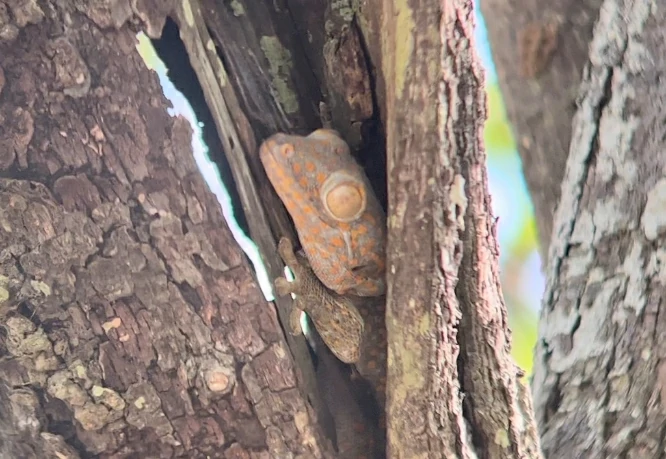
A tokay gecko spends most of its life in control of its space. In the wild, that space might be a tree hollow, a rock crevice, or the wall of a building.
In captivity, it’s an enclosure that feels just as important. It’s their world, and humans are large, unpredictable intruders.
When a human hand enters that space, the gecko doesn’t see a keeper or an owner. It sees a large, warm, moving object that doesn’t belong there.
That object can block a hiding spot, threaten food, or just feel overwhelming.
At first, the tokay often freezes. Its body stiffens. Its head lifts slightly. This is the moment where the situation could still go either way.
The gecko is deciding. Are you leaving? Are you going to hurt it? Can it escape?
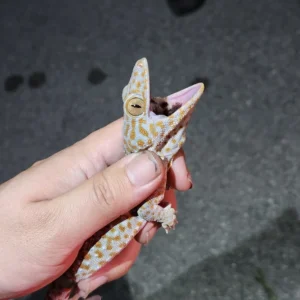
Then comes the warning. The mouth opens. The hiss starts. Sometimes the bark echoes off the glass. These aren’t random noises.
They’re clear signals that say, I see you, and I’m not comfortable with this.
If the hand keeps moving closer, the gecko’s options shrink fast. Running isn’t always possible. Hiding might already be blocked. And that’s when the bite happens.
What a Tokay Gecko Bite Actually Feels Like in the Moment
The first thing most people notice isn’t pain. It’s shock.
Your brain doesn’t expect something that small to react that fast or clamp down that firmly.
There’s a split second where your mind is just catching up to what your body already knows.
Then the pain registers. It feels sharp and tight at the same time. Not like a cut, and not like a sting. More like a powerful pinch with a row of tiny needles pressed into your skin.
If you move, it feels worse. If the gecko clamps down fully, the pressure increases, teeth hook slightly, and your nerves scream louder.
Some people describe it as a “jaw lock” feeling, where you’re aware of every millimeter the gecko holds on, every twitch of its body, every vibration as it tests the surface.
That combination of pain, pressure, and surprise is what makes tokay bites well-known.
Why Tokay Gecko Bites Feel So Intense Even When They’re Minor
Physically, a tokay gecko bite is usually shallow. The teeth are small. They don’t cut deeply into muscle or tear tissue the way a bigger lizard might.
But the experience feels intense because several things happen at once.
First, the bite is sudden. There’s no slow buildup like with a scrape or burn. Sudden pain always feels stronger.
Second, the pressure is constant. The gecko doesn’t nip and release. It holds. That steady pressure keeps your nerves firing.
Third, there’s the emotional response. Your brain interprets being bitten and not immediately released as danger. That instinctive reaction turns the volume up on pain.
By the time the gecko lets go, your body is already flooded with adrenaline.
It’s why even a tiny puncture can feel like a big deal. The gecko is small, but your feeling of the bite is amplified by instinct.
Why Do Tokay Geckos Hold On Instead of Letting Go?
This is one of the most misunderstood parts of tokay behavior.
Tokay geckos don’t hold on because they’re angry. They hold on because it works.
In the wild, a tokay that bites and releases is still in danger. A tokay that bites and clamps down creates a moment of confusion or pain that can make a predator hesitate. That pause is the gecko’s chance to survive.
A human hand doesn’t feel different to that instinct. It’s warm, it moves, and it doesn’t back off unless something changes. The gecko doesn’t think in terms of “owner” versus “intruder.” It just reacts to what’s happening.
How Long Does the Pain Actually Last After the Bite?
Once the gecko releases, the pain drops off faster than most people expect. The sharp intensity fades within minutes. What’s left is usually a dull soreness, like a bruised fingertip or a scraped knuckle.
There may be a little bleeding. Small puncture marks. The skin can feel tender for a day or two. For most people, the discomfort is short-lived.
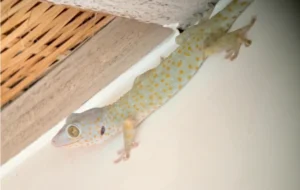
By the next day, the bite is more noticeable to the eyes than to the nerves.
Even minor swelling can make it feel worse than it is. Applying a cold compress and keeping the hand elevated can reduce soreness and prevent bruising.
First Aid Tips for a Tokay Gecko Bite
Even though tokay bites aren’t usually dangerous, it’s still smart to treat them carefully.
-
Wash the wound with soap and water to prevent infection.
-
Apply a mild antiseptic.
-
Keep the bite clean and covered if the skin is broken.
-
Watch for signs of infection: redness, swelling, or pus.
-
If bleeding is heavy or the bite was unusually deep, seek medical advice.
Most bites heal quickly, and serious problems are rare. Treating it promptly just makes recovery easier.
Why People Remember Tokay Bites for Years
Even though the pain fades quickly, the memory sticks.
That’s because tokay bites teach a lesson in a very clear way. They make you slow down, pay attention, and respect boundaries you might not have fully appreciated before.
People don’t forget the sound of the bark, the strength of the grip, or the realization that this animal is not bluffing. That mix of feeling and surprise makes the story stick.
How Do Tokay Bites Compare to Other Gecko Bites
If you’ve been bitten by other geckos, a tokay bite feels very different.
Many geckos nip quickly and release. Some barely apply pressure at all. Those bites feel more surprising than painful.
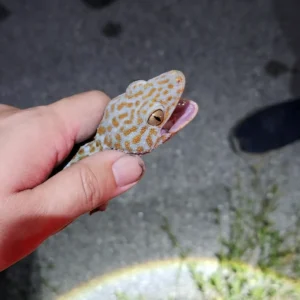
A tokay bite feels deliberate. Not mean, but purposeful. The gecko commits to the action, and that commitment is what people feel.
Compared to bigger lizards, tokay bites are still minor. There’s no crushing force, no deep tearing, no lasting injury. Often, the fear comes more from reputation than reality.
Why First-Time Tokay Bites Feel Worse Than Later Ones
The first tokay bite almost always feels like the worst one.
Not because it’s stronger, but because everything is unknown. You don’t know how long it will last. You don’t know how much it can do.
You don’t know what to do next.
Once you’ve experienced it, those unknowns disappear. The next time, your brain doesn’t panic the same way. The bite still hurts, but it doesn’t overwhelm your senses.
How Juvenile and Adult Tokay Bites Differ
Not all tokay bites are the same. One of the first things keepers notice is that juveniles and adults bite differently.
Juvenile tokays are smaller, so their bites usually don’t break the skin. They might nip quickly, startling you, but the pain is mostly surprise rather than real injury.
It’s a sharp pinch, often over before you fully register it. Even so, their little teeth can hook, and if you move suddenly, you might get a tiny puncture.
Adult tokays, on the other hand, are bigger, stronger, and more confident. Their bites are the ones that make people wince.
The teeth are larger, the jaw grip is firmer, and they hold on longer if they feel threatened.
A bite from a full-grown tokay can break the skin and sometimes draw a little blood, even if the actual damage is small.
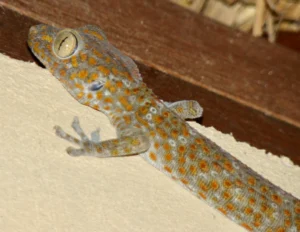
Interestingly, adults often give more warning than juveniles.
They hiss, bark, or stiffen in place before biting. Juveniles, still learning how to handle threats, may react faster and with less buildup, which can make their bites feel more sudden, even if they hurt less.
The difference isn’t about anger. It’s about size, experience, and instinct.
Adult tokays have learned that holding on can help against predators, while juveniles are still testing their strength and reactions.
Knowing this helps keepers see the risk and treat their gecko with the right respect for its age and size.
What Usually Makes Tokay Gecko Bites More Painful Than Necessary?
Ironically, human reactions often make tokay bites feel worse.
Jerking your hand away increases pressure and can tear skin. Panicking tightens muscles, which makes the pain worse. When the gecko feels unstable, it clamps harder.
When it feels supported, it often lets go sooner.
This is why experienced keepers say calm, controlled responses are better than force. Staying relaxed can make the difference between a small pinch and a painful struggle.
Why Tokay Gecko Bites Aren’t a Sign of a “Bad” Animal
It’s easy to call an animal aggressive after it bites. But that label doesn’t really fit tokays.
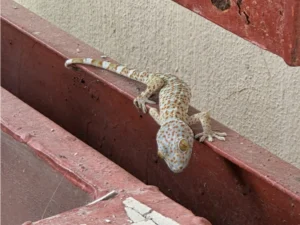
Tokay geckos are consistent. They warn. They react when boundaries are crossed. They don’t bite out of boredom or curiosity.
Once you learn their signals, bites become rare. The animal didn’t change. The human understanding did.
How Living With Tokays Changes How You See the Bite
People who live with tokay geckos long-term often stop fearing the bite.
Not because it doesn’t hurt, but because it stops being mysterious. It becomes a known risk with clear rules. Respect the space. Move slowly.
Don’t force interaction. Read the signals.
When those rules are followed, months or even years can pass without a single bite.
Why Tokay Gecko Bites Are Often Exaggerated Online
Online stories tend to focus on extremes. The loudest voices are usually the people who were surprised, not the ones who quietly learned and adapted.
Very few people post about the hundreds of calm, uneventful interactions they’ve had with their tokay.
They post about the one dramatic moment when they misread a situation. That makes the story seem scarier than it is.
How to Prevent Tokay Gecko Bites Before They Happen
One of the best ways to experience a tokay gecko without a painful surprise is to understand their signals and respect their space. Prevention is really just about paying attention and moving carefully.
First, watch their body language. A tokay that stiffens, raises its head, or starts hissing is sending a clear warning.
That’s your cue to pause, step back, or approach more slowly. Ignoring these signals usually leads to bites.
Second, move slowly and carefully. Sudden movements can trigger a defensive reaction, even if you’ve handled the gecko many times before.
Think of your hand as entering their world gently, not invading it.
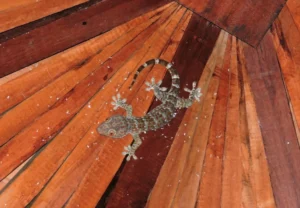
Third, avoid reaching into the enclosure when the gecko is active at night or in a tight space. Tokays are naturally active at night and can react more when startled in the dark or when hiding.
Giving them clear paths to retreat reduces stress and bite risk.
Fourth, don’t try to force interaction. Tokays are not domesticated animals; they respond to respect, not pressure. If you try to hold, corner, or chase them, you’re more likely to get a bite than if you simply watch.
Finally, consistent handling over time helps. Gradually building trust with calm, controlled approaches (like letting the gecko get used to your hand resting nearby before touching or picking it up) teaches the gecko that your presence isn’t a threat.
Preventing bites isn’t about fear. It’s about understanding the animal’s instincts and learning to live safely alongside them. Once you follow these steps, those dramatic stories you read online become much less likely to happen.
Common Myths About Tokay Bites
- Tokays bite to punish – False. They bite to defend, not punish humans.
- Tokay bites are deadly – False. They are painful but rarely dangerous.
- Tokays bite out of anger – False. It’s instinct, not emotion.
Understanding these myths helps new keepers approach their geckos more confidently.
Conclusion
So, does a tokay gecko bite hurt?
Yes. It hurts in a sharp, surprising, very memorable way. It can break skin and leave you sore for a short time. But it doesn’t cause serious injury, and the pain fades much faster than the story of it does.
What stays with you isn’t the wound. It’s the understanding.
A tokay gecko bites because it’s doing exactly what evolution taught it to do when something enters its space and won’t back off
Once you see the bite as communication rather than aggression, it stops feeling personal. And when it stops feeling personal, it stops being frightening and starts being understandable.

Hi, my name is Ezra Mushala, i have been interested animals all my life. I am the main author and editor here at snakeinformer.com.