
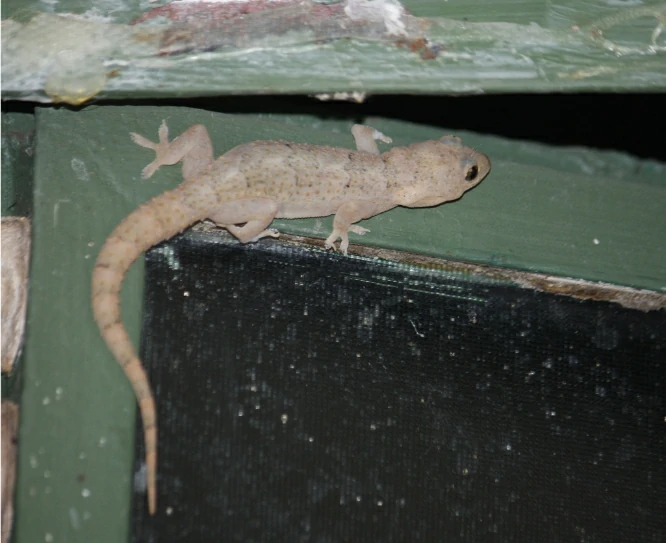
If you’ve ever watched your dog suddenly freeze like it just saw a ghost, only to realize it’s staring at a tiny gecko clinging to the wall, you already know how dramatic dogs can be.
One moment your dog is lying calmly on the floor, and the next it’s doing that slow, determined stalk across the room like it’s in a wildlife show.
For some reason, geckos trigger something in a dog’s brain that turns an ordinary evening into a personal mission. And when you see your dog chasing one, you might wonder, is this safe? Are geckos harmful to dogs?
No, geckos are not harmful to dogs. They aren’t poisonous, they don’t have venom, and they aren’t dangerous if your dog touches or chases them. In most cases, geckos are totally harmless to dogs The only small risk comes if a dog actually eats a gecko, and even then, most dogs are perfectly fine.
But as always, that simple answer brings up more questions once you imagine your dog nibbling, licking, pawing, or even swallowing a little reptile.
Why Geckos Aren’t Poisonous Or Dangerous To Dogs At All
To understand why geckos aren’t harmful to dogs, it important to think about how a gecko actually works as an animal.
Most geckos that live near homes are tiny, delicate creatures that spend their time eating insects and doing everything possible to avoid danger.
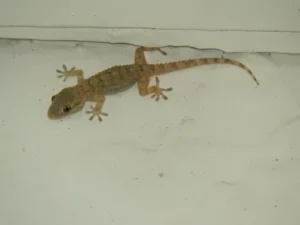
And to a gecko, a dog is basically a giant, unpredictable beast that they want nothing to do with.
Geckos do not have:
-
venom
-
poisonous skin
-
toxic saliva
-
dangerous glands
-
harmful chemicals
Nothing about a gecko is made to hurt a big animal like a dog. They survive by hiding, climbing, and running away, not by fighting or poisoning anything that bothers them.
So right from the start, you can relax. A gecko sitting on the wall is not a threat to your dog in any real way.
What Happens If Your Dog Tries To Bite Or Catch A Gecko?
Most dogs don’t actually want to eat geckos. They just want to chase them. It’s the movement that triggers the instinct. The gecko runs, the dog follows.
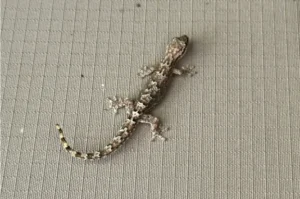
It’s basically the same excitement dogs get when they see a leaf blow across the yard.
If your dog tries to catch a gecko, one of three things usually happens:
1. The gecko escapes at lightning speed.
This is the most common outcome. Geckos are shockingly fast and can disappear into a tiny gap or run straight up the wall before a dog even gets close.
2. The gecko drops its tail.
When geckos are stressed, they can pop off their tail, which wiggles on the floor. This distracts your dog while the gecko runs to safety.
3. The dog catches the gecko.
This is less common, but it happens. If the dog grabs the gecko with its mouth, the gecko might get hurt, but your dog is still not at risk of poisoning or venom.
So most of the time, the chase ends quickly and nobody is hurt. The gecko gets a wild story to tell its friends, and your dog gets a quick thrill.
Could A Gecko Bite A Dog And What Would That Look Like?
People often wonder this quietly. A dog’s face is usually right up against the gecko, nose-first, and it’s easy to imagine the gecko trying to fight back.
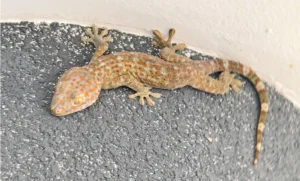
The good news is geckos don’t attack dogs. They don’t lunge, charge, or act aggressive.
If a dog sticks its nose right on a gecko, the gecko might try a tiny defensive bite. It’s barely anything. A gecko’s bite feels like a soft pinch to humans, and dogs have thicker skin, especially on their snout.
Dogs might react dramatically because dogs are dramatic, but it’s not dangerous. There’s no venom, no toxic saliva, and no real risk.
Your dog might sneeze, shake its head, or look offended for a moment, but that’s about it.
What If Your Dog Actually Eats A Gecko?
This is the part people worry about most.
Here’s the reality:
-
Dogs can eat geckos and usually be fine.
-
In many parts of the world where geckos are common, dogs eat them by accident or on purpose, and nothing serious happens.
-
Geckos don’t carry venom or poison, so the gecko itself isn’t harmful.
However, there are a few small things to watch for so you know what’s normal:
Mild stomach irritation is possible
A dog’s stomach isn’t made for reptiles, so it might vomit once or have slightly loose stools. This isn’t because geckos are poisonous, it’s just because eating a whole animal can upset the stomach. Most dogs bounce back quickly.
Very rare bacteria exposure
Like all reptiles, geckos often carry salmonella bacteria in it their gut, even if they look healthy. But most healthy dogs have very strong stomach acids that kill the bacteria before they can do any harm.
Old, or sicky dogs are most likely to catch a salmonella infection from eating a gecko. t
Behavior signs that pass quickly
Sometimes dogs act confused or embarrassed after vomiting. That’s normal and not dangerous.
So yes, while it’s not ideal for a dog to snack on geckos, it’s not dangerous the way people often imagine.
How To Tell If Your Dog Needs Help After Eating A Gecko
Most dogs show no symptoms at all. But if you want to be extra careful, watch for this over the next few hours:
-
one-time vomiting
-
one-time diarrhea
-
mild drooling if the gecko tasted weird
-
your dog acting guilty or confused
These are all normal and temporary.
You only need to contact a vet if:
-
your dog keeps vomiting repeatedly
-
your dog seems weak or very tired
-
symptoms last more than a day
This almost never happens with geckos, but it’s good to know in case your dog has a sensitive stomach.
Why Dogs Are So Obsessed With Geckos In The First Place
If you’ve watched a dog stalk a gecko across the wall like it’s on the most important mission of the night, you might wonder why they do this.
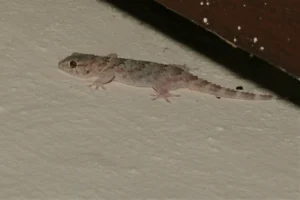
A few simple reasons:
Movement triggers instinct
Dogs are built to chase small moving things. A gecko darting across the room basically presses a giant “CHASE ME” button in a dog’s brain.
Geckos make tiny sounds
Some geckos squeak or click. Dogs hear it even when humans don’t.
Curiosity drives everything
Dogs check out anything unusual. A fast-moving reptile fits that perfectly.
It’s fun
Dogs enjoy the thrill of the chase. It’s exciting, engages their brain, and burns energy.
Geckos are just the perfect mix of small, fast, and interesting.
Are There Any Gecko Species That Could Harm A Dog?
You might wonder if some exotic gecko could have venom or something harmful.
The answer is no.
Not a single gecko species in the world is poisonous or venomous.
Even larger geckos, like tokay geckos, which some people keep as pets, aren’t dangerous to dogs. They can bite if provoked, but that’s only if a dog gets too close. And even then, it’s not harmful, just surprising.
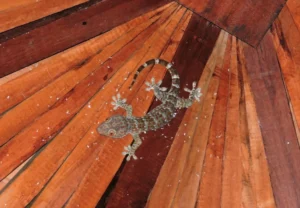
There are no toxic glands.
No venom sacs.
No poisonous skin.
Geckos are completely safe from a toxin standpoint.
Could A Gecko Carry Parasites That Affect Dogs?
This is another worry some people have. Geckos can carry tiny parasites that affect reptiles, but these usually cannot infect dogs.
Parasites usually stick to one species, meaning something that affects a gecko usually can’t switch to a dog.
A dog would have to eat a very large number of infected geckos for any real problem, and even then, the risk is very low.
If someone lived in a remote area where dogs ate geckos every day, a vet might check for rare parasites just to be safe. But for most households, this isn’t an issue.
Should You Stop Your Dog From Chasing Geckos Indoors?
This has two sides. On one hand, it’s not dangerous to your dog. On the other, it can stress the gecko.
If you want to keep geckos safe and avoid chaos in your home, you can gently redirect your dog when it starts staring at the wall.
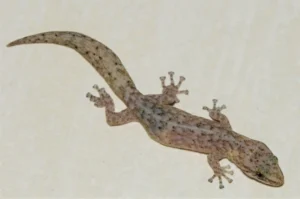
A simple “leave it” or a distraction with a toy usually works.
Dogs aren’t trying to hurt geckos; they’re drawn to movement. And geckos aren’t trying to invade your home; they’re hunting insects.
Redirecting your dog keeps the peace for everyone.
How To Keep Geckos Safe If Your Dog Is Too Curious
Since geckos aren’t harmful to dogs, the real issue is usually the other way around. Dogs can easily hurt geckos because geckos are fragile little animals with soft bodies and thin skin.
Some ways to protect geckos while keeping your dog happy:
-
reduce insects inside the house
-
keep doors and windows closed
-
use gentle outdoor lighting to draw bugs away
-
give your dog toys or puzzles for mental stimulation
-
block access to gecko spots like window corners or porch lights
These methods don’t hurt geckos. They just stop close encounters.
Why Geckos Actually Help Your Home And Your Dog Indirectly
Believe it or not, geckos quietly help both you and your dog. They eat insects that might otherwise annoy your dog, like:
-
tiny flies
-
moths
-
beetles
If your dog ever snaps at a fly or chases a mosquito, a gecko is basically helping keep those bugs under control.
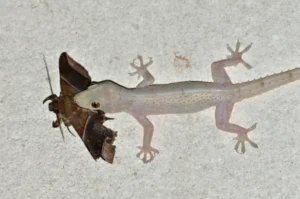
So even though dogs and geckos sometimes meet in chaotic ways, they are part of the same little household ecosystem.
Why Dogs Often React Dramatically After A Gecko Encounter
Sometimes dogs freak out after a gecko drops its tail or makes a tiny noise. Your dog might seem worried, confused, or too alert.
This comes from:
-
surprise
-
instinct
-
unusual movement
-
unexpected sounds
Dogs like predictable surroundings. A gecko dropping its tail and having it wiggle on the floor is one of the weirdest things a dog can see.
It doesn’t mean the dog is hurt. It’s just processing the experience in its own dramatic way.
When Should You Actually Be Concerned About A Gecko And Your Dog?
Even though geckos aren’t harmful, a few small situations might need your attention.
1. If your dog has a sensitive stomach
Some dogs vomit easily. Eating a gecko might upset their stomach for a few hours.
2. If the gecko walked through chemicals
If the gecko recently touched insect spray, rat poison, or cleaning chemicals, your dog could ingest a tiny amount. This is rare but worth noting.
3. If your dog chews a gecko toy or swallows something similar
This isn’t about real geckos, but sometimes dogs confuse gecko-shaped toys with real animals. Accidentally swallowing a hard toy is more dangerous than a real gecko.
These are the only real situations to watch for, and none come from the gecko itself.
Conclusion
Geckos might look fast and mysterious to dogs, and dogs might see them as the ultimate chase target, but geckos aren’t harmful to dogs in any real way.
They aren’t poisonous, they don’t have venom, they don’t attack, and they don’t carry dangerous toxins.
Even if a dog eats one, the worst that usually happens is a short stomach upset or one-time vomiting.
In everyday life, geckos are gentle, harmless insect-eaters that sometimes cross paths with curious dogs.
Most of the time, the gecko gets startled, the dog gets excited, and the adventure ends with both going back to their normal routines.
So if your dog stares at a gecko on the wall like it’s the most important mission ever, take a deep breath.
Your dog is safe, the gecko is harmless, and the whole thing is just another funny little moment in a house where animals, big and small, are learning to live around each other.

Hi, my name is Ezra Mushala, i have been interested animals all my life. I am the main author and editor here at snakeinformer.com.