
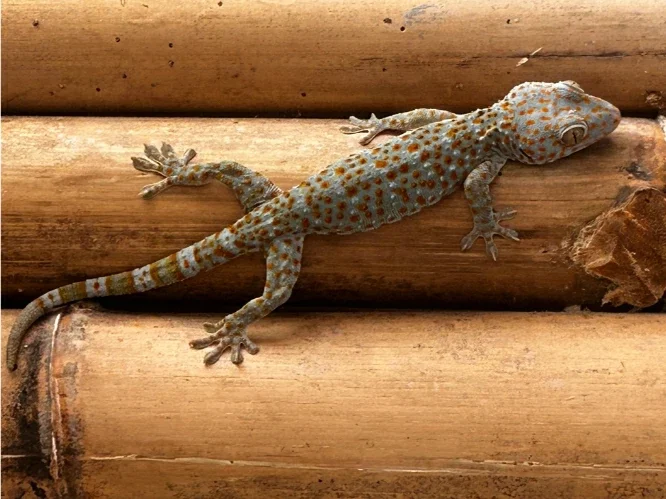
Have you ever watched a gecko sprint across a smooth wall and noticed how sometimes it looks like it’s running on just two legs? It’s a strange, surprising sight, and you might wonder, is that really how geckos move, or is it just the angle making it look that way?
Most geckos don’t normally run on two legs; they mostly use all four. However, some species, in certain situations, can lift their front legs and look like they’re “bipedal sprinting.” This usually happens when they need a quick burst of speed or when the surface below them is slippery.
How Geckos Normally Move Across Surfaces
Geckos are mostly quadrupeds, which means they walk and run on all four legs. Their limbs are short but strong, and their bodies are built to stay balanced while climbing or sprinting.
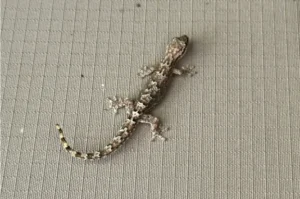
When they move, the back legs do most of the pushing, while the front legs steer and stabilize. On walls and ceilings, their sticky toes make sure they don’t slip while moving fast.
Even if it sometimes looks like a gecko is standing on its hind legs, they actually rely on all four limbs for speed and control most of the time.
Why Geckos Might Look Like They Run on Two Legs
Sometimes, especially in videos or photos, you might see a gecko lift its front legs. Why does this happen?
-
Surprise or Danger: When startled, geckos may push off with their hind legs, making it look like two-legged running.
-
Slippery Surfaces: On smooth surfaces, lifting the front legs slightly can give extra speed while the back toes stick.
-
Chasing Prey: Some geckos dash after insects and lift their front legs briefly to push harder with the hind legs.
It’s quick and temporary, not their normal style. It’s like a short sprint that makes them look like tiny, two-legged racers.
Which Geckos Can Do This?
Most geckos stick to four legs, but a few species have been seen doing short bipedal dashes:
-
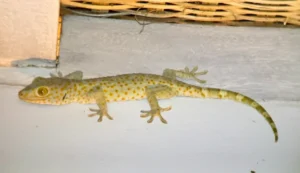
Tokay Geckos (Gekko gecko): Large and strong, occasionally lift front legs in bursts.
-
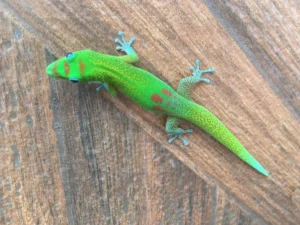
Day Geckos (Phelsuma): Fast tree-dwellers that can look bipedal when chasing prey.
-
Some Madagascar Geckos: Small species sometimes push off with hind legs during quick escapes.
Even in these species, the two-legged running is brief, just a few steps before they go back to all four legs.
How Geckos Use Their Tail for Balance
Whether on two or four legs, geckos use their tails for balance.
When they lift the front legs, the tail acts like a counterweight to stop them from tipping over. You might see it whipping side to side, that’s helping them stay stable.
If a predator grabs the tail, the gecko can drop it and keep running. The tail keeps moving, distracting the predator while the gecko escapes.
How Their Legs Are Built for Quick Movement
Geckos’ back legs are strong and muscular compared to their front legs. This is why they can push off powerfully, sometimes lifting the front legs for extra speed.
-
Back Legs: Give most of the forward push; flexible joints let them accelerate quickly.
-
Front Legs: Help steer and absorb impact from jumps.
-
Feet and Toes: Covered in tiny hair-like structures called setae, which help grip surfaces.
Even when they look like they’re running on two legs, the front limbs still help with control, they just might not touch the ground for a moment.
Do Other Lizards Run on Two Legs?
Some lizards, like Basilisk lizards, are true two-legged runners and can even run across water. Geckos aren’t built for full bipedal running.
They might lift their front legs briefly, but they don’t keep running on two legs. Their body (short limbs, sticky toes, and flexible spine) works best when all four legs are on the surface most of the time.
How Geckos React When Threatened
When a predator approaches, geckos react instantly. Sometimes this sudden burst of speed makes them lift their front legs.
-
Quick Dash: Back legs push hard, front legs may lift.
-
Tail Wriggle: Keeps balance during jumps or turns.
-
Change Direction: Zigzag or dart into hiding spots.
These movements make it look like two-legged running, but it’s really four-legged sprinting plus a split-second jump.
How Speed and Leg Coordination Work Together
Geckos combine muscle power, reflexes, and balance to run smoothly. Their nervous system times the legs perfectly, so feet stick, push, and release just right.
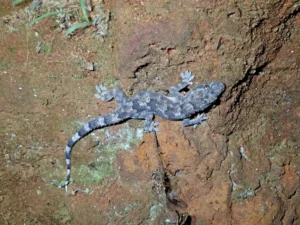
Even during bursts that look bipedal, the body tilts, the tail swings, and the toes grip. It’s a seamless motion that makes geckos look like tiny acrobats.
Can Young Geckos Run on Two Legs?
Baby geckos don’t often do this. Their legs are smaller, and coordination is still developing.
Still, young geckos are fast and agile on all four legs.
As they grow and strengthen their hind legs, they might occasionally lift their front legs for a short dash. So it’s more common in adults.
How the Environment Affects Gecko Movement
The surface affects whether a gecko lifts its front legs:
-
Vertical walls or ceilings: Stick to four legs for stability.
-
Smooth horizontal surfaces: May lift front legs briefly for bursts of speed.
-
Rough or uneven ground: Keep all four legs down.
Temperature matters too. Warmer geckos move faster and may use those short two-legged bursts more often.
How Scientists Study Gecko Movement
Researchers use high-speed cameras to see geckos’ tiny movements:
-
Which legs touch the ground
-
How toes grip and release
-
Tail motion during sprints
-
Body angle during jumps
Studies show that the “two-legged” look is almost always brief. It’s a short adaptation, not a normal walking or running style.
How Geckos Use Their Reflexes
Reflexes are key for fast movement. If a gecko senses danger:
-
Nerves trigger muscles before the brain fully reacts.
-
Hind legs push off, sometimes lifting front legs.
-
Tail swings for balance.
-
Feet grip and release to prevent slipping.
This lets them do short bipedal-looking dashes without losing speed or control.
Why Geckos Aren’t True Two-Legged Runners
Unlike some lizards built for running on two legs, geckos:
-
Have short front legs compared to back legs
-
Depend on sticky toes for grip
-
Use their tails for balance
These traits favor four-legged movement most of the time.
How Prey Behavior Affects Gecko Running
Geckos chase insects and spiders that move fast. A quick push-off with hind legs helps them catch prey.
This can make them look like they’re running on two legs. The front legs lift for a moment, while the back legs push and the tail helps steer. It’s a clever mix of speed, flexibility, and balance.
Conclusion
So, do geckos run on two legs? Not usually. Most use all four legs to sprint, climb, and escape danger.
But in certain situations (like quick escapes, slippery surfaces, or chasing fast insects) they can lift their front legs briefly, making it look bipedal.
Their back legs provide the push, tails balance them, and sticky toes grip almost anything.
Next time you see a gecko dart across a wall, watch closely. That brief “two-legged sprint” isn’t magic, it’s a tiny, perfectly timed survival trick.

Hi, my name is Ezra Mushala, i have been interested animals all my life. I am the main author and editor here at snakeinformer.com.