
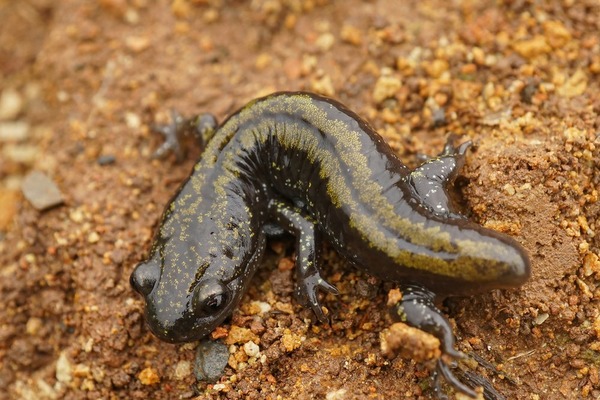
Salamanders may look small and quiet, but they have one of nature’s rarest skills. When they get hurt, they can grow back lost limbs, tails, and even parts of their organs.
Salamanders regrow limbs as a natural way to heal from injuries. This helps them survive in the wild because they can replace body parts they lost or damaged.
This ability is very rare in vertebrates, and scientists are still trying to understand how it works.
What Starts the Regrowth Process?
When a salamander loses a limb, healing starts almost right away. The skin quickly closes over the wound to stop infection, but instead of forming a scar, the body takes a different path.

The skin cells shift and make a thin cover over the injured area. This is called the wound epithelium.
Under that layer, something more dramatic happens. Cells in the injured area change into a flexible state.
This is called differentiation, which is when cells forget their old jobs and go back to a more basic form. These flexible cells gather to make a small bump called a blastema.
The blastema is where the real regrowth happens. Inside it, the flexible cells start to multiply.
Over time, they form the new limb. Skin, bones, nerves, and blood vessels all reappear in the right pattern.
The whole process can take weeks or even months, depending on the type of salamander and its health.
At first, the new limb is smaller than the original, but eventually it reaches full size and strength.
Why Did Salamanders Evolve This Ability?
In the wild, salamanders face danger all the time. They are small, slow, and have soft bodies.
This makes them easy targets for predators. They also get hurt from rough ground or fights with other salamanders.
For many animals, losing a limb can be deadly. But salamanders can recover. Being able to grow back a lost part gives them a big survival advantage.
Over millions of years, this ability became more common. Salamanders that could regrow body parts had a better chance to survive and have babies.
Their young inherited this skill. Over time, regrowth became normal for salamanders.
This is an example of natural selection, where helpful traits become more common in future generations. Some salamanders, like axolotls, can even grow back the same limb more than once.
Others can repair parts of their spine or brain. This gives them flexibility and strength in tough environments.
What Makes Regeneration Different From Healing?
Most animals heal by forming scar tissue. The scar is strong and protects the wound, but it does not restore what was lost. Humans, for example, can close a wound but cannot grow back a finger or leg.
Salamanders do things differently. Instead of sealing the wound with scar tissue, they go back to an earlier stage of growth.
Their cells act more like cells in embryos. These cells can make any tissue the body needs, from nerves to skin to cartilage.
The process is very organized. The blastema builds the right tissues in the right places. Blood vessels grow into the new limb, and nerve endings reconnect.
The immune system stays active, but it does not get in the way of regrowth.
Even though it is complex, this system works really well. Young and healthy salamanders can regrow the same body part more than once in their lives.
Do All Salamanders Regrow Equally?
All salamanders can regenerate, but the amount varies by species. Some, like axolotls, are famous for impressive regrowth. They can replace whole limbs, parts of their heart, eyes, or even brain.
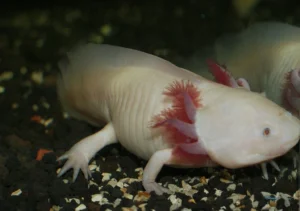
Other salamanders are more limited. They may only grow back limbs or tails. Some slow down as they get older, and others may not rebuild certain organs at all.
Where a salamander lives also affects how much it can regrow. Species that spend their whole life in water or stay in a juvenile stage usually have stronger regrowth. These places can be dangerous, so having a strong recovery system is helpful.
Diet, health, and temperature also change how well a salamander can regrow body parts.
How Important Is Tail Regrowth?
Losing a tail is a key survival tool for salamanders. Many species can drop their tails on purpose to escape danger. This is called autotomy.
When a predator grabs them, the salamander detaches its tail. The tail keeps moving and distracts the predator, while the salamander slips away.
This strategy is used by both salamanders and lizards. After losing the tail, salamanders start growing it back.
It takes a few weeks, and the new tail may look a little different, but it usually works just as well.
Tails are not just for balance. In many salamanders, tails store fat, which helps during cold or dry periods. Tails can also play a role in mating and social behavior.
So, regrowing the tail is important for both survival and daily life.
What Makes Their Cells So Flexible?
One mystery is how salamander cells know what to become. When the blastema forms, the cells do not build randomly. Each cell has a job.
For example, a skin cell does not become a bone cell, and a nerve cell does not become muscle. But together, they still build new body parts from scratch.
Scientists think this works because of a mix of genetic memory and chemical signals. Each cell has instructions telling it what to do. These instructions are guided by proteins and messengers that pass between cells during regrowth.
It is like a blueprint stored inside every cell. When part of the body is lost, the blueprint is used again.
In most animals, cells get fixed in their roles and cannot switch jobs. But in salamanders, cells are more flexible. This is called cellular plasticity, and it gives them a big advantage.
How Long Does Limb Regrowth Take?
The time to grow a new limb depends on many things. Younger salamanders usually heal faster than older ones. Warm weather, clean water, and good food help speed up the process.
On average, growing a full limb can take 6 to 12 weeks. In colder places or if the salamander is sick, it can take longer. Even after the limb looks normal on the outside, the inside may still be developing.
Muscles need time to get strong. Nerves need time to work properly. Joints and tendons also need to function smoothly. If a salamander gets hurt in the same place again, the new growth may be slower or look slightly different.
Still, most salamanders keep their ability to regrow limbs for much of their lives.
Why Can’t Humans Regrow Limbs?
People can heal cuts and even repair parts of some organs like the liver. But growing back a whole limb is not something humans can do. So why not?
Scientists think it may be because of how humans evolved. Our bodies heal quickly with scar tissue, which protects against infection. But this fast healing blocks regrowth.
Salamanders heal more slowly but more accurately. Their immune systems are less aggressive, which lets cells rebuild instead of rushing to close the wound.
Genetics also plays a part. Humans lack some genes needed for full regrowth. Some scientists think we still carry hidden versions of these genes, but they are turned off.
Learning more about salamander regrowth may help scientists find ways to turn these genes back on in people.
What Can Scientists Learn From Salamanders?
Salamanders are helping lead medical research. By studying them, scientists hope to find new ways to treat injuries and diseases.
In labs, axolotls and other species are used to study how nerves reconnect, how hearts repair, and how spinal cords heal.
Some experiments have even made human cells act like salamander cells.
If this research keeps going well, it could lead to big changes in medicine. Salamander studies may help people with:
- Faster wound healing and less scarring
- Spinal cord injury recovery
- Repairing damaged bones, tendons, or cartilage
- Organ repair after a heart attack or stroke
Even though humans cannot regrow limbs yet, every discovery brings scientists closer.
Conclusion
Salamanders may seem plain, but they hold a rare and powerful gift. When hurt, they don’t just patch the damage, they rebuild what was lost.
This ability is not magic. It comes from evolution, natural selection, and a deep level of coordination in their bodies.
Regrowing limbs helps salamanders survive in the wild, escape predators, and recover from injuries that would end most animals’ lives. It also gives scientists a glimpse of what might one day be possible for humans.

Hi, my name is Ezra Mushala, i have been interested animals all my life. I am the main author and editor here at snakeinformer.com.