
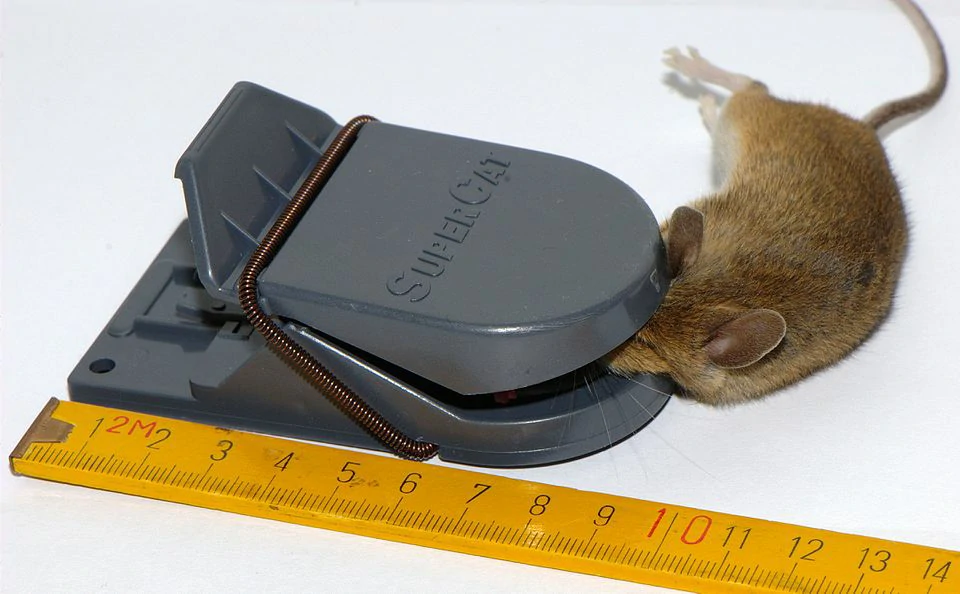
When you’re dealing with a rodent problem, you might wonder if you can use whatever traps you have on hand. If you’ve got rat traps but suspect you’re actually dealing with mice, can those larger traps still do the job? Can a rat trap catch or kill a mouse?
A rat trap can definitely catch and kill a mouse, but it’s often overkill in the worst way. Rat traps deliver 8-12 pounds of force compared to mouse traps’ 2-4 pounds, which can completely obliterate a mouse’s small body. The trap might also be too insensitive to trigger when a lightweight mouse steps on it, or it might snap so violently that it flings the mouse’s body away, creating a mess and potentially spreading disease.
While rat traps can technically work on mice, they create several practical problems that make them a poor choice for mouse control.
Understanding these issues helps explain why using the right-sized trap for your specific rodent problem really does matter.
The Size and Force Difference
Mice and rats are very different in size, which is the core issue here.
An average house mouse weighs between 0.5 to 1 ounce (14 to 28 grams). That’s incredibly light, about the weight of five or six quarters. Adult mice measure about 2.5 to 4 inches long, not including the tail.
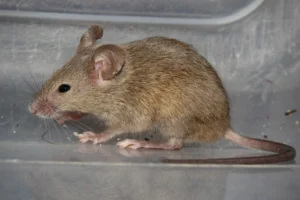
Rats are much larger. Norway rats weigh between 7 to 18 ounces (200 to 500 grams), roughly 7 to 18 times heavier than mice. Roof rats are smaller at about 5 to 9 ounces (150 to 250 grams), but still much larger than mice.

This size difference is like comparing a chihuahua to a German shepherd.
Mouse traps are designed to deliver about 2 to 4 pounds of force when they snap shut. This is enough to quickly kill a mouse by breaking its neck or skull, but not so much force that the trap becomes difficult or dangerous to set.
The trigger mechanism is also very sensitive to activate with the light weight of a mouse.
Rat traps deliver about 8 to 12 pounds of force, which is three to six times more powerful than a mouse trap. This extra force is necessary to kill the larger, stronger rat quickly.
But when that much force hits something as small and delicate as a mouse, the results can be extreme.
The metal bar on a rat trap is also heavier and thicker than on a mouse trap. When it comes down, it’s carrying more weight and moving with more momentum.
Combined with the stronger spring, this creates a much more violent snap than what a tiny mouse needs.
What Actually Happens When a Mouse Triggers a Rat Trap?
If a mouse is heavy enough and positioned correctly to trigger a rat trap, the results are often gruesome. The excessive force can completely crush the mouse’s body, sometimes to the point where it’s barely recognizable.
The trap might break the mouse’s spine in multiple places, crush its skull, or even partially dismember it.
This extreme force can also fling the mouse’s body away from the trap. Instead of the mouse being neatly caught and held by the trap (like what happens with a properly sized mouse trap), the rat trap’s violent snap can send the mouse flying several feet.
Now you have a dead or dying mouse somewhere else that you need to find.
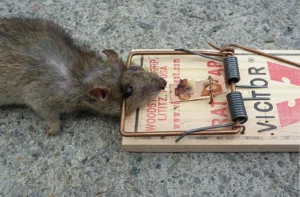
If the flung mouse isn’t killed instantly, it might crawl away to die in a wall void, under furniture, or in another inaccessible location.
This creates the same problem as using poison: a dead mouse rotting somewhere you can’t reach, creating terrible odors that can last for weeks.
The violent snap can also spray blood and body fluids around the area. Mice can carry diseases in their blood and tissues, so this creates a biohazard that you’ll need to clean up carefully.
A properly sized mouse trap contains the body much better and reduces this contamination risk.
Another issue is that the trap might damage the mouse’s body so badly that you can’t tell if you caught a mouse or a different small animal.
This matters because different animals have different regulations about trapping and disposal, and you want to know what you’re dealing with.
Sometimes the mouse’s tiny body is so mangled by the oversized trap that it falls apart when you try to remove it from the trap.
This makes disposal more difficult and unpleasant, and increases your contact with potentially contaminated material.
The Trigger Sensitivity Problem
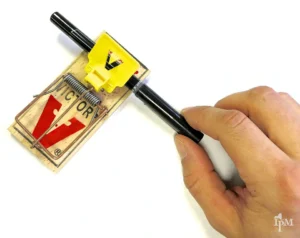
Rat traps are designed to trigger when a rat’s weight presses on the trigger plate.
Rats weigh several ounces at minimum, so the trap’s trigger mechanism is calibrated for that weight. A mouse weighing less than an ounce might not be heavy enough to set off the trap.
This means a mouse can walk onto the bait platform, eat the bait, and walk away without triggering the trap. You end up with missing bait but no caught mouse.
This is frustrating and counterproductive because you’re essentially feeding the mice without controlling them.
Even if the mouse is just barely heavy enough to trigger the trap, the timing might be off. The trap might not snap until the mouse has already grabbed the bait and started to retreat.
This can result in the mouse being hit awkwardly, getting injured but not killed, and potentially escaping with injuries.
An injured mouse that escapes can die elsewhere in your home, creating the smell problem mentioned earlier. Injured mice might also become more cautious and harder to trap in the future, having learned that the bait area is dangerous.
You can try to make a rat trap more sensitive by adjusting the trigger mechanism, but this makes the trap more likely to go off when you’re trying to set it or bait it.
This increases the risk of the trap catching your fingers, which with a rat trap’s force could cause serious injury.
Some people try to add extra weight to the bait to help trigger the trap, but this doesn’t really solve the problem.
The mouse still might not press the right spot, and you’re still using an oversized trap that will cause excessive damage when it does work.
Why Mouse Traps Exist as Separate Products
You might wonder why mouse traps and rat traps are sold as separate products if rat traps can technically catch mice.
The reason is that different-sized traps really do work better for different-sized rodents, and using the right size makes pest control more effective and humane.
Mouse traps are optimized for everything about mice: their weight, size, behavior, and fragility. The trigger is sensitive enough to activate reliably when a mouse steps on it.
The force is strong enough to kill quickly but not so strong that it destroys the body or creates a mess.
The size of a mouse trap also matters for placement. Mouse traps are small and can fit in tight spaces along walls, behind appliances, and in other areas where mice travel.
Rat traps are bulkier and won’t fit in many of the spots where you need to place mouse traps.
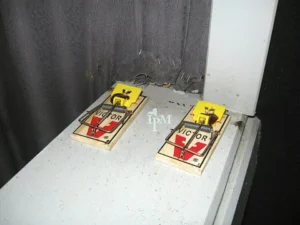
Mouse traps are also safer for humans to handle and set. The lighter spring doesn’t require as much force to set, and if the trap does catch your finger, it will hurt but probably won’t cause serious injury.
A rat trap catching your finger can break bones or cause deep cuts requiring medical attention.
From an effectiveness standpoint, mouse traps work better for mice because mice are more likely to investigate and enter a smaller trap.
The trap looks less threatening and more like a natural space to explore. A large rat trap might make mice suspicious.
Cost is another factor. Mouse traps are cheaper than rat traps because they use less material and weaker springs.
If you need to set out multiple traps (which is recommended for mouse control), buying appropriately sized mouse traps saves money compared to using oversized rat traps.
When Might You Use a Rat Trap for Mice
There are a few situations where using a rat trap for mice might make sense, though they’re fairly rare. If you have both rats and mice in the same area and you’re not sure which one you’re dealing with, a rat trap can catch either one (though it’s overkill for mice).
If you’re in a remote location with limited access to stores and you only have rat traps available, they can work in an emergency.
It’s better to catch mice with an oversized trap than to not catch them at all. But you should still get proper mouse traps as soon as possible.
Some people use rat traps in areas where they want maximum power, like in commercial buildings with very large mice or in situations where the trap needs to work reliably in difficult conditions. But even then, heavy-duty mouse traps would usually be a better choice.
If you’re setting traps outdoors where larger animals might interfere with regular mouse traps, a rat trap’s heavier construction might hold up better
. But outdoor trapping comes with its own issues around non-target animals, weather resistance, and local regulations.
In most residential situations, there’s really no good reason to use rat traps for mice. Mouse traps are readily available, inexpensive, and work much better for the job. Using the wrong tool just makes the job harder and messier than it needs to be.
How to Tell If You Have Mice or Rats
Before choosing traps, you need to know which rodent you’re dealing with. Mice and rats leave different signs, and identifying the pest correctly helps you choose the right control method.
Droppings are the easiest way to tell them apart. Mouse droppings are small (about 1/8 to 1/4 inch long), dark, and pointed at both ends, like tiny grains of rice.
They’re scattered randomly wherever the mouse travels. Rat droppings are much larger (1/2 to 3/4 inch long), blunt at the ends, and often found in concentrated piles.
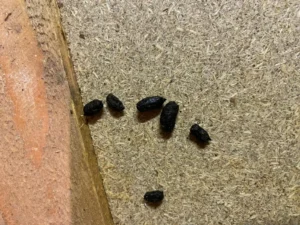
Footprints and tail marks can also help identify which rodent you have. Mice leave tiny footprints with four toes on front feet and five on back feet.
Their tails drag between footprints, leaving a thin line. Rat tracks are larger and show more detail in the paw pads.
Gnaw marks show size differences too. Mouse gnaw marks are small and fine, about 1/16 inch wide.
Rat gnaw marks are much larger and rougher, about 1/8 inch or wider. Fresh gnaw marks look lighter in color because they expose new wood or material.
The sounds are different as well. Mice make light scratching and squeaking sounds, usually at night. Their running sounds are very soft and fast.
Rats make heavier, louder scratching sounds and their running is more obvious. You might hear thumping when rats jump or move quickly.
Entry points tell you something about size. Mice can squeeze through holes as small as a dime (about 1/4 inch).
Rats need holes the size of a quarter or larger (about 1/2 inch). If you find the entry point, the size of the hole gives you a clue about what’s using it.
The Right Way to Use Mouse Traps
If you’ve determined you have mice, here’s how to use mouse traps effectively. First, buy enough traps. One or two traps won’t cut it for a mouse infestation.
You need at least 6 to 12 traps for a typical home, placed in areas where you’ve seen mouse activity.
Place traps along walls where mice travel. Mice don’t usually run across open spaces; they follow edges and corners.
Put the trap perpendicular to the wall with the trigger end almost touching the wall. This way, the mouse runs right into the trigger as it moves along the wall.
Use the right bait. Peanut butter works great because it’s sticky and smells strong. Use just a tiny amount (about the size of a pea).
Too much bait and the mouse might be able to lick it off without triggering the trap. Other good baits include chocolate, nuts, or bacon.
Don’t be stingy with trap placement. Put traps anywhere you’ve seen droppings, along walls, behind appliances, in cabinets, and near suspected entry points.
More traps mean faster control. You can always remove extras once the problem is solved.
Check traps daily. Dead mice start to smell after a day or two, and you want to remove them promptly.
Dispose of dead mice in sealed plastic bags in the outdoor trash. Wash your hands thoroughly after handling traps, even if you didn’t touch the mouse directly.
Reset traps immediately after catching a mouse. If you caught one mouse in a location, there are probably more using the same route.
Keep traps active until you go several days without any catches. Then you can start removing traps gradually.
Better Alternatives to Traditional Snap Traps
If you don’t want to deal with snap traps at all (whether mouse or rat sized), there are other options. Electronic mouse traps deliver a quick electrical shock that kills mice instantly.
They’re more expensive but cleaner and easier to use. You just empty the dead mouse into the trash without touching it.
Glue traps catch mice alive but are controversial because the mouse can suffer for extended periods stuck to the glue. Many people and animal welfare organizations consider them inhumane.
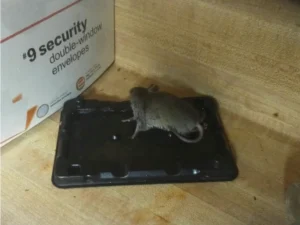
If you do use glue traps, check them frequently and humanely euthanize caught mice quickly.
Live traps catch mice without harming them. You can then release the mice outside, though this has its own problems. Mice released near your home will probably just come back inside.
Releasing them far from your property might be illegal in your area, and it just makes them someone else’s problem.
Ultrasonic repellents claim to drive mice away with high-frequency sounds, but research shows they’re not very effective. Mice can get used to the sounds, and the sounds don’t penetrate walls or furniture well.
These devices might provide some short-term relief but aren’t a long-term solution.
The best approach is actually prevention: seal up entry points, remove food sources, and eliminate hiding spots.
This is more work upfront but prevents mice from getting in rather than just catching the ones that are already inside. An ounce of prevention really is worth a pound of cure with mice.
Safety Considerations With Any Trap Type
Whatever trap you use, safety matters. Always place traps where children and pets can’t reach them.
Under appliances, in cabinets, or in rooms that children and pets don’t access are good spots. Even a mouse trap can hurt a child’s finger or a pet’s nose.
Wear gloves when handling traps, especially when disposing of dead mice.
Mice can carry diseases, and direct contact with their bodies or fluids should be avoided. Have a spray bottle of disinfectant handy to clean the trap and surrounding area after removing a mouse.
If you catch something other than a mouse (like a bird, lizard, or someone’s pet), carefully release it if possible. Some traps might injure non-target animals badly enough that they need veterinary care. This is another reason to check traps frequently.
Store unused traps safely where they can’t accidentally snap shut on someone. Keep them in a box or drawer, ideally with the spring released so they’re not under tension. Traps stored with springs compressed can weaken over time.
When setting traps, work carefully and deliberately. Most trap injuries happen because people are rushing or not paying attention.
Take your time, keep your fingers away from the snap bar path, and make sure the trap is stable before you release the setting mechanism.
Conclusion
A rat trap can catch and kill a mouse, but it’s a terrible match for the job. The excessive force (8-12 pounds versus the 2-4 pounds needed) can completely destroy the mouse’s small body, fling it away from the trap, or create a bloody mess.
The trap’s trigger might also be too insensitive to activate reliably with a mouse’s light weight, meaning you end up feeding mice instead of catching them.
Mouse traps exist as separate products for good reasons. They’re optimized for a mouse’s weight, size, and behavior. They’re more effective at catching mice, more humane, safer to handle, cheaper to buy, and easier to place in the tight spaces where mice travel.
If you’re dealing with mice, invest in proper mouse traps. If you’re not sure whether you have mice or rats, look at the evidence (droppings size, gnaw marks, entry hole size) to identify the pest correctly.
Using the right tool for the job makes pest control more effective and less frustrating for everyone involved.

Hi, my name is Ezra Mushala, i have been interested animals all my life. I am the main author and editor here at snakeinformer.com.