
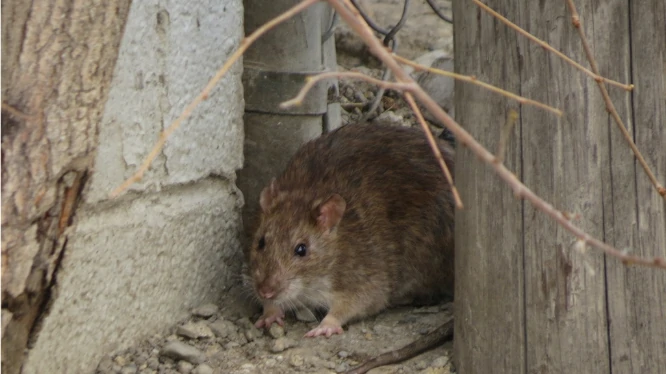
You’ve set traps, tried poison, and done everything the internet suggests, but the rats are still there. You hear them scratching in the walls at night, find fresh droppings every morning, and see evidence of their activity all over your property.
It’s incredibly frustrating to put in so much effort and still have a rat problem. Rats seem almost impossible to eliminate completely, and just when you think you’ve got them all, more appear. So why are rats so hard to get rid of?
Rats are hard to get rid of because they’re extremely intelligent and cautious animals (neophobic) that learn to avoid traps, they reproduce incredibly fast, they can squeeze through tiny openings to keep entering your property, and they’re naturally suspicious of anything new in their environment.
Understanding why rats are so difficult to control helps you develop better strategies. It’s not that you’re doing something wrong. Rats have evolved over millions of years to be survivors, and they’re really good at it.
Rats Are Incredibly Intelligent
One of the biggest reasons rats are hard to get rid of is that they’re smart. Really smart. Rats have excellent memories and learning abilities that help them avoid dangers.
Rats can remember routes and locations for long periods. If they find food in a specific spot, they’ll remember how to get there and return repeatedly. But they’ll also remember dangerous locations.

If a rat sees another rat get caught in a trap or notices that a rat that ate certain food got sick and died, the surviving rats learn to avoid that trap or food. They associate the danger with the specific trap type or bait.
Rats can solve problems and figure out how to get around obstacles. They’ll test traps carefully, sometimes triggering them without getting caught, and then they know to avoid that trap.
Studies have shown that rats can learn mazes, remember complex paths, and even learn from watching other rats. This social learning means one smart rat can teach an entire colony to avoid your control methods.
Dominant, older rats are usually the smartest and most cautious. These are the rats that have survived the longest and learned the most about avoiding danger.
Young rats are less cautious and might get trapped first, but the smart adults that remain are really hard to catch. You might catch a few young or careless rats, but then progress stops.
Neophobia: The Fear of New Things
Rats have a survival instinct called neophobia, which means they’re naturally afraid of new or unfamiliar objects in their environment. This makes them really cautious about traps.
When you put out a new trap, rats notice it immediately. But instead of investigating right away, they avoid it for days or even weeks while they watch and assess whether it’s dangerous.
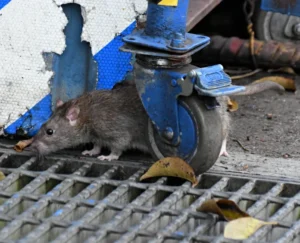
Rats will circle around new objects, approach and retreat repeatedly, and observe from a distance before actually touching or entering them. This caution means traps can sit there for a long time before a rat even tries to take the bait.
This behavior evolved because rats that investigated new things immediately were more likely to get caught, eaten by predators, or poisoned. The cautious rats survived and passed this trait to their offspring.
The level of neophobia varies. Rats in urban areas that have been exposed to pest control for many generations are often more neophobic than rats in areas where trapping is new.
To overcome neophobia, you need to leave traps in place (without setting them) for several days. Let rats get used to seeing the traps and even let them eat bait from unset traps. Then set the traps after rats have lost their fear.
But even this strategy doesn’t always work with really cautious rats. Some rats remain suspicious no matter how long the trap has been there.
Rats Reproduce at an Alarming Rate
Even if you’re catching or killing some rats, their reproduction rate can outpace your control efforts. This is one of the most frustrating aspects of rat control.
A female rat can get pregnant when she’s just 8 to 12 weeks old. From that point on, she can have babies continuously.
Each female can have 5 to 6 litters per year under good conditions. And your property with food, water, and shelter counts as good conditions.

Each litter contains 6 to 12 babies on average. Do the math and one female can produce 30 to 72 offspring in a year.
Those offspring start breeding within a few months, creating exponential population growth. What starts as a small family can become a colony of 50 or more rats in less than a year.
If you’re catching 2 or 3 rats per week but the population is producing 10 new rats per week, you’re losing ground. The population keeps growing despite your efforts.
This is why timing matters in rat control. If you start control efforts during breeding season (spring and fall), you’re fighting an uphill battle against their reproduction.
The only way to win is to catch or kill rats faster than they can reproduce and to prevent new rats from entering your property.
Rats Can Squeeze Through Impossibly Small Spaces
One reason rats keep coming back is that they can enter your property through openings you didn’t even know existed. Their ability to squeeze through tiny gaps makes exclusion really difficult.
Adult rats can squeeze through holes as small as 1/2 inch in diameter. That’s about the size of a quarter. If you can fit a quarter through a gap, a rat can get through it.

Young rats can fit through even smaller openings, sometimes as small as 1/4 inch. This means sealing your property requires finding and blocking every tiny crack and gap.
Rats have flexible skeletons that let them compress their bodies. The only rigid part is their skull, so if their head fits through, their whole body can follow.
They’re also excellent climbers and can reach openings several feet off the ground. Gaps around roof eaves, vent pipes, and utility lines are common entry points.
Even if you seal obvious holes, rats are persistent chewers. They can gnaw through wood, plastic, rubber, aluminum, and even weak concrete to create or enlarge openings.
This means exclusion requires not just finding and sealing every small gap but using materials rats can’t chew through, like steel wool, hardware cloth, or sheet metal.
Most people miss some entry points during their first attempt at exclusion. Rats find those missed spots and keep getting in.
Rats Have Multiple Survival Strategies
Rats don’t rely on just one strategy to survive. They have a whole toolkit of behaviors and abilities that make them really hard to eliminate.
Rats are mostly nocturnal and are most active when you’re asleep. This makes them hard to see and track. You might not even know where they’re coming from or where they’re going.
They can swim well and for long distances. Rats have been known to swim through sewer pipes and toilet bowls to enter homes. They can also cross bodies of water to reach new areas.
Rats are excellent climbers and can scale rough vertical surfaces, climb inside walls, and access roofs and attics. This three-dimensional movement makes it hard to predict their paths.
They have keen senses of smell, hearing, and touch that help them detect danger. Rats can smell your scent on traps you’ve handled and might avoid them for that reason.
Their whiskers are incredibly sensitive and help them navigate in complete darkness. They can move confidently through your walls and attic at night without needing to see.
Rats are opportunistic omnivores, meaning they can eat almost anything. If you remove one food source, they just switch to another. This flexibility makes it hard to starve them out.
They can survive on very little water and in some cases can get all the moisture they need from their food. This makes eliminating water sources less effective than you’d hope.
Social Structure and Learning
Rats live in colonies with social hierarchies, and this social structure actually makes them harder to control. They learn from each other and work together in ways that help them avoid danger.
In a rat colony, there are dominant rats and subordinate rats. Dominant rats are usually older, smarter, and more cautious. These are the hardest ones to catch.
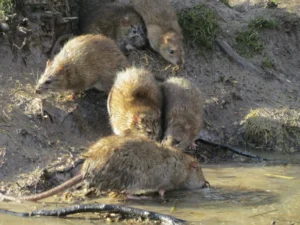
Subordinate rats and young rats often take more risks and might get caught first. But the dominant rats that remain are the most difficult to eliminate.
Rats use scent marking to communicate. If a rat gets caught in a trap, other rats can smell the fear pheromones and alarm signals, which makes them avoid that trap.
They also communicate vocally with ultrasonic calls that humans can’t hear. Rats warn each other about dangers, which can include your traps.
Some rats in a colony act as scouts, testing new food sources. If the scout rat gets sick or dies from poison, the other rats learn to avoid that food without having to taste it themselves.
This social learning means that even if you never poison or trap the dominant rats, they still learn to avoid your methods by watching what happens to other rats.
Breaking up a rat colony is hard because even if you eliminate some members, the remaining rats continue breeding and the colony rebuilds itself quickly.
Adaptation and Resistance
Over time, rat populations can develop resistance to control methods, making them even harder to eliminate. This happens both at the individual level and the population level.
Some rat populations have developed genetic resistance to certain types of anticoagulant poisons. The poison doesn’t kill these rats or takes much higher doses to be effective.
This resistance develops because rats that naturally have some tolerance to the poison survive and breed, passing the resistance to their offspring. After several generations, the whole population might be resistant.
Behavioral resistance happens when rats learn to avoid certain traps or baits. This isn’t genetic but is taught from one generation to the next through social learning.
In areas where pest control has been practiced for many years, rat populations become increasingly difficult to control. They’ve had generations to learn what to avoid.
Rats can also adapt to changes in their environment. If you remove their preferred food source, they switch to eating something else. If you block one entrance, they find or create another.
This adaptability means that static control methods (doing the same thing repeatedly) become less effective over time. You need to keep changing your approach.
Hidden Nesting Areas Make Tracking Difficult
You can’t eliminate rats if you don’t know where they’re living. Rats are excellent at finding and creating hiding spots that are really hard to access.
Inside homes, rats nest in walls, attics, basements, crawl spaces, behind appliances, inside furniture, and in other hidden spots. These areas are often inaccessible without major demolition.
Outside, rats burrow underground near foundations, under sheds and decks, in dense vegetation, under wood piles, and in areas you rarely disturb.
A rat colony might have several nesting sites spread across your property. Eliminating one nest doesn’t solve the problem if there are others you don’t know about.
Rats also use multiple routes to get to their nests. Blocking one path doesn’t stop them because they have backup routes you might not have discovered.
Their nesting areas are usually well protected with multiple entrance and exit holes. Even if you find the main nest, you might not find all the escape routes.
Young rats are born in these hidden nests and grow up without you ever seeing them until they’re old enough to venture out. By then, you have a new generation to deal with.
Trap Saturation and Avoidance
As you catch some rats, the remaining ones become progressively harder to catch. This phenomenon is called trap saturation or trap avoidance.
The first few rats you catch are usually the least cautious or least experienced. These are the “easy” ones.
After you’ve caught a few rats, the smart ones that remain have learned to avoid your traps. They might have seen other rats get caught, or they’ve tested the traps themselves and figured out the danger.
You might notice that traps that worked great initially stop catching anything after a week or two. This is because the remaining rats know to avoid them.
Switching trap types can help temporarily, but eventually rats learn to avoid those too. You get into an arms race where you keep changing methods and rats keep adapting.
Some rats become so trap-shy that they’ll go out of their way to avoid areas where traps are placed, even if there’s food there. You might see them taking longer routes to avoid trap locations.
Bait shyness happens when rats associate certain foods with getting sick (from poison) or trapped. They’ll avoid that bait type even if you use it in different traps or locations.
Continuous Reinfestation from Outside
Even if you successfully eliminate all rats on your property, new rats can move in from surrounding areas. This makes rat control feel like a never-ending battle.
Rats have large territories and constantly explore looking for new food sources and living areas. If your property offers what they need, rats from nearby will find it.

In urban and suburban areas, rats move between properties easily. Your neighbor’s rat problem can become your rat problem.
If there’s a large rat population in your neighborhood (in sewers, parks, abandoned buildings, or nearby properties), eliminating rats from your property just creates a vacuum that new rats fill.
This is especially frustrating if you’ve spent weeks or months getting rid of rats only to have new ones move in within days or weeks.
Seasonal movement patterns also bring new rats. In fall and winter, rats seek shelter and food, moving from outdoor areas into buildings. In spring, rats spread out looking for breeding territories.
Without community-wide rat control efforts, individual property owners are fighting a losing battle. Rats eliminated from one property just move to another temporarily.
What Actually Works Against Rats
While rats are really hard to eliminate, it’s not impossible. Understanding what actually works helps focus your efforts on the most effective strategies.
Comprehensive exclusion is the single most important step. If you can truly seal your entire property against entry, rats can’t come in even if they want to.
Use the right materials for exclusion including steel wool stuffed into small gaps, 1/4 inch hardware cloth for larger openings, sheet metal around pipes and utilities, and concrete for large holes in foundations.
Aggressive sanitation makes your property less attractive. Store all food in sealed containers, take garbage out daily in sealed bins, don’t leave pet food out, clean up spilled birdseed, and remove clutter that provides hiding spots.

Professional-grade trapping with the right placement, bait, and persistence can eliminate existing rats. Place traps along walls, near burrow entrances, and along active runways. Check and reset daily.
Combining methods is more effective than any single approach. Use exclusion to prevent entry, sanitation to remove attractants, and trapping to eliminate existing rats all at the same time.
Community efforts work better than individual actions. Coordinate with neighbors to reduce rat populations in the whole area, not just your property.
Professional pest control is worth considering for serious infestations. Pros have better tools, more experience, and can often solve problems faster than DIY approaches.
Persistence is key. Rat control takes weeks or months, not days. Keep at it even when you’re not seeing immediate results.
Conclusion
Rats are hard to catch and get rid of because they’re intelligent animals that learn to avoid traps, they have natural neophobia (fear of new things) that makes them cautious, they reproduce incredibly fast, and they can squeeze through tiny openings to keep entering your property.
Their social structure means they learn from each other, making entire colonies trap-shy. Their adaptability lets them switch food sources and find new entry points when you block old ones.
And continuous reinfestation from surrounding areas means new rats move in even after you’ve eliminated existing ones.
Effective rat control requires comprehensive strategies including exclusion with the right materials, aggressive sanitation to remove attractants, persistent trapping or other control methods, and patience over weeks or months.

Hi, my name is Ezra Mushala, i have been interested animals all my life. I am the main author and editor here at snakeinformer.com.