
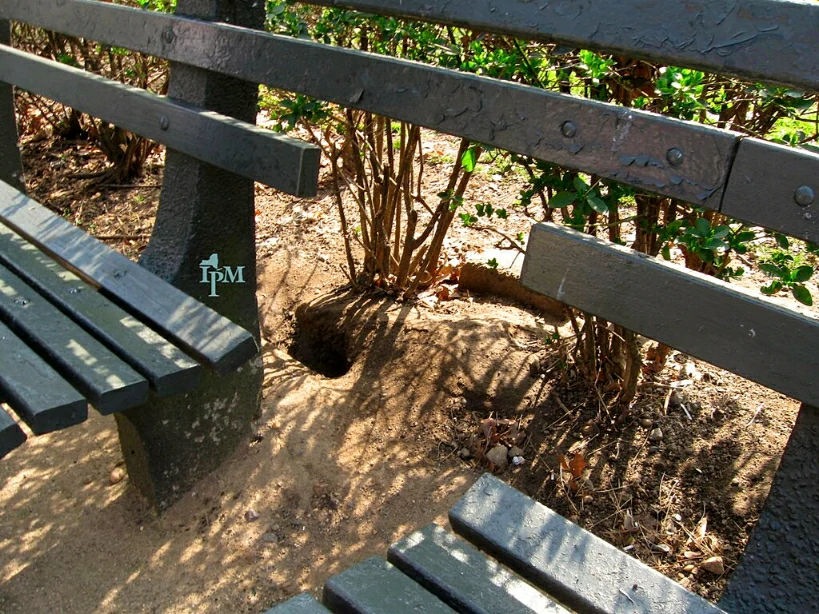
If you’ve found holes in your yard or garden, you might be wondering what’s causing them and what’s happening underground. Some animals just dig shallow holes, but others create complex tunnel systems that spread out beneath the surface.
Rats are known for being pests, but are they actually digging elaborate underground networks in your yard? Do rats dig tunnels in the ground?
Yes, rats dig extensive tunnel systems in the ground. Norway rats (brown rats) are especially skilled diggers and create complex underground burrows with multiple entrances, nesting chambers, food storage areas, and escape routes. These tunnel systems can spread several feet underground and cover a wide area.
Rats aren’t just making simple holes. They’re building entire underground homes complete with rooms, hallways, and multiple exits.
Understanding how and why they dig these tunnels can help you identify rat problems and take action to stop them.
Why Rats Dig Tunnels
Rats dig tunnels for survival. These underground systems meet all their basic needs.
First, tunnels provide shelter from predators. Rats are prey animals, and hawks, owls, cats, dogs, snakes, and other hunters are constantly looking for them. By staying underground, rats can hide where most predators can’t reach them.

Second, tunnels protect rats from weather. Underground spaces stay cooler in summer and warmer in winter. They’re insulated from rain, wind, and snow.
Third, tunnels give rats safe places to nest and raise babies. Female rats need dark, quiet, protected spots to give birth and care for their young, and underground chambers are perfect.
Fourth, tunnels provide storage space. Rats hoard food, and they’ll create chambers specifically for storing seeds, nuts, vegetables, and other items they collect.
Finally, tunnels connect rats to food sources. By digging tunnels near gardens, farms, or buildings, rats can access food quickly and safely without exposing themselves above ground.
What Types of Rats Dig Tunnels?
Not all rats are diggers, but one species in particular is an expert at it.
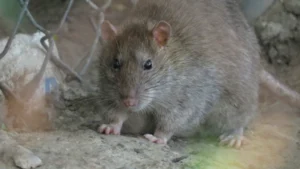
Norway rats (also called brown rats or sewer rats) are the main tunnel diggers. These are the big, chunky rats you see most often in cities, suburbs, and farms. They’re excellent at digging and create the most complex tunnel systems.
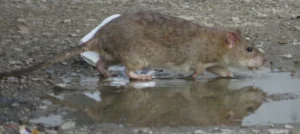
Norway rats have strong front paws with sharp claws that help them dig through dirt, clay, and even some softer rocks. They use their teeth to chew through roots and other obstacles.
Roof rats (black rats), on the other hand, aren’t big diggers. They prefer to climb and nest above ground in trees, attics, or roofs. While they might use existing burrows, they rarely dig their own tunnels.

In the wild, some native rat species like cotton rats and wood rats also dig, but their tunnel systems tend to be simpler than those of Norway rats.
If you’ve got tunnels in your yard, they’re almost definitely from Norway rats.
How Rats Build Their Tunnel Systems
Rat tunnel systems aren’t random. They’re carefully constructed with specific features and purposes.
The entrance is usually 2-4 inches wide and looks like a round or oval hole in the ground. You might see freshly dug dirt piled around the entrance, especially if the tunnel is new.
From the entrance, a main tunnel slopes downward. This tunnel can go 1-3 feet underground, sometimes deeper depending on the soil and what the rats are trying to reach.
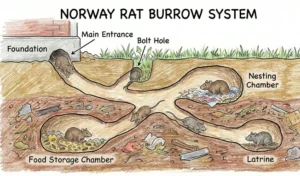
Off the main tunnel, rats dig side chambers for different purposes. There’s usually a nesting chamber lined with soft materials like grass, leaves, shredded paper, or fabric. This is where rats sleep and raise babies.
There’s often a food storage chamber where rats stash seeds, nuts, vegetables, and other food items they’ve collected.
Some tunnels have a waste area. While rats can’t control their bowels completely, they do tend to concentrate their droppings in certain spots within the burrow.
Many tunnel systems have multiple entrances and exits. This gives rats escape routes if a predator tries to dig into the burrow. You might find 2-4 entrance holes that all connect underground.
The tunnels can spread out horizontally as well as vertically. A single burrow system can cover several square feet underground, with tunnels branching off in different directions.
Where Rats Dig Tunnels
Rats don’t dig just anywhere. They choose spots that offer the best access to food, water, and cover.
Near buildings, you’ll find tunnels along foundations, under porches, decks, or sheds. Rats dig close to structures because buildings provide additional shelter and often have food sources nearby.
In gardens and yards, tunnels appear near plants, along fence lines, or under bushes. The vegetation provides cover for the entrance, and the garden soil is usually soft and easy to dig.
Along waterways, like streams, ponds, or drainage ditches, you’ll find rat tunnels. Rats need water to survive, and they’ll dig close to reliable sources.
Near food sources, like compost bins, animal pens, or bird feeders, rats will dig tunnels for easy access.
In fields and farmland, tunnels appear near crops or grain storage areas. Rats will dig extensive systems to stay close to food while remaining hidden.
You might also find tunnels in overgrown areas with tall grass, weeds, or piles of junk. These spots give rats cover and make them feel safer.
How Deep Do Rat Tunnels Go?
Rat tunnels usually go 1-3 feet underground, but it depends on the situation.
In soft soil like garden beds or sandy areas, rats might dig shallower tunnels because the soil is easy to work with.

In harder soil or clay, tunnels might be shallower too, because it’s more work to dig deep.
In areas where rats need to reach something specific (like getting under a foundation or accessing buried cables), they might dig deeper, sometimes 3-4 feet down.
The depth also depends on the climate. In cold areas, rats might dig deeper to get below the frost line and stay warm. In hot areas, they’ll dig deep enough to reach cooler soil.
Most of the tunnel system spreads out horizontally rather than vertically. Rats are more interested in covering ground and connecting different areas than in digging straight down.
How Wide Are Rat Tunnels?
Rat tunnels are just wide enough for rats to move through comfortably.
The main tunnels are usually 3-4 inches wide. This gives rats enough room to move, turn around, and carry food back to their chambers.
Side chambers (like nesting or storage areas) can be wider, sometimes 6-8 inches or more. These chambers need to accommodate multiple rats, nests, and stored food.
The tunnels are just big enough for rats, which means most predators can’t fit inside. This is part of the protective benefit of the burrow system.
Signs of Rat Tunnels in Your Yard
If you’re not sure whether you’ve got rat tunnels, here are some signs to look for.
First, look for entrance holes. These are usually 2-4 inches wide, round or oval, and might have fresh dirt piled around them.
Second, check for runways above ground. Rats use the same paths repeatedly between burrow entrances and food sources. These paths look like worn trails in the grass or dirt.
Third, watch for sunken areas in your yard. If there’s a tunnel underneath, the ground above it might collapse slightly over time, creating a depression or soft spot.
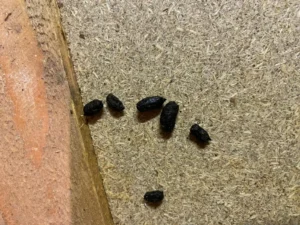
Fourth, look for droppings near the entrances. Rat droppings are dark, pellet-shaped, and about the size of a grain of rice.
Fifth, check for gnaw marks on plants, roots, or anything near the burrow entrances.
Sixth, listen for sounds. If you sit quietly near suspected burrows at dusk or dawn, you might hear scratching, rustling, or squeaking from underground.
Finally, try the hose test. If you pour water down a hole and it drains quickly, there’s probably a tunnel system below. If the water pools, it might just be a shallow hole.
How Rat Tunnels Damage Property
Rat tunnels can cause several problems for homeowners and gardeners.
First, they weaken the ground. All that digging creates air pockets and loose soil, which can cause the ground above to collapse. This is especially problematic near sidewalks, driveways, or building foundations.
Second, tunnels can damage plant roots. If rats dig too close to a plant, they might cut through or disturb the roots, which can kill or weaken the plant.
Third, tunnels can mess up irrigation systems. If you’ve got underground sprinklers or drip lines, rats might chew through them or create holes that cause leaks.
Fourth, tunnels near foundations can undermine structural stability. While rats aren’t big enough to cause major foundation problems, extensive tunneling right next to a building can shift soil and create settling issues.

Fifth, tunnels create hiding spots for rats where they’re hard to reach. This makes it harder to get rid of them because they can retreat underground where traps and poison might not reach.
Sixth, tunnel systems near homes often lead to rats getting inside. Rats can use their tunnels to access basements, crawl spaces, or wall voids.
Can Rats Dig Through Concrete or Pavement?
Rats are strong, but they can’t dig through solid concrete or pavement.
However, they can exploit cracks, gaps, and weak spots. If there’s a crack in a concrete slab or a gap between a patio and the foundation, rats will widen it and dig underneath.
They can also dig under pavement or concrete if there’s soft soil beneath it. You might see a burrow entrance right next to a driveway or sidewalk where the rats have dug underneath the edge.
Once they’re under the pavement, rats can create tunnels that spread out beneath it. This can weaken the support and cause the pavement to crack or sink.
If you’ve got concrete or pavement in your yard, check the edges and any cracks for signs of rat activity.
How to Find Rat Tunnels
If you suspect rats are digging on your property but you can’t find the tunnels, here’s how to track them down.
First, look for entrance holes near cover. Check around bushes, along fence lines, under decks, and near buildings.
Second, follow the runways. Rats create visible paths above ground between their burrows and food sources. Follow these trails and they’ll often lead you to an entrance.
Third, look for fresh dirt. Newly dug burrows will have piles of dirt near the entrance.
Fourth, watch at dusk or dawn. Rats are most active during these times, and you might see them going in and out of their tunnels.
Fifth, use a flashlight to inspect dark, hidden areas where rats might dig.
Sixth, check areas with soft soil. Rats prefer digging in easy-to-work soil, so gardens, flower beds, and recently tilled areas are prime spots.
How to Get Rid of Rat Tunnels
If you’ve got rat tunnels on your property, you need to get rid of the rats first, then deal with the tunnels.
First, set traps near the entrances. Snap traps or live traps baited with peanut butter, bacon, or dried fruit can catch rats as they come and go.

Second, use bait stations with poison, but be careful. Poison can harm pets, children, and wildlife. Use tamper-resistant stations and follow all instructions.
Third, remove food sources. If rats don’t have easy access to food, they’ll move to a different location.
Fourth, eliminate shelter. Clear out overgrown bushes, piles of junk, and other hiding spots that make your property attractive to rats.
Fifth, fill in the tunnels after you’re sure the rats are gone. Use dirt or gravel and pack it down firmly. You can stuff steel wool into the entrance first to make it harder for rats to re-dig.
Sixth, monitor the area. If new holes appear, you know rats are still active.
Seventh, consider professional help. If you’ve got a large tunnel system or the rats keep coming back, a pest control expert can help.
Can You Use the Tunnels to Your Advantage?
Knowing where rat tunnels are can actually help you get rid of rats more effectively.
First, place traps at tunnel entrances. Rats have to come out eventually, and if there’s a trap waiting, you’ll catch them.
Second, use bait stations near entrances. Rats will take the bait back into the burrow, which can kill multiple rats.
Third, you can use the tunnel locations to figure out where rats are getting food and water. This helps you identify what’s attracting them.
Fourth, monitoring the tunnels tells you if your control efforts are working. If the tunnels stay empty and no new ones appear, you’ve probably solved the problem.
Conclusion
So, do rats dig tunnels in the ground? Absolutely. Norway rats are expert diggers and create complex underground tunnel systems with multiple entrances, nesting chambers, food storage areas, and escape routes.
These tunnels can go 1-3 feet deep and spread several feet horizontally, connecting different parts of your yard. Rats dig tunnels for shelter, protection from predators and weather, nesting, and easy access to food.
If you’ve got rat tunnels on your property, you’ll see entrance holes, runways, droppings, and possibly sunken areas in your yard. The key to getting rid of them is removing food sources, setting traps, eliminating shelter, and filling in the tunnels once the rats are gone.
Understanding that rats dig extensive tunnel systems helps you take the right steps to control them and protect your property.

Hi, my name is Ezra Mushala, i have been interested animals all my life. I am the main author and editor here at snakeinformer.com.