

If you’ve ever had rats in your home or seen them in action, you’ve probably noticed one thing: they poop everywhere. Kitchen counters, floors, attics, you name it.
It seems like rats leave droppings wherever they go, which makes cleaning up after them a nightmare. This raises an obvious question that a lot of people wonder about but might feel weird asking. Can rats control their bowels?
No, rats can’t control their bowels. They poop constantly and involuntarily as they move around, which is why you’ll find droppings along their runways, near food sources, and pretty much everywhere they go. Rats don’t hold it in or designate specific bathroom spots like some animals do.
This lack of bowel control is one of the reasons rats are such messy pests. They’re not trying to be gross, it’s just how their digestive system works.
Understanding this helps explain why rat infestations are so unsanitary and why cleaning up is so important.
Why Rats Can’t Control Their Bowels
Rats physically can’t hold in their poop the way humans or many other animals can.
Their digestive system works continuously. Food goes in one end, gets processed, and comes out the other without much pause. Rats eat constantly throughout the day and night, which means they’re also pooping constantly.

Unlike animals with strong sphincter muscles (like dogs or cats) that can hold their waste until they find an appropriate spot, rats don’t have that ability. Their anal sphincter is much weaker, so poop just comes out whenever it’s ready.
This means rats aren’t choosing to poop on your counter or in your pantry. They literally can’t help it. It’s an automatic process that happens as they move around.
How Often Do Rats Poop?
Rats poop a lot more than you’d expect.
A single rat can produce 40 to 50 droppings per day, and some estimates go even higher. That’s almost constant pooping throughout their active hours.
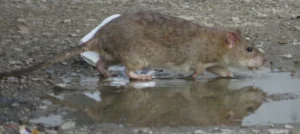
If you’ve got multiple rats in your home, the numbers add up fast. Ten rats could leave 400 to 500 droppings in a single day. That’s why rat infestations get so messy so quickly.
The droppings are small (about the size of a grain of rice), but when you’ve got hundreds of them scattered around, it’s gross and unsanitary.
What Rat Droppings Look Like
Rat droppings are pretty easy to recognize once you know what you’re looking for.
They’re dark brown or black, shaped like small pellets, and about 1/4 to 1/2 inch long. They’re usually pointed at the ends and might look a bit like rice grains or small beans.
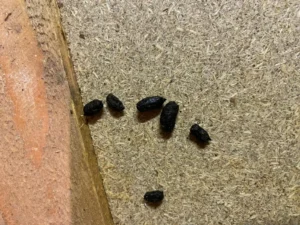
Fresh droppings are soft and moist, while older droppings dry out and become hard and brittle.
You’ll find them along runways (the paths rats use repeatedly), near food sources, in nests, and pretty much anywhere rats hang out.
If you see a concentration of droppings in one area, that’s usually a sign of heavy rat activity. The more droppings, the bigger the problem.
Where Rats Leave Droppings
Since rats can’t control when they poop, they leave droppings everywhere they go.
You’ll find droppings along baseboards and walls because rats stick to edges when they move around. They use the same paths over and over (called runways), and those paths get covered in droppings.
Droppings show up near food sources. If rats are eating in your pantry, you’ll find droppings on shelves, in cabinets, and around food containers.
In attics and basements, you’ll see droppings in corners, on insulation, and along beams. Rats nest in these areas, so there’s usually a lot of poop near their nests.
On countertops and tables, you’ll find droppings if rats are climbing up to search for food. This is especially gross because it’s where you prepare food.
Inside walls and voids, droppings accumulate over time. If you open up a wall that’s had rats, you might find piles of droppings.
Even outside, you’ll see droppings near burrows, along fences, and in areas where rats travel frequently.
Do Rats Have Designated Bathroom Areas?
Some animals (like rabbits) designate specific spots for going to the bathroom, but rats don’t.
Rats poop wherever they happen to be at the moment. There’s no planning or preference involved. They don’t think, “I need to go back to my bathroom spot.” It just happens.
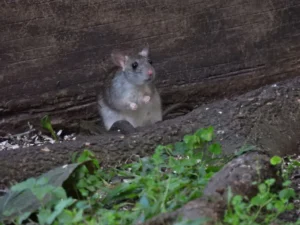
This is different from urination, which we’ll get to in a bit. When it comes to pooping, rats are completely uncontrolled.
You might notice more droppings in certain areas, but that’s just because rats spend more time there, not because they’ve chosen those spots as bathrooms.
Why This Matters for Infestations
The fact that rats can’t control their bowels is one of the main reasons they’re such a health hazard.
Every dropping is a potential source of disease. Rat poop can carry bacteria like salmonella, leptospirosis, and hantavirus. When droppings dry out, they can turn into dust that you might breathe in, which can make you sick.
Droppings also attract other pests. Insects and mites feed on rat droppings, which can lead to secondary infestations.
The sheer number of droppings makes cleaning up after rats a huge job. You can’t just wipe down one spot, you’ve got to disinfect everything.
This constant pooping also makes it easy to detect rats. If you see droppings, you know rats are active in that area. The amount and freshness of the droppings can tell you how bad the problem is.
Can Rats Control Their Bladder?
Rats also can’t fully control their bladder, but it’s a bit more complicated than bowel control.
Rats do urinate as they move around, leaving small drops along their paths. This is called “urine marking,” and it serves a purpose.

Rats use urine to communicate. They mark their territory, leave scent trails for other rats to follow, and signal their presence. Male rats especially do this to establish dominance and attract mates.
However, rats don’t have perfect bladder control either. They’ll release urine frequently and involuntarily, similar to how they poop.
The difference is that urine marking is somewhat intentional (rats will purposely urinate in certain spots to leave scent), while pooping is completely automatic.
Why Rats Pee Everywhere Too
Just like with pooping, rats pee constantly, and it’s all over the place.
Rat urine has a strong, musky smell. If you’ve got rats in your home, you’ll probably smell it before you see them. The odor is especially bad in enclosed spaces like basements, attics, or wall voids.
You’ll notice urine stains along runways, on surfaces rats climb on, and near nests. The urine can cause dark, greasy marks on walls and floors.
Like droppings, rat urine carries disease. It can transmit leptospirosis, which is a serious bacterial infection. The bacteria can survive in dried urine for weeks or even months.
Urine also attracts more rats. The scent tells other rats that the area is already occupied or that there’s a food source nearby.
How This Affects Your Home
The combination of constant pooping and peeing makes rats incredibly messy pests.
They contaminate food. If rats walk across your pantry shelves or counters, they’re leaving poop and pee behind. Anything they touch needs to be thrown out or thoroughly cleaned.
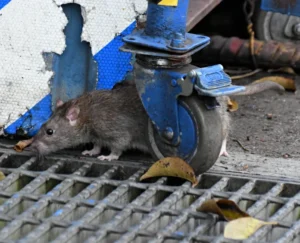
They damage property. Rat urine can stain wood, drywall, insulation, and fabric. The smell can soak into materials and be almost impossible to remove.
They create health hazards. The droppings and urine carry bacteria and viruses that can make you and your family sick. Cleaning up after rats requires protective gear and careful disinfection.
They attract other pests. Flies, beetles, and mites are drawn to rat waste, which can lead to other infestations.
The mess also makes it harder to ignore a rat problem. You can’t just pretend it’s not happening when there’s poop everywhere.
How to Clean Up Rat Droppings Safely
If you’ve got rat droppings in your home, you need to clean them up carefully to avoid getting sick.
First, don’t sweep or vacuum. This can kick up dust and bacteria into the air, which you might breathe in. That’s especially dangerous with hantavirus.
Instead, spray the droppings with a disinfectant or a mixture of bleach and water (1 part bleach to 10 parts water). Let it soak for at least five minutes.
Wear gloves, a mask, and protective clothing. You don’t want to touch droppings with your bare hands or breathe in the dust.
Use paper towels to pick up the droppings and put them in a sealed plastic bag. Throw the bag away in an outdoor trash bin.
After you’ve removed the droppings, mop or wipe down the area with disinfectant. Make sure to clean any surfaces the rats might have touched.
Wash your hands thoroughly with soap and water when you’re done, even if you wore gloves.
If you’ve got a large infestation with tons of droppings, it might be safer to hire a professional cleaning service.
How Rat Poop Helps You Track Them
Even though rats pooping everywhere is gross, it actually helps you figure out where they’re going and how bad the problem is.
Fresh droppings are soft and dark, while old droppings are dry and crumbly. If you find fresh droppings, you know rats are still active in that area.
The amount of droppings tells you how many rats you’re dealing with. A few scattered droppings might mean one or two rats, while piles of droppings mean a bigger infestation.
The location of droppings shows you their runways and nesting areas. You can use this information to place traps or seal up entry points.
If you clean up all the droppings and then check back in a day or two, you can see if new droppings have appeared. If they have, you know the rats are still around. If not, you might have successfully gotten rid of them.
Do Pet Rats Poop Everywhere Too?
Yes, pet rats also can’t control their bowels, but it’s a bit more manageable.
Pet rats are usually confined to a cage, so their droppings stay in one area. You can line the cage with bedding or litter, and clean it out regularly.
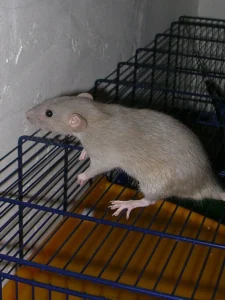
Some pet rat owners train their rats to use a litter box for urination, but even trained rats will still poop wherever they happen to be. It’s not something you can train them to control because it’s automatic.
The good news is that pet rats are healthier and cleaner than wild rats, so their droppings are less likely to carry disease (though you should still wash your hands after handling them or cleaning their cage).
If you let your pet rat out of the cage to play, they’ll leave droppings around your house just like wild rats. Most owners just accept this and clean up as they go.
Can You Tell Rat Poop from Mouse Poop?
Rat and mouse droppings look similar, but there are some differences.
Rat droppings are bigger, about 1/4 to 1/2 inch long. Mouse droppings are smaller, about 1/8 to 1/4 inch long.
Rat droppings are thicker and more rounded, while mouse droppings are thinner and more pointed.
Both are dark brown or black, and both are pellet-shaped, so it can be hard to tell them apart if you’re not sure what to look for.
If you’re dealing with droppings and you’re not sure which pest you have, size is the biggest clue. Bigger droppings mean rats, smaller droppings mean mice.
Conclusion
So, can rats control their bowels? No, they can’t. Rats poop constantly and involuntarily as they move around, which is why you’ll find droppings everywhere they go.
This lack of bowel control makes rats messy, unsanitary pests. They leave droppings along their runways, near food sources, in nests, and on any surface they walk across. A single rat can produce 40 to 50 droppings per day, and those droppings carry bacteria and viruses that can make you sick.
If you’ve got rats in your home, expect to find poop everywhere. The key is to clean it up safely, track where the rats are going, and take steps to get rid of them before the mess gets worse.

Hi, my name is Ezra Mushala, i have been interested animals all my life. I am the main author and editor here at snakeinformer.com.