
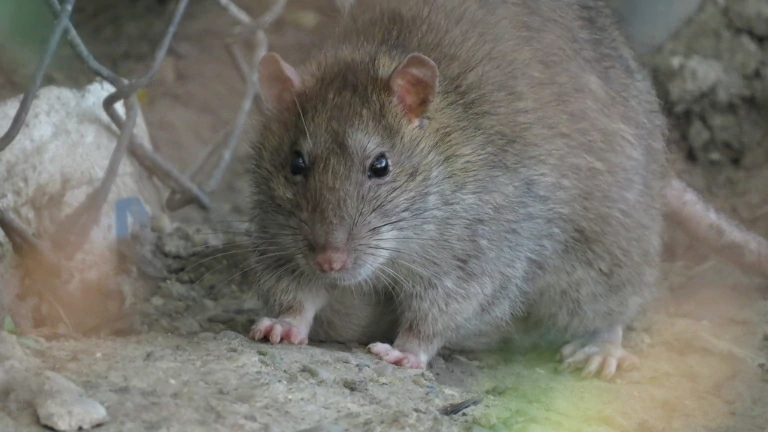
Rats have some pretty unusual teeth compared to many other animals.
Their front teeth (called incisors) keep growing continuously throughout their entire life, never stopping. If you have pet rats, you’ve probably noticed them gnawing on everything constantly. So why do rats’ teeth never stop growing?
Rats’ teeth never stop growing because they wear down constantly from gnawing. Rats chew through tough materials like wood, nuts, and even concrete to get food and make nests. If their teeth didn’t keep growing, they’d wear down to nothing and the rat would starve. Continuous growth balances continuous wear.
This design is actually really common in rodents.
The word “rodent” literally comes from the Latin word “rodere,” which means “to gnaw.” Constant tooth growth is one of the defining features of this whole group of animals.
How Fast Do Rat Teeth Actually Grow?
Rat teeth grow surprisingly fast compared to teeth in most animals.
A rat’s incisors grow about 4 to 5 inches per year. That works out to roughly 0.3 to 0.4 millimeters per day.
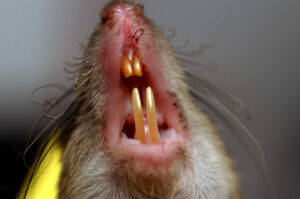
It doesn’t sound like much when you put it that way, but over a lifetime, it’s significant. If a rat lived for 3 years (a typical lifespan), that’s about 12 to 15 inches of tooth growth.
Of course, you never see teeth that long because they’re constantly being worn down. The growth and wear balance each other out.
When a rat is gnawing properly, their teeth stay at the perfect length. They’re naturally filed down by all that chewing.
The teeth grow from the root, which is located deep in the jaw bone. New tooth material is constantly being produced at the root.
As new material forms at the bottom, it pushes the rest of the tooth up and out. It’s a continuous process that never stops as long as the rat is alive.
What Rat Teeth Are Made Of
Rat incisors have a really interesting structure that helps them stay sharp.
The front of the tooth is covered in hard enamel (the same stuff that covers human teeth). But the back of the tooth has much softer dentine.
When the rat chews, the soft dentine on the back wears down faster than the hard enamel on the front. This creates a naturally sharp, chisel-like edge.

It’s self-sharpening, which is pretty clever. The rat doesn’t need to do anything special to keep their teeth sharp; it happens automatically.
The enamel on rat incisors is also orange or yellow colored because it contains iron. This iron makes the enamel extra hard.
It’s harder than regular white enamel. This helps the teeth stand up to all the tough materials rats chew through.
If a rat’s teeth look very pale or white, it can actually be a sign of a nutritional problem. Healthy rat teeth should have that orange-yellow color.
Why Rats Need to Gnaw Constantly
Rats gnaw for several really important reasons, and controlling tooth length is just one of them.
In the wild, rats need to chew through tough materials to get to food. Nuts, seeds, tough plant materials, and even bark all need to be gnawed through.
If rats couldn’t chew through these things, they’d have a much harder time finding enough food to survive. Their teeth give them access to food sources other animals can’t reach.

Rats also gnaw to make nests and burrows. They’ll chew through wood, cardboard, insulation, and other materials to create spaces to live in.
This is why rats can be such a problem in houses. They’ll gnaw through walls, furniture, and even electrical wires.
Gnawing also helps rats investigate their environment. When they find something new, they’ll often chew on it to figure out what it is.
This is part of how they learn about their world. The texture, taste, and resistance of the material all give them information.
What Happens If a Rat Can’t Gnaw Enough?
If a rat doesn’t gnaw enough, their teeth will overgrow, and this is a serious problem.
The teeth can grow so long that the rat can’t close their mouth properly. They can’t eat, and they’ll start to starve.
In severe cases, the teeth can curve around and actually grow into the rat’s jaw or face. This is incredibly painful and can cause serious infections.
It can even be fatal if not treated. Overgrown teeth are a medical emergency for rats.
Pet rats can develop this problem if they don’t have enough appropriate things to chew on. They need hard materials that will wear their teeth down.
Soft foods alone won’t do it. They need wood blocks, hard dog biscuits, or other chew toys in their cage at all times.
Wild rats rarely have this problem because they’re constantly gnawing as part of their natural behavior. They’re chewing to get food and make shelter every day.
But captive rats rely on their owners to provide proper chewing materials. It’s a really important part of rat care.
How to Tell If a Rat’s Teeth Are Too Long
If you have pet rats, you should check their teeth regularly to make sure they’re the right length.
Normal rat incisors should meet evenly when the mouth is closed. The top and bottom teeth should line up and touch.
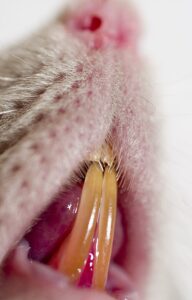
If you see gaps between the teeth, or if the teeth are pointing in weird directions, that’s a sign of overgrowth or misalignment.
You should also watch how your rat eats. If they’re having trouble picking up food, dropping food frequently, or eating less than normal, teeth problems could be the cause.
Weight loss is another warning sign. If a rat can’t eat properly because of tooth problems, they’ll start losing weight fast.
Drooling or wet fur around the mouth can also indicate tooth issues. If the teeth are too long or misaligned, the rat might drool excessively.
Any of these signs mean you need to get your rat to a vet who knows how to treat small animals (an exotic vet). Teeth problems won’t fix themselves and they get worse fast.
Malocclusion: When Teeth Don’t Line Up Right
Sometimes rat teeth don’t grow straight, and this causes a condition called malocclusion.
This means the teeth don’t meet properly. Instead of grinding against each other and wearing down evenly, they miss each other.
When this happens, the teeth keep growing but they don’t get worn down. They can become overgrown really quickly.
Malocclusion can be caused by genetics, injury, or poor diet during development. Some rats are just born with jaws that don’t quite line up right.
If a rat breaks a tooth or injures their jaw, the teeth might not grow back in the correct position. This can cause permanent malocclusion.
Rats with malocclusion need regular teeth trims from a vet. The vet will use special tools to trim the teeth back to the proper length.
This usually needs to be done every few weeks for the rest of the rat’s life. It’s manageable, but it does require ongoing care.
Some severe cases of malocclusion can’t be managed with trims alone. The rat might need more intensive treatment or special feeding arrangements.
The Back Teeth Are Different
Rats also have molars (back teeth), and these work differently from the incisors.
Molars do grow throughout a rat’s life, but much more slowly than the front teeth. They grow about 2 to 3 millimeters per year.
The molars are used for grinding food rather than gnawing. They have a flatter surface with ridges that help break down food into smaller pieces.

These teeth also self-sharpen to some degree, but they mostly wear down evenly from chewing food. The constant grinding keeps them at the right size.
Problems with molars are less common than problems with incisors, but they can happen. Overgrown molars can cause mouth pain and make it hard to eat.
Checking molars is harder than checking incisors because they’re way back in the mouth. A vet can examine them more thoroughly during a health check.
What Rats Should Chew On
For pet rats, providing the right things to chew on is really important for dental health.
Wood blocks are excellent. Choose hardwoods like apple, pear, or willow. Avoid soft woods like pine or cedar, which can be harmful.
Hard dog biscuits work great too. Rats love them, and they’re tough enough to provide good tooth wear.
Whole nuts in the shell are another good option. Rats have to gnaw through the shell to get to the nut, which gives their teeth a workout.
Cardboard is okay for chewing, but it’s pretty soft so it shouldn’t be the only thing they chew on. It’s more for entertainment than tooth maintenance.
Some people give their rats deer antlers or special lava ledges made for small animals. These are really hard and provide excellent tooth wear.
You can also find chew toys specifically made for rats at pet stores. Look for ones made from safe, hard materials.
Avoid anything plastic or painted. Rats will ingest pieces as they chew, and you don’t want them eating harmful materials.
The Evolutionary Advantage of Constantly Growing Teeth
Constantly growing teeth gave rats and other rodents a huge evolutionary advantage.
It allowed them to exploit food sources that other animals couldn’t access. Tough nuts, hard seeds, wood-boring insects, and tree bark all became available food.

This meant rodents could survive in environments where other small mammals might starve. They had more options.
The ability to gnaw through materials also let them create shelter in more places. They could dig into hard ground, chew into tree trunks, or make nests inside thick vegetation.
Over millions of years, rodents became incredibly successful partly because of this adaptation. There are over 2,000 species of rodents today.
That’s about 40% of all mammal species on Earth. The constantly growing teeth definitely played a role in that success.
For rats specifically, this trait helped them spread all over the world. They could adapt to almost any environment because they could find or create what they needed.
How Vets Trim Overgrown Rat Teeth
If your rat’s teeth become overgrown, a vet can trim them back to the proper length.
This is a delicate procedure that needs to be done carefully to avoid damaging the tooth or jaw. Most vets use special clippers or a dental drill.
Some vets will give the rat a light anesthetic for the procedure, especially if the teeth are really overgrown or the rat is stressed. Others can do it without anesthetic if the rat stays calm.
The vet will trim the teeth so they meet properly again. They’ll make sure the angle is correct so the teeth can wear down naturally going forward.
After a trim, you’ll need to watch your rat carefully to make sure they can eat normally. Sometimes rats need soft food for a day or two while they adjust.
The teeth will start growing immediately after being trimmed, so if the underlying problem isn’t fixed, you’ll need regular trims.
This can get expensive over time, so it’s really important to provide proper chewing materials to prevent overgrowth in the first place.
Can You Prevent Tooth Problems in Pet Rats?
Most tooth problems in pet rats can be prevented with good care.
Always provide multiple types of chew toys and hard foods. Different textures and hardness levels help wear the teeth evenly.
Feed a proper diet with pellets, fresh vegetables, and occasional hard treats. Avoid feeding only soft foods.
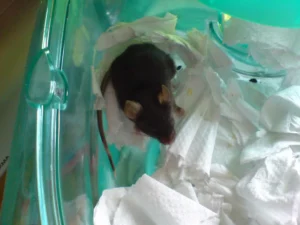
Even though rats can eat soft foods, they need hard items to keep their teeth healthy. A varied diet is best.
Watch your rats regularly to make sure they’re chewing. If a rat stops chewing as much as normal, it could be an early sign of a problem.
Regular vet checkups can catch dental issues early. A vet can spot the beginning of tooth overgrowth or misalignment before it becomes serious.
Genetic issues can’t be prevented, but they can be managed if you catch them early. If you know a rat has a family history of dental problems, watch them extra carefully.
Do All Rodents Have Continuously Growing Teeth?
Yes, all rodents have front teeth that grow continuously.
This includes mice, hamsters, gerbils, guinea pigs, squirrels, beavers, and every other rodent species. It’s one of the defining characteristics of rodents.
Different rodents wear their teeth down in different ways though. Beavers chew through trees, so their teeth wear down really fast.
Guinea pigs eat a lot of hay, which is abrasive and wears down their teeth. Hamsters gnaw on seeds and grains.

Each species has adapted to use their continuously growing teeth in ways that fit their lifestyle and diet. But the basic feature is the same across all rodents.
Some other animals have continuously growing teeth too, but they’re not rodents. Rabbits have teeth that grow constantly, but they’re not rodents; they’re lagomorphs.
The difference is that rabbits have a second set of small incisors behind their main ones. Rodents only have one set of incisors.
Teeth Color and Health
The color of a rat’s teeth can tell you about their health.
Healthy adult rat teeth should be orange or yellow because of the iron in the enamel. The darker the orange, the stronger the enamel.
Baby rats have lighter colored teeth that darken as they mature. By the time they’re a few months old, the teeth should be their adult color.
If an adult rat’s teeth are very pale or white, it could mean they’re not getting enough nutrients. Iron and vitamin deficiencies can cause pale teeth.
Changing to a better quality food usually fixes this over time. New tooth growth will be the proper color.
Very dark or black discoloration can indicate decay or infection. This needs veterinary attention.
Red or bloody-looking teeth aren’t always a problem though. Rats produce a red substance called porphyrin when they’re stressed.
This can stain their teeth temporarily. If the red wipes off, it’s probably porphyrin, not blood.
Conclusion
Rats’ teeth never stop growing because they need to balance constant wear from gnawing.
This adaptation lets them chew through tough materials to find food and make shelter. The continuous growth is matched by continuous wear, keeping the teeth at the perfect length.
For pet owners, this means providing lots of appropriate things for rats to chew on. It’s not optional; it’s a critical part of keeping rats healthy.
Understanding how rat teeth work helps you give your pets the care they need and appreciate the clever evolutionary design of these animals.

Hi, my name is Ezra Mushala, i have been interested animals all my life. I am the main author and editor here at snakeinformer.com.