

Air conditioners keep your home cool, but they also create openings to the outside world. Whether you have a window unit, central AC, or a ductless mini-split system, your air conditioner has to connect to the exterior somehow.
These connections and the gaps around AC units can become pathways for mice looking for a way into your home. So can mice actually come in through air conditioners?
Yes, mice can come in through air conditioners. Window AC units often have gaps around their frames that mice can squeeze through, central AC systems have exterior vents and condensate drains that provide entry points, and even mini-split systems can have gaps around their wall penetrations. Mice can fit through openings as small as a dime, making even small gaps around AC units a potential problem.
The specific vulnerabilities depend on what type of air conditioner you have. But all AC systems create potential entry points because they need connections to the outside for airflow, drainage, or refrigerant lines. Understanding these vulnerabilities and how to address them is the key to keeping mice from using your AC as a doorway into your home.
How Window AC Units Let Mice In
Window air conditioners sit in your window opening, and the fit is rarely perfect. There are almost always gaps between the unit and the window frame, even when the unit seems snug.

The accordion-style side panels that come with window units are designed to fill the extra space in your window. But these flexible plastic or metal panels don’t create a tight seal. Mice can find gaps at the edges where the panels meet the window frame.
Behind the unit, where the window closes against the top of the AC, there’s often a small gap. Even if the window is locked down tightly, the irregular shape of the AC housing can create spaces that mice exploit.
Some window units have gaps around the vents on the side or back. If the grating or filter covering these vents is loose, damaged, or missing, mice might be able to get through.
The bottom of window AC units often sits on the windowsill with only gravity holding it in place. If there’s any gap between the bottom of the unit and the sill, mice can squeeze underneath.
Central AC Systems and Mouse Entry
Central air conditioning uses ductwork to distribute cool air throughout your home. This ductwork connects to exterior vents that can be entry points for mice.
The outdoor condenser unit sits outside your home and has various pipes and wires running into your house. Where these lines penetrate your wall or foundation, there might be gaps that mice can use.
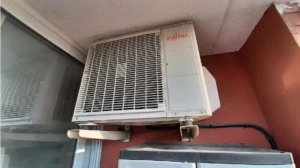
The condensate drain line carries water from your indoor AC unit to the outside. This small pipe typically exits through your foundation or an exterior wall. The open end of this pipe is an easy entry point if it’s not protected.
Air intake vents bring fresh air into your system. If these vents don’t have proper screens or if the screens are damaged, mice can crawl through and access your ductwork.
Refrigerant lines that connect your indoor and outdoor units pass through your walls. The holes for these lines are often larger than the lines themselves, and if the gaps aren’t sealed properly, mice can squeeze through.
Mini-Split Systems and Mice
Ductless mini-split systems are becoming more popular, and they have their own mouse vulnerabilities. These systems have an indoor unit mounted high on a wall and an outdoor unit, connected by refrigerant lines and wiring.
The hole in your wall where the lines pass through is a potential entry point. This opening needs to be just big enough for the lines and electrical wiring, but it’s often larger than necessary.
The indoor unit’s drainage line has to go somewhere. If this line exits through your wall to the outside, the opening can let mice in.
Some mini-split systems have a small gap between the indoor unit and the wall mounting bracket. If mice can reach the unit (by climbing or jumping), they might squeeze through this gap.
The outdoor unit isn’t usually a direct entry point, but mice might nest inside the unit’s housing. From there, they could potentially access the lines running into your home.
Signs Mice Are Using Your AC to Enter
Mouse droppings around your AC unit are the most obvious sign. Check around window AC units, near floor vents for central systems, and around the wall penetration for mini-splits.
Grease marks appear where mice repeatedly squeeze through the same opening. These dark, oily streaks show up on windowsills, wall surfaces, or around vent covers.
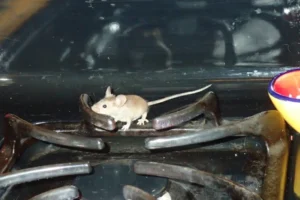
You might hear scratching or scurrying sounds coming from your AC or the area around it. This is especially noticeable at night when mice are most active.
Chew marks on window frames, accordion panels, or weatherstripping indicate mice are working to enlarge entry points. Fresh gnaw marks are lighter colored with sharp edges.
If you notice a bad smell coming from your AC area, it could be mouse urine or even a dead mouse. The smell gets worse when the AC is running and pushing air through the system.
Sealing Window AC Units Against Mice
Start by filling all gaps around the unit with foam weatherstripping. Apply it between the AC and the window frame, covering the top, sides, and bottom.
The accordion panels need extra attention. Add foam tape along the edges where they meet the window frame. You can also use rigid foam board or thin plywood to create a more solid barrier, then seal around that with foam or caulk.
Seal the area where the window closes against the AC. There’s often a gap here even when the window is locked down. Weatherstripping or foam tape can fill this space.
Check underneath the unit. If there’s a gap between the bottom of the AC and the windowsill, fill it with expanding foam or weatherstripping. Make sure the unit is still angled slightly downward for proper drainage.
For extra protection, some people create a wooden or metal frame that fits around the AC unit and seals tightly against the window frame. This provides a much more secure barrier than the flimsy accordion panels.
Protecting Central AC Entry Points
Install fine mesh screens on all exterior vents. Use hardware cloth with quarter-inch openings or smaller. Regular window screening won’t stop mice because they can chew through it.
Seal the condensate drain line opening. You can use a small screen or mesh secured with a zip tie or hose clamp. Make sure water can still drain freely but mice can’t get through.
Where refrigerant lines and electrical conduits penetrate your walls or foundation, seal the gaps around them. Use caulk, expanding foam, or hydraulic cement depending on the size of the gap and the material you’re sealing.
Check all ductwork connections, especially in basements, crawl spaces, and attics. Seal loose joints with metal tape (not regular duct tape, which mice can chew through).
Make sure all vent covers inside your home fit tightly and are screwed in place. Floor vents are particularly important because they’re at ground level where mice naturally travel.
Securing Mini-Split Line Sets
The hole where your mini-split lines pass through the wall needs to be sealed around the lines. Most installations use a wall sleeve or escutcheon that should fit snugly around the line set.
If there are gaps around the sleeve, seal them with caulk or expanding foam. Make sure you don’t compress or damage the refrigerant lines or drain line when sealing.
Check where the drainage line exits the wall. If it drains outside, protect the opening with a fine mesh screen that allows water flow but blocks mice.
Inside your home, make sure the gap between the indoor unit and the wall is minimal. If there’s space, you might need to adjust the mounting bracket or add backing material to close the gap.
Consider having a professional check the installation. Properly installed mini-splits should have minimal gaps, but poor installation can leave openings for mice.
What to Do If Mice Get Into Your AC
First, figure out exactly how they’re getting in. Check all the potential entry points we’ve discussed and look for signs like droppings, grease marks, or chew marks.
Set traps near the entry point. Snap traps work best and are safer than poison. Place traps along walls and in corners where mice travel. Check them daily.
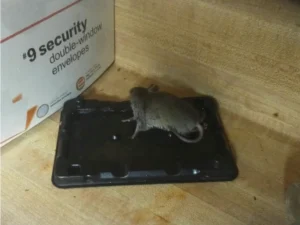
Don’t use poison if mice are getting into your ductwork or AC system. Dead mice in inaccessible areas will create a terrible smell that can last for weeks.
Once you’ve caught all the mice, seal the entry points before they can return. Don’t wait because more mice might follow the same route.
If mice have been in your ductwork, consider having it professionally cleaned. Mouse droppings and urine in your ducts create health hazards and spread allergens through your home.
The Seasonal Pattern of Mouse Entry
Fall is the worst time for mice entering through AC units. As temperatures drop, mice actively search for warm shelter, and your home is very attractive.
Window AC units are particularly vulnerable in fall and winter if left in place. The units aren’t running so there’s no airflow to deter mice, and the gaps around them are like open doors.
Central AC systems face more pressure in winter too. Mice looking for warmth will work harder to find and exploit entry points around your AC connections.
Spring and summer are actually good times to mouse-proof your AC. The weather is nice for working outside, and you can address problems before fall when mice become more desperate.
Should You Remove Window AC Units in Winter?
If you can remove your window AC unit when you’re not using it, you should. Taking it out eliminates that entire entry point for several months.
Store removed units properly. Clean them thoroughly, cover them, and keep them in a dry place like a basement or garage. This protects the unit and prevents mice from nesting in it during storage.
When you remove the unit, seal the window normally. Make sure there are no gaps around the window frame where it closes.
If you can’t remove the unit, cover it. Use a weatherproof AC cover on the outside, and seal all gaps around the unit as thoroughly as possible. Inside, you can block the vents with cardboard or foam to prevent drafts and mice.
The Problem with Portable AC Units
Portable air conditioners stand on your floor and have an exhaust hose that vents through a window. The window kit that comes with these units is designed to fill the window opening around the hose.
But these window kits are usually just thin plastic panels with an opening for the hose. They don’t seal well, and there are often gaps around the edges.
Mice can squeeze through the gaps between the window kit and the window frame. The fit is rarely tight enough to keep them out.
The hose connection to the window kit can also have gaps. If the hose doesn’t fit snugly into the kit opening, mice might get through there.
To secure a portable AC setup, add weatherstripping around all edges of the window kit. You can also create a more solid barrier by using plywood or rigid foam board cut to fit your window, with a hole for the exhaust hose.
AC Maintenance and Mouse Prevention
Regular AC maintenance helps prevent mouse problems. Technicians can spot gaps and damage that create entry points.
Annual service calls are good opportunities to ask about mouse-proofing. HVAC professionals can recommend specific solutions for your system’s vulnerabilities.
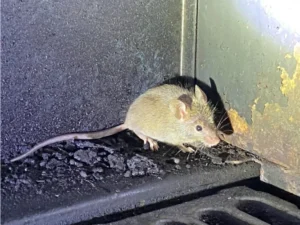
Keep the area around your outdoor AC unit clean and clear. Don’t let vegetation grow up against the unit, and don’t store items near it. This makes it easier to spot problems and less attractive to mice looking for hiding spots.
Change or clean your air filters regularly. While this doesn’t directly prevent mice, it gives you regular opportunities to check for signs of pest activity around your AC system.
Check your AC’s condensate drain regularly. Make sure it’s draining properly and that the exit point hasn’t been blocked or damaged.
Health Concerns with Mice and AC Systems
If mice get into your ductwork through AC connections, their droppings become airborne when the system runs. This spreads allergens and potentially harmful bacteria throughout your home.
People with asthma or allergies are particularly vulnerable. Mouse allergens can trigger attacks and cause respiratory problems.
Mice can carry diseases, though the risk of transmission through AC systems is relatively low. The bigger concern is the contamination of your air supply with waste products.
The smell from mouse activity in your AC system is unpleasant and hard to eliminate without professional cleaning. The odor circulates through your home every time the AC runs.
Conclusion
Mice can definitely come in through air conditioners of all types. Window units often have gaps around their frames and accordion panels. Central AC systems have exterior vents, condensate drains, and wall penetrations that can be entry points. Even mini-split systems can have gaps around their line sets.
The key to keeping mice out is identifying and sealing all potential entry points around your AC system. Use weatherstripping for window units, screen exterior vents, protect drain lines, and seal all wall penetrations. Regular inspection and maintenance help you catch problems before they become serious infestations.
If you’re having persistent mouse problems, consider professional help. Pest control and HVAC experts can work together to identify vulnerabilities and implement effective, long-lasting solutions.

Hi, my name is Ezra Mushala, i have been interested animals all my life. I am the main author and editor here at snakeinformer.com.