
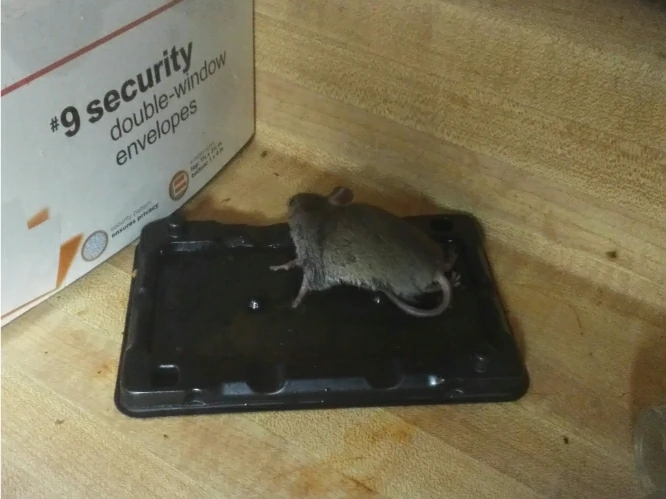
If you’ve spotted a rat in your house and you’ve got mouse traps on hand, you might be wondering if they’ll work. Mouse traps are easier to find in stores, they’re cheaper than rat traps, and maybe you’re hoping you can use what you already have.
But rats are bigger and stronger than mice. A trap designed for a small mouse might not be enough to catch or kill a larger rat. So can a mouse trap actually catch a rat?
Mouse traps can catch small, young rats, but they usually won’t work on adult rats. Adult rats are too big and heavy for most mouse traps to kill effectively. The trap might snap on the rat but not deliver enough force to kill it, leaving you with an injured, angry rat that escapes or suffers.
If you’re dealing with rats, you really need rat-specific traps. Mouse traps just aren’t designed to handle the size and strength of a full-grown rat.
The Size Difference Between Rats and Mice
To understand why mouse traps don’t work well on rats, you need to know how much bigger rats are than mice.
A house mouse weighs about half an ounce to one ounce. They’re small, light animals that fit in the palm of your hand.
A rat, on the other hand, weighs anywhere from 7 to 18 ounces, depending on the species and age. Some large rats can weigh even more. An adult Norway rat (the most common type of rat in houses) typically weighs around 12 to 16 ounces.
That means a rat can be 10 to 20 times heavier than a mouse. This huge size difference is why traps designed for mice don’t work well on rats.
The body structure is different too. Rats have thicker skulls, stronger necks, and tougher bodies than mice. A trap that can kill a mouse instantly might only injure a rat.
What Happens When a Rat Triggers a Mouse Trap
When a rat triggers a mouse trap, a few different things can happen, and most of them aren’t good.
If the trap is a traditional snap trap, it’ll snap shut when the rat takes the bait. But because the rat is so much bigger than a mouse, the trap’s bar might not hit in the right place or with enough force to kill the rat quickly.
The rat might get caught by a paw, its tail, or its nose instead of its head or neck. This can injure the rat without killing it, leaving you with a suffering animal that’s trapped but alive.
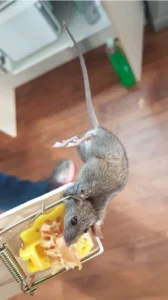
In some cases, the rat is strong enough to drag the trap away. You might find the trap missing, with the bait gone, and the rat is somewhere in your house injured and even more cautious about traps.
Sometimes the rat can pull free from the trap. Snap traps designed for mice just don’t have enough holding power to keep a struggling rat in place.
Young rats or particularly small rats might get killed by a mouse trap, but it’s not reliable. You can’t count on a mouse trap to do the job if you’re dealing with adult rats.
Why Rat Traps Are Different From Mouse Traps
Rat traps look similar to mouse traps, but they’re built to handle much larger animals.
The first difference is size. Rat traps have bigger platforms where the bait goes and larger trigger mechanisms. This makes them easier for rats to activate and harder for rats to steal bait without triggering the trap.
The snap bar on a rat trap is also bigger and hits with a lot more force. Mouse traps use a small, light bar that’s strong enough to kill a mouse instantly. Rat traps use a heavier bar that can deliver enough force to kill a rat.
The spring in a rat trap is much stronger too. It needs to be powerful enough to snap the bar down hard enough to kill a larger, tougher animal.
Rat traps are also more solidly built. They’re made to withstand the struggle of a caught rat without breaking or bending.
The Problem with Using the Wrong Size Trap
Using a mouse trap on a rat isn’t just ineffective. It can actually make your rat problem worse.
If you injure a rat without killing it, that rat becomes “trap shy.” It learns that traps are dangerous, and it’ll avoid them in the future. Even if you switch to proper rat traps later, that rat will be much harder to catch.

An injured rat can also be aggressive. If you come across a rat that’s caught in a trap but still alive, it might try to bite you. Rats can carry diseases, and a rat bite is a serious health risk.
There’s also the ethical issue. Leaving an animal to suffer in a trap that can’t kill it cleanly is cruel. If you’re going to use traps, you should use ones that are designed to kill quickly and humanely.
Finally, a mouse trap with bait that rats can steal teaches them that they can get free food from traps. They learn to approach traps carefully and take the bait without triggering the mechanism. This makes them much harder to catch later.
When a Mouse Trap Might Actually Work
There are a few situations where a mouse trap could potentially catch a rat, though it’s still not recommended.
Very young rats that are close to the size of an adult mouse might get caught and killed by a mouse trap. But if you’re seeing young rats, there are almost certainly adult rats nearby, and the mouse traps won’t work on those.
If you happen to have a commercial-grade mouse trap that’s built more heavily than typical household mouse traps, it might work on small rats. But why take the chance when you can just buy proper rat traps?
Some people use mouse traps as an early warning system. They set them in areas where they suspect rat activity, knowing the traps probably won’t kill a rat but will trigger when a rat investigates. This tells them they need to set up proper rat traps. It’s not a great use of mouse traps, but it can give you information.
What Type of Rat Trap You Should Use Instead
If you’ve got rats, you need to use traps specifically designed for them. There are several types to choose from.
Traditional snap traps are the most common and often the most effective. They look like oversized mouse traps with a heavy bar and a strong spring. When set up and baited correctly, they kill rats quickly.
Electronic traps are another option. These are enclosed boxes that deliver a lethal electric shock when a rat enters. They’re more expensive than snap traps, but they’re clean and effective.
Live traps can catch rats without killing them. These are cage-style traps that close when the rat enters. You then have to release the rat far from your property or humanely euthanize it. Live traps work, but most people prefer kill traps because they’re easier to deal with.

Glue traps are available but not recommended. They catch rats by sticking them to a glue board, and the rat dies slowly from stress, dehydration, or suffocation. They’re considered inhumane by many people and should be avoided.
How to Set Rat Traps Effectively
Just having the right trap isn’t enough. You need to set it up correctly to catch rats.
Place traps along walls and in corners. Rats don’t like being out in the open. They travel along edges where they feel protected, so that’s where your traps should be.
Set traps perpendicular to the wall with the trigger end facing the wall. This forces rats to cross over the trigger as they move along the wall.
Use the right bait. Peanut butter works really well because it’s sticky, smelly, and rats love it. You can also use dried fruit, nuts, or bacon. Put just a small amount on the trigger so the rat has to work at it.
Set multiple traps. Don’t just use one or two. If you’ve seen one rat, there are probably more. Set at least four to six traps in different locations.
Check traps daily. You need to remove dead rats quickly and reset traps that have been triggered. The more frequently you check, the more effective your trapping will be.
Wear gloves when handling traps and dead rats. Rats can carry diseases, and you don’t want to touch them with bare hands.
Why Rats Are Harder to Trap Than Mice
Even with the right traps, rats are more challenging to catch than mice.
Rats are more cautious. They’re wary of new objects in their environment, including traps. They might avoid a trap for days or even weeks before they feel comfortable enough to investigate it.

This behavior is called neophobia (fear of new things), and it’s one reason why rat control takes patience. Sometimes you need to leave traps unset for a few days with bait on them to get rats comfortable with the traps before you actually set them.
Rats are also smarter than mice. They learn from experience and from watching other rats. If one rat gets caught in a trap, other rats in the area become more cautious.
They’re stronger too. A rat can sometimes pull free from a trap that isn’t set properly or can drag a trap to a hiding spot where you can’t reach it.
Signs You Need Rat Traps, Not Mouse Traps
If you’re not sure whether you have rats or mice, there are ways to tell.
Droppings are the easiest indicator. Mouse droppings are small, about the size of a grain of rice. Rat droppings are much larger, about the size of a raisin or olive pit.
The amount of damage is another clue. Rats chew bigger holes and cause more destruction than mice. If you see large gnaw marks on wood, plastic, or wires, you’re probably dealing with rats.
The sounds are different too. Mice make light scratching sounds. Rats make heavier, louder noises when they move around, especially at night.
If you’ve seen the animal itself, size is the obvious giveaway. Mice are small and delicate-looking. Rats are noticeably larger and more robust.
What to Do If You’ve Been Using Mouse Traps on Rats
If you’ve been trying to catch rats with mouse traps and it hasn’t been working, don’t worry. You haven’t made things impossible, but you do need to change your approach.
First, stop using mouse traps and switch to proper rat traps. Get several rat-sized snap traps or electronic traps.

If rats in your house have become trap shy because of your previous attempts, you might need to be more patient. Leave new traps in place unset for a few days with bait on them. This lets rats get comfortable with the traps.
Consider using different bait than what you used before. If rats associate peanut butter with danger, try bacon, dried fruit, or chocolate instead.
You might also want to call a pest control professional, especially if you have a large infestation or if rats have been in your house for a long time. Professionals have more experience dealing with cautious rats and can use techniques that work better than DIY methods.
Conclusion
Mouse traps can occasionally catch very small or young rats, but they’re not effective for adult rats. Adult rats are too big, too strong, and too tough for mouse traps to kill reliably.
Using the wrong size trap can injure rats without killing them, make them trap shy, and drag out your rat problem. If you’ve got rats, you need rat traps that are designed to handle their size and strength.
Proper rat traps cost a bit more than mouse traps, but they’re worth it. They’ll catch rats more effectively and more humanely, helping you solve your rat problem faster.

Hi, my name is Ezra Mushala, i have been interested animals all my life. I am the main author and editor here at snakeinformer.com.