
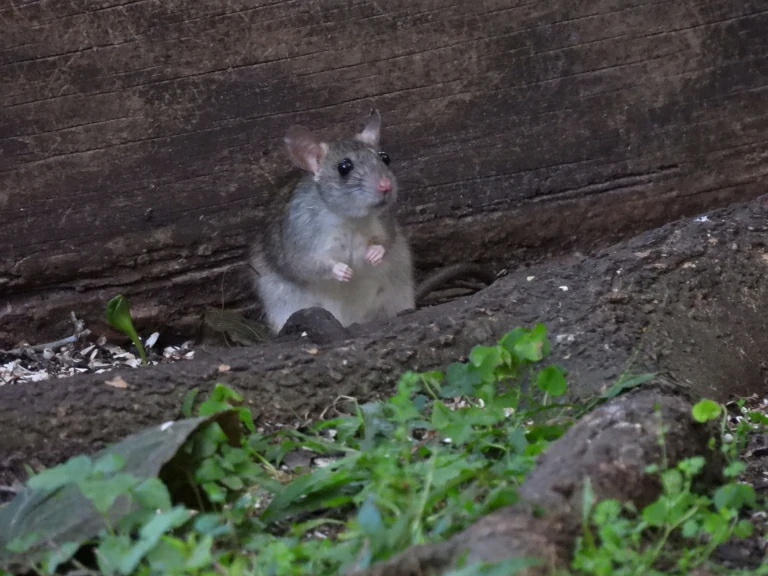
When you’re trying to keep rats out of your home, you might think that tiny cracks and small gaps are nothing to worry about. After all, rats are pretty big animals compared to insects.
But you’d be shocked at how small of an opening a rat can actually squeeze through. Can rats get through small gaps?
Yes, rats can get through surprisingly small gaps. An adult rat can squeeze through a gap as small as half an inch (about 1.3 cm) wide. Young rats can fit through even smaller openings, sometimes as narrow as a quarter-inch. If a rat can fit its skull through, the rest of its body can follow.
This means that openings you’d barely notice can be major entry points for rats. Understanding this helps you properly protect your home.
Why Rats Can Squeeze Through Small Gaps
Rats have several physical features that let them fit through openings that seem way too small for them.
Their skeletons are incredibly flexible. Unlike humans, rats don’t have rigid collarbones. This means their shoulders can collapse inward, making their bodies much narrower when they need to squeeze through tight spaces.
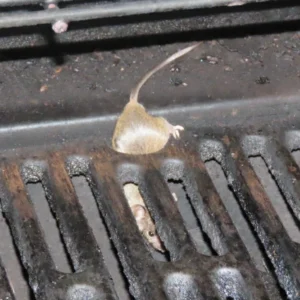
The only truly solid part of a rat’s body is its skull. Once the head makes it through a gap, the rest of the body can compress and slide through behind it.
Their ribcages are also more flexible than you’d expect. Rats can compress their ribs significantly to make themselves thinner. Combined with their flexible spines, this lets them contort their bodies in ways that look impossible.
On top of these physical abilities, rats are persistent. If they want to get through a gap badly enough (because there’s food, water, or shelter on the other side), they’ll keep working at it until they succeed.
How Small Is Too Small for a Rat?
The general rule is that if a gap is half an inch wide or bigger, an adult rat can get through it. That’s about the width of your thumb.
For young rats, the threshold is even lower. Baby rats and juvenile rats can squeeze through gaps as small as a quarter-inch (about the width of a pencil).
Here’s a practical test: if you can fit your thumb through a gap, an adult rat can probably get through it. If you can fit a pencil through it, a young rat can get through.
This is why pest control experts use the “quarter rule.” If you can fit a quarter (the coin) through a gap, a rat can fit through it too. Actually, most adult rats need slightly bigger gaps than a quarter, but using this rule helps you catch all the potential entry points.
Common Small Gaps Rats Exploit
Rats are experts at finding and using small gaps throughout your home. Here are the most common ones.
Gaps under doors are probably the most frequently used entry point. Even a half-inch gap between your door and the floor is enough. Exterior doors, garage doors, and basement doors are all vulnerable.

Cracks in your foundation or walls might look harmless, but if they go all the way through, rats can squeeze through them. Hairline cracks can widen over time, especially in older homes.
Gaps around pipes and utility lines are basically rat highways. When plumbers or electricians install pipes, wires, or cables, they usually cut holes slightly bigger than needed. These extra gaps are perfect for rats.
Spaces around air conditioning units, dryer vents, or exhaust fans often have small gaps where the unit meets the wall. Rats will find and use these openings.
Worn weatherstripping around windows and doors creates small gaps that rats can exploit. Even if the door or window fits well, damaged seals leave openings.
Rats Can Make Small Gaps Bigger
If a gap starts out too small for a rat, it won’t necessarily stay that way. Rats have incredibly strong teeth and will chew through many materials to enlarge an opening.
A gap that’s only a quarter-inch wide today could be rat-sized by tomorrow if it’s made of wood, plastic, or another soft material that rats can chew.
Rats’ teeth grow continuously (about 4 to 5 inches per year), so they’re always looking for things to gnaw on. If they find a small gap that leads somewhere interesting, they’ll chew it bigger.
This is why it’s so important to seal even tiny gaps. You might think “that’s way too small,” but rats see it as a starting point.
Testing Your Home for Rat-Sized Gaps
To find all the gaps rats might use, you need to do a thorough inspection. Here’s how to check your home properly.
Walk around the outside of your house during the day with a flashlight. Look carefully at your foundation, walls, and anywhere different materials meet (like where brick meets wood).

Get down low and look under bushes, decks, and porches. Rats often hide their entry points in areas people don’t usually look.
Check around every pipe, wire, and cable that enters your home. Look both inside and outside for gaps around these entry points.
Use your thumb or a pencil to test gap sizes. If either one fits through easily, mark that spot as needing repair.
Go into your basement, attic, and crawl spaces with a good flashlight. Look for light coming through cracks or holes. If you can see daylight, rats can use that opening.
Look for signs of rat activity near small gaps. These signs include droppings (dark pellets about the size of a raisin), grease marks (dark smudges on walls from rats’ oily fur), gnaw marks on wood or plastic near the gap, and small piles of debris or shavings from chewing.
Gaps That Seem Too Small But Aren’t
Some gaps look way too small to be a problem, but rats will prove you wrong. Here are openings that often get ignored but shouldn’t be.
The gap between your garage door and the ground might only be a quarter-inch in some spots, but that’s enough for young rats. Even if the center of the door seals well, check the corners.

Gaps around air bricks or foundation vents often look too small, but if the vent cover is damaged or missing, rats can squeeze through the opening.
Cracks where your driveway or sidewalk meets your foundation might seem insignificant, but if they go under the foundation, rats can use them to get into your basement or crawl space.
The space between stacked firewood or lumber might have small gaps between pieces. Rats can navigate through these and use them as hiding spots or pathways to your house.
How to Seal Small Gaps
Once you’ve found all the small gaps, you need to seal them properly. Using the wrong materials will just waste your time because rats will chew through them.
For small gaps (half-inch or less), stuff steel wool tightly into the opening. Rats hate chewing on steel wool because it’s sharp and hurts their teeth and gums. Push it in so it’s packed tightly and won’t fall out.
For gaps up to one inch, use steel wool plus expanding foam. Push the steel wool in first, then spray expanding foam around it. The foam holds the steel wool in place and fills the remaining space. Don’t use foam alone, because rats will chew through it easily.
For cracks in concrete or brick, use hydraulic cement or concrete patch. These materials dry extremely hard and rats can’t chew through them. Clean the crack first, then apply the patch according to the product instructions.
For gaps around pipes, use metal collars or escutcheon plates. These are metal discs that fit around pipes and cover the gap between the pipe and the wall. Secure them with screws.
For gaps under doors, install door sweeps or threshold seals. Make sure they actually touch the ground when the door is closed. There should be no gap at all.
What Materials Won’t Work
Some materials seem like they’d seal gaps effectively, but rats can chew through them. Avoid relying on these alone.
Caulk or sealant might look good, but rats can chew through it pretty easily. Use it only for gaps that are too small for rats (less than a quarter-inch) or combine it with steel wool.

Spray foam by itself is not rat-proof. Rats will chew through cured foam in less than 30 minutes. Only use it with steel wool or another barrier.
Wood or wooden plugs won’t stop rats. They’ll just chew through the wood to get to the other side.
Plastic or vinyl won’t work either. These materials are actually easier for rats to chew than wood.
Cardboard, paper, or fabric are useless against rats. They’ll tear through these materials instantly.
Young Rats and Tiny Gaps
Baby rats (called pups) are incredibly small when they’re born. They’re about the size of a jellybean and can fit through gaps that would be impossible for adults.
As they grow, young rats remain much smaller than adults for several weeks. A three-week-old rat might fit through a gap the width of a pencil. By the time they’re three months old, they need the same size gaps as adults.
This is why it’s so important to seal even the tiniest gaps. If you only seal openings big enough for adult rats, young ones can still get in. Once inside, they’ll grow up and start breeding, creating a whole new generation of rats in your home.
When checking for gaps, assume that any opening you can see is big enough for a baby rat. If light comes through, or if air is moving through, seal it up.
Seasonal Changes Can Create New Gaps
Your home expands and contracts with temperature changes throughout the year. This can create new gaps or widen existing ones.
In winter, materials contract and gaps can open up. In summer, things expand and gaps might close up. But if rats find and use a gap during one season, they’ll remember it and keep using it year-round.

Old homes are especially prone to this because the structure has settled and shifted over many years. Gaps can appear where there weren’t any before.
It’s a good idea to inspect your home for gaps at least twice a year, once in spring and once in fall. This helps you catch new openings before rats find them.
Can Rats Compress Their Bodies on Purpose?
Yes, rats can intentionally flatten and compress their bodies when they need to squeeze through tight spaces. It’s not just something that happens accidentally.
When a rat encounters a narrow gap, it’ll test it by sticking its head through first. If the head fits, the rat will deliberately flatten its ribcage, tuck in its shoulders, and wiggle its body through.
This is a learned behavior that rats get better at with practice. Older, more experienced rats are actually better at squeezing through tight gaps than young rats, even though young rats are smaller.
Rats also use their whiskers to judge whether a gap is big enough. Their whiskers are roughly as wide as their body, so if the whiskers fit, the rat knows its body can probably fit too.
Gaps in Unusual Places
Don’t just check the obvious spots. Rats can find and use gaps in places you might not think to look.
Behind appliances like stoves, refrigerators, and dishwashers, there are often gaps where utility lines enter. Rats will squeeze behind these appliances to access those gaps.

Inside closets or cabinets, check where pipes or wires run through walls. These might have gaps around them that connect to other parts of your home.
In your attic, look where the roof meets the walls. Small gaps in the soffit or fascia are easy entry points for rats that can climb.
Around chimneys, both inside and outside, there can be gaps where the chimney structure meets the roof or walls. Check both at the roofline and where the chimney comes through the ceiling inside.
Conclusion
Rats can squeeze through gaps as small as half an inch, and young rats can fit through openings as narrow as a quarter-inch. Their flexible skeletons and persistent nature make them experts at exploiting tiny gaps throughout your home.
To keep rats out, you need to find and seal all gaps, no matter how small they look. Use materials rats can’t chew through, like steel wool, hardware cloth, metal, and concrete.
Don’t underestimate what rats can do. If you can fit your thumb through a gap, a rat can get through it. Taking the time to seal even the smallest openings will protect your home from rat infestations and save you from bigger problems down the road.

Hi, my name is Ezra Mushala, i have been interested animals all my life. I am the main author and editor here at snakeinformer.com.