
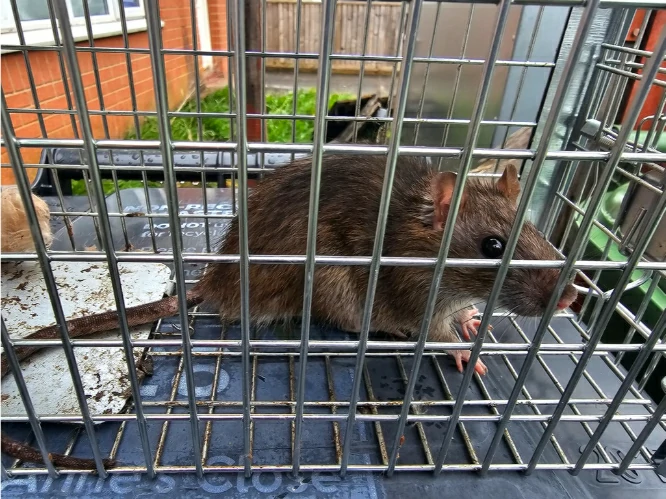
You’ve probably heard some wild claims about how small of a space rats can squeeze through. Some people say rats are like liquid and can fit through impossibly tiny gaps. When you’re trying to rat-proof your home, you need to know the truth. One common question is about pencil-sized holes – those seem pretty small, but are they small enough to keep rats out? Can rats actually get through a hole the size of a pencil?
No, rats can’t get through a hole the size of a pencil. A standard pencil is about 1/4 inch in diameter, which is too small for rats to squeeze through. Adult rats need openings at least 3/4 inch (about the size of a quarter) to fit through, and even young rats need at least 1/2 inch.
If you’ve got holes the size of a pencil in your walls or foundation, you’re actually in pretty good shape when it comes to keeping rats out. But you still shouldn’t ignore them completely.
How Small Can Rats Actually Squeeze?
Rats are flexible, but there are real physical limits to what they can do. The internet has spread a lot of exaggerated information about this.
The key limiting factor is the rat’s skull. Rats can compress their bodies quite a bit because they don’t have a collarbone. This gives them more flexibility to squeeze through tight spaces. But they can’t compress their skull or their rib cage very much.

If a rat’s head can’t fit through an opening, its body won’t fit either. This is the rule that matters most when you’re trying to figure out what size holes to worry about.
An adult rat’s skull is typically about 3/4 to 1 inch wide at the widest point. This means an adult rat needs an opening at least 3/4 inch in diameter to squeeze through. Most pest control experts use the “size of a quarter” comparison, which is about 3/4 inch.
Young rats have smaller skulls and can fit through slightly smaller openings, sometimes as small as 1/2 inch. But this is their absolute minimum, and it’s not comfortable for them. They’d much rather use a bigger opening if one is available.
A pencil is only about 1/4 inch in diameter, which is way too small for even the smallest rat to squeeze through. You’d need a hole at least two to three times bigger than a pencil before a rat could fit.
Why the Pencil Comparison Gets Used
You might be confused because you’ve heard people talk about pencil-sized holes in relation to mice, not rats. This is where some of the confusion comes from.
Mice are much smaller than rats. An adult mouse can squeeze through holes as small as a dime, which is about 1/4 inch. This is roughly the size of a pencil, which is why the pencil comparison makes sense for mice.
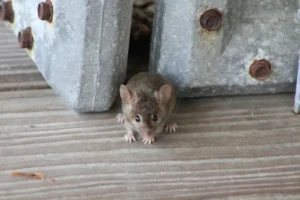
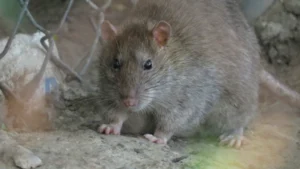
Some people mistakenly use this same guideline for rats, but rats are significantly larger. An adult rat can weigh 10 to 20 times more than a mouse, and their skulls are much bigger.
If you’re dealing with mice, then yes, you need to worry about pencil-sized holes. If you’re dealing with rats, you’ve got a bit more breathing room. Quarter-sized holes are the concern for rats.
This doesn’t mean you should ignore small holes entirely. Even if rats can’t fit through them, they might chew on them to make them bigger. Rats can gnaw through wood, plastic, and even soft concrete given enough time.
What Size Holes Should You Actually Worry About?
When you’re rat-proofing your home, you need to know what size openings are actually dangerous. Here’s the breakdown.
Anything 3/4 inch or larger is definitely big enough for adult rats. This includes gaps under doors, holes around pipes, cracks in foundations, and openings in vents. These need to be sealed immediately.

Openings between 1/2 inch and 3/4 inch are borderline. Adult rats will have trouble with these, but young rats might be able to squeeze through. It’s better to seal these too, just to be safe.
Holes smaller than 1/2 inch are generally too small for rats. But you should still keep an eye on them because rats might try to enlarge them by chewing. If you see gnaw marks around small holes, seal them before they become big enough for rats to use.
The practical advice is this: if you can fit your pinky finger through a hole, assume a rat can probably fit through it too. If your thumb fits through, a rat definitely can. Seal anything that seems even remotely large enough.
How Rats Make Small Holes Bigger
Even though rats can’t fit through pencil-sized holes initially, they won’t necessarily give up if they really want to get inside.
Rats have incredibly strong teeth that never stop growing. They need to constantly chew on things to keep their teeth filed down. This means they’re always ready to do some gnawing.
If a rat finds a small hole that’s too small to squeeze through but can smell food, shelter, or other rats on the other side, it might start chewing to enlarge the opening. Given enough time, they can turn a tiny hole into a rat-sized entrance.

Wood is easy for rats to chew through. They can enlarge a pencil-sized hole in wood to quarter-sized or bigger in just a few hours of determined gnawing.
Drywall is even easier. Rats can chew through drywall really quickly. If they find a small hole in your drywall, they can have a rat-sized opening in no time.
Soft plastics, foam insulation, and rubber are all materials rats can chew through easily. Even aluminum flashing or screens might not stop them if it’s thin enough.
Harder materials like concrete, brick, and thick metal take longer, but rats can still damage them over time. They’re less likely to bother with these unless they’re really motivated.
Materials That Rats Can’t Chew Through
If you’re sealing holes to keep rats out, you need to use materials that rats can’t enlarge by chewing.
Steel wool is a popular choice for filling small to medium holes. Rats hate trying to chew through it because the sharp fibers hurt their mouths. Pack it tightly into the hole, then seal over it with caulk or mortar.
Sheet metal, especially steel or galvanized metal, is too hard for rats to chew through. You can use this to cover larger openings or to reinforce vulnerable areas.

Hardware cloth with 1/2 inch or smaller openings keeps rats out and can’t be chewed through. It’s perfect for covering vents or other areas where you need air flow but don’t want rats.
Concrete and mortar are excellent for permanently sealing holes in foundations, brick walls, or concrete blocks. Once it cures, rats can’t chew through it.
Copper mesh works like steel wool but lasts longer because it doesn’t rust. It’s more expensive but good for permanent installations.
Materials to avoid include wood, plastic, rubber, foam, caulk alone, and expanding foam alone. Rats can chew through all of these. You can use them in combination with the materials above, but never by themselves.
Common Entry Points That Seem Too Small
There are certain spots around your home that might look too small for rats but are actually perfect entry points once rats enlarge them.
Gaps around pipes where they enter your home often start out small but have soft materials around them. Rats can chew away the caulk, foam, or wood surrounding the pipe and create a larger opening.
Holes where wires or cables enter your foundation might be drilled to exact size, but the material around them can be chewed. The hole itself might be pencil-sized, but rats can make it bigger.

Weatherstripping that’s old or damaged creates small gaps under doors or around windows. While these gaps might start out too small, rats can pull at the weatherstripping and create larger openings.
Dryer vent covers with broken flaps or loose covers give rats a starting point. They can chew on the edges or push through gaps to get into your dryer vent system.
Gaps in siding or trim, even if they’re narrow, can be widened. Wood siding is especially vulnerable because rats can gnaw at the edges to create larger openings.
How to Find Small Holes Rats Might Enlarge
You need to do a thorough inspection of your property to find all the potential entry points before rats find them.
Start outside and work your way around the entire perimeter of your home. Get down low and look at your foundation, checking for any cracks, holes, or gaps.
Pay special attention to areas where different materials meet. The joint between your foundation and siding, or between brick and wood, often has small gaps.
Check around all utility entry points. Look where pipes, wires, cables, gas lines, and other utilities enter your home. These are common spots for small holes.
Inspect your roof line and eaves. Rats are excellent climbers and might find entry points near your roof. Look for gaps in soffits, damaged vents, or holes near the roof edge.

Use a bright flashlight, especially when checking dark areas like crawl spaces, attics, or the back of sheds. Small holes are easy to miss in dim light.
Run your hand along surfaces (carefully) to feel for drafts. If you feel air moving, there’s a gap somewhere, even if you can’t see it.
Do this inspection at least once a year, and again after any construction work or major storms that might have created new openings.
The Difference Between Mouse Holes and Rat Holes
If you find a hole and you’re not sure whether it’s being used by mice or rats, there are ways to tell.
The size of the hole is the first clue. If it’s about the size of a quarter or larger, it’s probably rats. If it’s dime-sized or smaller, it’s more likely mice.
Look for rub marks around the hole. Rats have oily fur that leaves dark, greasy smears on surfaces they repeatedly brush against. These marks are usually more prominent with rats than mice because rats are larger.
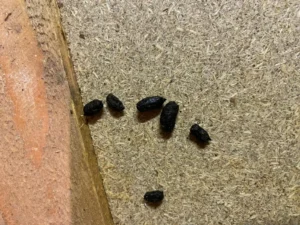
Check for droppings near the hole. Rat droppings are about 1/2 to 3/4 inch long and look like large grains of rice with pointed ends. Mouse droppings are much smaller, about 1/4 inch long, and look like small black grains of rice.
The location might give you a hint too. Rats are more likely to create entry points at ground level or in lower areas. Mice can be anywhere, but they’re often found in higher locations too.
If you’re not sure and you want to find out what’s using the hole, you can tape a piece of paper loosely over it. Whatever is using the hole will tear through or push aside the paper, and you might be able to see tracks or droppings.
What to Do About Holes That Are Too Small for Rats Now
Even if a hole is currently too small for rats, you should still deal with it to prevent problems later.
Seal small holes before they become big holes. Use steel wool and caulk for holes up to about 1 inch. Stuff the steel wool in tightly, then cover it with caulk or mortar.
For slightly larger holes, use steel wool or copper mesh as backing, then fill with mortar or concrete. This creates a barrier rats can’t chew through.
Cover larger openings with hardware cloth, then seal around the edges. This works well for vents or areas where you need some air flow.
Replace damaged materials that rats might chew through. If your siding, trim, or other materials are rotting or deteriorating, repair or replace them before rats take advantage.
Keep monitoring. Just because a hole is too small today doesn’t mean it’ll stay that way. Check your seals and patches periodically to make sure rats haven’t started working on them.
Signs Rats Are Trying to Get In
Even if you don’t have rats inside yet, there are signs they might be testing your defenses and looking for weak spots.
Fresh gnaw marks around small holes or gaps show that rats are actively trying to enlarge entry points. Fresh gnaw marks look lighter in color because they expose the inner material.
Wood shavings, sawdust, or debris near holes suggest rats have been chewing. They don’t eat the material they chew – they just remove it to make the hole bigger.

Scratching sounds at night, especially near walls or in specific areas, might mean rats are working on creating an entry point.
Grease marks or rub marks along your foundation or walls show where rats are traveling. If these marks lead to a specific spot, check that area carefully.
Rat droppings outside near your home’s foundation mean rats are spending time close to your house. They’re probably looking for a way in.
If you see these signs, act quickly. It’s much easier to keep rats out than to get rid of them once they’re inside.
Conclusion
Rats can’t get through holes the size of a pencil. A standard pencil is only about 1/4 inch in diameter, which is too small for even young rats to squeeze through. Adult rats need openings at least 3/4 inch (the size of a quarter) to fit.
However, you shouldn’t ignore small holes completely. Rats can chew through many materials to make holes bigger. If a rat finds a pencil-sized hole in wood, drywall, or other soft material, it can enlarge that hole to rat-size with enough time and motivation.
The best approach is to seal all holes and gaps, even ones that seem too small for rats right now. Use materials rats can’t chew through, like steel wool with caulk, hardware cloth, or mortar. This prevents rats from getting in and stops them from making small problems into big ones.

Hi, my name is Ezra Mushala, i have been interested animals all my life. I am the main author and editor here at snakeinformer.com.