

Finding rats in your home is stressful enough, but the real challenge is figuring out how they’re getting inside in the first place.
You might see rats scurrying across your floor or find droppings in your kitchen, but unless you know where they’re coming from, you can’t really solve the problem. How do I know where rats are coming from?
You can figure out where rats are coming from by looking for their droppings, tracking marks, greasy smear marks on walls, gnaw marks, and following their travel paths. Rats leave behind clear signs that point back to their entry points.
Rats are creatures of habit and they follow the same routes over and over. By paying attention to where you find the most activity and what signs they leave behind, you can trace their path backwards to find out exactly where they’re sneaking into your home.
Look for Rat Droppings and Follow the Trail
Rat droppings are one of the clearest signs that’ll help you figure out where rats are coming from. These droppings aren’t random, they’re concentrated in areas where rats travel most often.
Rat droppings are dark brown or black pellets, shaped like grains of rice but a bit larger (about half an inch long). Fresh droppings are dark and shiny, while older ones turn gray and crumbly.
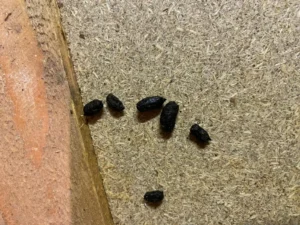
Start by identifying all the areas where you’re finding droppings. Don’t just note one spot, check your entire home. Look in kitchens, pantries, basements, attics, garages, and under sinks.
Once you’ve found multiple areas with droppings, look for patterns. Where are the droppings most concentrated? Rats drop waste as they move, so areas with lots of droppings are either places they visit frequently (like near food sources) or places they travel through regularly.
Follow the droppings back toward walls and corners. Rats don’t like being out in the open, they travel along walls and baseboards where they feel protected. If you find droppings along a particular wall, that wall is part of their travel route.
Pay special attention to droppings near corners, under furniture, or in hidden spaces. These often lead directly to entry points. If you find a concentration of droppings in one specific area (especially along a wall or near a corner), there’s probably an entry point nearby.
Check for Greasy Rub Marks
Rats have oily fur, and when they travel along the same path repeatedly, they leave behind dark, greasy marks. These marks are super helpful for tracking where rats are coming from.
Look along your baseboards, especially at corners and where walls meet the floor. Rats run along these edges, and their bodies rub against the wall as they move. Over time, this creates visible smear marks.

These marks usually appear as dark, greasy streaks. They’re most visible on light-colored walls or surfaces. If you run your finger along one of these marks, it might feel slightly oily or greasy.
Check around any holes or gaps in your walls. If rats are using an opening to get in, there will almost always be dark smear marks around the edges where their bodies squeeze through.
Look at pipes, wires, and other things that go through your walls. Rats often use these as highways, and they’ll leave greasy marks on the pipes or on the walls around them.
Don’t forget to check higher up too. Rats can climb really well, so they might be using upper portions of walls or even ceiling areas. Look for marks along any ledges, shelves, or places where pipes run along walls.
Search for Gnaw Marks
Rats need to constantly chew to keep their teeth from growing too long. They’ll gnaw on wood, plastic, cardboard, and even soft metals. These gnaw marks can lead you right to their entry points.
Look at the corners of doors and window frames. Rats often gnaw at these spots trying to make openings bigger or create new ways inside.
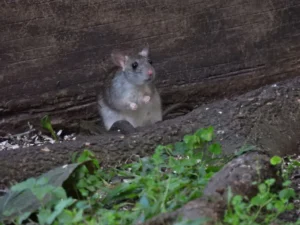
Check any wooden areas in your basement or attic. Fresh gnaw marks are light colored (because they expose fresh wood underneath), while older gnaw marks darken over time.
Examine areas around pipes and wires where they enter your home. Rats will often gnaw around these spots to make the opening bigger so they can squeeze through.
Look at food containers and packaging. If rats are getting into your pantry, they’re gnawing through boxes and bags. Following these damaged items back to where they’re concentrated can help you find the route rats are taking.
Check your drywall and insulation, especially in basements and attics. Rats will chew through these materials to create tunnels and pathways between walls.
If you find fresh gnaw marks (light colored, with visible teeth marks), that entry point is actively being used right now. Old gnaw marks are still worth noting, but fresh ones tell you this is a current route.
Track Their Movement Patterns
Rats are creatures of habit. They use the same paths over and over, usually traveling along walls and through hidden spaces. Understanding their movement patterns helps you work backwards to entry points.
Rats typically stay within 100 to 300 feet of their nest. This means if you’re seeing rats in your kitchen, their entry point is probably somewhere within that range of your home.
Watch for patterns in where you see rats or signs of rats. Are they always in the same rooms? Do you notice activity at the same times? Rats are most active at night, especially just after sunset and before sunrise.

If you’re seeing rats in multiple rooms, try to figure out the path they’d take between those rooms. Do they all connect through a certain hallway? Is there a basement or crawlspace underneath?
Pay attention to corners and edges. Rats almost never run straight across open floor. They stick to walls, baseboards, and furniture edges where they feel protected.
Check behind appliances like stoves, refrigerators, and dishwashers. Rats love these areas because they’re warm, hidden, and often have access to gaps in walls or floors.
Inspect Your Home’s Exterior
Many rat entry points are actually on the outside of your home. Rats get in through gaps in your foundation, walls, or roof, then travel through hidden spaces to get inside your living areas.
Start by walking around the outside of your home and looking at the foundation. Look for cracks, holes, or gaps where the foundation meets the ground. Rats can fit through holes as small as a quarter, so even tiny gaps are potential entry points.
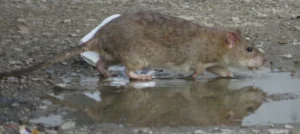
Check where utilities enter your home. Look at pipes, electrical wires, cable lines, and gas lines. These often have gaps around them that rats can use to get inside.
Examine your roof and eaves. Look for missing or damaged shingles, gaps in soffits, and holes in fascia boards. Rats can climb up the outside of your house and get in through roof damage.
Look at your vents, including dryer vents, attic vents, and crawlspace vents. Make sure they all have screens and that the screens are in good condition with no holes.
Check your windows and doors. Look for gaps under doors, damaged weather stripping, and cracks in window frames. Basement windows are especially common entry points.
Look for any openings in your siding or exterior walls. Even small cracks can be entry points that rats will make bigger by gnawing.
Check Basements and Crawlspaces
Basements and crawlspaces are some of the most common areas where rats first enter your home. These spaces often have multiple entry points and give rats access to your walls and floors.
If you have a basement, inspect it carefully. Look at where the walls meet the floor, checking for cracks or gaps in the concrete.

Check around your basement windows. These often have gaps or cracks that rats can squeeze through, especially if the windows are old or the caulking has deteriorated.
Look at any floor drains. While most have traps that prevent rats from coming up through them, damaged or dry traps can let rats in.
If you have a crawlspace, this needs careful inspection too. Bring a flashlight and look for holes in the foundation, gaps where pipes enter, and damage to crawlspace vents.
Check the vapor barrier (the plastic sheeting on the ground in crawlspaces). If rats have been there, you’ll see damage to the plastic and signs of travel routes.
Look up at the floor joists and subflooring from below. Rats might be traveling through these spaces to reach different parts of your home.
Inspect Your Attic and Roof
Your attic is another prime entry location for rats. They can climb up the outside of your house and find their way in through roof damage or gaps.
If it’s safe to do so, go into your attic and inspect it carefully. Look for droppings, which will tell you if rats are using your attic space.
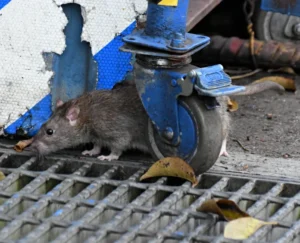
Check where your roof meets your walls. Look for gaps or openings, especially around where pipes or vents go through the roof.
Examine your attic vents from the inside. Make sure they’re properly screened and that there are no holes or damage.
Look at your soffit (the underside of your roof overhang). Rats can squeeze through gaps between the soffit and the wall.
Check your chimney. If you don’t have a chimney cap, rats can climb down from the roof and get into your fireplace.
Look for daylight coming through anywhere it shouldn’t. If you can see light coming through a gap during the day, rats can probably get through that same gap.
Inspect any wires or pipes that go through your attic. Rats often follow these from outside into your attic space.
Use Flour or Baby Powder to Track Movement
If you’re having trouble figuring out exactly where rats are traveling, you can use a simple tracking method to see their paths.
Sprinkle flour or baby powder in areas where you think rats might be traveling. Do this at night before you go to bed (since rats are most active at night).

In the morning, check the powder for footprints. Rat prints are small, with four toes on the front feet and five on the back feet. You might also see tail drag marks.
Follow the prints to see where they lead. They should point you toward either food sources or entry points (or both).
Pay attention to where the prints start and end. If prints suddenly appear near a wall or corner, there’s probably an entry point there.
You can also sprinkle powder right at suspected entry points. If rats are using that spot, you’ll see disturbed powder and possibly prints leading away from the opening.
Common Entry Points to Check First
While every home is different, there are some entry points that are more common than others. Checking these first can save you time.
Check gaps under doors, especially garage doors and exterior basement doors. Even a small gap at the bottom of a door is enough for a rat to squeeze under.

Look at your garage door seal. If it’s worn or damaged, there could be gaps when the door is closed.
Inspect areas where different building materials meet, like where brick meets wood siding. These joints often have gaps that grow over time.
Check around your air conditioning unit where it connects to your house. There are often gaps here that rats can use.
Look at your dryer vent opening. Make sure it has a working flap that closes when the dryer isn’t running, and check that there are no gaps around where the vent goes through the wall.
Examine your foundation for cracks. Even hairline cracks can become rat entry points if they’re at ground level.
Check any outdoor structures attached to your house, like decks or porches. Rats can hide under these and then find ways into your foundation.
What to Do Once You Find Entry Points
Once you’ve identified where rats are coming from, you need to seal those entry points properly to keep more rats from getting in.
Don’t seal entry points while rats are still inside. You need to make sure all the rats have left first, or you’ll trap them inside where they’ll die in your walls.
Use the right materials to seal openings. Steel wool or copper mesh works well for small gaps because rats can’t chew through metal. Push the steel wool into the hole, then seal it with caulk or foam.

For larger openings, use metal sheeting or hardware cloth (wire mesh with small holes). Cover the entire opening and secure it well so rats can’t push it aside.
Don’t use materials that rats can chew through, like wood, plastic, or regular insulation. These won’t keep rats out for long.
After sealing entry points, monitor those areas for a few weeks. Check to see if rats try to chew through your repairs or find new ways around them.
When to Call a Professional
Sometimes finding rat entry points is more complicated than it seems, and that’s when professional help makes sense.
If you can’t figure out where rats are coming from after doing thorough inspections, a professional pest control expert has experience and tools that can help. They know all the common (and uncommon) entry points to check.

If you’ve found entry points but you’re not comfortable sealing them yourself (maybe they’re in hard-to-reach areas or require repairs you’re not equipped to do), professionals can handle this safely.
If rats keep getting in even after you’ve sealed what you thought were all the entry points, there’s likely something you missed. A professional can do a complete property inspection to find hidden problems.
If you have a large property or a complex home with multiple levels, basements, and attics, professional inspection is often worth it. They can cover more ground more efficiently.
Conclusion
Figuring out where rats are coming from takes patience and careful inspection, but the signs they leave behind will point you in the right direction. Follow the droppings, track the greasy marks, look for gnaw damage, and check both inside and outside your home.
Focus on basements, crawlspaces, attics, and areas where utilities enter your home, since these are the most common entry points. Once you identify where rats are getting in, seal those openings properly with materials they can’t chew through.
Remember that rats can fit through openings as small as a quarter, so even tiny gaps need attention. The effort you put into finding and sealing entry points will pay off by keeping your home rat-free.

Hi, my name is Ezra Mushala, i have been interested animals all my life. I am the main author and editor here at snakeinformer.com.