
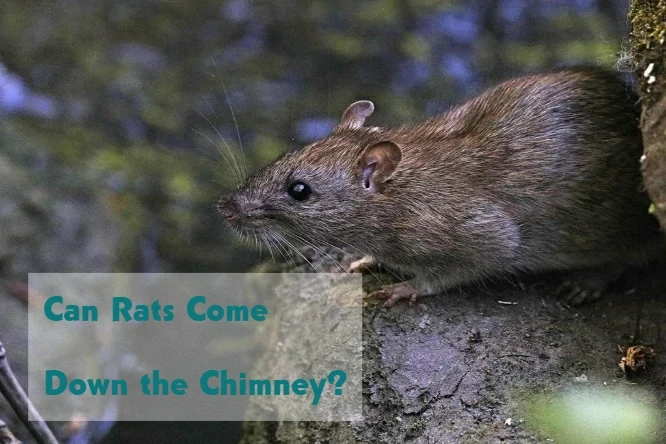
Your chimney might seem like a secure part of your home, but it’s actually a highway for all sorts of unwanted visitors. If you’ve heard scratching or scurrying sounds coming from your fireplace, you might be wondering what’s going on up there. Can rats come down the chimney?
Yes, rats can come down chimneys. Both roof rats and Norway rats are capable of climbing down the inside of chimneys, especially if the interior surface is rough (like brick) or if there are ledges, gaps, or obstructions they can grip onto. Once they reach the bottom, they can enter your home through the fireplace if it’s not properly sealed.
Chimneys provide everything rats are looking for: shelter from weather, safety from predators, and often a direct route into your warm house.
Understanding how rats use chimneys and how to keep them out is important for protecting your home.
How Rats Actually Get Down Chimneys
Rats are surprisingly good at navigating vertical spaces, and chimneys aren’t as hard for them as you’d think.
Rats reach your chimney by climbing onto your roof first. They’ll use tree branches, exterior walls, utility lines, or downspouts to get up there. Once on the roof, finding the chimney is easy.
The exterior of most chimneys has rough brick, stone, or textured materials that rats can grip easily. They’ll climb up the outside to reach the top opening.
Inside the chimney, rats can climb down if there’s anything to grip. Brick chimneys have mortar lines between bricks that create natural footholds. Even small imperfections in the surface give their claws something to catch on.
Metal chimney liners are harder for rats to climb because they’re smooth, but rats can still work their way down if there are joints, seams, or any kind of roughness. They might also be able to brace themselves between the liner and the chimney wall if there’s a gap.
Rats can also fall down chimneys accidentally. If they’re exploring around the top opening and slip, they’ll tumble down. Surprisingly, many rats survive falls down chimneys because they’re small and relatively light.
Ledges, dampers, or obstructions inside the chimney give rats places to rest as they climb. They don’t need to go all the way down in one attempt. They can take breaks on their way down.
Why Rats Are Attracted to Chimneys
Chimneys have several features that make them appealing to rats looking for shelter.
The top of the chimney provides a high vantage point with cover. Rats, especially roof rats, like being up high where they feel safe from ground predators.
The chimney interior is protected from weather. Rain, wind, and snow don’t reach inside, making it a comfortable spot to nest or hide.
Warmth radiates from chimneys that are used for fires. Even if you don’t use your fireplace regularly, residual warmth from your house might radiate up through the chimney. Rats can sense this warmth and are attracted to it.
Chimneys often have gaps or damaged areas where the flashing meets the roof. These gaps might lead directly into your attic or wall cavities. Rats investigate these areas looking for entry points.
The chimney stack itself might have cracks or loose mortar that create nesting spots. Some rats will nest in these gaps without ever going all the way down into the house.
Access to multiple parts of the house is possible through the chimney. Some chimneys connect to more than one fireplace on different floors, giving rats options for where to enter.
Signs That Rats Have Come Down Your Chimney
You might not see a rat climbing down your chimney, but there are signs that tell you it’s happening.
Scratching or scurrying sounds from inside the chimney are the most obvious clue. You’ll hear these noises especially at night when rats are most active.
Squeaking or chattering sounds mean rats are communicating. If there are multiple rats in or around your chimney, you might hear these vocalizations.
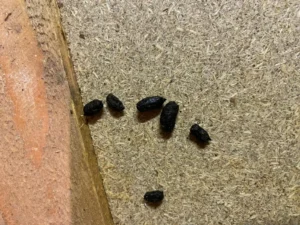
Droppings in your fireplace are a dead giveaway. Rat droppings are dark, capsule-shaped, and about half an inch long. If you’re finding these in or near your fireplace, rats have been there.
Nesting materials like shredded leaves, twigs, paper, or insulation appearing in your fireplace suggest rats are building nests somewhere in the chimney system.
A musky or urine smell coming from your fireplace or chimney area indicates rat activity. The smell gets stronger as more rats use the space or as waste accumulates.
Soot or debris falling down the chimney more than usual happens when rats disturb the buildup as they climb around.
Seeing a rat in or near your fireplace is definitive proof. You might spot one peeking out of the fireplace opening or running across the room if it got out.
What Happens If a Rat Gets Into Your Fireplace
Once a rat makes it down your chimney to the fireplace level, you’ve got a problem that needs immediate attention.
If your fireplace has a closed damper (the metal plate that seals off the chimney from your room), the rat might be trapped between the damper and the firebox. You’ll hear it scratching and trying to get out.
If the damper is open or broken, the rat can walk right out into your living space. Some rats will do this immediately, while others might be cautious and wait until things are quiet.
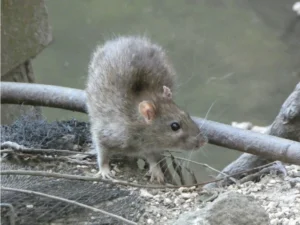
A rat loose in your house is stressful for both you and the rat. The rat will be scared and looking for a way out or a place to hide. It might run behind furniture, into other rooms, or try to find dark, enclosed spaces.
The rat could potentially bring parasites into your home. Fleas, mites, and ticks that live on rats can jump off and infest your living space.
If the rat dies in your chimney or fireplace (from being trapped, injured, or from poison if you used it), you’ll have to deal with the smell of decomposition. This can be really unpleasant and hard to eliminate.
Multiple rats coming down your chimney means you could have an infestation developing. Where there’s one rat, there are often others.
Types of Chimneys and Rat Access
Not all chimneys are equally accessible to rats. The design and condition of your chimney matters.
Brick chimneys with rough interiors are the easiest for rats to climb. The texture gives them plenty of grip, and older brick chimneys might have deteriorating mortar that creates even more footholds.
Metal chimney liners or inserts make climbing harder because they’re smoother. However, rats can still navigate these if there are joints, seams, or if they can wedge themselves between the liner and the outer chimney wall.
Prefabricated metal chimneys (common in newer homes) are generally harder for rats to climb because they’re smooth inside. But rats can still fall down them or use any imperfections to work their way down.
Unused or abandoned chimneys are prime targets. If you’ve sealed off a fireplace but left the chimney open at the top, rats might nest in the space. They feel safe there because there’s no smoke, heat, or human activity to disturb them.
Chimneys in poor condition with cracks, missing bricks, or damaged flashing give rats multiple entry options. They might not even need to climb down the flue if they can get into your house through a gap in the chimney structure.
How to Keep Rats From Coming Down Your Chimney
Prevention is way easier than dealing with rats that are already in your chimney.
1. Install a chimney cap with mesh screening.
This is the single most effective solution. A properly installed chimney cap covers the opening while still allowing smoke to escape.
The mesh screen (quarter-inch or smaller openings) keeps rats, birds, and other animals out.
2. Make sure the cap is secured properly.
A cap that’s just sitting on top can be pushed off by determined animals or blown off by wind. It should be screwed or bolted into place.
3. Inspect your chimney cap regularly.

Check that the mesh isn’t damaged, rusted through, or coming loose. Replace damaged caps immediately.
4. Repair any damage to the chimney structure.
Cracks in the bricks, gaps in the flashing, or loose mortar should be fixed. These aren’t just rat entry points; they’re also structural problems that can get worse over time.
5. Keep tree branches away from your chimney and roof.
Trim branches back at least six to eight feet so rats can’t use them as bridges to reach your roof and chimney.
6. If you have an old unused chimney, consider having it professionally sealed at the top.
This completely blocks access while maintaining the structural integrity of the chimney.
7. Install a top-sealing damper if your fireplace damper is broken or missing.
This seals the chimney at the very top when the fireplace isn’t in use, preventing rats from getting down into the firebox.
What to Do If a Rat Is Already in Your Chimney
If you already have a rat in your chimney, you need to get it out before you can seal the entry points.
- Listen carefully to locate where the rat is.
Is it at the top of the chimney, partway down, or in the firebox area? This helps you decide how to handle it.
- Open the damper if it’s closed and the rat is above it.
You want to give the rat a clear escape route into the fireplace where you can deal with it. But be ready to close off the room so it doesn’t run through your house.
- Set a live trap or snap trap in the fireplace.
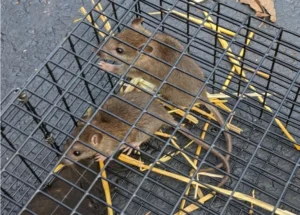
Bait it with peanut butter or bacon. If the rat is in the firebox area, it might go for the bait.
- Don’t light a fire to “smoke out” the rat.
This is cruel, it’s ineffective (rats can survive smoke better than you’d think), and you might end up with a dead rat in your chimney that you can’t reach.
- If the rat is stuck or won’t come out, you might need to call a professional.
Wildlife removal experts have tools and experience for getting animals out of chimneys safely.
- Once you’re sure the rat is out, clean the chimney and fireplace thoroughly.
Wear gloves and a mask because rat droppings can carry diseases. Disinfect all surfaces the rat might have touched.
Only after the rat is completely gone should you install a chimney cap or seal entry points. If you seal things up while a rat is still in there, you’ll trap it and it will die in your chimney.
Can Baby Rats Climb Down Chimneys?
Adult rats aren’t the only concern. Baby rats can also end up in your chimney.
Mother rats sometimes build nests in chimneys, especially at the top near the cap or on ledges inside the flue. If the nest is disturbed or if babies wander away from it, they can fall down the chimney.
Baby rats can’t climb as well as adults. Their claws aren’t as developed and they don’t have the strength or coordination yet. If they fall down the chimney, they probably can’t climb back up.

Orphaned baby rats might be found in your fireplace if the mother was killed or trapped elsewhere. These babies can’t survive on their own and will die if not removed.
If you hear high-pitched squeaking from your chimney (different from adult rat sounds), it might be baby rats. This suggests there’s a nest somewhere in or near the chimney.
The presence of baby rats means you have a breeding population, which is a bigger problem than just one or two adults passing through.
Chimney Caps and What to Look For
If you’re going to invest in a chimney cap to keep rats out, here’s what you need to know.
Stainless steel caps are the best choice. They resist rust, last a long time, and rats can’t chew through them. They cost more upfront but are worth it.
Galvanized steel caps are cheaper but will rust eventually, especially in humid or coastal areas. They’ll need to be replaced more often.
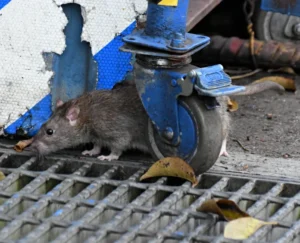
Copper caps are attractive and last forever, but they’re expensive. If you care about appearance and have the budget, they’re a great option.
The mesh size matters. Quarter-inch mesh or smaller keeps out rats, mice, and most other pests. Larger mesh openings might stop birds but won’t stop rodents.
Single-flue caps cover one chimney opening. Multi-flue caps can cover chimneys with multiple flues in one structure. Make sure you get the right type for your chimney.
The cap needs to fit properly. Measure your chimney opening accurately before buying. A cap that’s too small won’t fit, and one that’s too large won’t seal properly.
Professional installation ensures the cap is secured correctly. While you can install some caps yourself, having a chimney professional do it guarantees it’s done right.
Other Animals That Come Down Chimneys
Rats aren’t the only animals that can end up in your chimney. Understanding what else might be there helps with identification.
Squirrels sometimes fall down chimneys or deliberately enter to nest. They sound different from rats (louder, more frantic scratching) and are usually active during the day.

Birds, especially chimney swifts, are common chimney visitors. They nest inside chimneys in summer. Their sounds include chirping and fluttering wing noises.
Bats might roost in chimneys, especially during migration or in summer. They make high-pitched squeaking sounds and are most active at dawn and dusk.
Raccoons occasionally enter chimneys, usually when they’re looking for den sites to have babies. They’re much larger and louder than rats, and their scratching sounds more forceful.
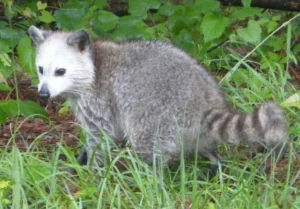
If you’re not sure what animal you have, the time of day you hear sounds helps. Rats are nocturnal (active at night). Squirrels are diurnal (active during the day). Bats are crepuscular (active at dawn and dusk).
Insurance and Chimney Damage From Rats
If rats in your chimney cause damage, you might wonder about insurance coverage.
Most homeowner’s insurance policies don’t cover rodent damage. This includes damage rats cause while in your chimney or fireplace, or damage from them chewing on structural elements.
Neglect is usually not covered. If you knew about a rat problem and didn’t fix it, insurance probably won’t pay for resulting damage.
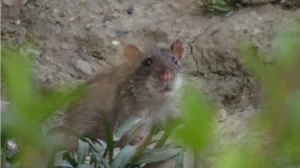
Fire damage caused by rats chewing wires in or near your chimney might be covered, depending on your policy. But you’d need to prove the fire was related to the rat damage.
Prevention and maintenance are your responsibility. Insurance companies expect homeowners to maintain their properties, including installing chimney caps and sealing entry points.
The cost of professional wildlife removal isn’t usually covered by insurance. This is considered a maintenance issue that homeowners should handle.
Some specialized policies or riders might cover wildlife or pest damage, but these are uncommon. Check your specific policy if you’re concerned.
Conclusion
Rats can definitely come down chimneys. Both roof rats and Norway rats are capable of climbing down the interior of chimneys, especially rough brick ones. Once at the bottom, they can enter your home through the fireplace if it’s not sealed properly.
The best way to prevent rats from using your chimney is to install a properly fitted chimney cap with fine mesh screening. This blocks access while still allowing your fireplace to function. Maintaining your chimney structure and keeping trees trimmed away from your roof also helps.
If you already have rats in your chimney, don’t light a fire to get rid of them. Instead, give them a way out through the fireplace into a contained area where you can trap them, or call a wildlife removal professional.
Only seal the chimney after you’re certain all rats are gone. Regular chimney maintenance and inspection will help you catch problems before they become serious infestations.

Hi, my name is Ezra Mushala, i have been interested animals all my life. I am the main author and editor here at snakeinformer.com.