
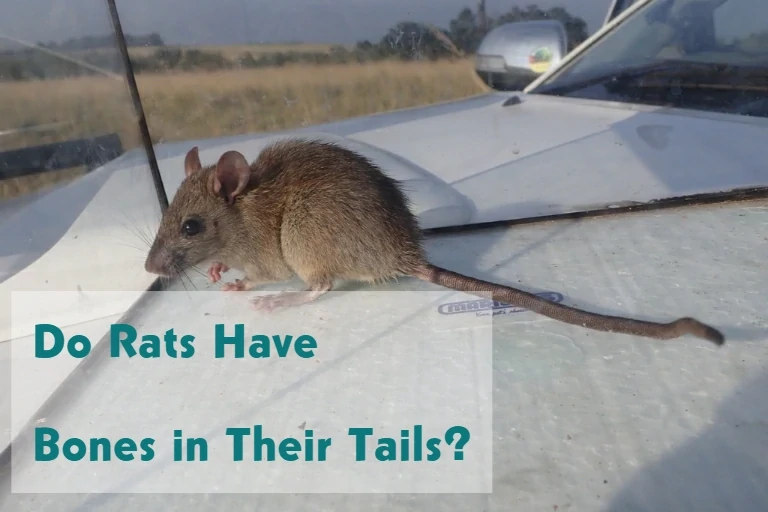
Rat tails are one of the most distinctive features of these rodents, but they’re also one of the most misunderstood. The long, scaly, pink tail looks almost like it could be boneless and flexible, similar to a worm or a tentacle. But appearances can be deceiving. Do rats have bones in their tails?
Yes, rats have bones in their tails. A rat’s tail contains between 27 and 30 small vertebrae (tiny bones stacked in a row) that run from the base of the tail all the way to the tip. These bones are surrounded by muscles, tendons, blood vessels, and nerves, all covered by skin and scales.
The tail bones are much smaller and more flexible than the vertebrae in the rat’s spine, but they’re real bones nonetheless.
This internal structure is what gives the tail its strength while still allowing it to bend and move in all directions.
What the Bones in a Rat’s Tail Look Like
The bones in a rat’s tail are called caudal vertebrae. They’re basically miniature versions of the vertebrae that make up the spine.
Each vertebra is shaped like a small cylinder or disk with projections that connect to the vertebrae before and after it.
Near the base of the tail (close to the body), these vertebrae are larger and more substantial. As you move toward the tip, they get progressively smaller and smaller.
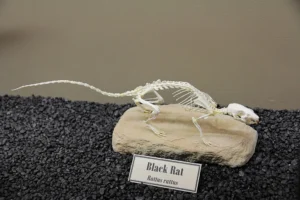
The bones are connected by cartilage and ligaments that allow movement between each vertebra. This is what makes the tail so flexible.
The rat can curve its tail in almost any direction because each joint between bones can move a little bit.
At the very tip of the tail, the bones are incredibly tiny, almost like the size of a grain of rice or smaller. These tiny bones still have the same basic structure as the larger ones, just scaled down.
If you were to look at an X-ray of a rat’s tail, you’d see this chain of bones running down the center, kind of like a string of beads. It’s actually pretty amazing how many bones are packed into that thin tail.
Why Rats Need Bones in Their Tails
The bones aren’t just there for no reason. They serve important functions that help the rat survive.
Structural support is the main purpose. Without bones, the tail would just be a floppy tube of muscle and skin. The bones give the tail rigidity and shape while still allowing flexibility.

The bones work with muscles to control tail movement. Muscles attach to the vertebrae and contract or relax to move the tail in different directions. Without bones for the muscles to pull on, the rat wouldn’t be able to control its tail precisely.
Protection for blood vessels and nerves is another key function. Major blood vessels and nerves run through the center of the tail, right alongside the bones.
The vertebrae create a channel that helps protect these delicate structures from injury.
The tail bones also provide attachment points for ligaments and tendons. These connective tissues need something solid to anchor to, and the bones provide that foundation.
For balance, the bones add just enough weight to make the tail useful as a counterbalance. If the tail was boneless and too light, it wouldn’t work as well for helping the rat balance on narrow surfaces or when climbing.
How Flexible Are the Bones in a Rat’s Tail?
Even though the tail has bones, it’s remarkably flexible. This might seem like a contradiction, but it’s all about how the bones are arranged and connected.
Each individual vertebra can only move a tiny bit relative to its neighbors. But when you add up the movement from 27 to 30 joints all working together, you get a lot of flexibility.
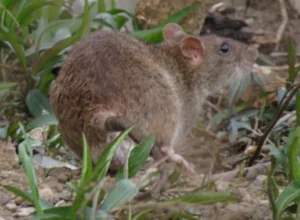
A rat can curl its tail completely around in a circle. It can bend it to the left or right, up or down, or in complex spiraling motions. This level of flexibility helps the rat navigate tight spaces and maintain balance in tricky situations.
The bones are also somewhat flexible themselves when the rat is young. Young rats have more cartilage in their tails, which makes the bones slightly less rigid. As the rat ages, the bones calcify more and become harder.
Despite all this flexibility, the tail bones can still break if enough force is applied. A hard impact, getting the tail caught and pulled violently, or being stepped on can fracture or dislocate the vertebrae.
Can You Feel the Bones in a Rat’s Tail?
If you gently touch or hold a rat’s tail (with the rat’s permission, so to speak), you can definitely feel that there’s something solid inside.
The tail doesn’t feel squishy or hollow like a tube. There’s a firmness to it that comes from the bones inside. If you very gently press on the tail, you can feel the resistance of the bone structure.
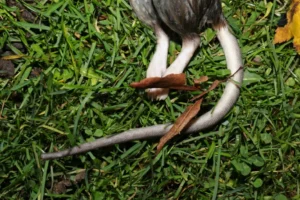
However, you probably won’t feel individual vertebrae unless you’re really trying to. The skin, scales, blood vessels, and muscles around the bones create padding that makes the tail feel more like one smooth structure.
At the base of the tail where it connects to the body, the bones are larger and easier to feel. As you move toward the tip, the bones get smaller and are harder to distinguish.
If a rat has an injured tail, you might be able to feel abnormalities like breaks or dislocations in the bone structure. The tail might feel kinked, have a weird angle, or be swollen at the injury site.
What Happens to the Bones When a Rat Loses Its Tail
When a rat loses part of its tail through injury, the bones obviously get severed along with everything else.
The bones don’t grow back. Unlike the tail bones of some lizards (which can regenerate), rat tail bones can’t regrow. Once they’re gone, they’re gone permanently.
At the injury site, the exposed bone ends will die back slightly as the body heals. The bone retracts a tiny bit from the edge of the wound, and the soft tissues (skin and muscle) grow over it to seal everything up.

Eventually, the remaining bones in the tail are covered by healed skin at the end. The tail looks rounded or blunt at the amputation site instead of tapering to a point like a normal tail would.
If the tail breaks instead of being completely severed, the broken bones might heal together if they’re aligned properly. But this rarely happens perfectly in rats. More often, the tail heals at a crooked angle, leaving a permanent kink or bend.
Dislocated vertebrae (where the bones separate at a joint without breaking) sometimes heal on their own, but the tail might be permanently bent or crooked at that spot.
Do the Bones Make Rat Tails Strong?
The bones do add strength, but rat tails aren’t as strong as you might think.
The tail can support the rat’s weight when it’s wrapped around something, at least partially. Rats climbing ropes or thin branches will sometimes use their tails for extra grip and support. But the tail alone can’t hold up the entire body weight, especially not for long periods.

The bones are relatively thin and can break under pressure. If you accidentally step on a rat’s tail or slam it in a door, the bones will fracture. They’re not designed to handle that kind of force.
For pulling or dragging, the tail is pretty weak. You should never pick up a rat by its tail because the bones and connective tissues can be damaged, and it’s painful for the rat. The tail isn’t built to support the animal’s weight when hanging vertically.
In terms of bending and twisting forces, the tail is quite resilient. The multiple joints and flexible connections allow it to bend in extreme ways without breaking under normal use.
How Rat Tail Bones Compare to Other Animals
Rats aren’t unique in having bones in their tails. Actually, most animals with tails have bones in them.
Cats and dogs have tail bones. Their tails have fewer, larger vertebrae than rats (usually 18 to 23), but the basic structure is similar. The main difference is that cat and dog tails have much more muscle and are covered in fur.
Lizards have bones in their tails too. Some lizards can drop their tails when threatened, and the tail grows back, but with cartilage instead of bone in the regrown portion.
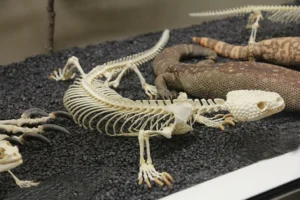
Monkeys with prehensile tails (tails that can grip things) have especially strong tail bones with powerful muscles. Their tails are almost like a fifth limb.
Mice, being closely related to rats, have the same type of bony tail structure. The bones are just smaller because mice are smaller overall.
Animals with extremely flexible tails (like certain salamanders) have more vertebrae than rats, sometimes 40 or more. More bones means more joints and more flexibility.
Can Rat Tail Bones Get Diseases or Conditions?
Yes, the bones in rat tails can develop problems, especially in pet rats.
Tail injuries are the most common issue. Broken bones, dislocations, or crushed vertebrae can happen from accidents. These injuries are painful and usually require veterinary care.
Infections can affect the tail bones if a wound penetrates deep enough or if bacteria enter through the bloodstream. Bone infections (called osteomyelitis) are serious and need antibiotics to treat.
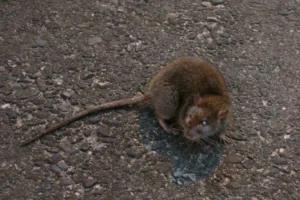
Arthritis can develop in the tail joints of older rats, especially if the tail was injured when the rat was younger. This makes the tail stiff and possibly painful.
Tumors can grow in or around the tail bones, though this is relatively rare. Both benign and cancerous tumors are possible.
Metabolic bone disease from nutritional deficiencies (especially lack of calcium or vitamin D) can weaken tail bones, making them more prone to breaking.
Ring tail is a condition in young rats where the tail becomes constricted, cutting off blood flow. If not treated, the tail tissue and bones can die and the tail might fall off.
How Scientists and Vets Examine Rat Tail Bones
When there’s a suspected problem with a rat’s tail bones, vets have several ways to check them out.
Physical examination is the first step. The vet will gently feel along the tail for swelling, pain responses, abnormal angles, or anything that feels out of place.
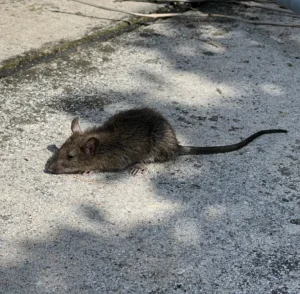
X-rays are the main diagnostic tool for looking at tail bones. An X-ray clearly shows the vertebrae, any breaks or dislocations, signs of arthritis, or bone infections. It’s quick and relatively inexpensive.
For more detailed information, CT scans can be used, though this is rare and expensive for a rat. CT scans give a 3D view of the bones and can show problems that don’t show up well on regular X-rays.
Researchers studying rat anatomy often use cleared and stained specimens. This is a process where the soft tissues are made transparent and the bones are dyed so you can see the entire skeleton (including every tiny tail vertebra) while it’s still in place.
Taking Care of Tail Bones in Pet Rats
If you have pet rats, protecting their tail bones is part of keeping them healthy.
- Handle tails gently.
Never pick up a rat by its tail. Always support the rat’s body weight with your hands under its chest and hindquarters.
Prevent cage injuries by using proper cage equipment. Wire cage floors with large gaps can trap tails. Doors should close smoothly without pinch points.
- Watch for signs of tail pain.
If your rat is guarding its tail, not using it normally, or seems painful when the tail is touched, get it checked by a vet.
- Provide proper nutrition to keep bones strong.
A balanced diet with adequate calcium and vitamin D helps maintain healthy bones throughout the body, including the tail.
- Keep multiple rats from fighting.
Aggressive rats will sometimes bite each other’s tails, which can damage or break the bones.
- Be careful with young rats to prevent ring tail.
Keep humidity at appropriate levels and don’t let baby rat tails get too dry, as this can lead to constriction and circulation problems.
Conclusion
Rats definitely have bones in their tails. The tail contains 27 to 30 small vertebrae that run from base to tip, giving the tail structure and strength while still allowing remarkable flexibility.
These bones work together with muscles, tendons, and ligaments to let the rat control its tail precisely for balance, communication, and temperature control. The bones also protect the blood vessels and nerves that run through the tail.
While the tail is flexible and can bend in many directions, the bones inside can still break or get injured. If you have pet rats, always handle them gently and never pick them up by their tails.
Understanding that rat tails contain real bones helps explain why they’re so important to the animal and why injuries to the tail need to be taken seriously.

Hi, my name is Ezra Mushala, i have been interested animals all my life. I am the main author and editor here at snakeinformer.com.